

Discover 36 authentic Lebanese recipes, from creamy hummus and fresh tabbouleh to traditional kibbeh, flavorful shawarma, homemade manakish, and classic Lebanese desserts. These traditional Lebanese dishes showcase the rich flavors of Lebanon, with fresh herbs, olive oil, lemon juice, garlic, and aromatic spices.
Whether you’re planning a Lebanese mezze feast, looking for easy family meals, or exploring traditional Middle Eastern desserts, you’ll find delicious recipes for every occasion. Discover the flavors of Lebanese cuisine and bring these beloved dishes to your own kitchen with helpful tips for preparing them at home.
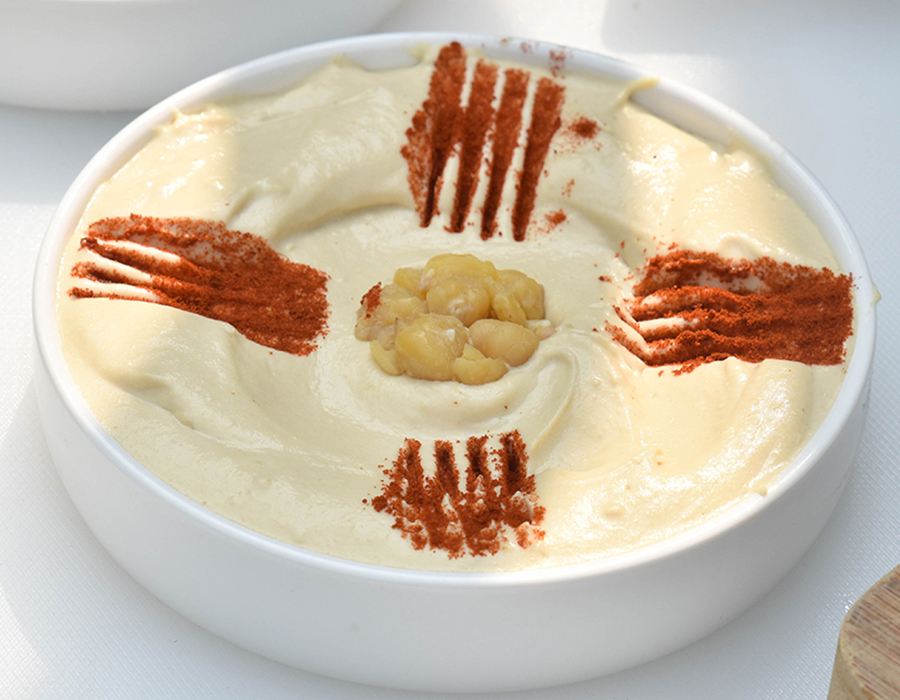
Lebanese Hummus (Hummus Bi Tahini)
No Lebanese feast is complete without a bowl of smooth, creamy hummus.
Hummus bi Tahini combines chickpeas, tahini, fresh lemon juice, garlic, and extra-virgin olive oil to create a simple yet flavorful classic.
Skip the store-bought version and make it fresh at home. For an extra-creamy texture, you can peel the chickpeas, or use a few kitchen shortcuts to save time.
Serve it with: Warm pita bread, fresh vegetables, or your favorite mezze dishes.
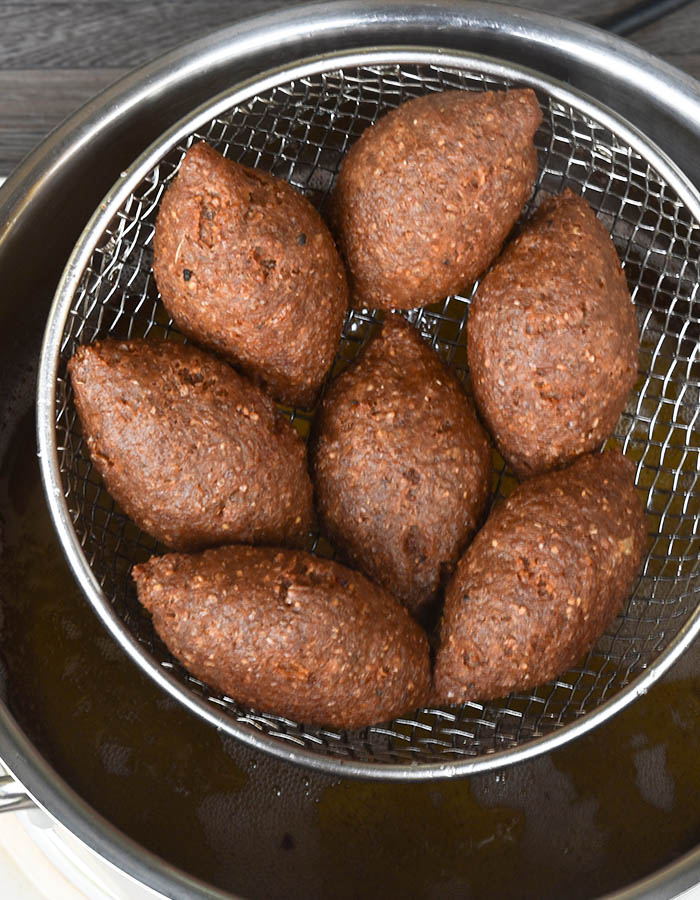
Authentic Lebanese Fried Kibbeh Balls
Kibbeh Raas is one of Lebanon’s most beloved traditional dishes. These golden, football-shaped croquettes are a highlight of festive meals and mezze platters.
They have two delicious layers:
- The shell: Ground beef or lamb, fine bulgur wheat, and puréed onions.
- The filling: Sautéed meat, Lebanese seven-spice seasoning, and toasted pine nuts.
Shaping kibbeh takes practice, but a step-by-step method makes the process much easier.
The goal is a crisp outer shell with a juicy, flavorful filling.

Lebanese Tabbouleh
Tabbouleh is a refreshing Lebanese salad made primarily with finely chopped parsley, ripe tomatoes, fresh lemon juice, and olive oil.
The secret to authentic tabbouleh is simple: parsley should be the star, not bulgur wheat.
Traditional Lebanese tabbouleh uses only a small amount of fine bulgur, which absorbs the juices from the tomatoes and lemon.
For the best results:
- Dry the parsley thoroughly before chopping.
- Use a sharp knife rather than a food processor.
- Add fresh lemon juice and good-quality olive oil.
Serve it with: Crisp romaine lettuce or fresh cabbage leaves for scooping.

Lebanese Fattoush
Fattoush is a colorful Lebanese garden salad known for its fresh vegetables, crunchy pita chips, and tangy dressing.
It typically includes romaine lettuce, tomatoes, cucumbers, radishes, and fresh mint or purslane.
The dressing brings everything together with olive oil, lemon juice, garlic, sumac, and pomegranate molasses.
The secret to great fattoush: Keep the vegetables crisp and add the pita chips just before serving.
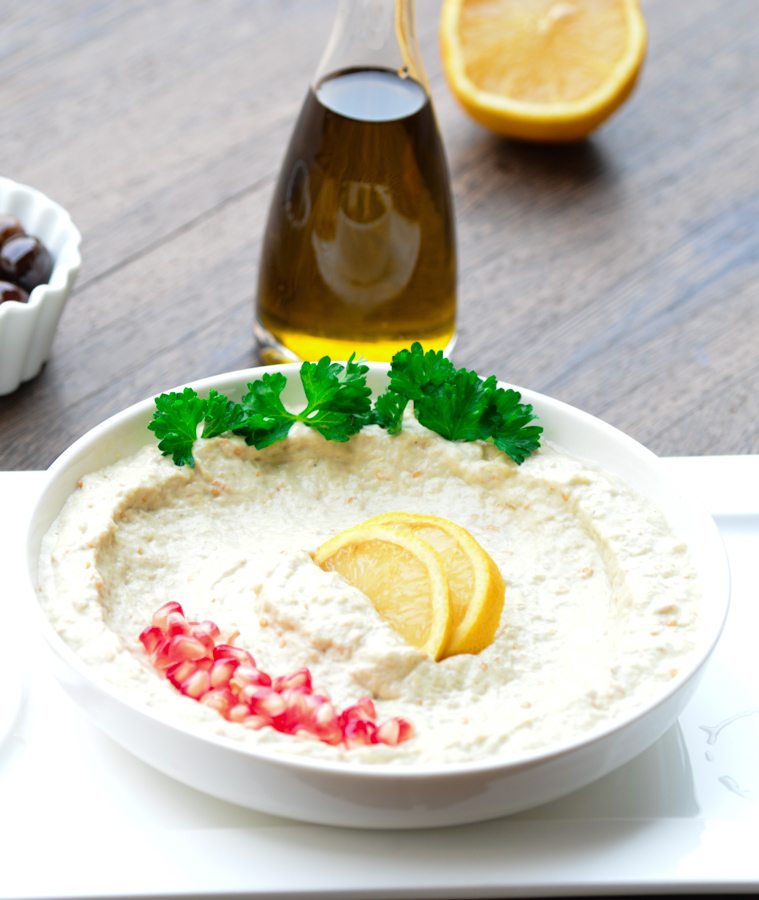
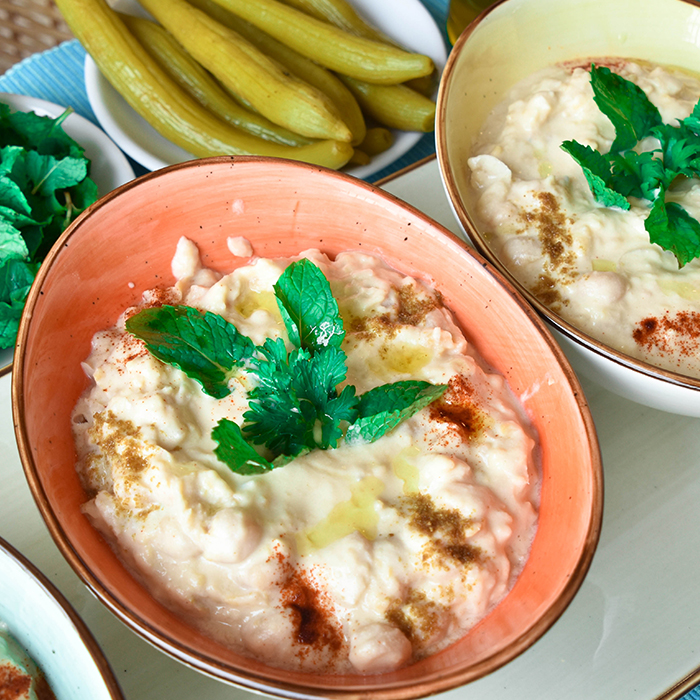
Lebanese Moutabal
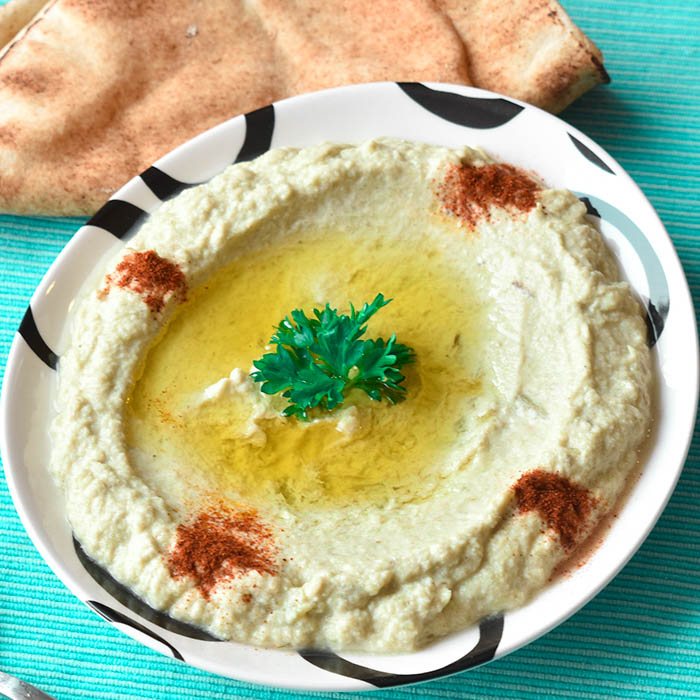
Moutabal is a smoky roasted eggplant dip made with tahini, lemon juice, garlic, and olive oil.
It’s a staple of the Lebanese mezze table and pairs beautifully with hummus, tabbouleh, fattoush, and warm pita bread.
For authentic Lebanese moutabal, the eggplant is charred until soft and smoky before being mixed with the other ingredients.
A helpful distinction: In Lebanon, moutabal generally refers to the creamy, tahini-based eggplant dip. Baba ghanouj can refer to a different, chunkier eggplant preparation, depending on the region.
Serving tip: Serve it as a dip, an appetizer, or an accompaniment to grilled fish and meat.

Lebanese Loubia Bzeit
Loubia Bzeit, also spelled Loubieh bi Zait, means “green beans in oil.” It’s a traditional Lebanese vegan dish made with green beans, tomatoes, onions, garlic, and olive oil.
The ingredients simmer gently until the beans become tender and absorb the rich, savory flavors.
This simple dish belongs to a beloved tradition of Lebanese meatless cooking, where a few everyday ingredients become a comforting meal.
Serve it with: Warm pita bread, fresh radishes, and green onions.
Enjoy it warm, at room temperature, or chilled.

Lebanese Moussaka (Maghmour)
Lebanese moussaka, traditionally called Maghmour, is a hearty eggplant and chickpea stew.
Unlike the Greek version, this Lebanese dish is naturally vegan and gluten-free when prepared with suitable ingredients.
Tender eggplant simmers in tomato sauce with chickpeas, onions, garlic, olive oil, and dried mint.
The result is a rich, comforting dish with a wonderfully soft texture.
Serving tip: Maghmour is traditionally enjoyed at room temperature or chilled, when its flavors have had time to develop. Serve it with warm pita bread.

Riz a la Djej (Lebanese Chicken and Rice)
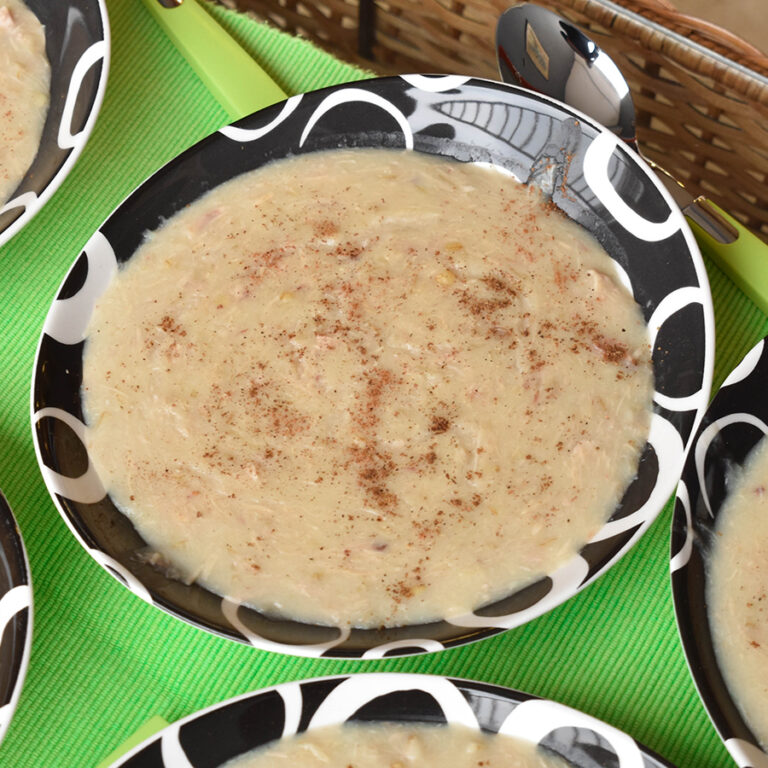
Riz a la Djej, also spelled Riz ala Djaj, is a classic Lebanese comfort food served at family gatherings, Sunday lunches, and festive celebrations.
The dish features fluffy rice cooked in homemade chicken broth with warm spices such as cinnamon, allspice, and Lebanese seven spice.
It’s topped with tender shredded chicken and toasted pine nuts and almonds.
Although it looks impressive, this traditional meal is achievable in a home kitchen.
The finishing touch: Generously scatter the toasted nuts over the rice just before serving.

Malfouf Mahshi (Lebanese Stuffed Cabbage Rolls)
Malfouf Mahshi is a comforting Lebanese dish made with tender cabbage leaves wrapped around a savory rice and meat filling.
The filling typically includes ground beef or lamb, short-grain rice, and Lebanese seven spice.
What makes the Lebanese version distinctive is its bright, tangy sauce, flavored with garlic, lemon juice, and dried mint.
Preparing the rolls takes a little patience, but blanching the cabbage first makes the leaves easier to separate and fold.
The finished dish is tender, fragrant, and wonderfully satisfying.
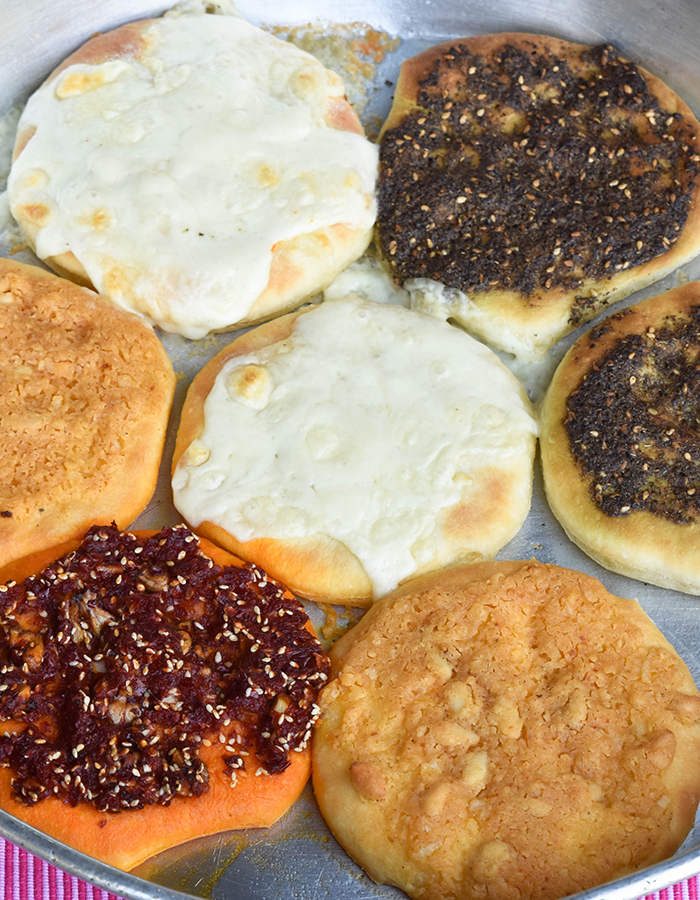
Lebanese Manakish (4 Toppings)
Manakish, also spelled Man’oushe, is a beloved Lebanese flatbread often enjoyed for breakfast or brunch.
Think of it as Lebanon’s answer to pizza, with flavorful toppings spread over soft, yeasted dough.
This recipe features four traditional options:
- Za’atar: A fragrant blend of herbs and spices mixed with olive oil.
- Akkawi cheese: A mild, salty cheese that melts beautifully.
- Kishk: A traditional tangy fermented grain-and-yogurt mixture.
- Lebanese red pepper paste: A savory, spiced topping inspired by muhammara.
The dough needs time to rise, but the process is rewarding and fills your kitchen with the aroma of freshly baked bread.
Baking tip: Stretch the dough evenly and bake until the edges are golden and crisp.
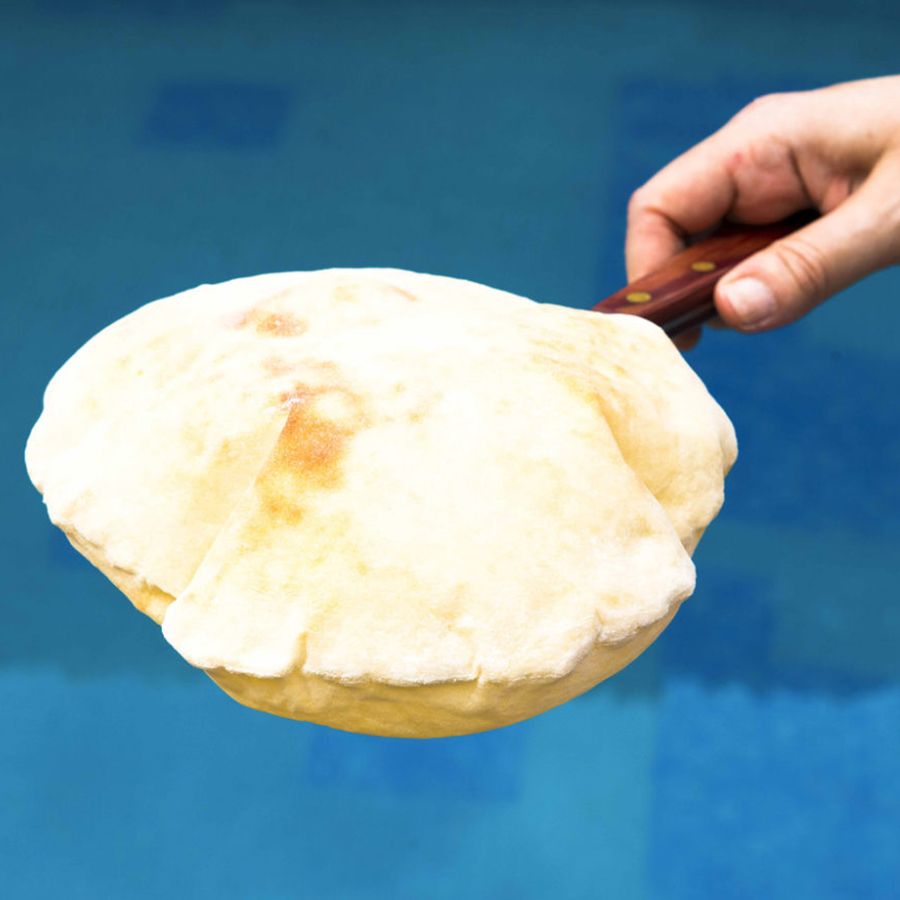
Traditional Lebanese Pita Bread (Arabic Bread)
Lebanese pita bread, also known as Arabic bread, is a staple of Lebanese cuisine and a favorite across the Middle East. This soft, round flatbread is perfect for scooping up hummus and moutabal, wrapping shawarma and kafta, or serving alongside your favorite Lebanese dishes. Easy to enjoy with almost any meal, homemade pita bread brings an authentic taste of Lebanon to your table.

Lebanese Beef Shawarma
Bring the flavors of Beirut’s street-food stalls into your kitchen with homemade beef shawarma.
Traditional shawarma cooks on a rotating vertical spit, but this one-pot version offers a practical alternative for home cooks.
Thin cuts of beef are marinated with olive oil, citrus juice, vinegar, and aromatic spices. They’re then cooked slowly until tender and flavorful.
While the meat simmers, prepare a creamy tahini sauce called taratour and slice your favorite vegetables.
Serve it in: Warm pita bread with pickles, sumac-spiced onions, and taratour.
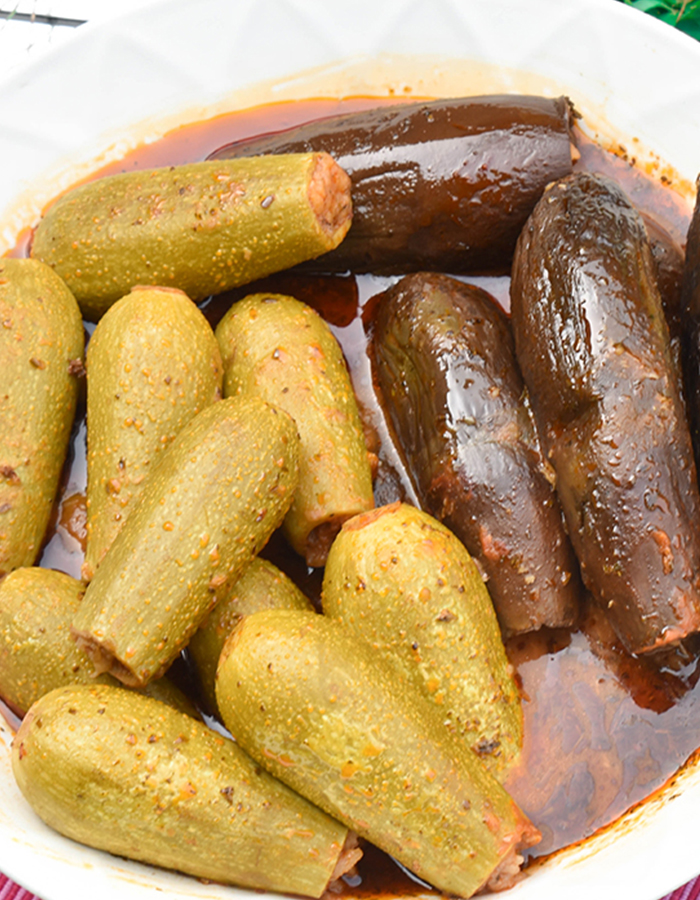
Kousa Mahshi (Lebanese Stuffed Zucchini and Eggplant)
Kousa Mahshi is a traditional Lebanese favorite often served at Sunday family gatherings and special occasions.
Grey zucchini and small eggplants are hollowed out and filled with a mixture of short-grain rice, ground beef or lamb, and aromatic spices.
The vegetables then simmer in a tomato broth flavored with garlic and mint until tender.
Hollowing the vegetables takes a little practice, but working carefully helps prevent the skins from breaking.
The result is a comforting, flavorful dish well worth the effort.

Authentic Shish Barak
Shish Barak consists of small Lebanese dumplings filled with seasoned meat and served in a warm yogurt sauce.
The dumplings resemble tiny ravioli or tortellini. Their filling typically includes ground beef or lamb, onions, spices, and pine nuts.
After being shaped, the dumplings are baked and gently simmered in a creamy yogurt sauce.
A finishing drizzle of garlic and fresh cilantro, or dried mint, adds the traditional final touch.
Cooking tip: Prepare the dumplings ahead of time, and keep the yogurt sauce at a gentle simmer to help prevent curdling.

Kibbeh Mishwieh (Lebanese Grilled Kibbeh)
Kibbeh Mishwieh is a specialty associated with Zgharta in northern Lebanon. These large, dome-shaped kibbeh are traditionally grilled over charcoal for a distinctive smoky flavor.
The outer shell combines meat and bulgur wheat, while the filling features a rich mixture of lamb fat, onions, fresh basil, and walnuts.
As the kibbeh cooks, the filling becomes wonderfully juicy and aromatic.
Shaping the domes can seem challenging at first, but using a small bowl as a guide can make the process easier.

Lebanese Toum (Garlic Sauce)
Toum is the fluffy, intensely garlicky sauce served with many Lebanese grilled dishes and sandwiches.
Traditional toum is an emulsion of garlic, oil, lemon juice or citric acid, and salt. Getting the emulsion right can take practice.
This easier version uses cornstarch to help bind the ingredients, making it more forgiving for beginners while delivering a creamy texture and bold garlic flavor.
Serve it with:
- Grilled chicken and kafta
- Crispy potatoes
- Shawarma sandwiches
- Grilled vegetables
It’s a must-have condiment for a Lebanese-style meal.
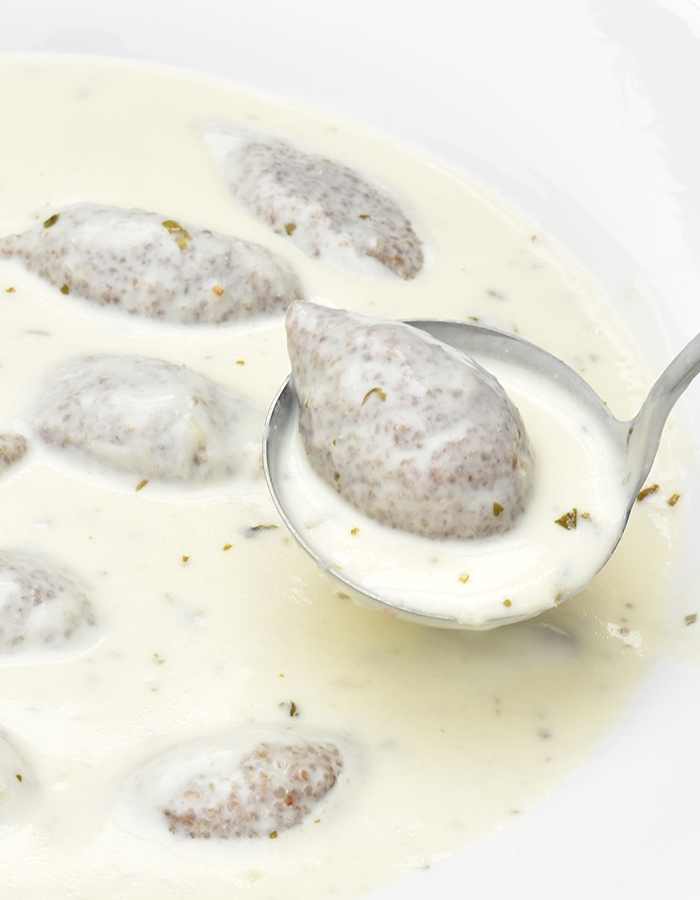
Kibbeh Bil Laban (Lebanese Kibbeh in Yogurt Sauce)
Kibbeh Bil Laban, also called Kibbeh Labanieh, combines savory kibbeh with a warm, creamy yogurt sauce.
The kibbeh is gently simmered in the tangy sauce, then finished with sautéed garlic and fresh cilantro.
The combination of tender kibbeh, smooth yogurt, and aromatic herbs makes this a comforting Lebanese classic.
Cooking tip: Stabilize the yogurt sauce and maintain a gentle temperature to help keep it smooth and prevent splitting. Fresh or frozen kibbeh can both work.

Lebanese Sfeeha (Meat Pies)
Sfeeha are traditional Lebanese meat pies with soft dough and a savory, spiced meat filling.
They’re popular in Lebanese bakeries and make a delicious addition to a mezze spread or a satisfying meal with plain yogurt.
The dough is shaped into small pies, filled with seasoned meat, and baked until golden.
Working with yeasted dough takes a little practice, but the results are worth it.
Baking tip: Shape and seal the corners carefully to help keep the filling juicy during baking.
These portable little pies are perfect for sharing.

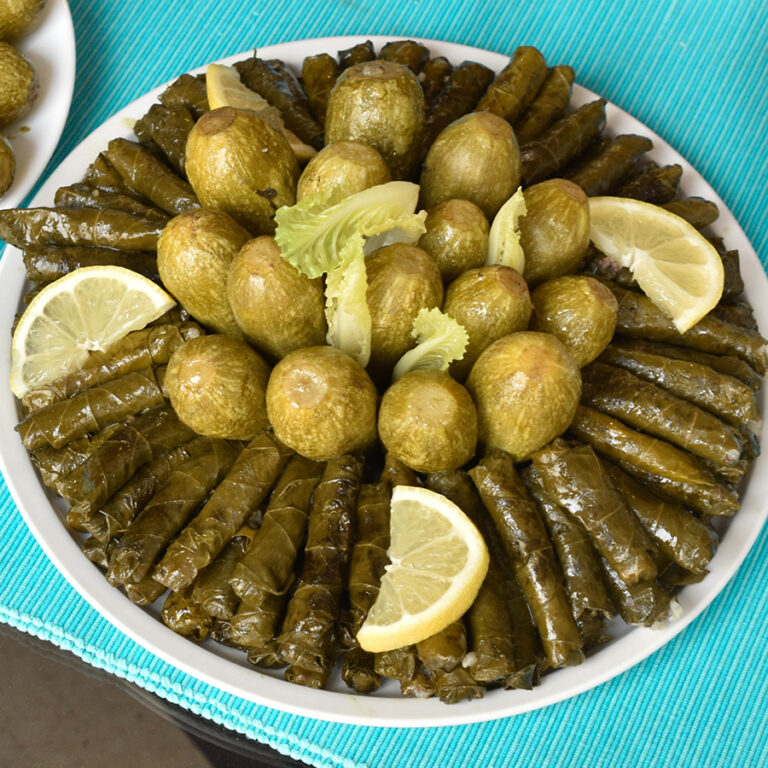
Mahshi Kousa wa Warak Enab (Stuffed Zucchini and Grape Leaves)
This traditional dish brings together two Lebanese favorites: stuffed zucchini and stuffed grape leaves.
Both are filled with seasoned short-grain rice and ground meat, then arranged in a pot and slowly simmered in a lemon-and-garlic broth.
Some traditional versions include lamb chops beneath the stuffed vegetables and grape leaves for extra richness.
The preparation takes time, especially when rolling the grape leaves and hollowing the zucchini, but the finished dish is a spectacular centerpiece for family gatherings.
Cooking tip: Roll the grape leaves snugly and arrange them carefully so they hold their shape during cooking.

Authentic Lebanese Chicken Shawarma
Chicken shawarma is one of the most popular Lebanese street foods, known for its juicy meat, aromatic spices, and beautifully browned edges.
This oven-friendly version brings those flavors into your home without requiring a rotating spit.
The chicken is marinated in yogurt, citrus, and warm Levantine spices. A little cornstarch helps retain moisture during cooking.
For an extra smoky flavor, the recipe also features a traditional natural-charcoal technique.
Serve it with: Lebanese toum, warm pita bread, pickles, and fresh vegetables.

Lebanese Grilled Kafta
Grilled kafta is a barbecue favorite made with seasoned ground meat shaped onto skewers.
The mixture typically combines beef, lamb, or both with fresh parsley, grated onions, black pepper, and Lebanese seven spice.
The skewers are grilled until browned on the outside and juicy inside.
You can also adapt the recipe for an indoor grill pan or oven.
Serve it with: Pita bread, hummus, taratour, or a refreshing parsley-and-onion salad seasoned with sumac.
Grilling tip: Knead the meat mixture well and shape it firmly around the skewers to help the kafta hold together.

Mujadara Msafaieh (Creamy Lebanese Lentil Purée)
Mujadara Msafaieh, also spelled Mjadra or Msafaye, is a traditional northern Lebanese dish made with lentils, rice, and onions.
Unlike the more familiar lentil-and-rice mujadara topped with crispy onions, this version is blended into a thick, creamy purée.
The lentils and rice are cooked until tender, then combined with deeply caramelized onions and olive oil.
It’s a naturally plant-based, budget-friendly dish that makes excellent use of pantry staples.
Serve it with: Cabbage salad, pickled vegetables, or fresh seasonal vegetables.
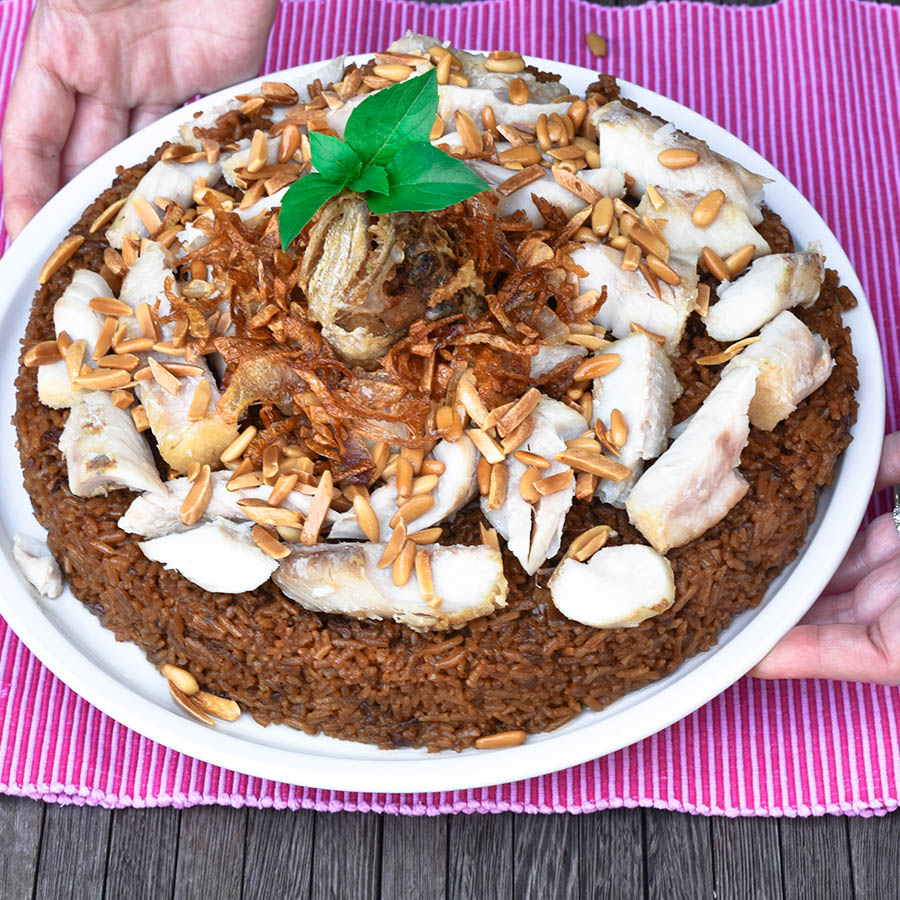
Sayadieh (Lebanese Fish and Rice)
Sayadieh is a traditional Lebanese fish-and-rice dish especially associated with coastal cooking.
Its signature feature is the dark, aromatic rice, which gets its color and deep flavor from slowly caramelized onions.
In the Beiruti style, the rice is cooked in homemade fish stock and seasoned with cumin, white pepper, and salt.
Tender white fish is served over the rice, with toasted pine nuts and blanched almonds scattered on top.
Serve it with: Lemon tahini sauce, also called taratour, and fresh fattoush.
The combination makes an impressive meal for a family gathering or dinner party.

Authentic Lebanese Namoura (Basbousa-Style Semolina Cake)
Namoura is a traditional Lebanese semolina cake, also known in parts of the Levant as basbousa or harissa.
Its appeal lies in its coarse, tender texture and sweet aroma.
The batter combines coarse semolina and yogurt, while tahini greases the baking pan and adds a subtle nutty flavor.
Once baked until golden, the cake is soaked in fragrant sugar syrup flavored with orange blossom water and rose water.
It’s traditionally cut into diamond shapes and often garnished with nuts.
Baking tip: Pour the syrup over the hot cake to help it absorb the sweetness and stay moist.

Lebanese Sfouf (Turmeric Cake)
Sfouf is a bright golden Lebanese cake flavored with turmeric and often served alongside coffee or tea.
It’s naturally eggless in its traditional form and easy to prepare in one bowl.
The batter combines flour, semolina, sugar, oil, butter, milk, and turmeric. The baking pan is greased with tahini, which adds a subtle nutty note.
Before baking, the cake is often topped with pine nuts or blanched almonds.
Serving tip: Let the cake cool before cutting it into neat diamond-shaped pieces.
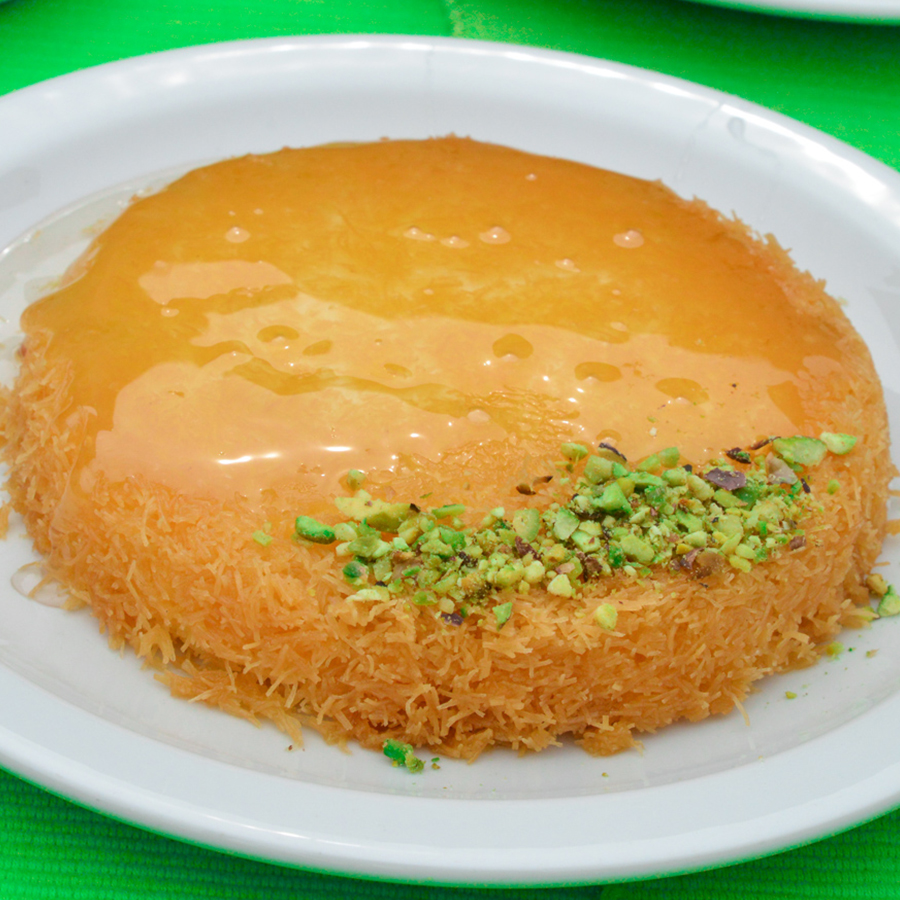
Lebanese Knafeh Bil Ashta
Knafeh Bil Ashta is a beloved Middle Eastern dessert featuring a crisp, golden pastry crust and a creamy clotted-cream filling.
This Lebanese variation uses shredded kataifi pastry around a rich ashta cream scented with orange blossom water and rose water.
After baking, the hot dessert is soaked with fragrant sugar syrup and topped with crushed pistachios.
The contrast between the crisp exterior and smooth cream filling makes it a special-occasion favorite.
Serving tip: Add the syrup after baking and allow the filling to set before slicing.

Lebanese Ghraybeh (Shortbread Cookies)
Ghraybeh are delicate Lebanese butter cookies known for their pale color and melt-in-your-mouth texture.
The traditional dough uses just three main ingredients: flour, powdered sugar, and clarified butter or ghee. A little orange blossom water or rose water can add fragrance.
The dough is shaped into rings or small logs, sometimes topped with a raw pistachio, and baked gently.
Baking tip: Keep the oven temperature controlled so the cookies remain pale rather than becoming deeply browned.
These elegant cookies are perfect for holidays, celebrations, or serving with Lebanese coffee.
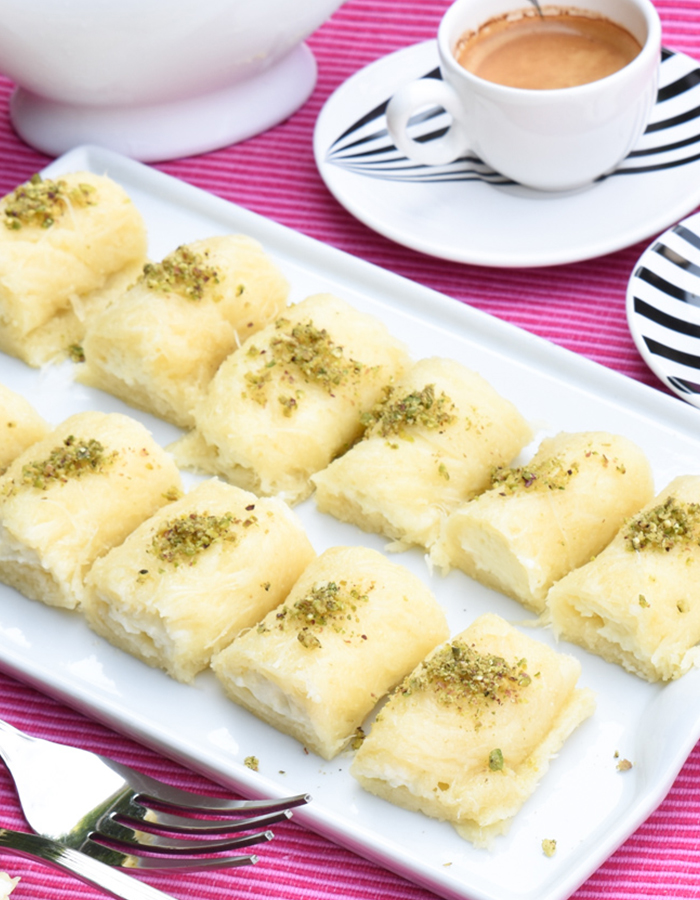
Halawet El Jibn (Sweet Cheese Rolls)
Halawet El Jibn is a traditional Lebanese dessert made from soft, stretchy sweet cheese dough wrapped around creamy ashta.
The dough combines melted Akkawi or mozzarella cheese with semolina. It’s rolled out, filled with clotted cream, and cut into bite-sized pieces.
The rolls are finished with fragrant orange blossom and rose water syrup and crushed pistachios.
Although the cheese dough may seem tricky, working through the steps carefully makes this elegant dessert achievable at home.
Serving tip: Drizzle with syrup just before serving for a fragrant, festive finish.
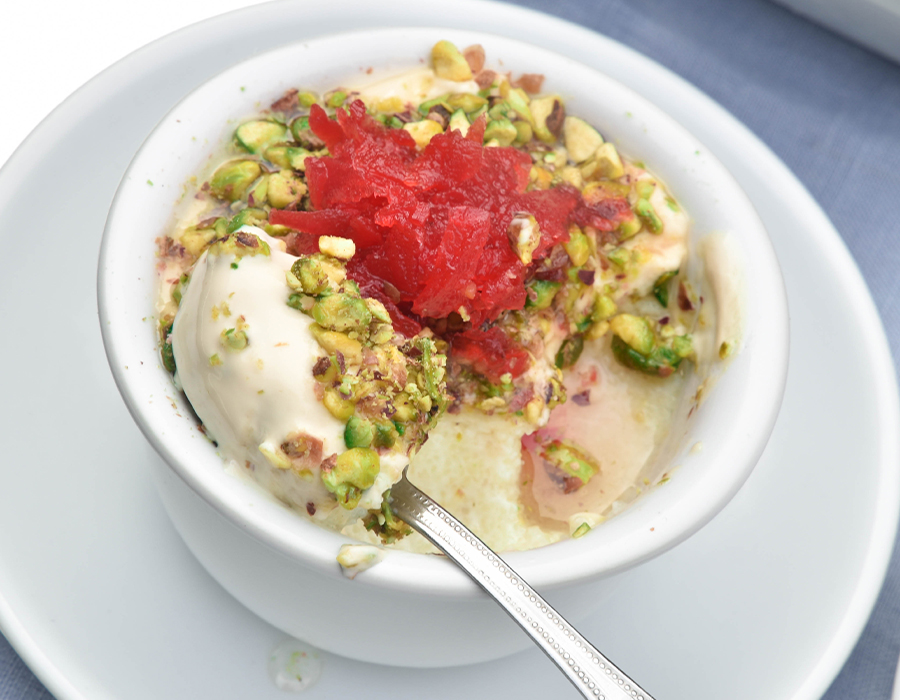
Layali Lubnan (Lebanese Nights Dessert)
Layali Lubnan, meaning “Lebanese Nights,” is a chilled semolina pudding topped with creamy ashta.
The base is made by cooking semolina with milk until thick and smooth. After chilling, it’s covered with a layer of cream and sprinkled with crushed pistachios.
A drizzle of orange blossom sugar syrup completes the dessert.
Because it requires no baking, it’s an excellent make-ahead option for dinner parties and family gatherings.
Preparation tip: Chill thoroughly before serving to help the layers set.

Lebanese Znoud El Sit
Znoud El Sit are crisp, golden pastry rolls filled with creamy ashta.
Thin sheets of phyllo or spring roll pastry are wrapped around the cream filling, sealed, and fried until crunchy.
The hot rolls are then dipped in fragrant sugar syrup flavored with orange blossom water and rose water.
The appeal lies in the contrast between the crisp exterior and cool, creamy center.
Cooking tip: Seal the pastry edges securely with a flour-and-water paste to help prevent the filling from escaping during frying.
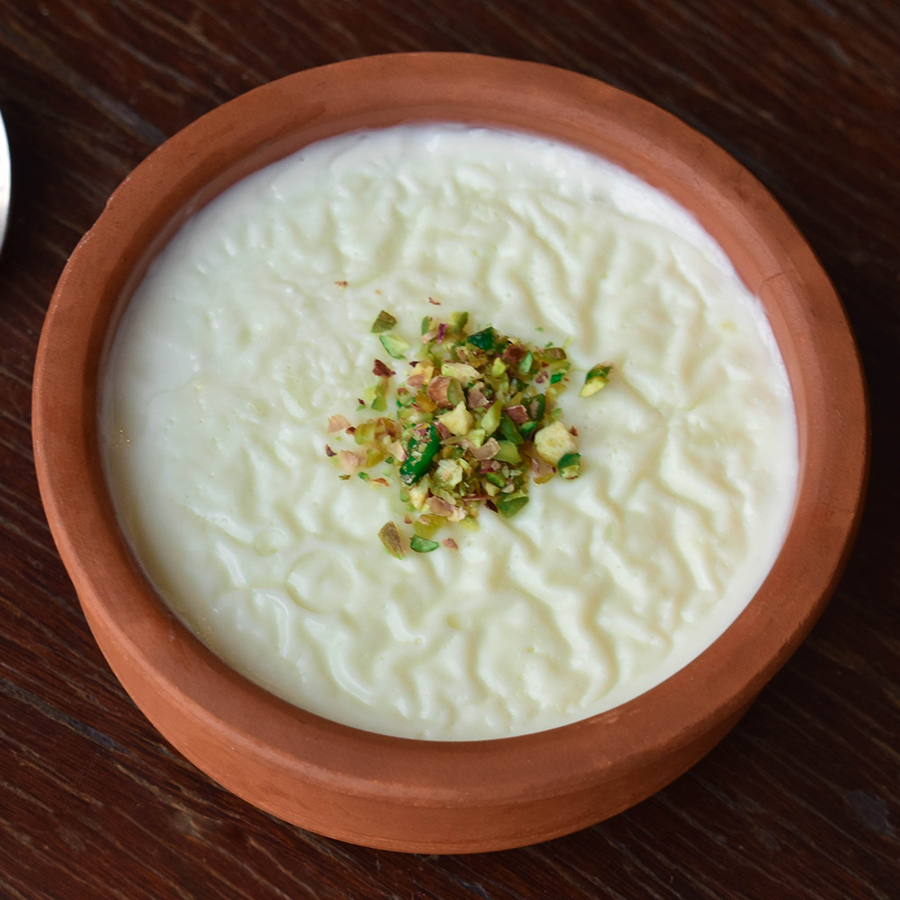
Riz Bi Haleeb (Lebanese Rice Pudding)
Riz Bi Haleeb is the Lebanese version of creamy rice pudding, flavored with orange blossom water and a hint of lemon zest.
Short-grain rice is simmered with whole milk and a little cream until the mixture becomes thick and silky.
Unlike some versions of rice pudding, this one has a distinctive floral fragrance that gives it its traditional Lebanese character.
It’s served chilled in individual bowls and often topped with crushed pistachios.
Make-ahead tip: Prepare it in advance and refrigerate until ready to serve.

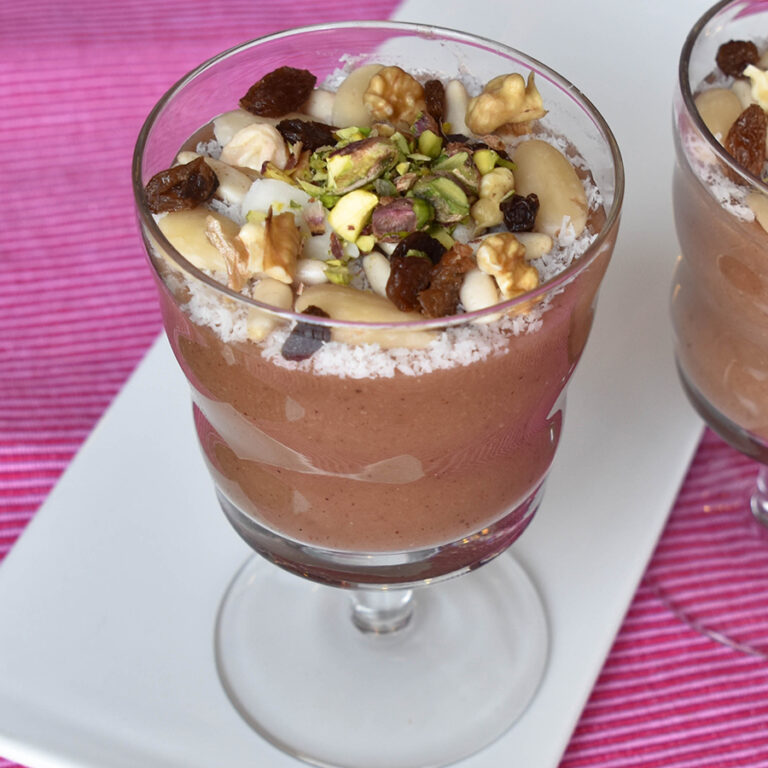
Lebanese Meghli (Caraway Pudding)
Meghli is a traditional Lebanese pudding often prepared to celebrate the arrival of a newborn. It’s also enjoyed during winter and Christmas celebrations.
The pudding is made by simmering rice flour, sugar, ground caraway, cinnamon, and anise until thick and smooth.
It’s naturally vegan, dairy-free, and gluten-free when prepared with suitable ingredients.
Once chilled, each bowl is generously topped with shredded coconut and a mixture of nuts, such as almonds, pistachios, walnuts, and pine nuts.
Serving tip: Let the pudding chill completely before adding the toppings.

Lebanese Awamat (Sweet Doughnuts)
Awamat are small, round Lebanese doughnuts with a crisp exterior and soft, airy centers.
The yeasted dough is shaped into little balls and fried until golden. They’re then dipped in chilled sugar syrup scented with orange blossom water.
These bite-sized sweets are popular at festive gatherings and make a wonderful addition to a traditional dessert platter.
The recipe is naturally dairy-free and egg-free when prepared with suitable ingredients.
Frying tip: Keep the dough consistency light and the oil temperature steady to help the doughnuts puff up without absorbing too much oil.
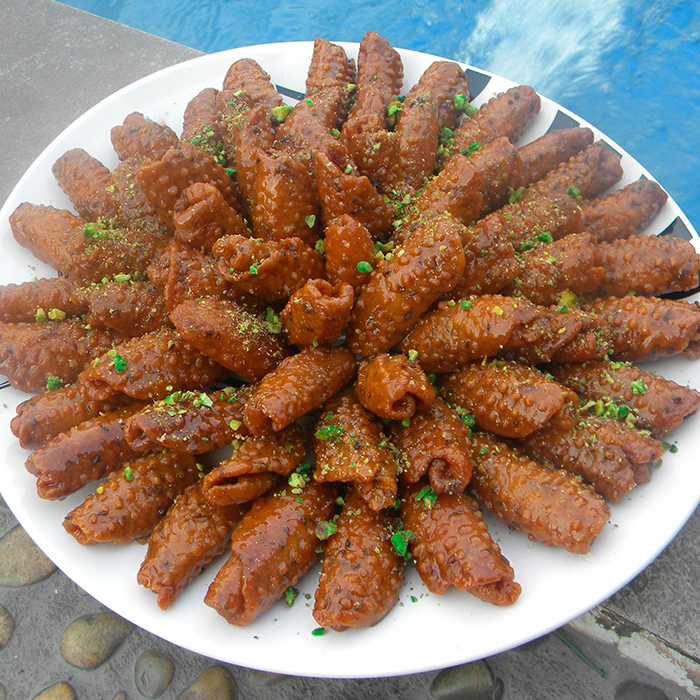
Lebanese Maakaron (Anise Seed Fritters)
Lebanese Maakaron are crunchy, syrup-soaked fritters flavored with anise seed and mahlab.
They’re made from a fragrant dough combining semolina and all-purpose flour. The dough is shaped into small logs and rolled over a patterned surface to create their distinctive ridges.
After frying until golden, the fritters are dipped in cold orange blossom sugar syrup.
These traditional sweets are especially popular during festive holidays and family celebrations.
Cooking tip: Shape the ridges evenly to help the fritters fry consistently and hold their texture.

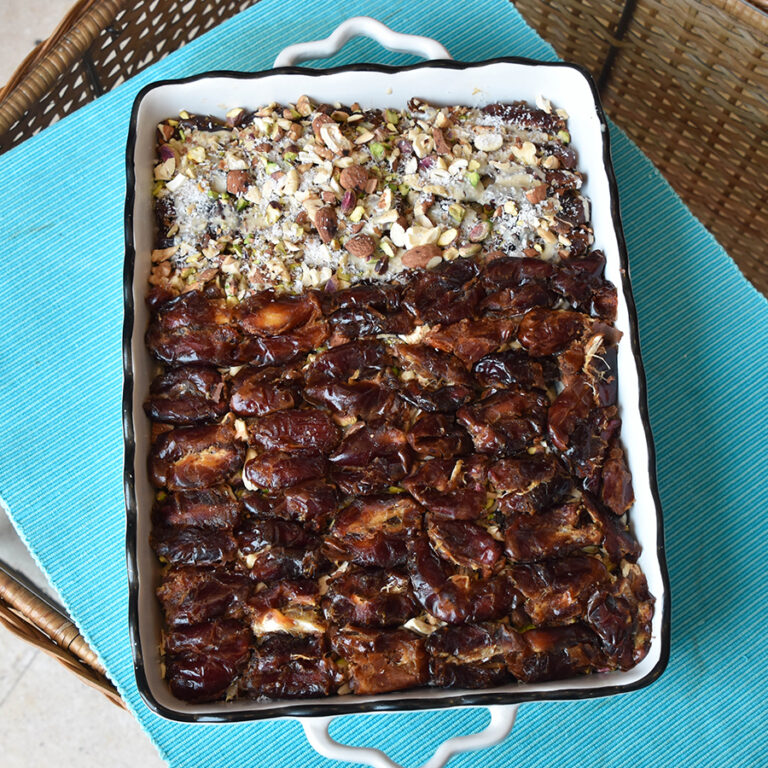
Maamoul Mad Bil Tamer (Lebanese Date Bars)
Maamoul Mad Bil Tamer is a tray-baked alternative to traditional individually shaped maamoul cookies.
It features layers of fragrant semolina dough surrounding a generous filling of sweet date paste.
The dough is scented with orange blossom water and rose water, then baked until lightly golden and cut into diamond-shaped bars.
Unlike individually molded maamoul, this version is easier to prepare for larger gatherings.
Baking tip: Allow the tray to cool before cutting so the bars hold their shape.

Quick Date Maamoul
These date-filled treats are perfect for holidays, sharing with guests, or enjoying with a cup of Lebanese coffee.
These Lebanese date maamoul cookies are tender, buttery, and filled with a fragrant date paste flavored with orange blossom water and mastic. Made with a simple dough of flour, ghee, mahlab, and sweetened condensed milk, this easy date maamoul recipe skips the long resting time and is perfect for beginners. Traditionally enjoyed during Eid and Easter, these delicious Middle Eastern cookies are wonderful for holidays, family gatherings, or serving with a cup of coffee or tea.