


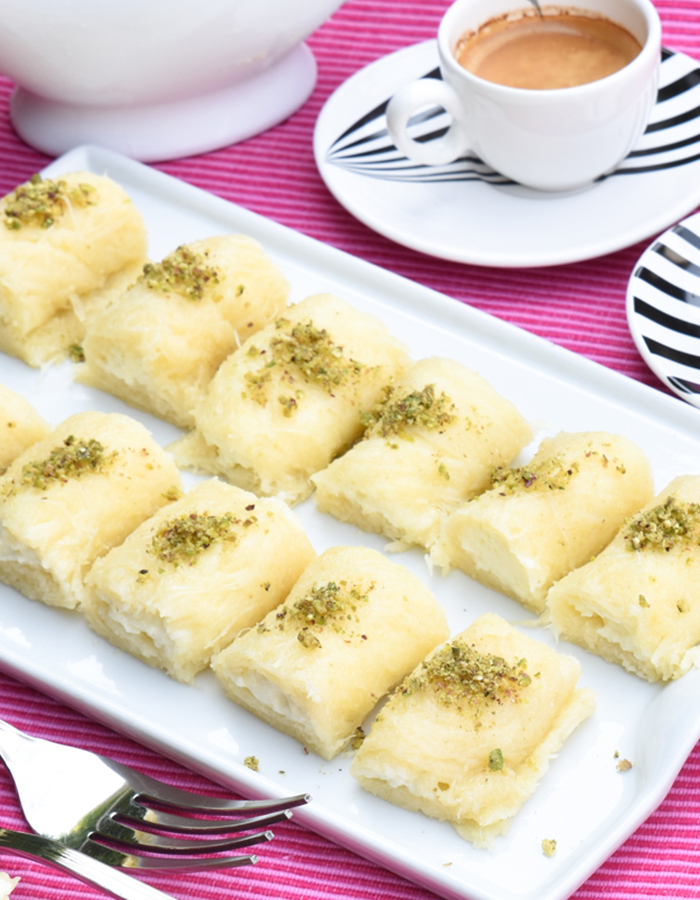
One of the most common requests I receive in my inbox is from readers asking me to share a recipe for Halawet El Jibn. This dessert is a beloved classic for good reason.
A dense, stretchy cheese-and-semolina dough envelops a luscious, milky clotted-cream filling known in Arabic as ashta, then gets generously drizzled with a fragrant sugar syrup infused with orange blossom water.
A unique Lebanese and Syrian dessert, Halawet El Jibn reflects the pure, refined artistry of our cuisine—both in presentation and in taste. It is the result of a brilliant culinary technique that Lebanese and Syrian chefs have perfected with remarkable precision over generations.
Elegant, sophisticated, and utterly gourmet, Halawet El Jibn is truly a dessert unlike any other.
Watch the detailed video below!
The Origin of Halawet El Jibn
Oriental sweet shops across Lebanon and Syria have Halawet El Jibn on their menus. Today, these delicate semolina-and-cheese rolls, with their creamy, soft center, are gaining popularity in other parts of the world as well.
Halawet El Jibn has survived the passage of time, but not without evolving. Based on some videos I watched on YouTube, the dessert may have started as a sweet semolina-and-cheese dough, cut into strips and served simply with sugar syrup. According to one version of the story, this ingenious creation was developed by the great-grandfather of Asaad Salloura in the 1870s. It was reportedly sold in the streets of Hama, carried on the head as a humble, on-the-go dessert.
Over time, it evolved into the more refined dessert we know today, filled with ashta, the rich Middle Eastern clotted cream.
But this is only one version of the story. Others firmly claim that Halawet El Jibn originated in the Syrian city of Homs. The debate does not end there: Tripoli, in northern Lebanon, is also renowned for its Halawet El Jibn, and some people insist that the dessert is distinctly Lebanese.
In the end, I found that its history appears to be rooted in a variety of cities and culinary traditions. The debate has become an ongoing war of words, fueled by the strong sense of pride people have in their national cuisines.
Regardless of where this brilliant invention first originated, respect is due to the pastry chefs who have refined the technique and carried the tradition forward. They have preserved one of the most iconic sweets of the Middle East and ensured that its legacy continues.
Perhaps the most important part of any culinary heritage is not claiming ownership, but preserving the knowledge, craftsmanship, and traditions that allow it to endure.
Tips and Tricks
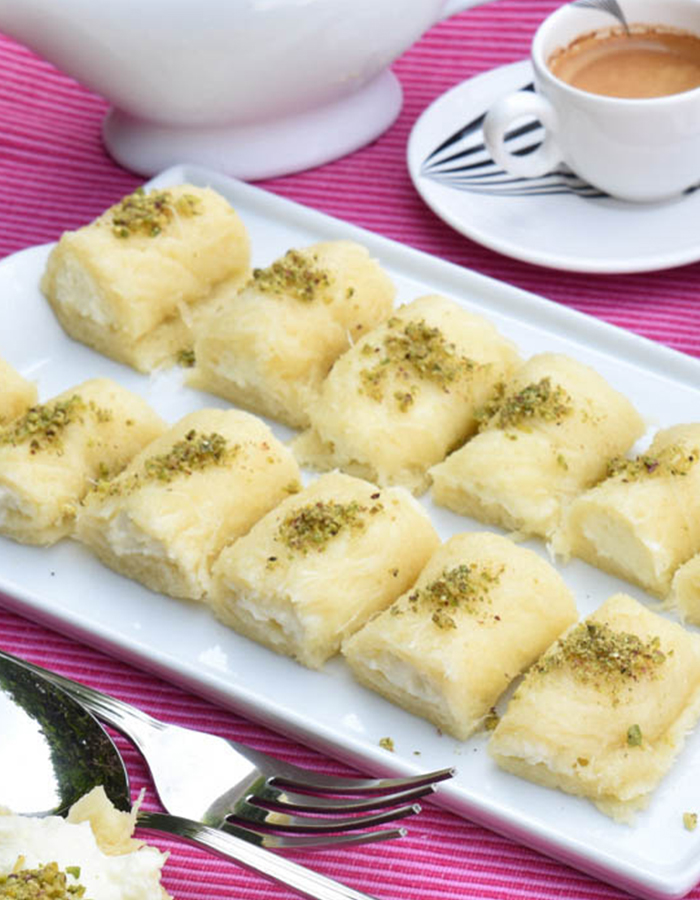
This sublime dessert gets its deep Middle Eastern flavors and aromas from a combination of mastic gum and orange blossom water, which lend it a lovely, delicate floral undertone. Please don’t skip them!
Choose the right cheese. Not all cheeses are created equal when it comes to melting. Opt for cheeses with good melting properties, such as Tchiki Akkawi, Majdoola, or mozzarella. Mozzarella, in particular, is excellent for achieving that irresistible cheese stretch. These cheeses have the right balance of fat and moisture to melt smoothly and blend beautifully with the sugar and semolina.
About Akkawi cheese: Akkawi is a traditional Middle Eastern cheese commonly used in both sweet and savory dishes. It is heavily salted for preservation and needs to be soaked before using. I tested mozzarella as a substitute and found the result incredibly satisfying. If you choose mozzarella, however, use the best-quality mozzarella you can find, as the quality of the cheese will have a significant impact on the final result of your Halawet El Jibn.
If using Tchiki Akkawi or Majdoola: You will need to desalinate the cheese, as both are quite salty. Cut the cheese into squares, cover them with water, and soak for 8 hours, changing the water every hour to gradually reduce the saltiness. Skip this step if using mozzarella!
For the pistachio garnish: Grind 2 tablespoons of pistachios in a food processor, or use a spice or coffee grinder to process them into a fine powder. Sprinkle the pistachio powder over the Halawet El Jibn just before serving.
Storage: Refrigerate Halawet El Jibn for up to 4 days, tightly covered with plastic wrap. This will prevent it from drying out and help preserve its freshness.
A Time-Saving Strategy
While Halawet El Jibn may look labor-intensive to prepare, it is actually a fun and rewarding project—and just wait until you taste those flavors!
To make things easier, you can divide the preparation into two stages:
Stage 1: Prepare the ashta (filling) and sugar syrup (attar) one day ahead and keep them refrigerated.
Stage 2: Prepare the semolina-cheese dough on the day you plan to serve the dessert.
This approach makes the process much more manageable and allows you to enjoy assembling the dessert without having to do everything at once.
And now, let’s get started! Watch the video tutorial below.
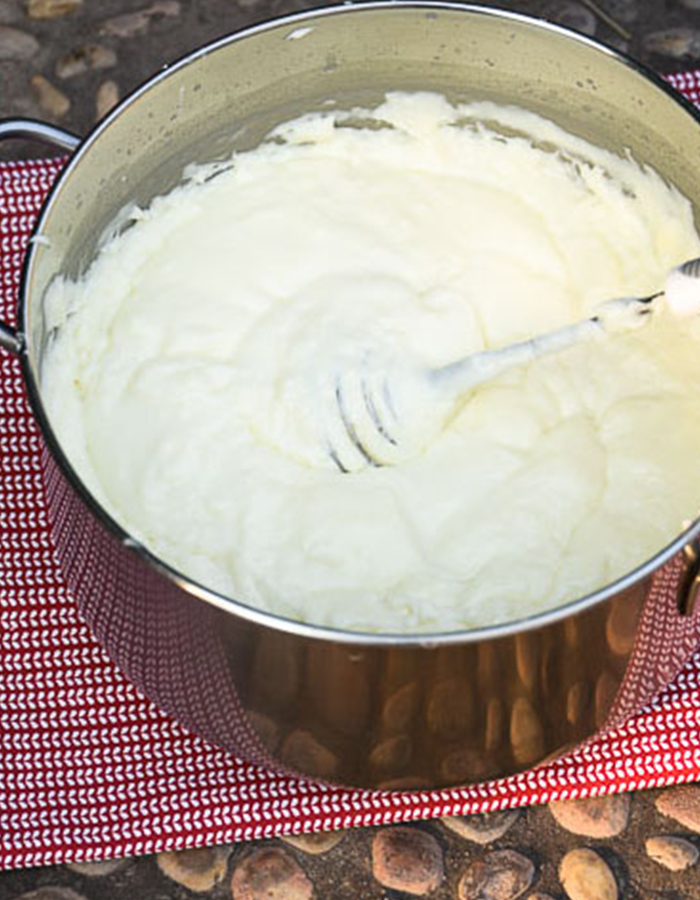
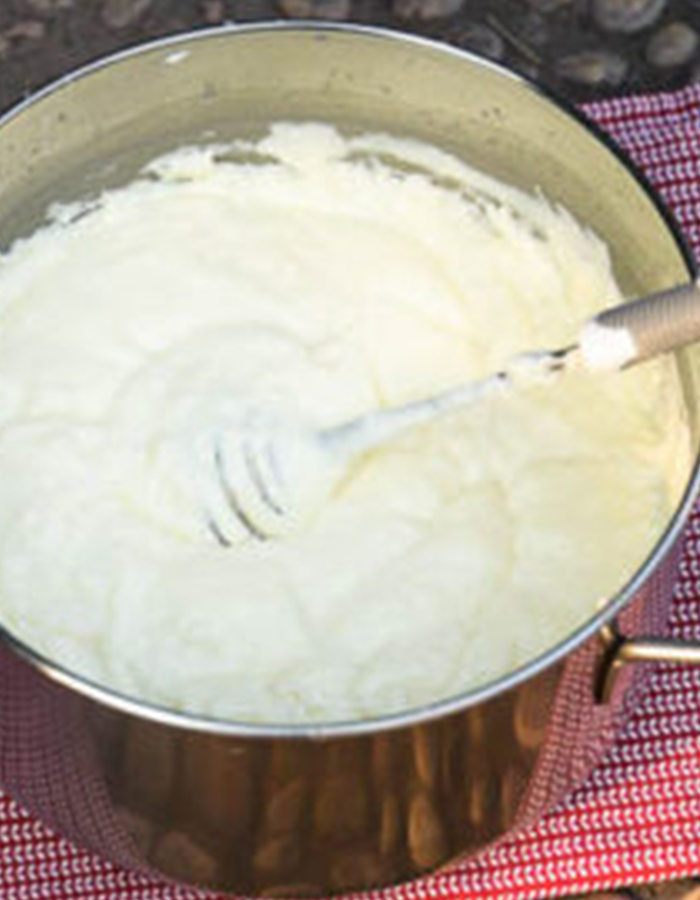
To make the filling/ashta (Middle Eastern clotted cream), place the milk, heavy cream, cornstarch, and mastic in a saucepan over medium heat. Whisk constantly until the mixture comes to a boil and thickens.
Set aside and cover with a piece of parchment paper pressed directly onto the surface to prevent a skin from forming. Let cool completely.
The ashta can be made one day ahead and stored in the refrigerator to save time.
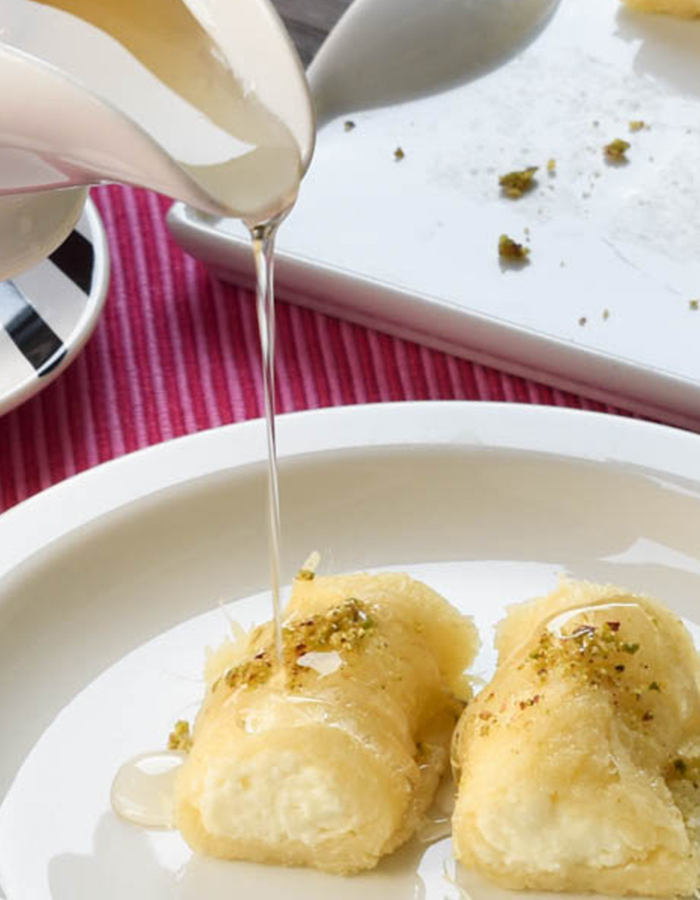
To Make the Sugar Syrup (Atter)
Place the sugar, water, and lemon juice in a saucepan over medium heat. Stir with a wooden spoon until the sugar has dissolved. Once the mixture comes to a boil, reduce the heat to low and simmer for 7 minutes. Do not cover the saucepan.
Add the orange blossom water and simmer for 1 more minute. Remove from the heat and set aside to cool completely.
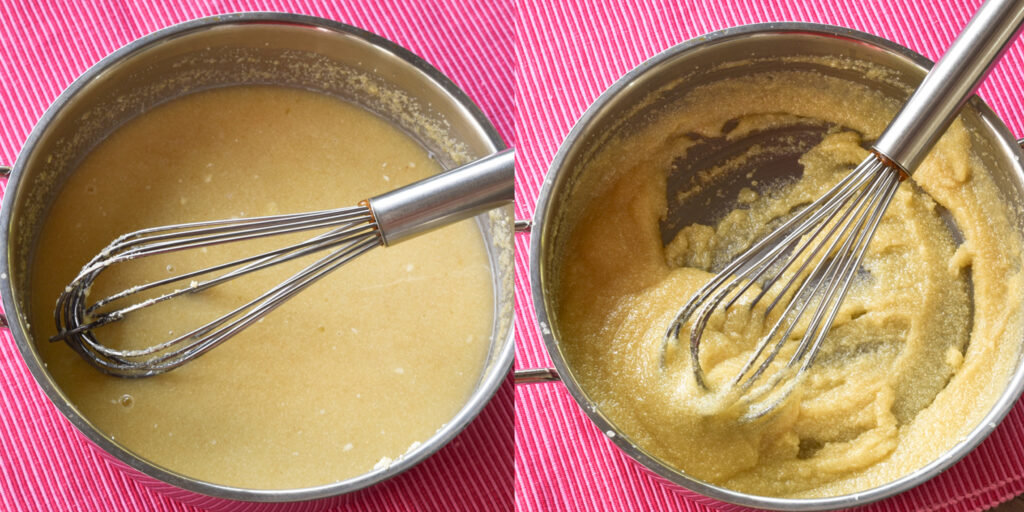
To make the semolina-cheese dough: Add 3/4 cup sugar, 1 cup fine semolina (farina), crushed mastic, and 1 1/4 cups water to a medium saucepan. Whisk together over medium-high heat, stirring constantly, until the mixture thickens completely. This happens quickly—about 2 minutes.
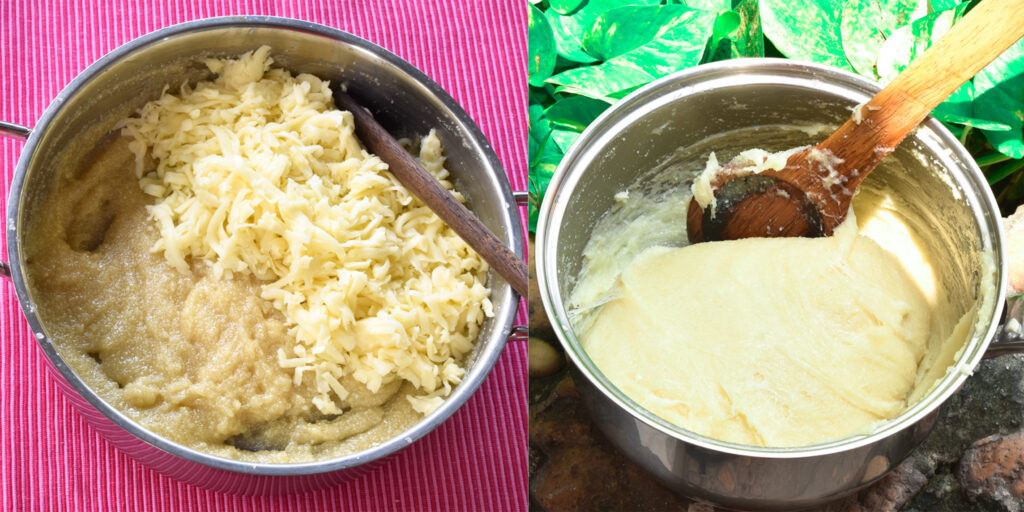
Reduce the heat to low. Add the shredded mozzarella and stir vigorously with a wooden spoon or spatula until the cheese is fully incorporated. Whisk constantly to ensure you end up with a smooth, uniform dough. Remove from the heat and set aside until the dough is cool enough to handle. Divide the dough into two equal balls
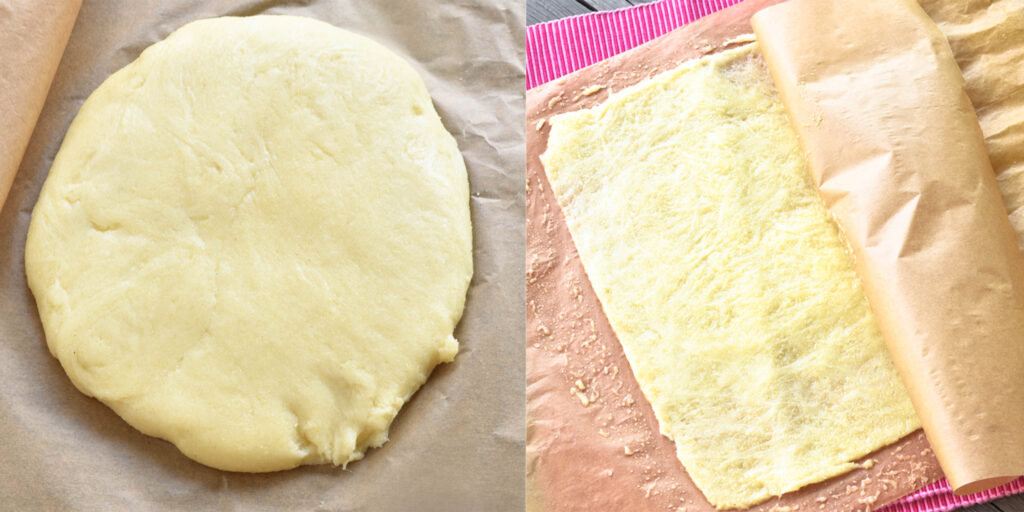
Work with one of the halves: Place two equal-sized sheets of parchment paper underneath and on top of the dough, creating a kind of dough sandwich. Using a rolling pin, roll out the dough while keeping it sandwiched between the two sheets of parchment paper. Roll the dough as evenly as possible into a rectangle about 1 1/4 cm (1/2 inch) thick. Avoid rolling it any thinner, as the dough may poke through the parchment. Remove the top sheet of parchment, if you have not already done so.
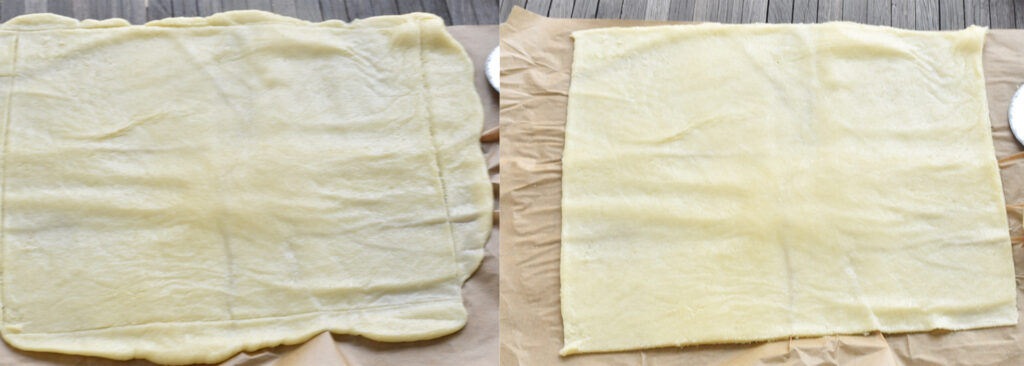
Use a ruler for this step. Cut the dough into a uniform rectangle; it doesn’t have to be perfectly shaped. Trim off the excess dough and set it aside. (It would be a crime to throw away those trimmed pieces—eat them later with some ashta and sugar syrup!)
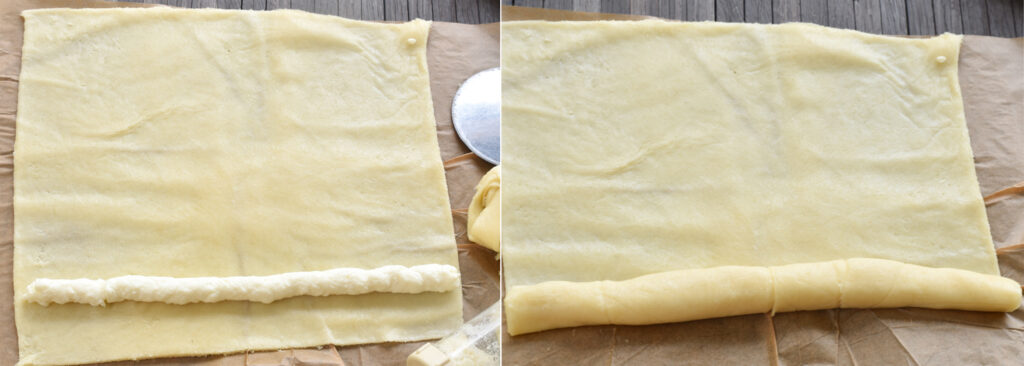
Using a pastry bag fitted with a large coupler, apply firm pressure to pipe a line of filling close to the edge of the dough, lengthwise. Starting at the end closest to you, carefully lift the edge of the parchment to bring the innermost edge of the semolina-cheese dough up and over the filling. Use the parchment to gently encourage the roll to take on a circular shape, continuing until the filling (ashta) is completely enclosed and the seam is facing down. Then, using a pizza cutter or sharp knife, delicately slice the log away from the remaining dough.
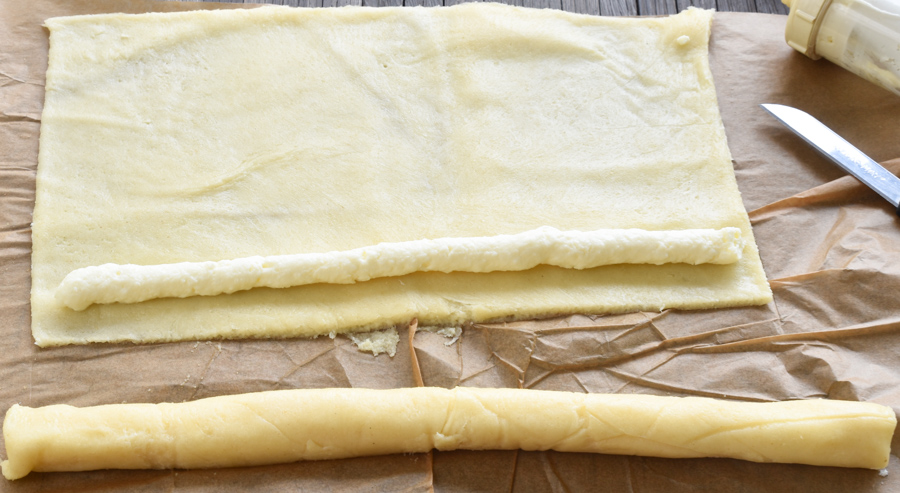
Pipe the filling in the same manner using the remaining semolina-cheese dough. Repeat with the second half of the dough. After using both portions of dough, I ended up with six filled logs.
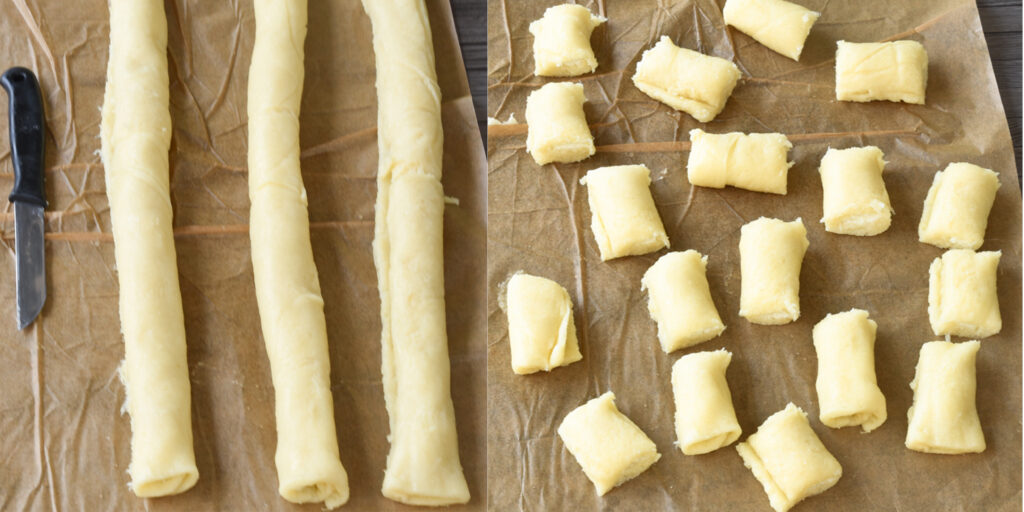
Using a sharp knife, cut into equal mini morsels, about 4–5 cm (1.5 inches) long.
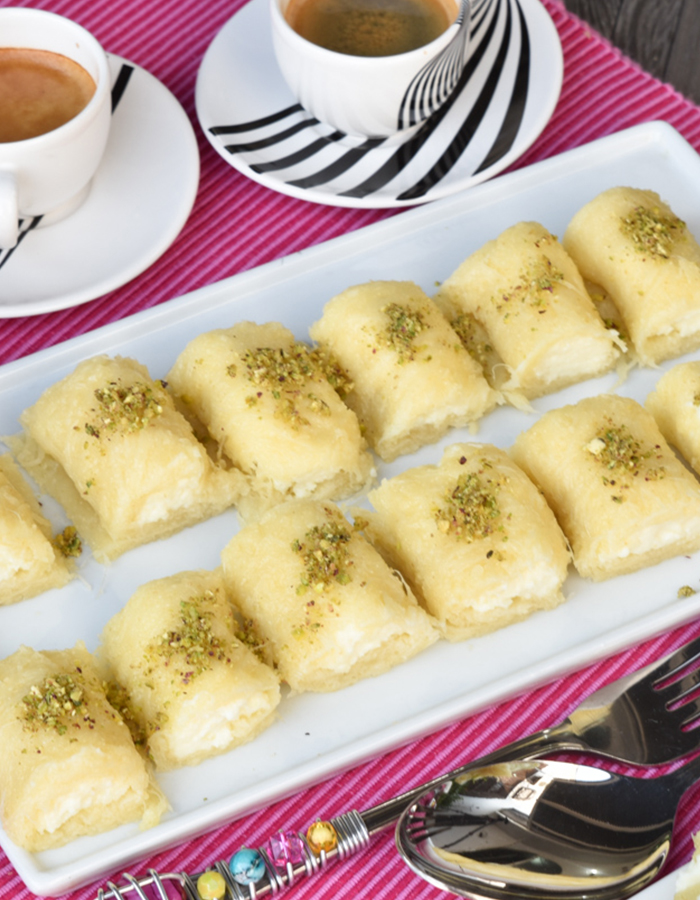
Transfer to a pretty platter, garnish each morsel with crushed pistachios, and, if you’re lucky enough to have dried rose petals, add them for a more attractive garnish. Unfortunately, I couldn’t find any where I live, but no worries if you can’t find them either—they’re simply there to add a pop of color. Serve with sugar syrup on the side.
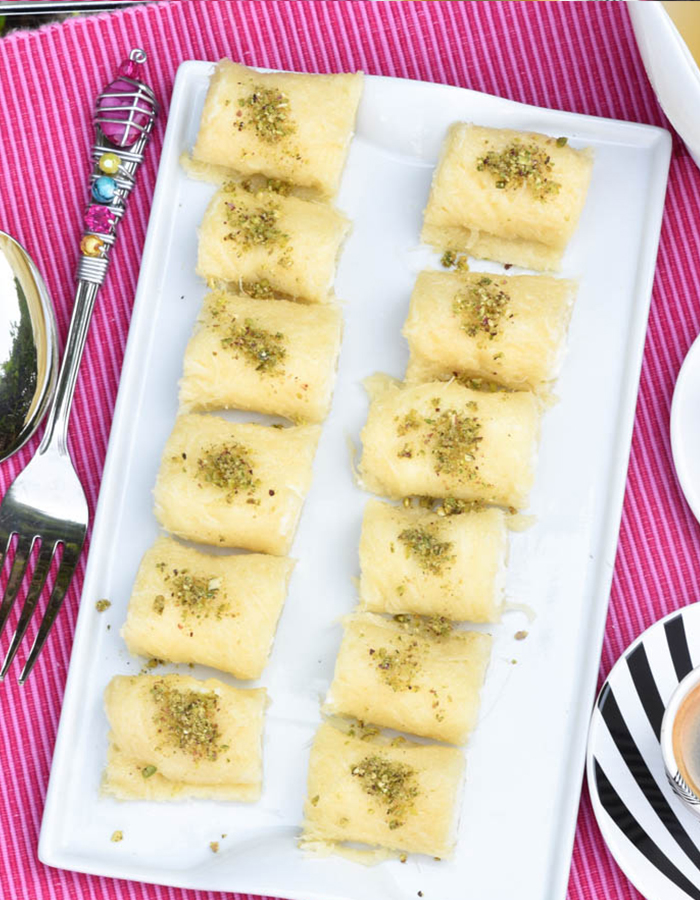
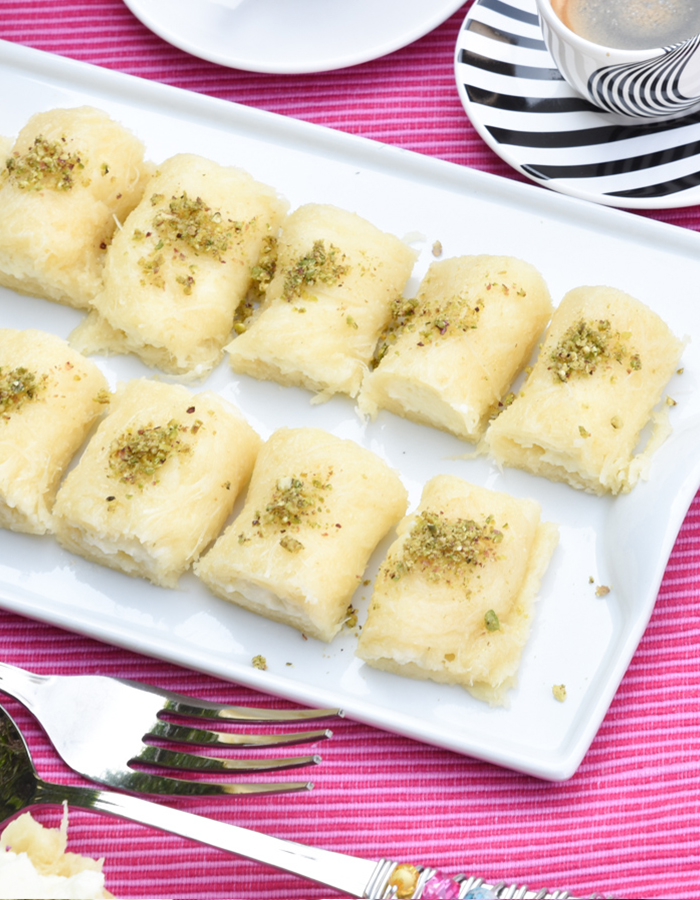
The creamy center contrasts deliciously with the soft, stretchy, cheesy semolina dough. These are a “must” at our house during the holy month of Ramadan or at any family gathering—they’re always so rewarding!
Looking for more sugar-syrup-based recipes? We’ve got you covered:
- Halawet Al Riz / Sweet Cheesy Rice Pudding
- Awamat (Lebanese Doughnuts)
- Knafeh Bil Ashta
- Ashtalieh/ Ashtalleya with Desiccated Coconut
- Bread Knafeh
- Nabulsi Knafeh/Kunafa/ Knafeh Nabulsieh
- Znoud El Sit
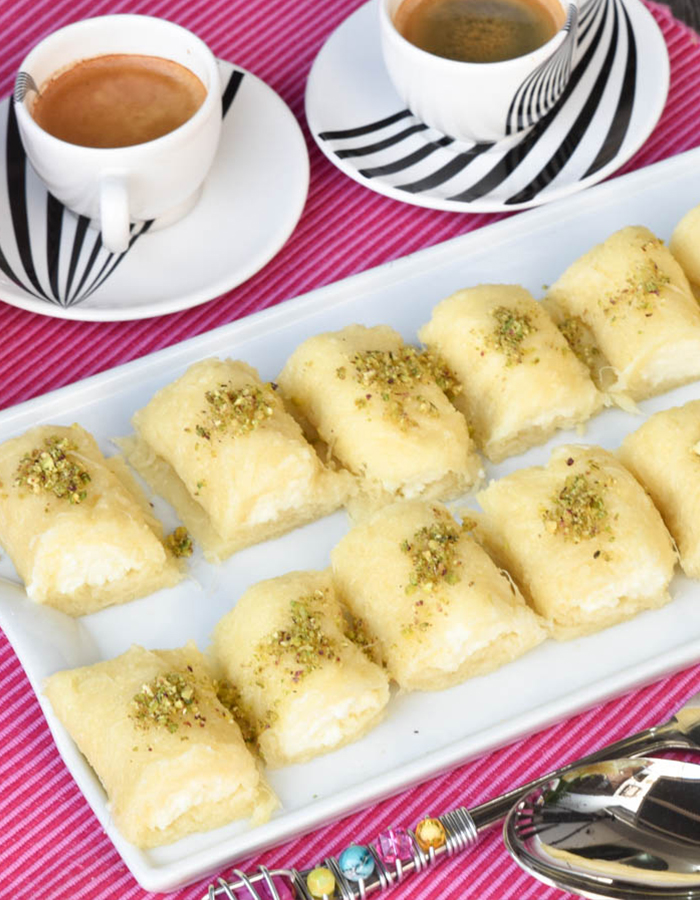
Halawet El Jibn
Description
Ingredients
Lebanese Clotted Cream (Ashta)
- 1 ½ cups milk
- ½ cup heavy cream
- 2 heaping tablespoons cornstarch
- ¼ teaspoon mastic gum crushed with a pinch of sugar using a mortar and pestle
Sugar Syrup (Atter)
- 2 cups sugar
- 1 cup water
- 2 tablespoons lemon juice
- 1 tablespoon orange blossom water
Semolina-Cheese Dough
- 350 grams 12 oz mozzarella cheese
- 1 cup fine semolina farina, called fine farkha in Arabic
- ¾ cup granulated sugar
- 1 ¼ cups water
- ¼ teaspoon mastic gum crushed with a pinch of sugar
- 2 tablespoons shelled pistachios for garnish
Instructions
To make the ashta (Middle Eastern clotted cream):
- Place the milk, heavy cream, cornstarch, and mastic in a saucepan over medium heat, whisking constantly to prevent scorching. Once the liquid comes to a boil, the mixture will begin to thicken. (It should become quite thick.) Set aside, cover with a piece of parchment paper to prevent a skin from forming on the surface, and leave to cool completely.
To make the sugar syrup (atter):
- Place the sugar, water, and lemon juice in a saucepan over medium heat. Stir with a wooden spoon until the sugar has dissolved. Once the mixture comes to a boil, reduce the heat to low and simmer for 7 minutes. Do not cover the saucepan. Add the orange blossom water and simmer for 1 more minute. Set aside to cool completely.
To make the semolina-cheeese dough:
- Add ¾ cup sugar, 1 cup fine semolina (farina), crushed mastic, and 1¼ cups water to a medium saucepan. Whisk the mixture together over medium-high heat, stirring constantly, until it thickens completely.Reduce the heat to low, add the shredded mozzarella cheese, and stir vigorously with a wooden spoon or spatula until the cheese is fully incorporated. Continue stirring constantly until you have a smooth, uniform dough. This happens very quickly.Remove from the heat and set aside just until the dough is cool enough to handle. Divide the dough into two equal balls.
- Work with one of the halves. Place two equal-sized sheets of parchment paper underneath and on top of the dough, creating a kind of dough sandwich. Then, using your rolling pin, roll out the dough while keeping it sandwiched between the two sheets of parchment paper. Roll the dough as evenly as possible into a rectangle about 1 1/4 cm (1/2 inch) thick. Avoid making it any thinner, as the dough may poke through. Remove the top sheet of parchment paper, if you haven’t already done so.
- Use a ruler for this step. Cut the dough into a uniform rectangle; it doesn’t have to be perfectly shaped. Trim off the excess dough and set it aside. (It would be a crime to throw away those trimmed pieces—eat them later with some ashta and sugar syrup!)
- Using a pastry bag fitted with a large coupler, apply firm pressure to pipe a line of filling close to the edge of the dough, lengthwise. Starting at the end closest to you, carefully lift the edge of the parchment to bring the innermost edge of the semolina-cheese dough up and over the filling. Use the parchment to gently encourage the dough into a circular shape until the filling (ashta) is completely enclosed, with the seam facing down.Then, using a pizza cutter or sharp knife, carefully slice the log away from the remaining dough. Pipe the filling in the same manner along the remaining portion of the semolina-cheese dough, and repeat with the second piece of dough. I ended up with six logs in total.
- Using a sharp knife, cut into equal mini morsels, about 4–5 cm/1.5 inches long. Transfer them to a pretty platter and garnish each morsel with crushed pistachios. If you are lucky enough to have dried rose petals, add them for a more attractive garnish. Unfortunately, I couldn’t find any where I live, but no worries if you can’t either—they’re simply there to add a pop of color. Serve with sugar syrup on the side.




















3 Comments
Thank you for recipe for Halawet Al Jihn. It calls for 3/4 c fine semolina and 1/4 c. semolina. does this mean coarse semolina? I look forward to making this dessert and would like to get the correct ingredients. Very informative and educational site and photos of recipe is so helpful.