

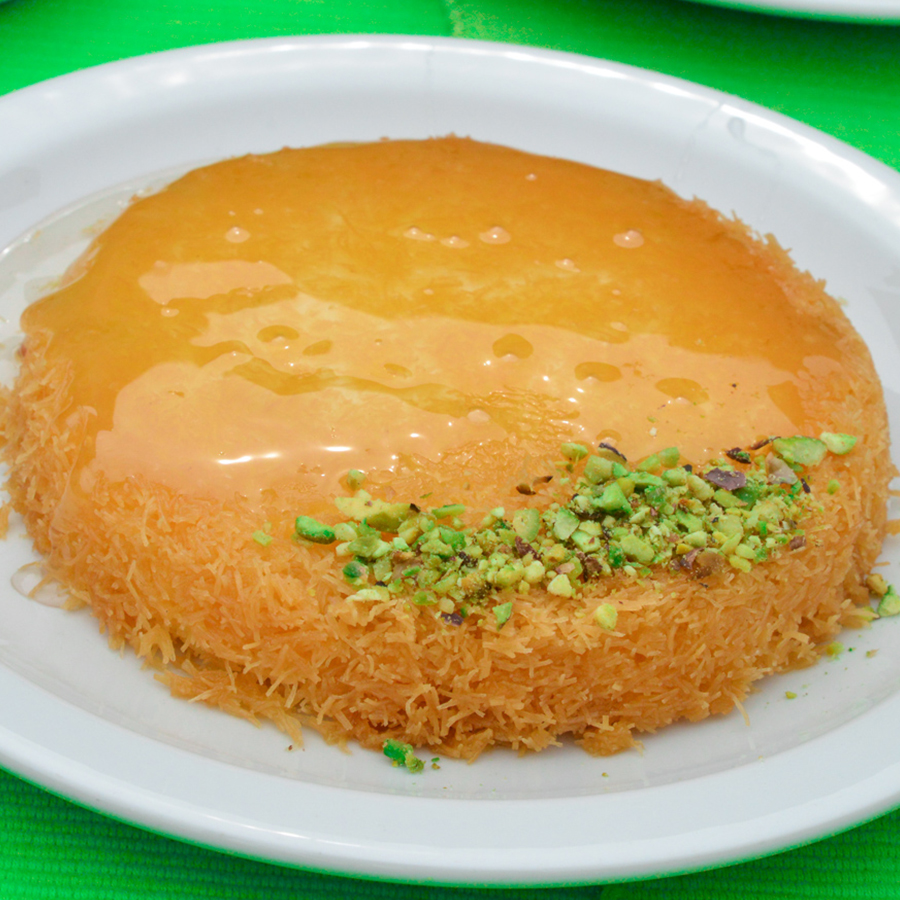
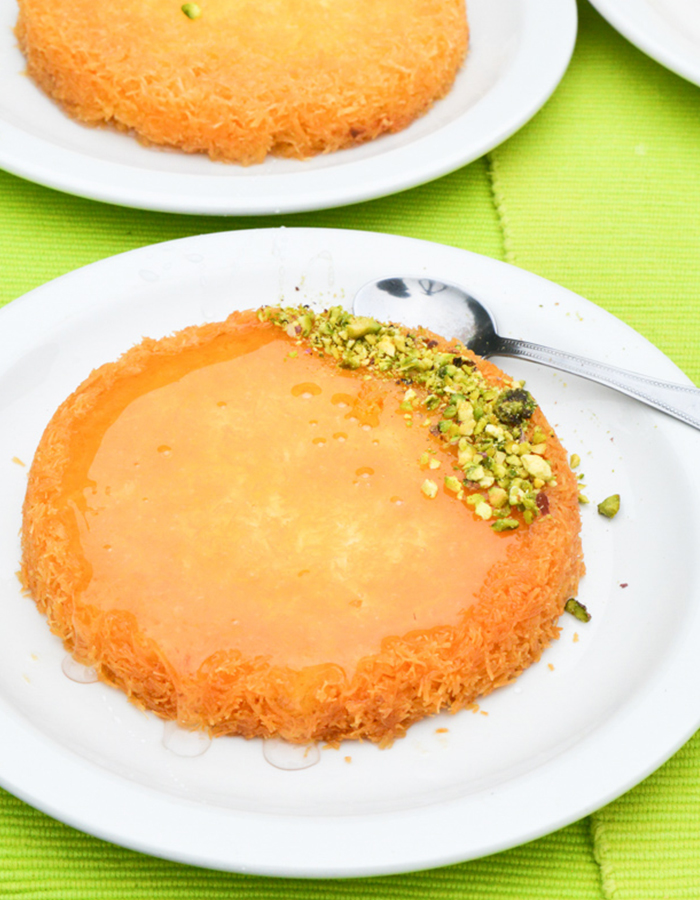
Knafeh Bil Ashta: This scrumptious dessert has everything you’d expect from a Middle Eastern sweet. Two layers of kadaifi dough (shredded phyllo dough), infused with ghee, sandwich a layer of ashta (the Middle Eastern version of clotted cream). It’s baked until golden, then saturated with a fragrant orange blossom water syrup. And yes, no cheese is involved in this version!
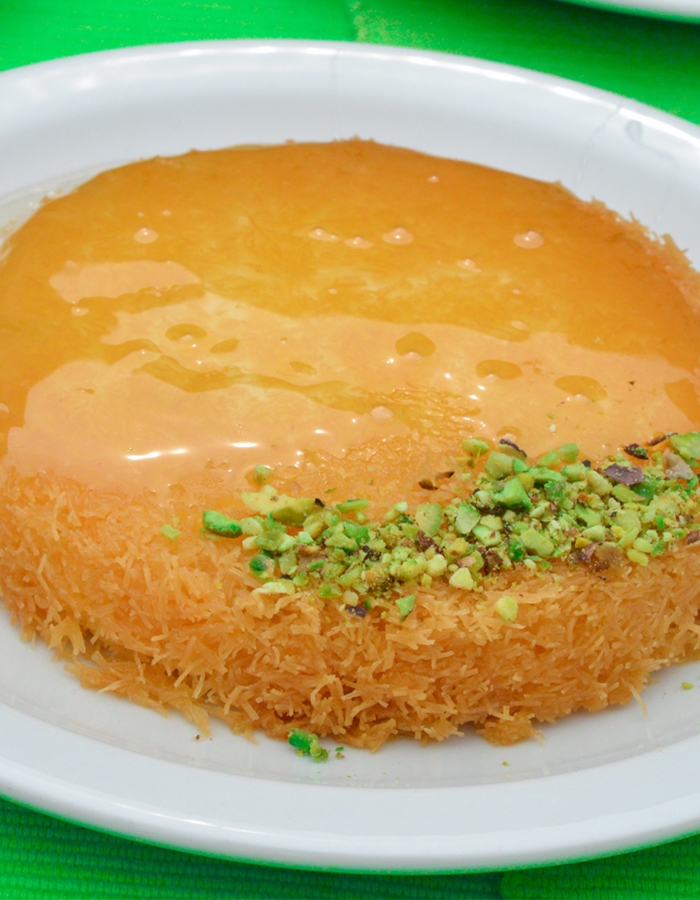
I will always have a soft spot in my heart for Middle Eastern desserts that rely on sugar syrup rather than granulated sugar as a sweetener, and the queen of those syrup-soaked desserts has to be knafeh. Its name and pronunciation vary depending on where you live and the country or region you come from—knafeh, kunafa, knafa, kunafah, and perhaps a few more variations.
Knafeh is the epitome of deliciousness and a staple among Middle Eastern cooks, with countless variations found throughout the region. The next time you’re looking for a sweet ending to a Middle Eastern-inspired meal, make this version. It tastes absolutely divine!
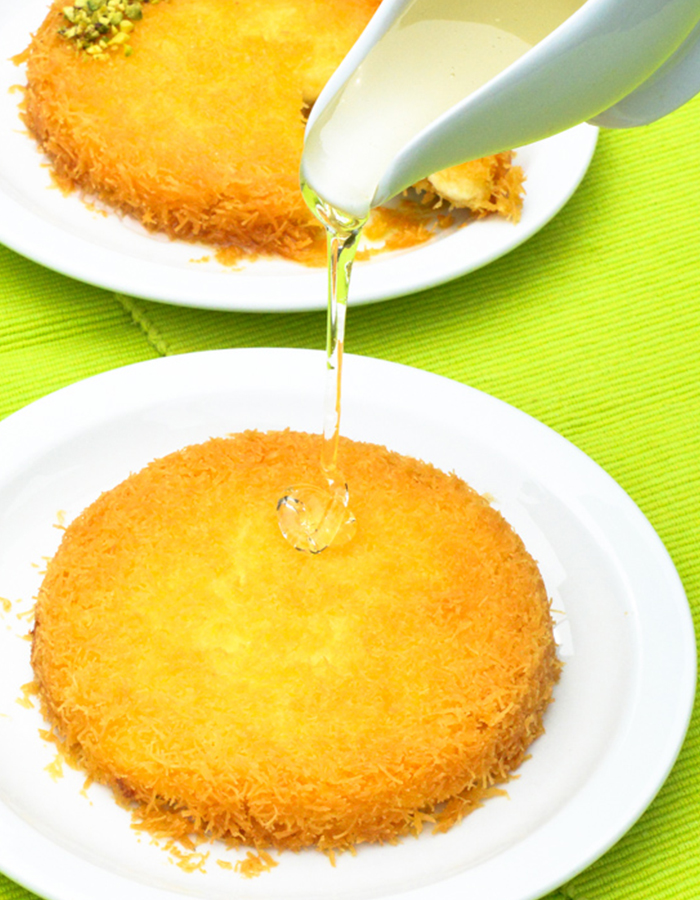
The flavor of the orange blossom water–scented sugar syrup shines through beautifully here, and it pairs wonderfully with the ashta (cream filling) and roasted kadaifi (knafeh).
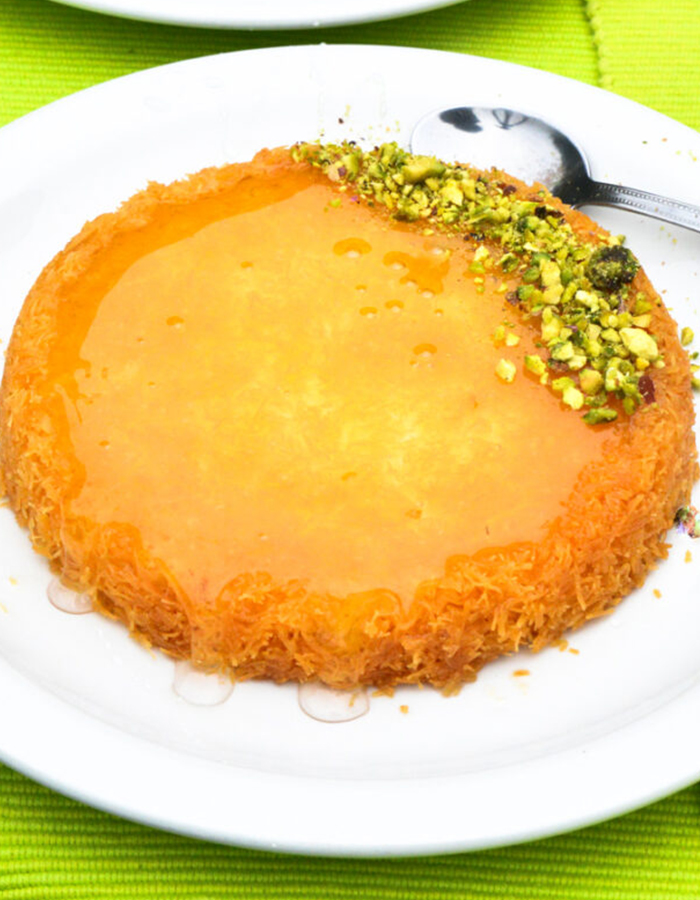
Knafeh Bil Ashta sounds like something fancy and complicated, but it’s actually homey and easy to make. There are a few steps to prepare before putting everything together, though. To save time, prepare the ashta (filling) and Arabic sugar syrup one or two days in advance, then refrigerate them until you’re ready to use them.
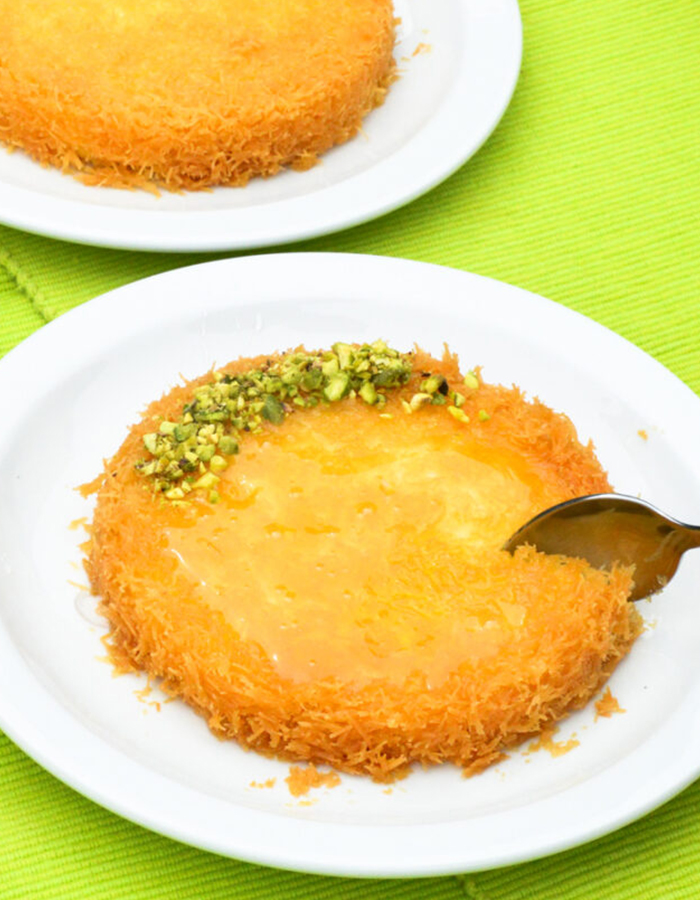
Tips to Make the Perfect Knafeh Bil Ashta
-
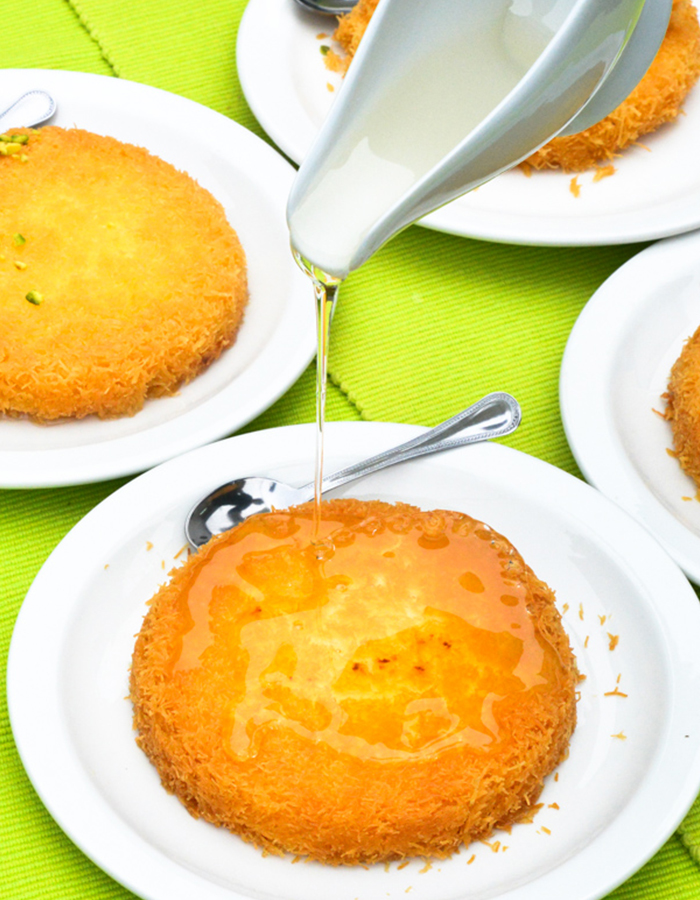
Go easy on the atter (sugar syrup): Drizzle a minimal amount of atter over the knafeh before serving. When serving, you can spoon additional syrup over each portion according to taste.
-
Keep the sugar syrup cold: The syrup should be cold when poured over the sizzling-hot knafeh. It is best to prepare the atter a day or two in advance and refrigerate it. It can be refrigerated for up to 1 month.
-
Serve warm: Knafeh bil Ashta is best enjoyed warm, making it an ideal dessert for entertaining—it is meant to be devoured on the spot! However, it can also be refrigerated for 4–5 days and reheated in the oven.
-
Storing the ashta: Loosely cover the ashta and refrigerate for up to 3 days.
-
About this style of knafeh: The knafeh you find in Lebanese sweet shops is a little different from the version I am showcasing in today’s post. It is traditionally made with a smoother upper crust, known as knafeh naameh. I’ll be sharing a detailed recipe for that version in the future, but this one is equally delicious, I promise!
Prepare Ahead of Time
This is an easy dessert to prepare up to 2 days in advance, making it one of my favorite make-ahead desserts for entertaining. Simply assemble it ahead of time, then bake it just before serving.
After your meal, pop it into the oven for a quick 15–17 minutes, then serve and indulge in every sweet bite. Guests absolutely rave about this dessert!
The cooled sugar syrup (atter) is poured over the still-hot pastry, creating that characteristic sizzle. Knafeh is traditionally filled with cheese or ashta, a Middle Eastern clotted cream.
Baking Pans
I used six individual mini round, rimmed 12-cm (5-inch) baking pans. If you immediately tuned out at the thought of individual pans, don’t worry! You can easily assemble the knafeh in one large 30-cm (12-inch) rimmed round baking pan. Just note that a larger knafeh will require additional baking time to cook through.
Using Frozen Knafeh Dough
If you are using frozen shredded dough (kadaifi), defrost it in its packaging overnight in the refrigerator.
Removing the Knafeh from the Oven
Very carefully remove the knafeh from the oven. Carefully remove the individual baking pans and transfer the knafeh to serving plates.
The easiest way to flip your baked knafeh is to place a plate or baking pan that is larger than the knafeh over the top of the baking pan, then carefully invert it.
The only substitute for ghee!
The wonderful thing about most Middle Eastern desserts is that ghee is traditionally used to give them a rich, luxurious flavor. Whether it’s knafeh, baklava, namoura, or many other desserts, ghee is difficult to replace with butter—unless you clarify the butter.
You may be wondering why.
The milk solids in butter can burn the kadaifi. When you clarify butter, you remove the milk solids and water, leaving behind pure butterfat. This gives it a higher smoke point, making it similar to ghee and much better suited for these desserts.
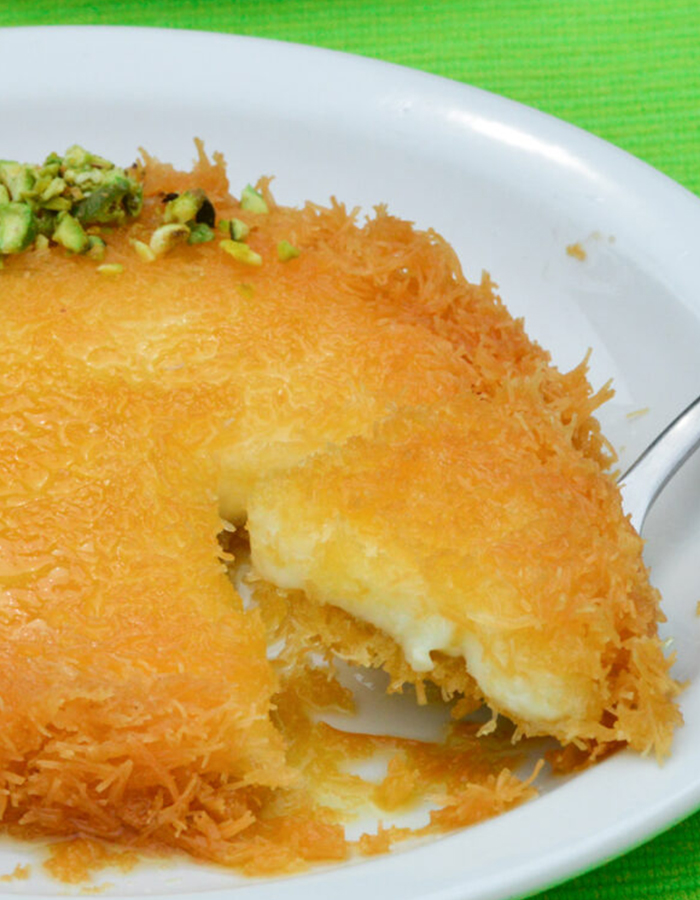
Where to Find Shredded Kunafa / Kadaifi?
In the Middle East, kunafa/kadaifi can easily be purchased fresh, which is what I prefer to use for this recipe. However, the recipe is still doable with frozen kadaifi. Outside the Middle East, you can usually find it in the freezer section of Middle Eastern, international, and some gourmet markets.
The Ideal Baking Sheet for Making Knafeh
After much testing, I found that aluminum baking sheets provide the best heat distribution throughout the entire pan. Because aluminum has excellent heat conductivity, the kadaifi (shredded phyllo dough) roasts more evenly, which helps prevent burnt spots and soggy bottoms.
Now, take a look at that beautiful golden color of the crus
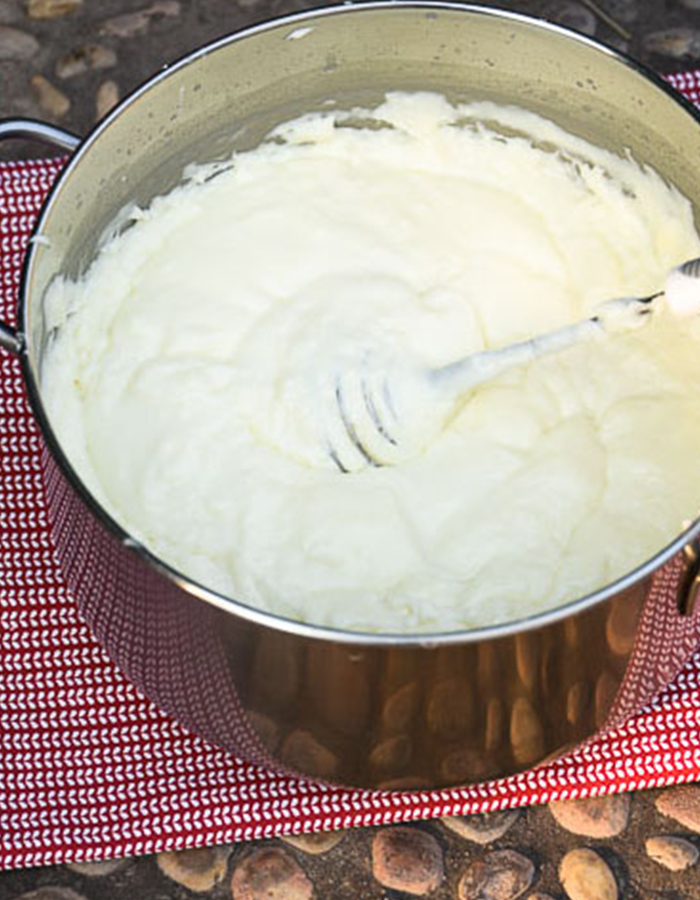
Make the Ashta (Middle Eastern Clotted Cream)
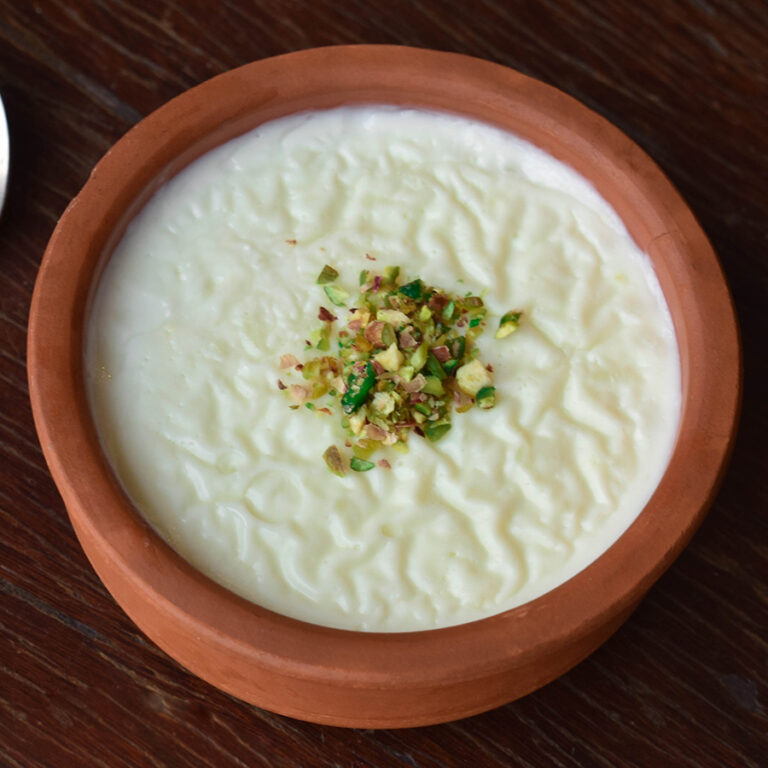
Place the milk and cornstarch in a saucepan over medium heat, whisking constantly until the mixture comes to a boil and thickens. Add the orange blossom water, whisk once more, then set aside to cool completely.
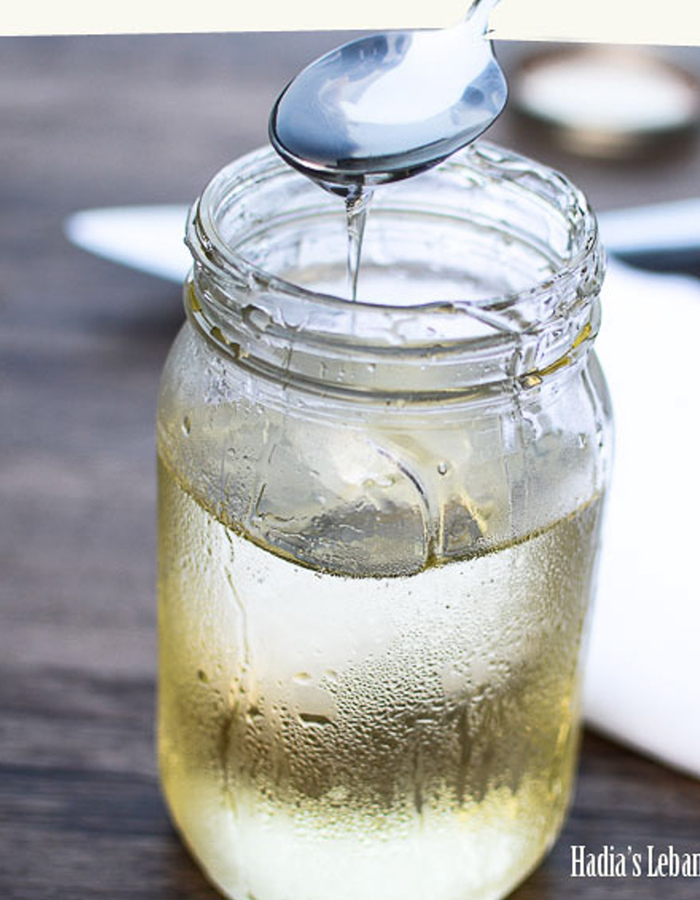
Make the Atter (Sugar Syrup Infused with Orange Blossom Water)
Place the sugar, water, and lemon juice in a saucepan over medium heat. Stir with a wooden spoon until the sugar has dissolved. Once the mixture comes to a boil, reduce the heat to low and simmer for 7 minutes. Do not cover the saucepan.
Add the orange blossom water and simmer for 1 more minute. Remove from the heat and set aside to cool completely.
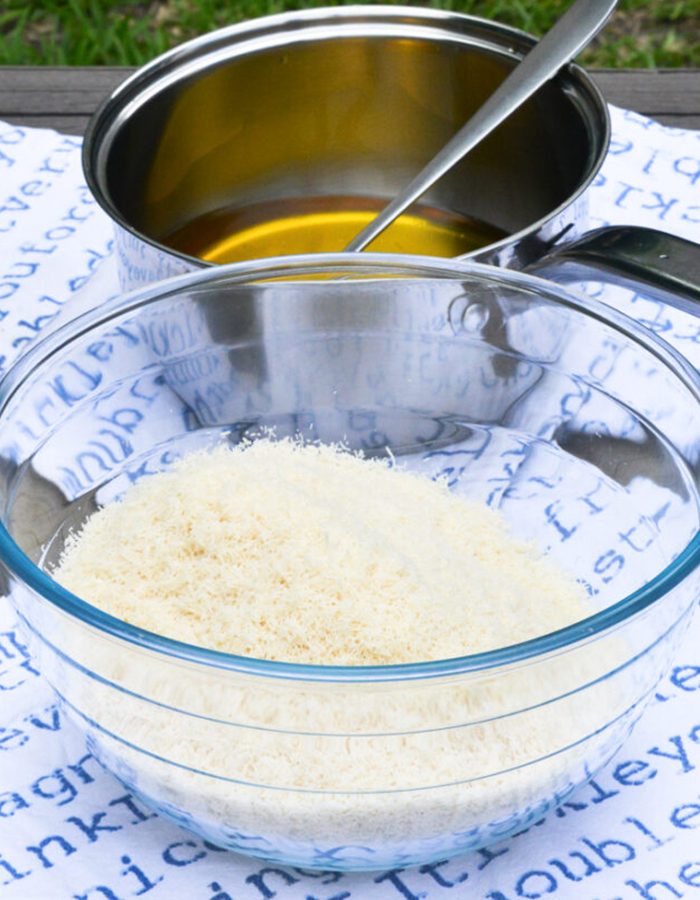
Defrost the shredded filo pastry if frozen. Gently pull the dough apart with your hands to separate it into a loose pile. Transfer it to a food processor—you may need to do this in batches—and pulse a few times to break down the kadaifi as much as possible.
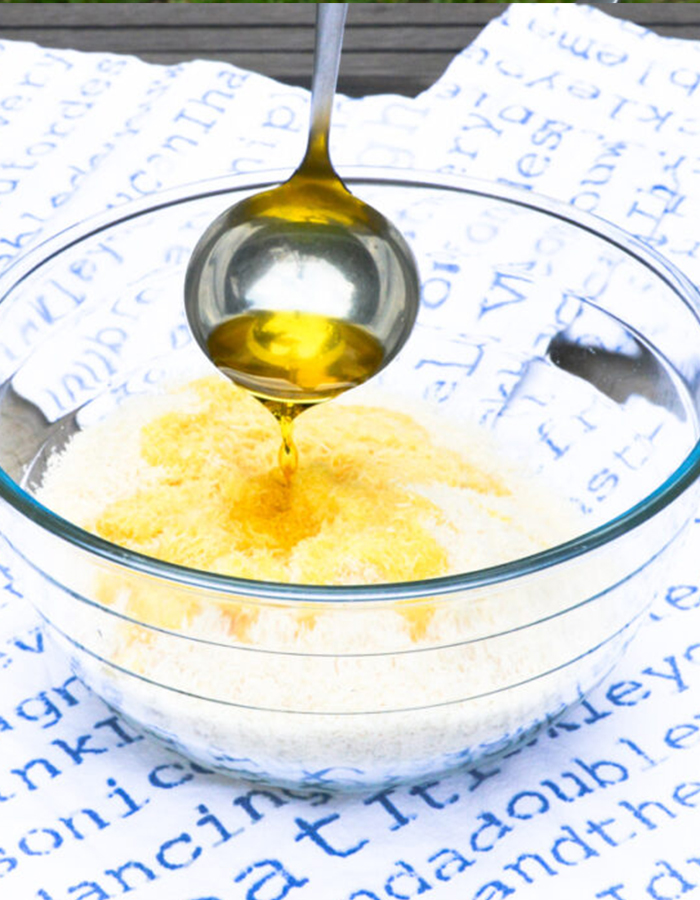
Melt the ghee over low heat and add it to the ground kataifi.
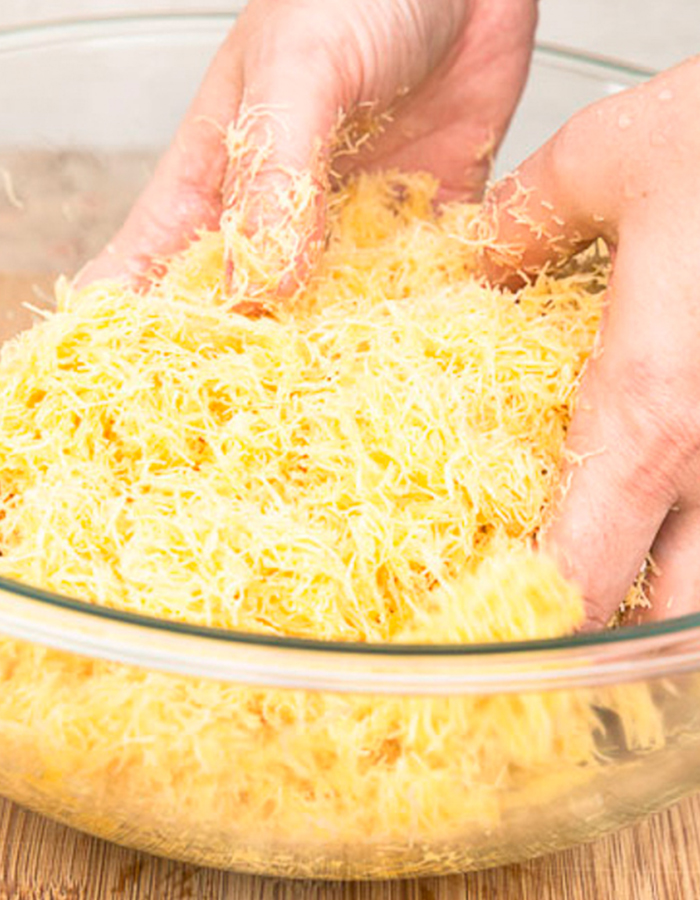
Using your hands, mix the shredded filo pastry with the ghee.
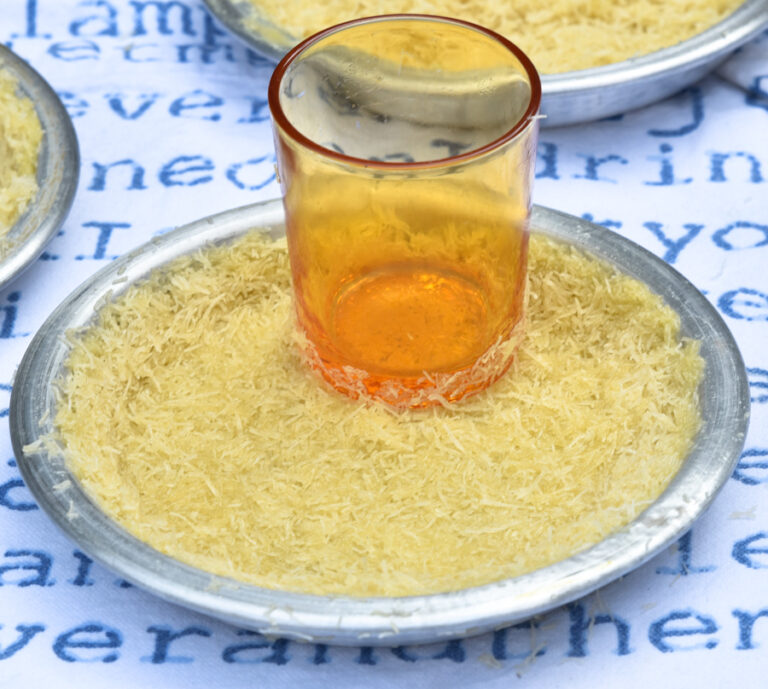
Grease six 12 cm (5-inch) round, rimmed baking sheets with ghee, making sure to coat the sides and bottom evenly. Take a handful of kadaifi and press it into one of the greased baking sheets, pressing it slightly up the sides. Use the bottom of a small, flat cup to press and compact the kadaifi. This will help create an even thickness for the kadaifi crust across the base and sides. The crust should be about 2 cm thick. Repeat with the remaining baking sheets.
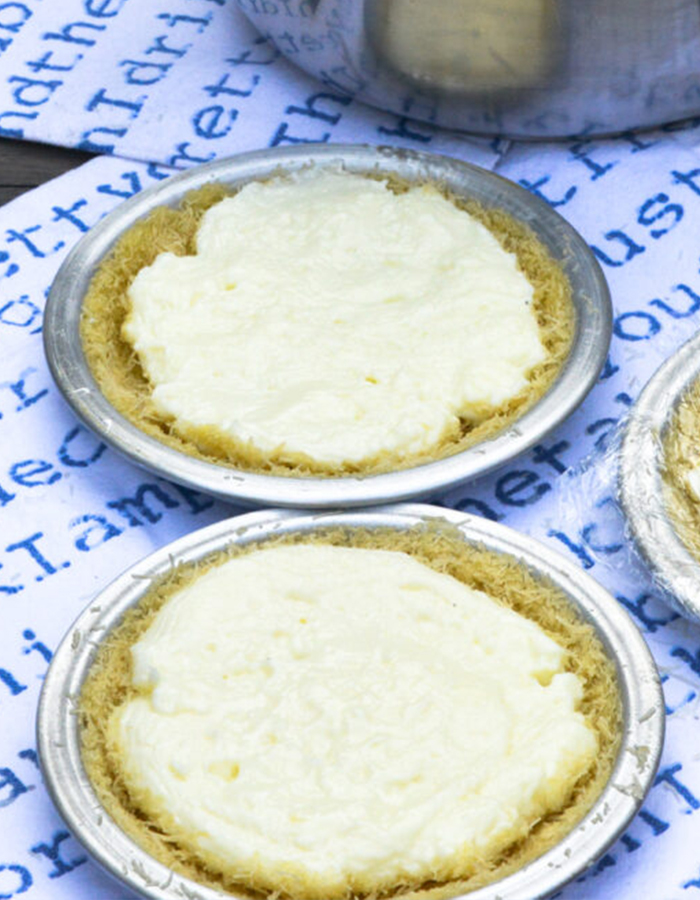
Add about 3 tablespoons of ashta (clotted cream) to each knafeh sheet, spreading it evenly to cover and level the surface.
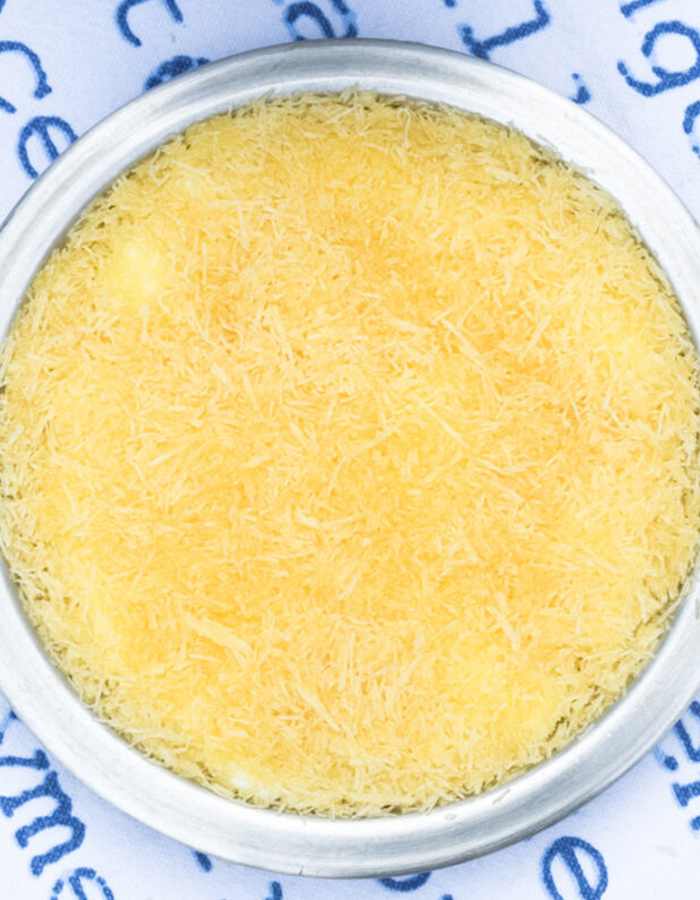
Add the remaining shredded pastry, spreading it evenly to fully cover the ashta. Gently press it down with your hands to create a smooth, even surface.
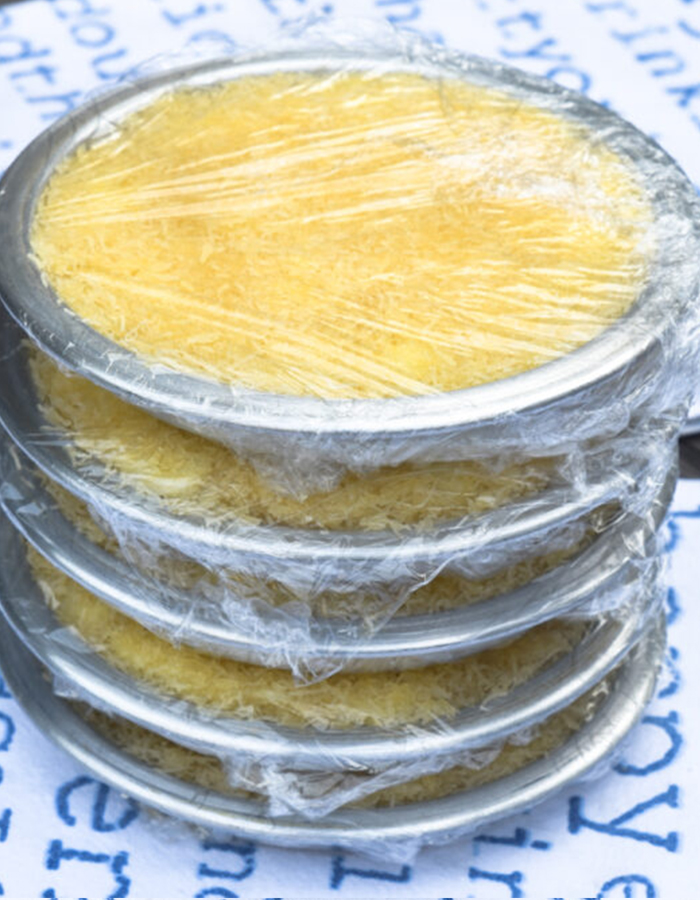
Knafeh bil Ashta is a great make-ahead dessert. At this stage, the knafeh can be refrigerated for up to 2 days before baking, making it an excellent option for entertaining. Cover the trays tightly with cling film to prevent the pastry from drying out. Remove the knafeh from the refrigerator 30 minutes before you intend to bake it.
Equipment Needed
-
Six 12 cm (4¾-inch) round, rimmed mini aluminum baking sheets, which I bought specifically from Saida, Lebanon. For those who immediately tune out, rest assured that you can assemble the knafeh bil ashta in one large, round, 30 cm (12-inch) rimmed baking sheet. Please note, however, that it will require more time to bake through.
-
A food processor to separately grind the shredded phyllo dough/knafeh strands/kadaifi and the pistachios.
-
A whisk to make the ashta.
-
Two saucepans to make the sugar syrup and the ashta.
Craving more syrupy Arabic sweets?
 Let’s Stay in Touch!
Facebook, Instagram, YouTube , Pinterest and TikTok!
Knafeh Bil Ashta
Description
Ingredients
- 500 g / 1 lb 2 oz kadayif strands kunafah strands or shredded filo pastry
- 300 g / 10.5 oz ghee use a good-quality brand
- A handful of raw shelled pistachios, for garnish
Ashta
- 3 cups / 750 ml whole milk
- 1 cup / 250 ml heavy cream
- 4 heaped tablespoons cornstarch
- 2 tablespoons orange blossom water
- ¼ teaspoon mastic gum crushed with a pinch of sugar (optional, but recommended)
Sugar Syrup (Arabic Atter)
- 3 cups granulated sugar
- 1½ cups water
- 2 tablespoons freshly squeezed lemon juice
- 2 tablespoons orange blossom water
Instructions
Prepare the sugar syrup:
- Place the sugar, water, and lemon juice in a saucepan over medium heat. Stir with a wooden spoon until the sugar dissolves. Once the mixture comes to a boil, reduce the heat to low and simmer for 7 minutes. Do not cover the saucepan. Add the orange blossom water and simmer for 1 more minute. Set aside to cool completely. This step can be done a few days in advance; simply cover and store in the fridge.
Prepare the Ashta:
- Place the milk, cornstarch, and heavy cream in a saucepan over medium heat. Whisk constantly until the mixture comes to a boil and thickens completely, about 5–7 minutes.Add the crushed mastic, if using, and the orange blossom water. Stir once more until well combined. Place a piece of parchment paper directly on the surface of the mixture to prevent a skin from forming. Set aside to cool.
- Grind the pistachios: Roughly grind the pistachios in a food processor.
To Put Together.
- Defrost the shredded filo pastry if frozen. Gently pull the strands apart with your hands to form a loose pile. Transfer to a food processor, working in batches if necessary, and pulse a few times until considerably more finely chopped.Melt the ghee over low heat, then add the ground kadaifi and mix well to ensure it is thoroughly coated and infused with the ghee.
- Grease six 12 cm/5-inch round mini rimmed baking sheets with ghee, making sure to coat the bottom and sides thoroughly.
- Using your hands, mix the shredded filo pastry with the ghee.
- Take a handful of the kadaifi and press it into the mini greased, rimmed baking sheet, pushing it slightly up the sides. Use the bottom of a small, flat cup to press it down evenly. This will help ensure an even thickness across the base and sides of the kadaifi crust. The crust should be about 2 cm thick. Repeat with the remaining baking sheets.
- Add about 3 tablespoons of ashta (clotted cream) to each knafeh sheet, spreading it evenly to cover and level the surface.
- Add the remaining shredded pastry, spreading it evenly to completely cover the ashta. Gently press it down with your hands to create a smooth, connected surface.
- Bake in a preheated oven at 200°C/400°F for about 8 minutes, or until the edges of the knafeh sheets turn golden and crisp.
- Remove the knafeh from the oven and loosen the edges with a knife. Invert it onto a serving plate. The easiest way to flip the baked knafeh is to place a larger plate or baking sheet over the pan, then carefully flip them together.
- Evenly drizzle 2 tablespoons of sugar syrup over each knafeh sheet. Drizzle with a little more sugar syrup when serving, and garnish with pistachios. Sublime!