


Lebanese Moutabal, also known as Baba Ghanouj or Baba Ghanoush in many Western countries, is a classic Middle Eastern roasted eggplant dip made with smoky eggplant, creamy tahini (sesame paste), fresh lemon juice, and garlic. Finished with a generous drizzle of extra-virgin olive oil, this delicious Lebanese eggplant dip is best enjoyed with warm pita bread.
A staple of Lebanese meze, Moutabal is often served alongside hummus, tabbouleh, fattoush, sfeeha (Lebanese meat pies), and other Middle Eastern appetizers. It also makes a wonderful party dip and a delicious accompaniment to grilled or fried fish.
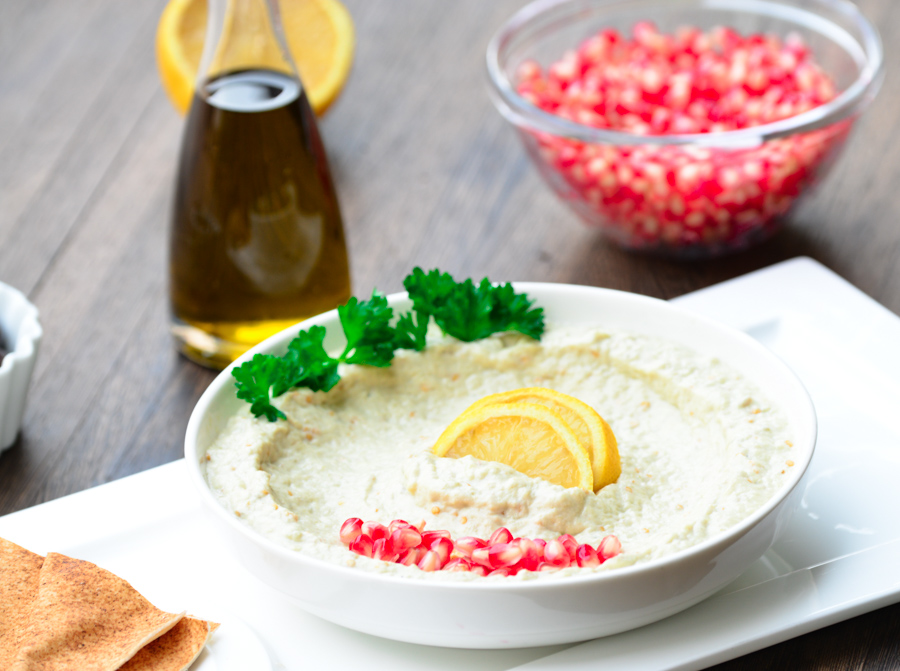
Hummus or Baba Ghanouj? Which Lebanese Dip Goes Best with Your Meal?
The frequently asked question, “Hummus or Baba Ghanouj?” Now, that is a difficult, if not impossible, question to answer! I love both equally and would happily enjoy either as part of a traditional Lebanese meze spread. But if you need a little guidance, here is my rule of thumb: hummus pairs beautifully with red meat dishes, while Baba Ghanouj (Baba Ghanoush) makes a wonderful accompaniment to baked or fried fish. Of course, there is no strict rule—you can enjoy both dips with just about anything you like!
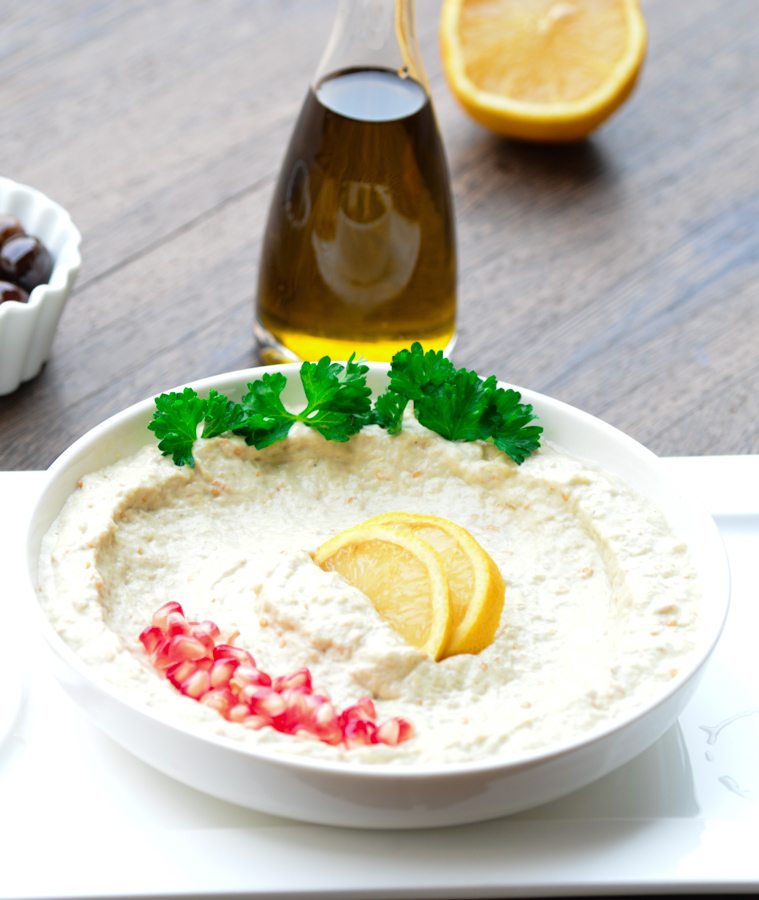
There are three ways to roast eggplants: on the stovetop, directly over hot coals, or in the oven. When the warmer weather arrives and I have more time, I love grilling the eggplants over a charcoal fire for an extra-smoky flavor. Roasting eggplants over an open flame gives Baba Ghanouj its wonderfully deep, smoky flavor!
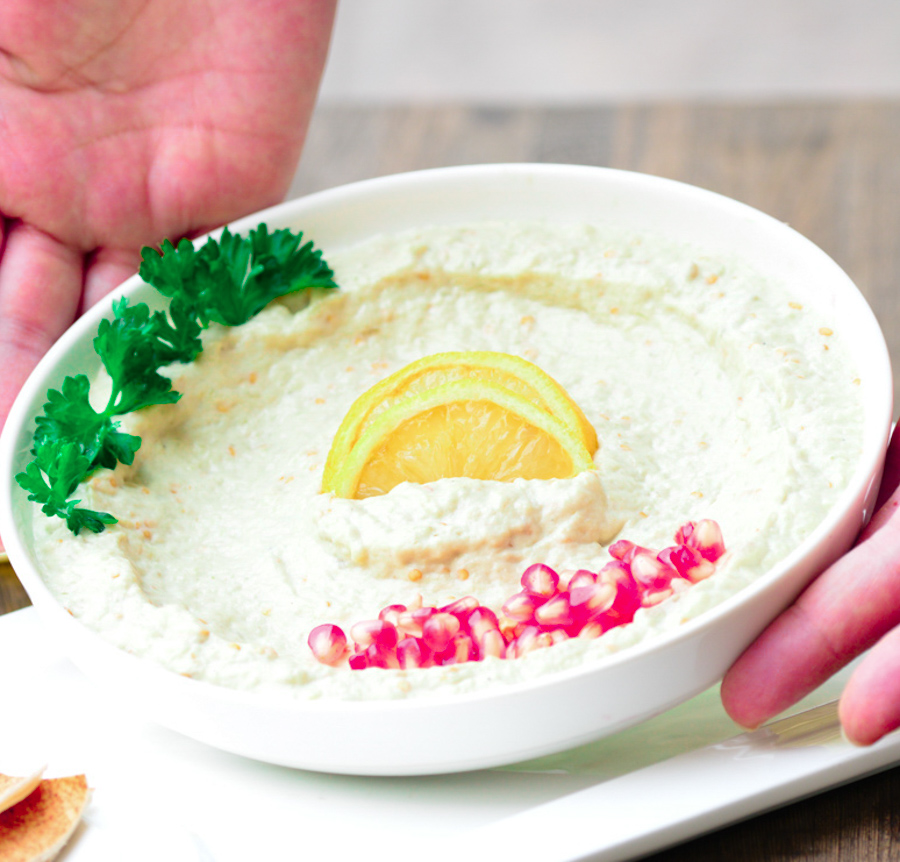
How to Keep Baba Ghanouj Light in Color, Just Like in Beirut Restaurants
After plenty of recipe testing to achieve that beautiful, pale-colored Baba Ghanouj served in restaurants across Beirut, I finally figured out a few tricks worth sharing!
- Choose the right eggplants. Look for eggplants with smooth, shiny, unblemished skin. Whenever possible, choose eggplants with fewer seeds, as they tend to have a less bitter taste. Smaller, lighter eggplants may have fewer seeds, although this is not always the case.
- Never prick the eggplants before roasting. I prefer to leave the eggplants whole and unpricked to help preserve their moisture and achieve a beautifully light-colored dip. Just remember that whole eggplants roasted over an open flame should be handled carefully, as steam can build up inside them.
- Avoid overcooking the eggplants. This is an important step! Overcooking can cause the flesh to darken, which may affect the final color and flavor of your Baba Ghanouj. Roast them until tender, but avoid letting the flesh become excessively charred.
- Choose good-quality tahini. Not all tahini brands are created equal! For a rich, creamy Baba Ghanouj with a beautiful, pale color, use good-quality tahini with a naturally light color and a smooth consistency.
- Always use freshly squeezed lemon juice. Fresh lemon juice gives Baba Ghanouj a bright, fresh flavor. I recommend avoiding bottled lemon juice, which can have a less vibrant taste.
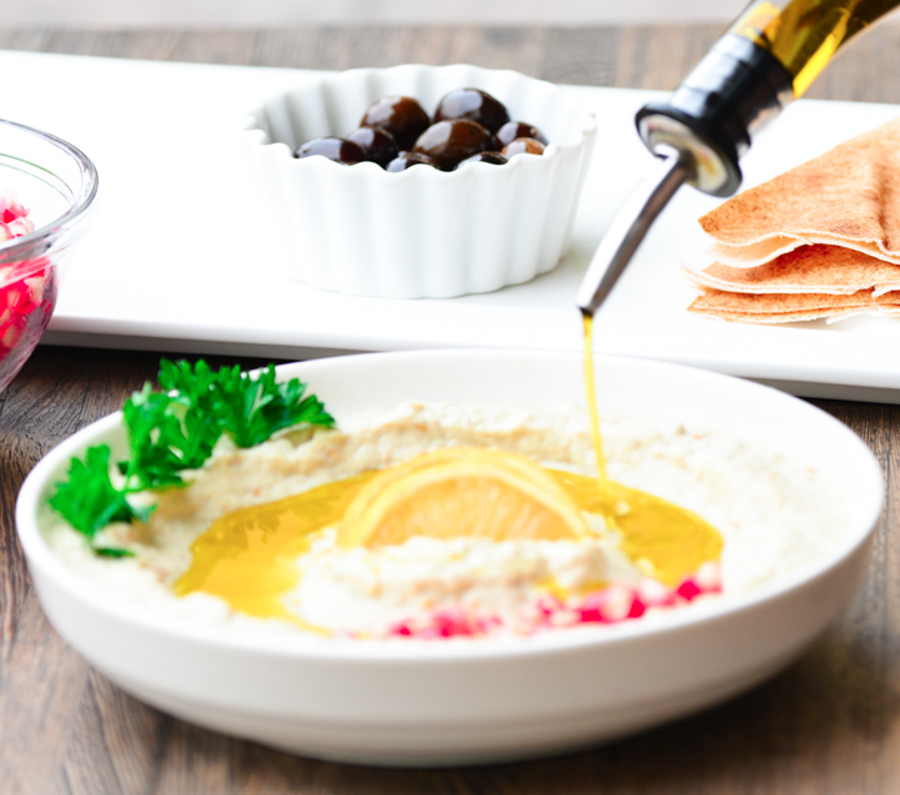
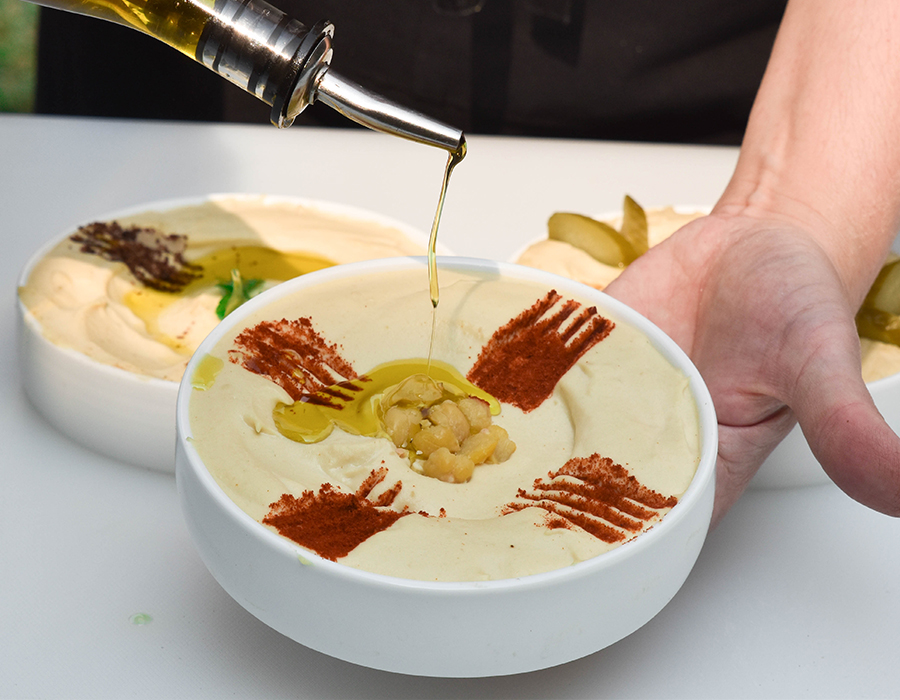
- Finish with the best olive oil you can find. Olive oil and Middle Eastern dips are a match made in food heaven! A generous drizzle of good-quality extra-virgin olive oil adds a lovely fruity flavor and makes your Baba Ghanouj even more inviting.
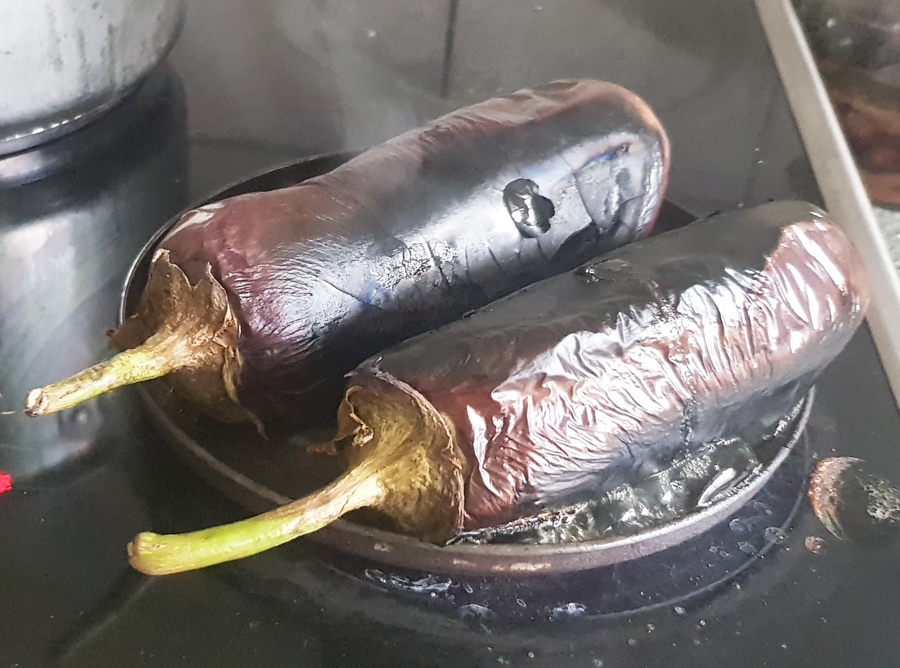
How to Roast Eggplant on the Stovetop for Baba Ghanouj
Whenever the weather warms up and I have a little extra time on my hands, I like to roast my eggplants over a charcoal fire, which gives Baba Ghanouj that irresistible smoky depth of flavor. But when making Baba Ghanouj indoors, roasting eggplants directly over a stovetop flame is my preferred method. The open flame gives this classic Lebanese eggplant dip an irresistible smoky flavor and silky texture.
To keep your stovetop clean, place the eggplants on a large metal baking tray positioned to catch any drips, if your setup allows it safely. Alternatively, use a suitable stovetop roasting rack over a gas burner. Roast the eggplants over a medium flame, turning them occasionally to ensure even cooking. Depending on their size, they may take about 10–12 minutes, although larger eggplants can take longer.
Some liquid may drip out during roasting, and that is perfectly normal. The eggplant skin should become heavily charred, almost like burnt paper, while the flesh inside becomes very soft and tender. Remove the eggplants from the heat and set them aside until cool enough to handle.
Peel away the charred skin and place the flesh in a strainer for about 2 minutes to drain off excess liquid. If you prefer a milder flavor, remove any large, visible clusters of seeds, although eggplant seeds are not necessarily the source of bitterness.
Transfer the peeled eggplant to a blender or food processor. Add the garlic, tahini, salt, and freshly squeezed lemon juice, then blend until you reach your preferred consistency. For a more rustic, chunky Baba Ghanouj, simply mash the eggplant with a fork and stir in the remaining ingredients.
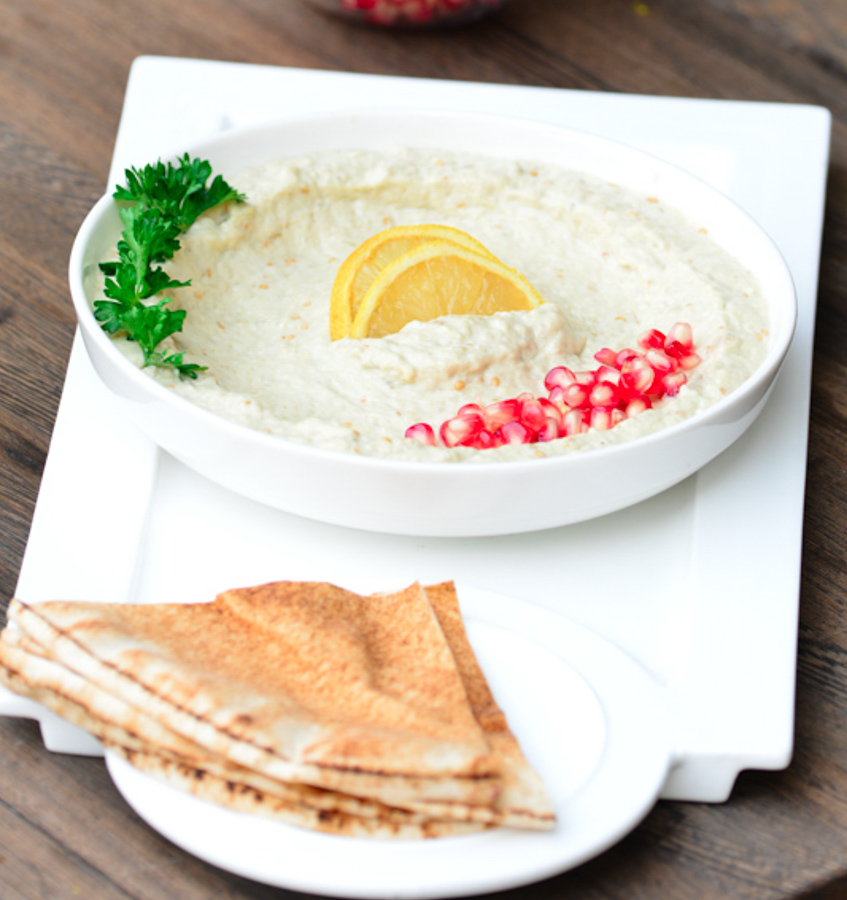
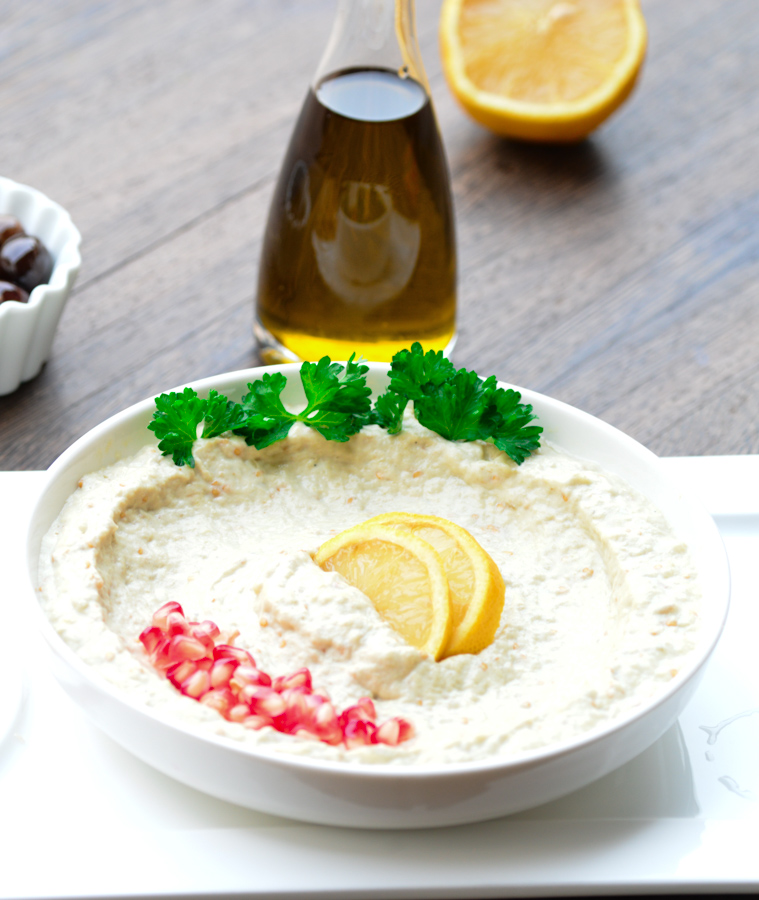
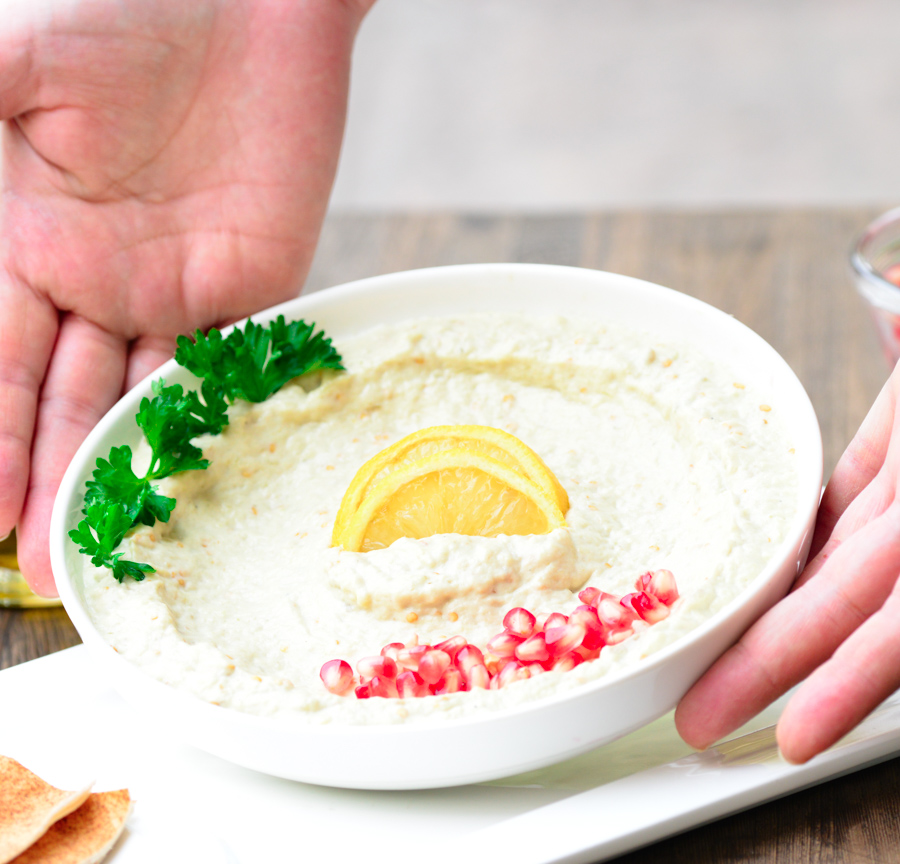
Transfer your Lebanese Baba Ghanouj to a serving plate. Use the back of a spoon to create a shallow well in the center, then garnish with pomegranate seeds and fresh parsley. Finish with a generous drizzle of extra-virgin olive oil and serve with warm pita bread.
How to Roast Eggplant in the Oven for Baba Ghanouj
Oven-roasted eggplant is a convenient alternative when you do not have access to an open flame. It takes a little longer and produces a milder, less smoky flavor than stovetop or charcoal roasting. Personally, I prefer the stovetop method for its unmistakable smoky aroma, but the oven works beautifully when that is your only option.
Preheat the oven to 230°C (450°F). Place the eggplants on a baking sheet lined with aluminum foil and roast for about 20–25 minutes, turning them occasionally for even cooking. The exact time will depend on the size of your eggplants. They are ready when the skins have wrinkled and the flesh is very soft and the eggplants have shrunk noticeably. If they are not yet tender, continue roasting until they are.
Remove the eggplants from the oven and allow them to cool until they are easy to handle. Peel away the skin and place the flesh in a strainer for a couple of minutes to drain excess liquid.
Transfer the peeled eggplant to a blender or food processor. Add the garlic, tahini, salt, and freshly squeezed lemon juice, then blend until you achieve your desired consistency. Some people love their Baba Ghanouj smooth and creamy, while others prefer a chunkier texture. You can also mash the eggplant by hand for a more traditional, rustic finish.
Transfer the finished Baba Ghanouj to a serving plate and use the back of a spoon to make a shallow well in the center. Garnish with pomegranate seeds and fresh parsley, drizzle with extra-virgin olive oil, and serve with warm pita bread.
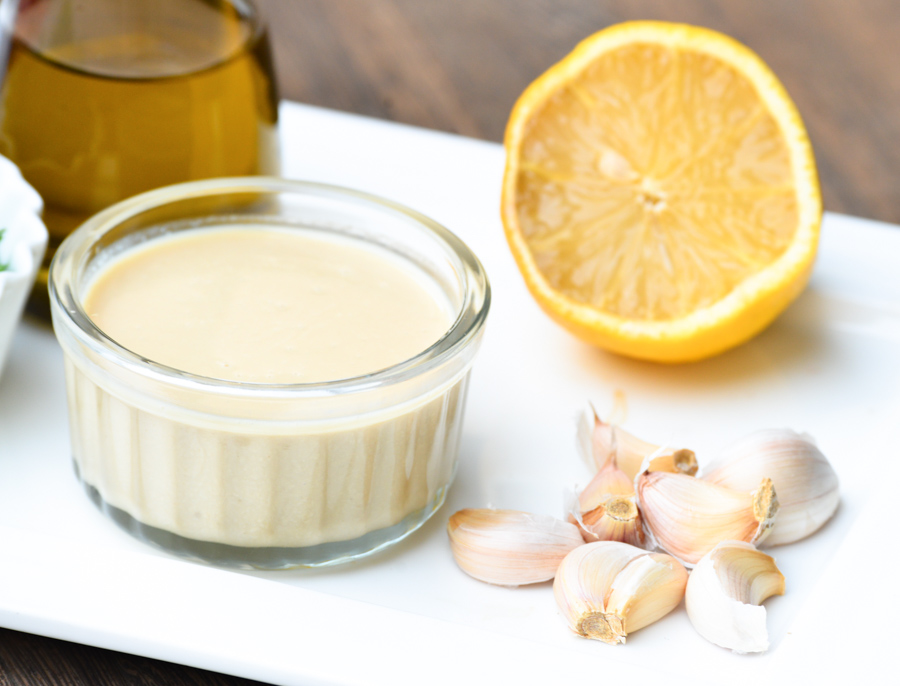
Make sure to use a good-quality tahini brand; it makes all the difference! I would specifically recommend Lebanese tahini—no bias here, just telling the truth! Before using it, give the jar a good shake or stir the tahini thoroughly to redistribute the solids that tend to settle at the bottom, ensuring a smooth, creamy consistency.
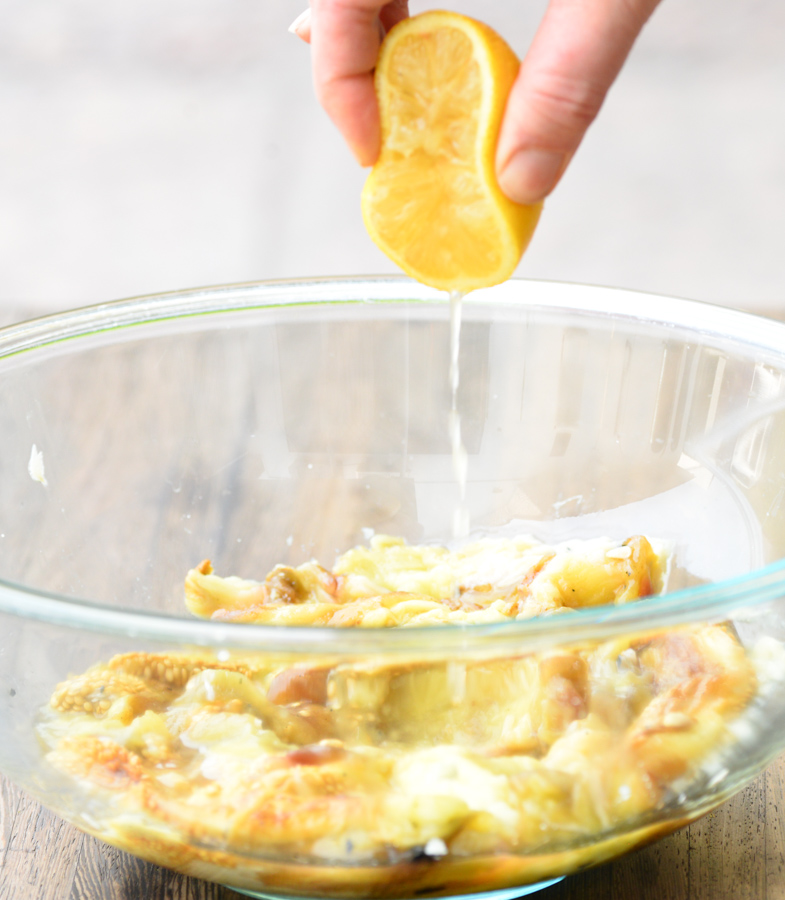
Use freshly squeezed lemon juice for the best flavor, and avoid store-bought bottled lemon juice, which lacks the fresh, bright taste that makes Baba Ghanouj so delicious!
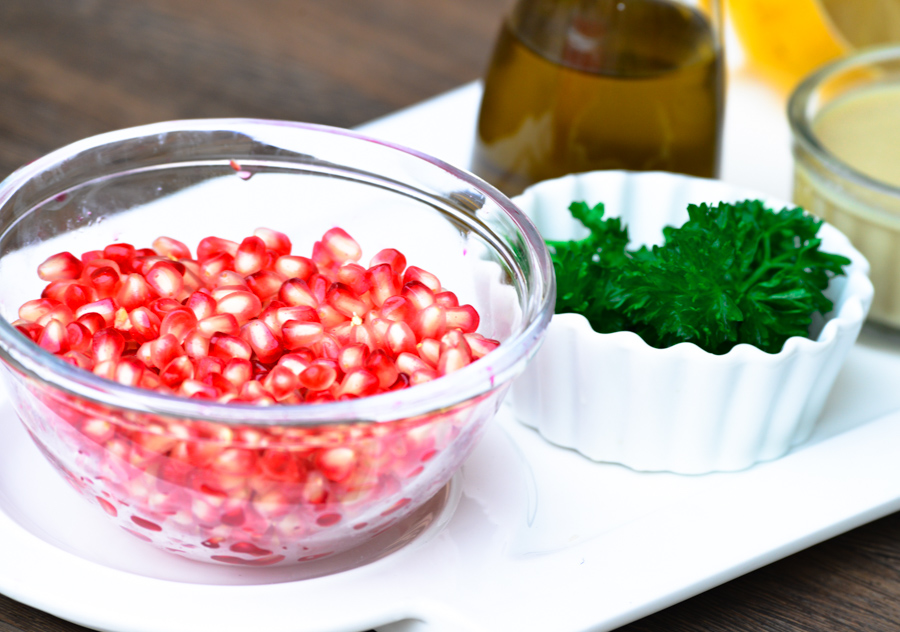
Garnishing Baba Ghanouj with pomegranate seeds adds a beautiful pop of color, but they do much more than simply make the dip look appealing! Their sweet-tart flavor adds a delightful burst of freshness that brightens the overall flavor of your Baba Ghanouj and complements its rich, smoky taste.
looking for the authentic Lebanese supreme hummus recipe, look no further
Frequently Asked Questions
How do you peel roasted eggplant easily?
Hadia’s Tip: To peel your roasted eggplants effortlessly, remove them from the stovetop or oven and immediately cover them with a lid for 10 minutes to trap the steam. This moisture naturally loosens the charred skin, allowing it to slip right off without losing any of the delicious flesh inside!
What is the difference between Moutabal and Baba Ghanouj?
Although Baba Ghanouj and Baba Ghanoush are widely used names for roasted eggplant dip in the West, in Lebanon, the creamy version made with tahini is commonly called Moutabal. Depending on the restaurant, ordering Baba Ghanouj may get you a roasted eggplant dip without tahini. So, if you are craving that rich, creamy, sesame-infused flavor, remember to ask for Moutabal.
Can you freeze Baba Ghanouj?
It is not recommended to freeze Baba Ghanouj. Freezing breaks down the delicate texture of the roasted eggplant and can cause the tahini and citrus juices to separate, making the dip watery and losing its creamy consistency upon thawing. It is best enjoyed fresh or refrigerated for up to 3 to 4 days.
Why is my eggplant dip bitter, and can I fix it?
Bitterness usually comes from using older, overripe eggplants with large clusters of mature seeds. You can minimize this by scooping out large visible seed pockets before blending. If your finished dip still tastes slightly bitter, adding a tiny pinch of salt or an extra squeeze of fresh lemon juice can help balance the flavor.
More Lebanese Dips and Middle Eastern Spreads to Try
Garlic Labneh with Blistered Cherry Tomatoes and Dukkah
Beetroot and Eggplant Moutabal
 Let’s Stay in Touch!
Facebook, Instagram, YouTube , Pinterest and TikTok!
Baba Ghanouj/ Baba Ghanoush
Description
Ingredients
- 1 kg about 2 lb large eggplants
- 1 teaspoon crushed garlic
- ½ cup tahini
- ¼ cup freshly squeezed lemon juice
- 1 teaspoon salt or to taste
- A handful of pomegranate seeds for garnish
- Fresh parsley leaves for garnish (optional)
Instructions
Step 1: Prep & Roast (Choose Your Method)
- Stovetop Method: Clean eggplants and pat dry. Place on a large metal baking sheet to protect your stovetop. Do not prick. Roast over medium-high heat for 10–12 minutes, turning occasionally, until charred and very soft.
- Oven Method: Clean eggplants and pat dry. Place on a baking sheet lined with aluminum foil. Roast at 230°C (450°F) for 20–25 minutes, turning occasionally, until softened and shrunken.
Step 2: Peel & Drain
- Cool slightly, then peel off the charred skin.
- Place eggplants in a strainer for 2 minutes to drain excess fluid.
- Scoop out large, visible seeds to remove any bitter flavor.
Step 3: Mix & Blend
- Transfer eggplants to a food processor or blender.
- Add garlic, tahini, salt, and lemon juice.
- Blend to your preference: Process until smooth, or mash with a fork for a traditional, rustic texture.
Step 4: Garnish & Serve
- Spread onto a serving plate and use a spoon to create a shallow well in the center.
- Drizzle with olive oil and garnish with pomegranate seeds and fresh parsley.
- Serve fresh with pita bread.
- Storage: Store leftovers in an airtight container in the fridge for 3–4 days.
Notes
- Prep Time: 15 mins (includes washing, cooling, steaming, and peeling)
- Cook Time: 12 mins (stovetop method) | 25 mins (oven method)
- Total Time: 27 mins (stovetop) | 40 mins (oven)




















6 Comments
[…] Baba Ghanouj/ Baba Ghanoush/ Moutabal […]
[…] Baba Ghanouj/ Baba Ghanoush/ Moutabal […]
[…] Baba Ghanouj, which we call moutabal in Lebanon, may be one of the most famous eggplant dips in the West. But have you ever tried Raheb salad? It’s an equally scrumptious and beloved dish from Lebanon and the Middle East. […]
[…] fats, it is a deeply nourishing addition to any mezze platter. Think of it as a spectacular baba ghanoush recipewith a creative beetroot twist—one bite, and you are going to fall in love with this beautiful […]
[…] Lebanese Moutabal […]