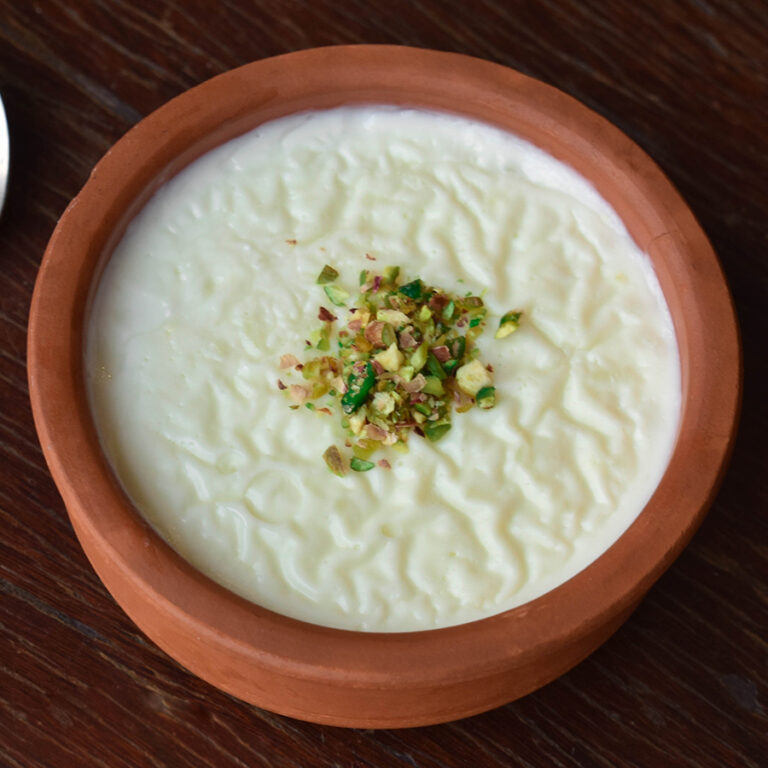


In Lebanon and across the Middle East, yogurt (laban) is a staple and the key ingredient of many beloved dishes, such as kibbeh labanieh, shish barak, koussa bil laban, fatteh, and many more. Enjoy it plain, drizzle it with honey, stir it into dressings, or serve it for breakfast or dinner as a simple, light, and budget-friendly meal accompanied by olives and bread.
Laban is also used as a condiment, a dip, a base for making labneh, and a marinade for meat and chicken. Learn how to make your own homemade laban (yogurt)—it’s far better than the store-bought kind!

If you’ve never made homemade laban because you thought it would be difficult to get it right, I’m here to tell you that it’s easier than you might think! You only need to pay attention to four key factors when making laban: the type of milk you use, the starter culture, the temperature, and the fermentation time.
How to Make Laban
In a large pot, heat the milk to between 180°F and 200°F (82°C and 93°C), stirring occasionally. You’ll notice small bubbles forming around the edges. Remove the pot from the heat and let the milk cool until it reaches 115°F (46°C).
You can test the temperature by touch: the milk should feel comfortably warm, allowing you to keep your finger in it for about five seconds without discomfort.
If you’re in a hurry, fill a large bowl with ice water and place the pot of milk in the ice bath. Stir frequently until the milk cools to 115°F (46°C).
Transfer ½ cup of the warm milk to a small bowl and whisk in the yogurt starter until smooth. Pour the mixture back into the pot of warm milk and whisk thoroughly to ensure the starter is evenly distributed.
Cover the pot and place it in a warm spot. Wrap it in a thick blanket to help maintain a consistent temperature. Let the yogurt ferment for 6–12 hours, or until it has thickened and developed a pleasantly tangy flavor. The longer it ferments, the tangier it will become.
Can I Use Low-Fat Milk to Make Laban?
This simple recipe calls for whole milk and a small amount of yogurt as a starter culture. I recommend using plain whole milk because it produces a richer, creamier, and thicker yogurt. Low-fat milk can also work, but the resulting yogurt may be thinner and less creamy.
What Ingredients Do I Need to Make Laban?
You only need two ingredients to make homemade laban:
- Whole milk: Choose regular pasteurized whole milk rather than ultra-pasteurized milk, which may not set as reliably when making yogurt.
- Plain, whole-milk yogurt: Use store-bought yogurt with live and active cultures as your starter. Once you’ve made your first batch of homemade laban, you can reserve a little to use as the starter for your next batch. This way, you can keep the culture going from one batch to the next without having to buy a new starter every time.
Why Shouldn’t I Add More Starter Culture Than the Recipe Calls For?
It’s important to use the recommended amount of starter culture. Adding too much doesn’t necessarily make yogurt thicker or better. Instead, it can sometimes lead to an overly sour flavor, a grainy texture, or separation.
For the best results, stick to the amount specified in the recipe.
What Is the Shelf Life of Homemade Laban?
Homemade laban is best enjoyed within 2–3 weeks when stored in a clean, airtight container in the refrigerator at or below 40°F (4°C). Over time, its flavor will become increasingly tangy.
Always use clean utensils when serving, and discard the yogurt if you notice any signs of spoilage, such as mold, unusual discoloration, or an unpleasant odor.
A few important notes
-
Temperature conversion: 115°F is approximately 46°C, not 47°C. Either way, use a thermometer for the most reliable results.
-
Milk selection: Ultra-pasteurized milk can sometimes produce yogurt that sets less reliably, but results vary by product. Low-fat milk can also make yogurt, although the texture may be less creamy.
-
Fermentation time: Six to twelve hours is a reasonable general guideline, but the exact time depends on the starter culture and the temperature maintained during fermentation.
-
Storage: Two to three weeks is a relatively long storage period for homemade yogurt. Keeping it consistently refrigerated, using clean equipment, and following reliable food-safety guidance are important. For a published recipe, you may want to recommend a more conservative storage period unless you have tested the shelf life of your specific method.
 Let’s Stay in Touch!
Facebook, Instagram, YouTube , Pinterest and TikTok!

Laban(Lebanese Homemade Yogurt)
Description
Equipment
- a pot
- Whisk
Ingredients
- 8 cups 2 liters / ½ gallon whole milk
- ⅓ cup plain whole-milk yogurt containing live and active cultures
Instructions
- In a large pot, heat the milk to between 180°F and 200°F (82°C and 93°C), stirring occasionally. You’ll notice small bubbles forming around the edges. Remove the pot from the heat and let the milk cool to 115°F (46°C).
- You can test the temperature by touch: the milk should feel comfortably warm, allowing you to keep your finger in it for about five seconds without discomfort. However, using a thermometer is the most reliable way to check the temperature.
- If you’re in a hurry, fill a large bowl with ice water and place the pot of milk in the ice bath. Stir frequently until the milk cools to 115°F (46°C).
- Transfer ½ cup of the warm milk to a small bowl and whisk in the yogurt starter until smooth. Pour the mixture back into the pot of warm milk and whisk thoroughly to ensure the starter is evenly distributed.
- Cover the pot and place it in a warm spot. Wrap it in a thick blanket to help maintain a consistent temperature. Avoid moving or stirring the yogurt while it ferments. Let it sit for 6–12 hours, or until it has thickened and developed a pleasantly tangy flavor. The longer it ferments, the tangier it will become.
- Once the yogurt has set, refrigerate it. Homemade yogurt can generally be stored in the refrigerator for about 1–2 weeks, provided it is handled hygienically and kept consistently cold.