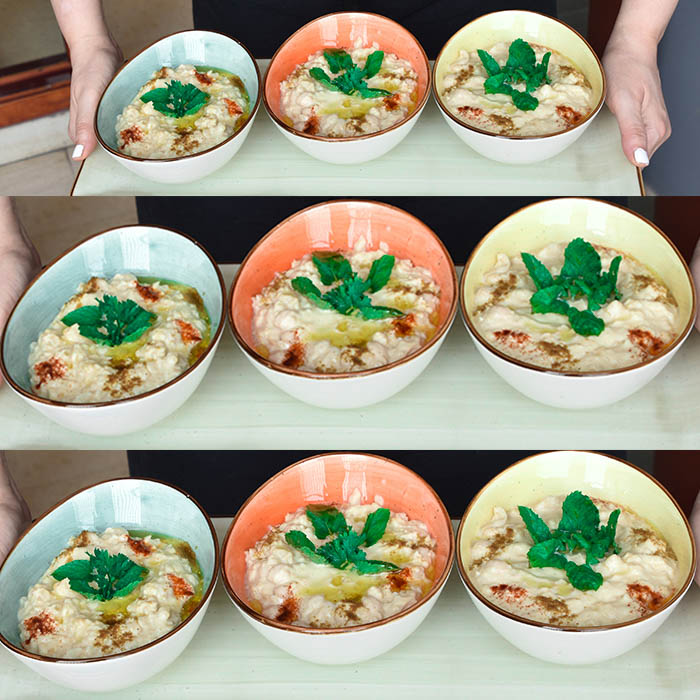


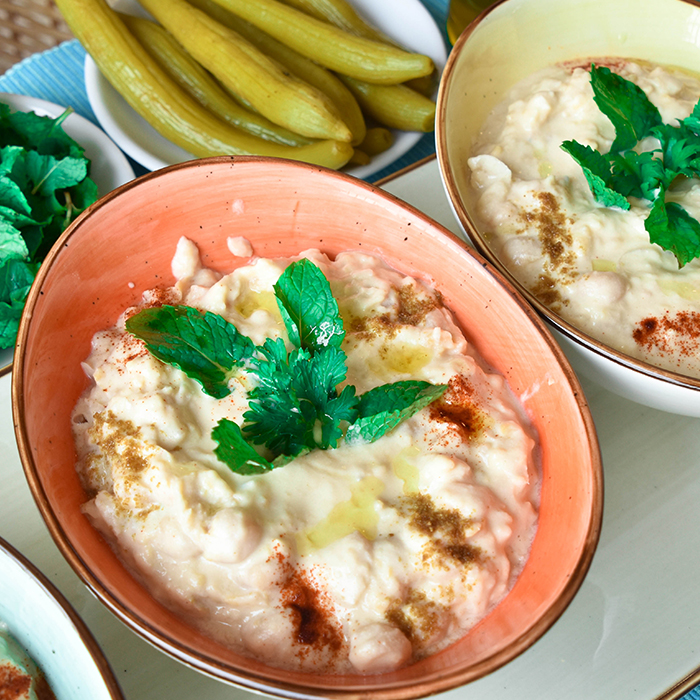
Wondering what makes Musabaha different from hummus? Discover this warm, rustic Lebanese chickpea dish bathed in nutty tahini, lemon juice, and fresh garlic.
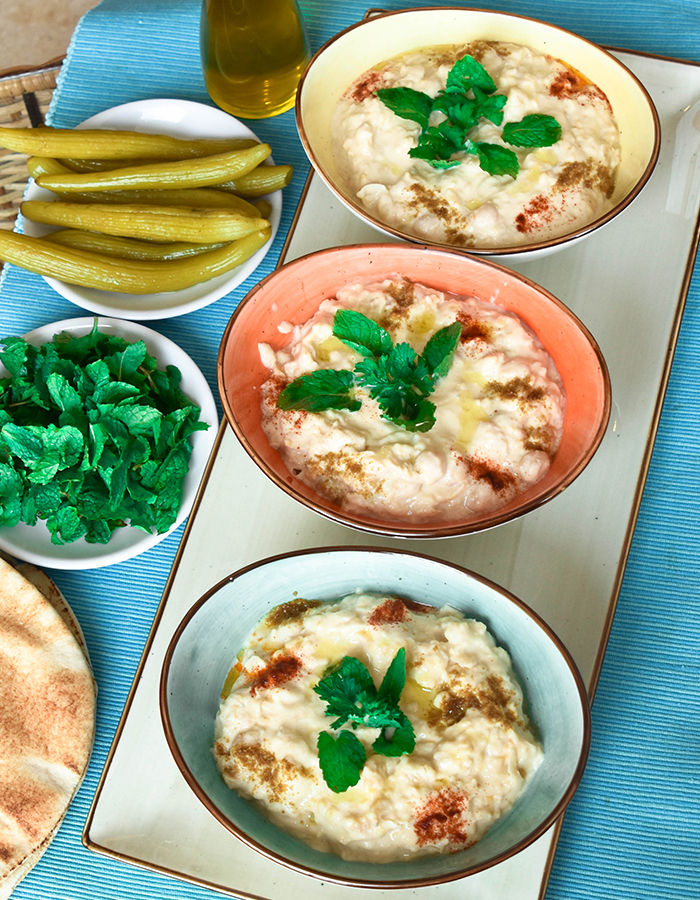
Musabaha, also known as Msabaha, is a traditional Lebanese chickpea dish made with tender chickpeas, creamy tahini, fresh lemon juice, and garlic. Unlike hummus, where the chickpeas are blended into a smooth dip, Lebanese musabaha keeps the chickpeas whole or lightly crushed, creating a warm, rustic texture while allowing the nutty tahini and bright lemon flavors to shine. Served with warm pita bread and a drizzle of olive oil, this simple Lebanese recipe makes a delicious breakfast, mezze, or light meal.
What makes musabaha different from hummus and balila?
Musabaha comes from the Arabic verb saba7a, which means “to swim.” The chickpeas are roughly mashed but kept chunky, allowing them to “swim” in the lemony tahini sauce. This gives musabaha its rustic, textured appearance, rather than the smooth, creamy consistency of hummus.
Musabaha is also traditionally served warm, while hummus is served at room temperature.
As for balila, musabaha contains tahini, whereas balila does not. And when it comes to lemon, there’s some debate: some versions of balila include lemon, while others don’t—people here are divided on this one.
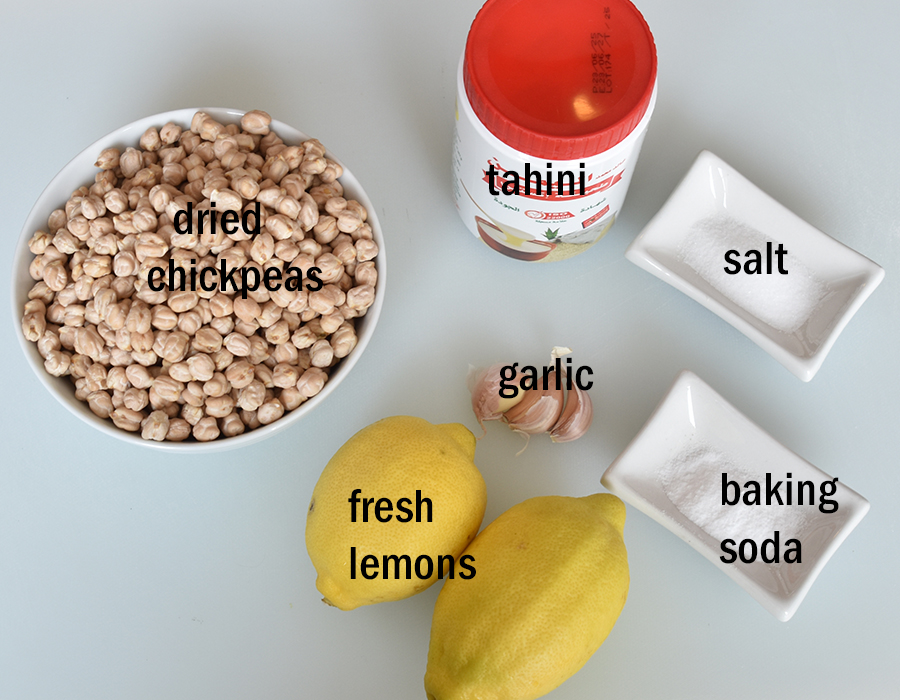
The quality of your finished musabaha starts with the quality of your ingredients. Yes, cook your own chickpeas from dried, use a good tahini brand, and always use freshly squeezed lemon juice.
Ingredients
Dried Chickpeas: A big no to canned chickpeas. They will never deliver the same texture and flavor as dried chickpeas, so please stick to dried chickpeas.
Tahini: Use a good-quality tahini for your musabaha. No bias here, but Lebanese tahini brands are the best.
Fresh Lemons: Use freshly squeezed lemon juice. Strain the juice to remove any lemon pulp, as it can eventually contribute a bitter taste to the musabaha.
Garlic: Crush the garlic into a smooth paste.
Baking Soda: Used both when soaking the chickpeas and during boiling.
Salt: Obviously, to balance the flavors.
Water: Used to soak and cook the chickpeas.
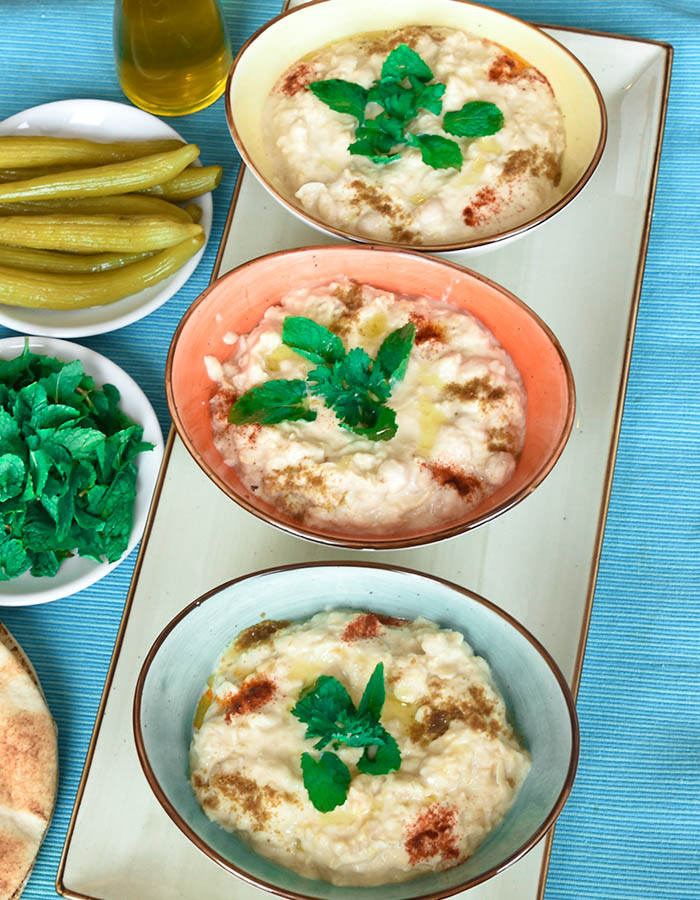
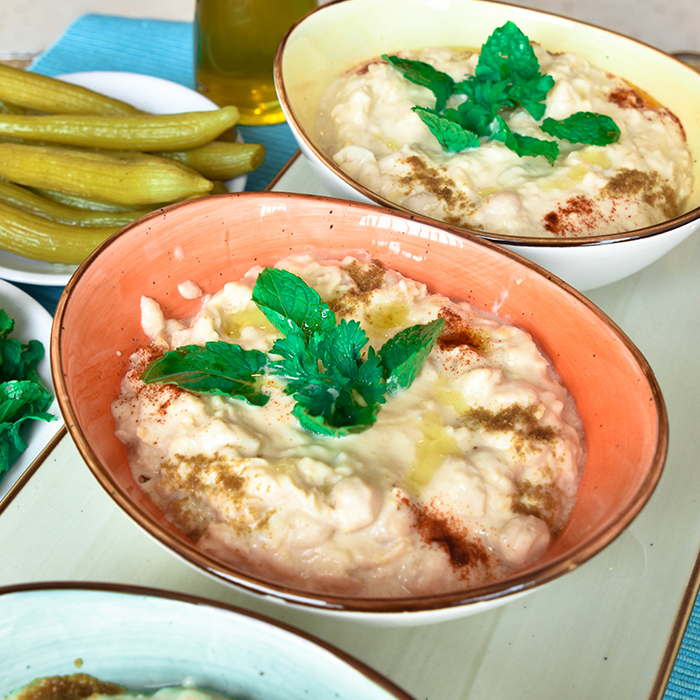
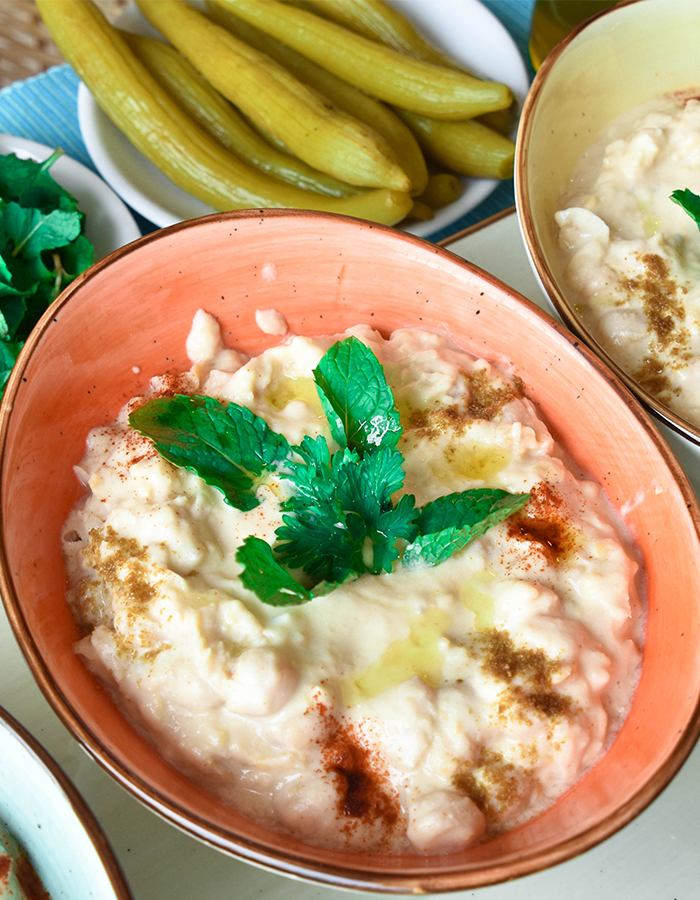
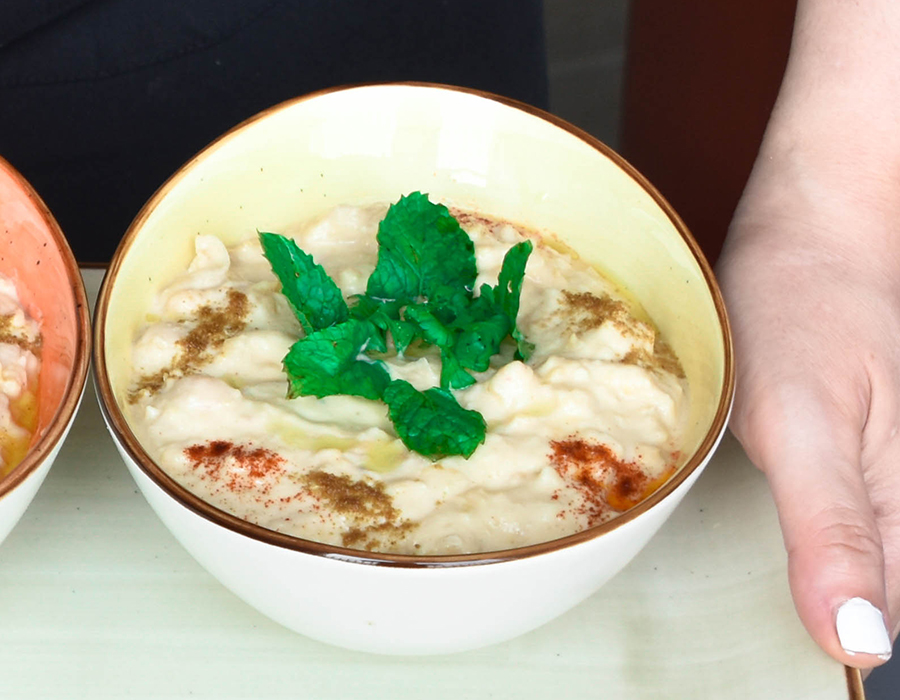
Once you have your musabaha ready, think about the garnish. Sprinkle with cumin powder and paprika, if desired, then drizzle with a swirl of olive oil. Finish with fresh mint leaves or parsley; thinly sliced red onion is another appealing option.
-
Other Authentic Lebanese Breakfast Recipes.
Other Authentic Lebanese Breakfast Recipes
- Manakish, Lebanese Flat Bread with Different Toppings
- Manakish in a Skillet
- Foul Medames
- Balila
- Hummus
- Knafeh
- Northern Lebanese Flat Kaak
- Kaak Al Asreya
Let’s stay in touch
If you like seeing my recipes subscribe via email or, connect with me on my social media platforms:
Facebook, Instagram, YouTube , Pinterest and TikTok!
Why are you against canned chickpeas?
I’m not against using canned ingredients in general, but when it comes to a recipe where chickpeas are the main ingredient, I would never use the canned option. It’s not just about wanting to stick to authenticity; dishes like msabaha, balila, and hummus are at their best when the chickpeas are so tender that they collapse under the slightest pressure.
For these recipes, the chickpeas need to be soft enough to squish easily while you’re working with them. In my experience, you simply don’t get that same texture with canned chickpeas.
Another important reason is the taste. Canned chickpeas tend to have a bland, slightly metallic flavor that can’t compare with the deep, nutty flavor of freshly boiled chickpeas.
 Let’s Stay in Touch!
Facebook, Instagram, YouTube , Pinterest and TikTok!
Musabaha, Chickpeas Bathed in Tahini Sauce
Description
Ingredients
- 2 cups dried chickpeas
- 2 fresh lemons juiced
- ⅔ cup tahini
- 1 cup water
- 3 garlic cloves crushed
- Salt to taste
- 1½ teaspoons baking soda divided:
- ½ teaspoon for soaking the dried chickpeas
- 1 teaspoon for cooking the chickpeas
Instructions
- In a bowl, add the dried chickpeas and cover them with twice their volume of cold water. Add ½ teaspoon of baking soda and leave them on the kitchen bench to soak overnight.
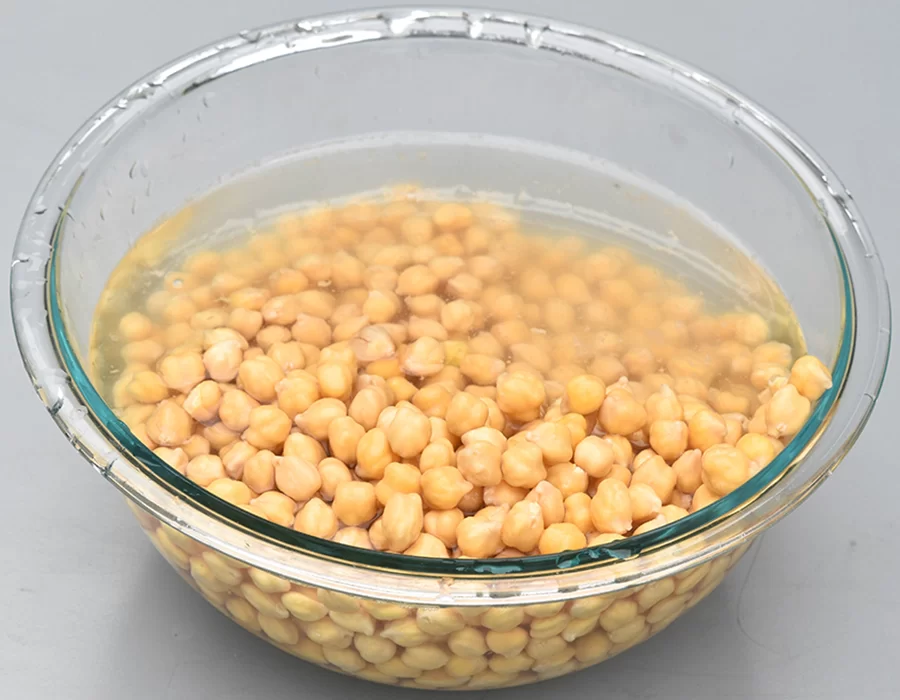
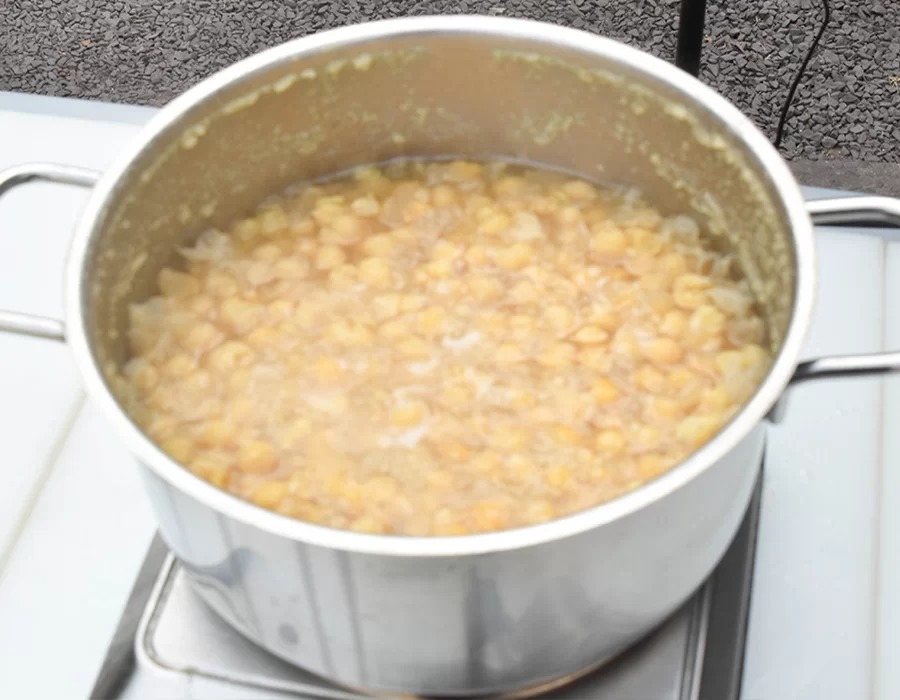
- Once the chickpeas have been rehydrated, drain the soaking water and transfer them to a large pot. Cover with 1½ liters/6 cups of fresh water. Bring to a boil, skim off any scum that rises to the surface, then add the remaining baking soda. The baking soda will cause more scum to rise, so skim the surface again.Reduce the heat and simmer gently until the chickpeas are tender. They should be soft enough to mash easily when pressed between your fingers and almost falling apart. This will take about 1 hour or more, depending on the chickpeas. Add more hot water if they seem to be drying out during cooking.
Prepare the tahini sauce
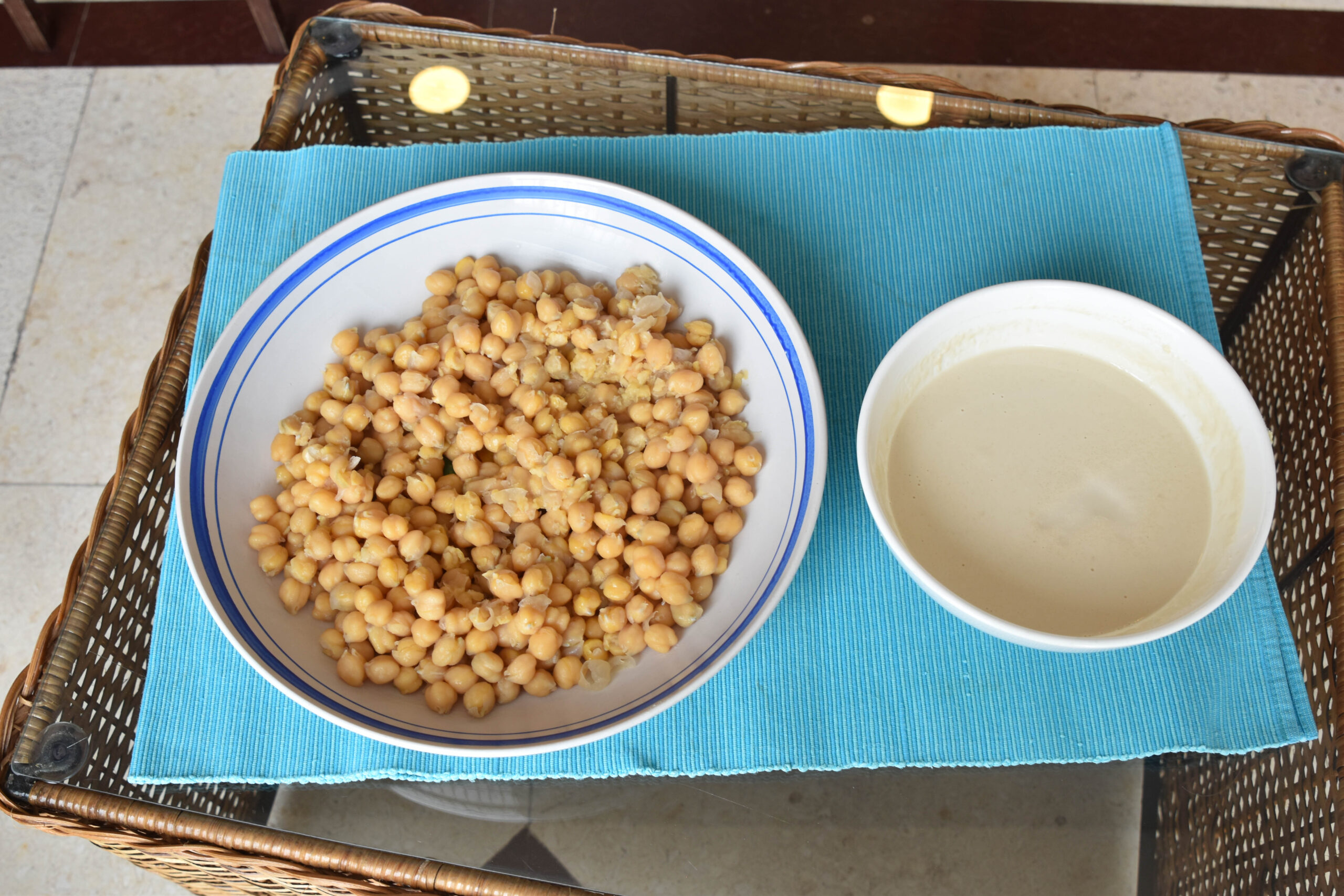
It is crucial to stir the tahini jar well before using it, as the solids tend to settle at the bottom. Add the specified amount to a bowl, then whisk in the crushed garlic, lemon juice, and water.At first, you may notice that the mixture seizes up slightly when the liquids are added. Just keep whisking; it will quickly smooth out and homogenize with the other ingredients.You should end up with a considerably thin, paste-like consistency. If it looks too thick, add a little more water. Adjust the salt to taste—we don’t want the sauce to be bland.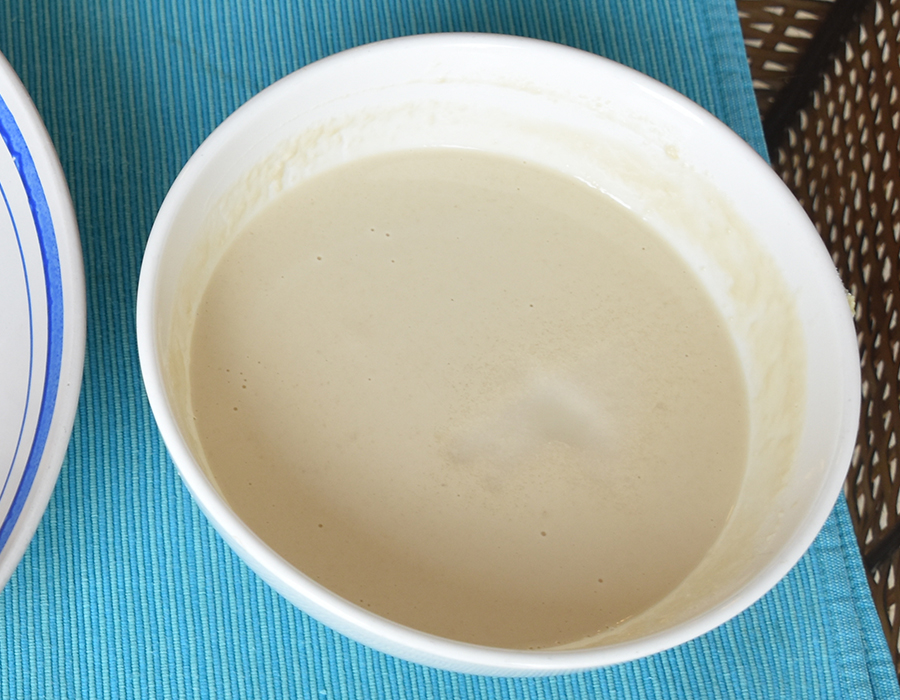
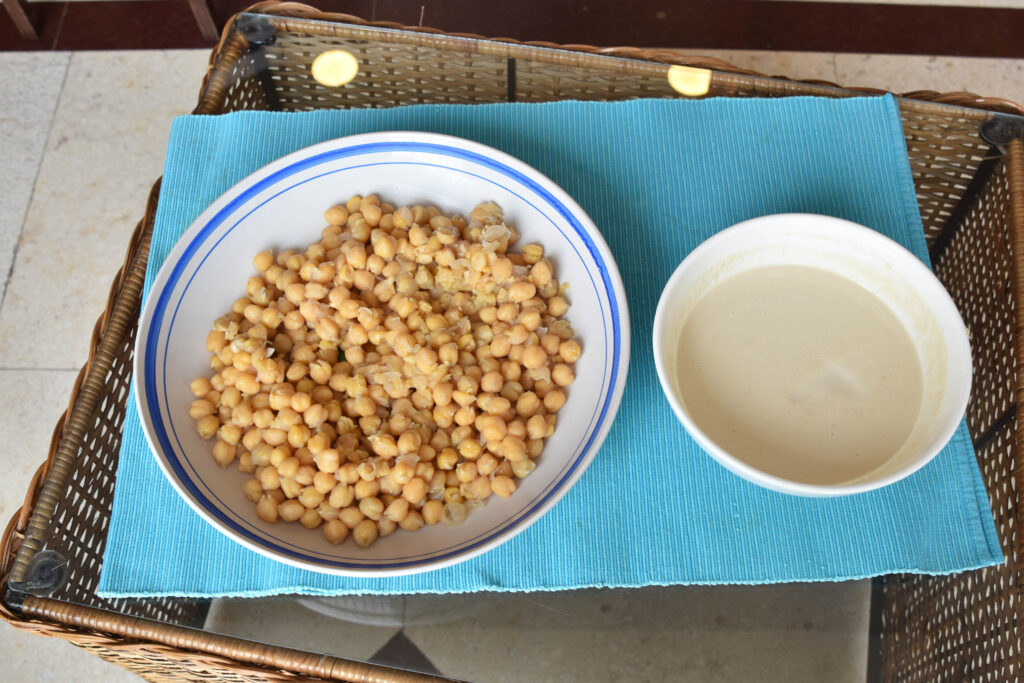
- Prepare a deep serving plate. Using a slotted spoon, remove the warm chickpeas (it’s fine if some of the chickpea liquid comes with them) and transfer them to the serving plate. Drizzle with the lemony tahini sauce, then, using the back of a spoon, roughly mash the chickpeas. Make sure to keep them considerably chunky—this is one of the major differences between hummus bi tahini and musabaha: the consistency. Taste and adjust the salt one last time.
- Garnish: Sprinkle with cumin powder and paprika (if desired), then drizzle with a swirl of olive oil. Garnish with fresh mint leaves or parsley; thinly sliced red onion is another appealing option.
Video