


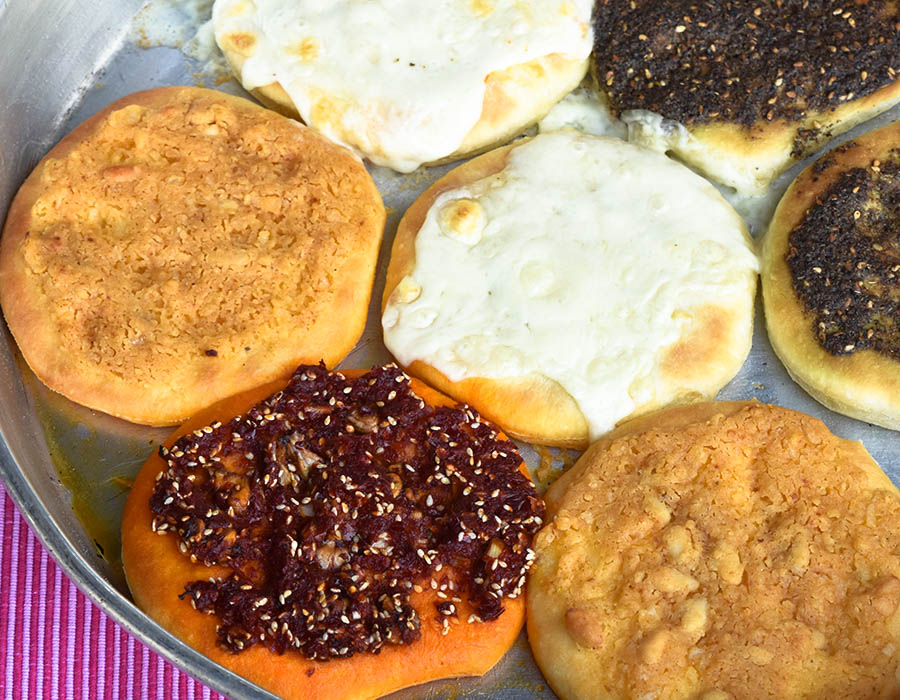
What is Manakish? (The Ultimate Lebanese Breakfast Flatbread)
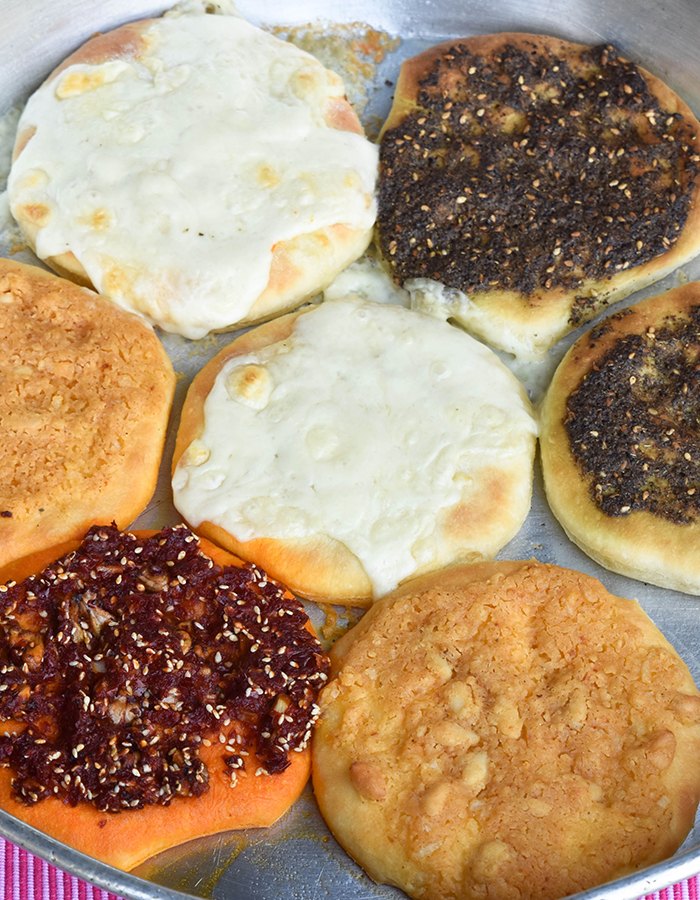
Why Baking Homemade Manakish From Scratch is Pure Therapy
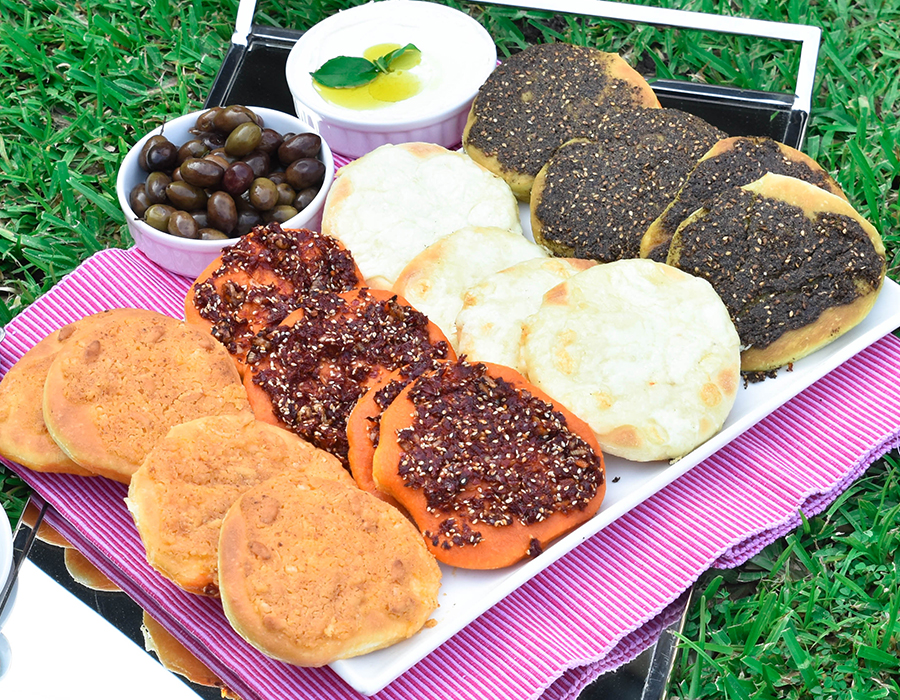
A Perfect Dough for Making Manakish
Yeast dough recipes can be a bit intimidating. Some people shy away from them, worried that they’re laborious to make. But when you have a good recipe with straightforward instructions, that worry can quickly fade.
When making manakish in a home oven rather than a traditional communal oven, you need to work with the dough in a way that helps maximize its flavor, tenderness, and rise. This recipe is approachable even if you’re not an experienced bread baker. It’s simple, reliable, and efficient—I promise.
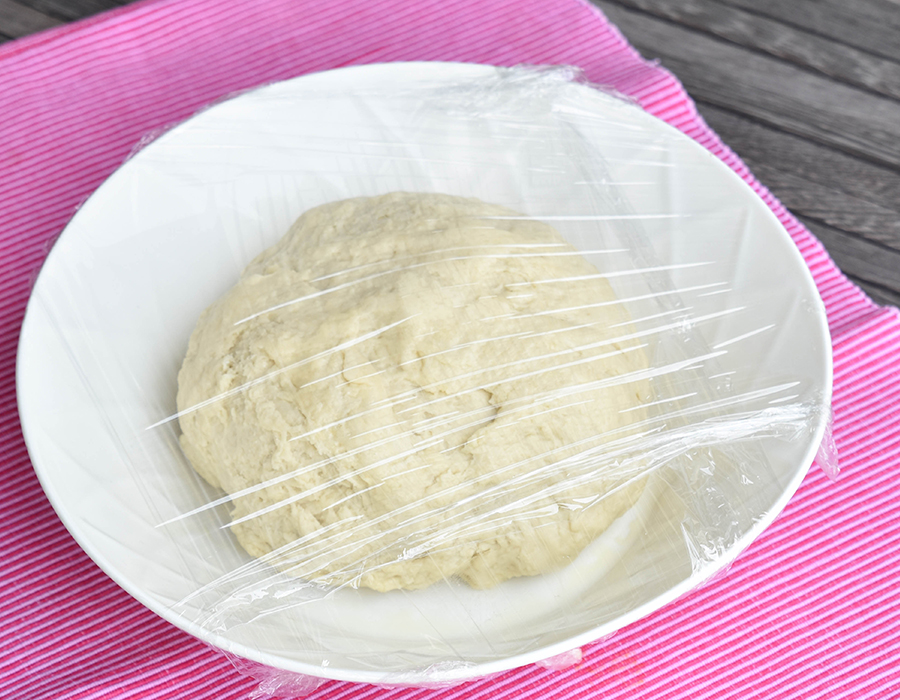
Every manakish dough recipe begins with a great crust. Some like their manakish thin and crispy, while others prefer a thick and soft crust. My recipe gives you the best of both worlds: soft and fluffy on the inside, with a delicious crispness and the perfect flavor. It’s my go-to manakish dough recipe!
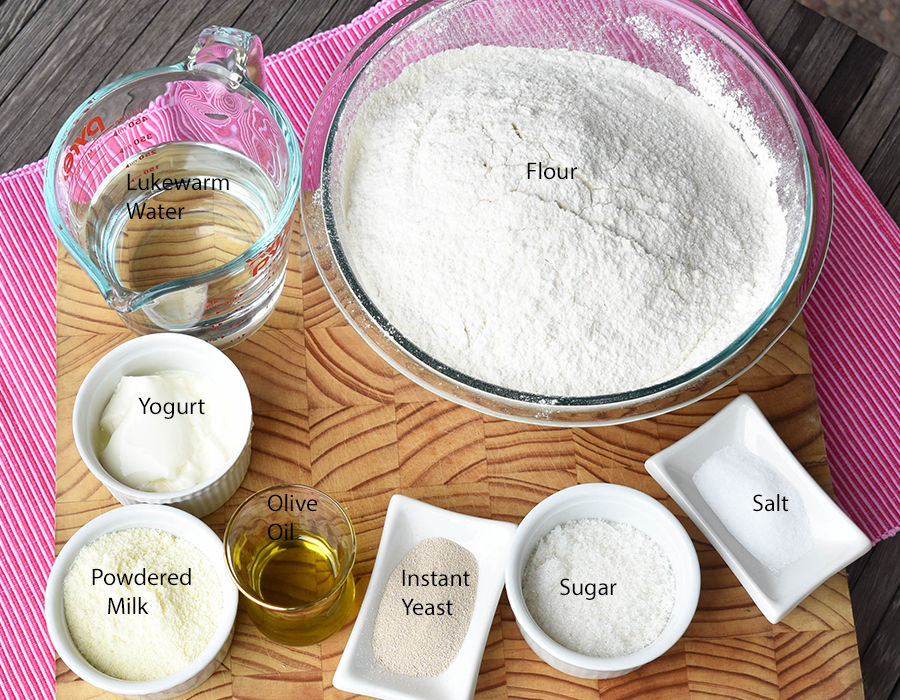
Ingredients You’ll Need to Make Manakish Dough
Making homemade manakish starts with a soft, supple dough that is easy to stretch and bakes up beautifully. Each ingredient has an important role in creating that perfect texture and flavor.
All-purpose flour: You don’t need a special type of flour to make delicious manakish. All-purpose flour works beautifully and gives the dough the right balance of structure and tenderness.
Instant yeast: I recommend using instant dry yeast. Its finer particles allow it to be mixed directly into the dry ingredients without needing to be proofed first. Instant yeast also produces plenty of carbon dioxide, helping the dough rise beautifully and giving your manakish a light, airy texture.
Powdered milk: A little powdered whole milk works wonders in this dough. It acts as a dough enhancer and helps keep the baked bread wonderfully soft and tender. If powdered whole milk is difficult to find, you can substitute whole milk (3.25–3.5% fat) for some or all of the water in the recipe.
Yogurt: Use full-fat yogurt for the best results. It adds richness and tenderness to the dough and contributes to a softer, fluffier texture.
Olive oil: Olive oil gives the dough a lovely softness and makes it more elastic, which makes stretching and shaping the manakish much easier.
Sugar: Sugar provides food for the yeast, helping the dough rise, and also encourages beautiful browning during baking.
Salt: Salt is essential for flavor, but it also plays an important role in the dough. It strengthens the gluten structure, giving the dough more elasticity and making it less likely to tear when you stretch it.
Lukewarm water: Use lukewarm water at around 100°F (38°C). Water that is too hot can kill the yeast, while water that is too cold can slow down the fermentation and affect the rise.
Four Delicious Toppings for Manakish
One of the things I love most about manakish is how versatile it is. Once you have the dough ready, you can top it with all kinds of delicious ingredients and create your own favorite combinations.
Below, I’ve included four classic manakish toppings, each with its own unique flavor and character. And don’t be afraid to get creative—there are endless possibilities when it comes to manakish toppings!
In Lebanon, it’s even common to bring your own filling to a neighborhood bakery. The baker will spread your topping over the dough and bake the manakish for you. It’s a wonderful part of the local food culture and a testament to just how customizable this beloved flatbread can be.
For all of the toppings, I recommend using light olive oil or sunflower oil. Avoid extra-virgin olive oil, as it has a lower smoke point and can burn during baking, affecting the flavor and appearance of your manakish.
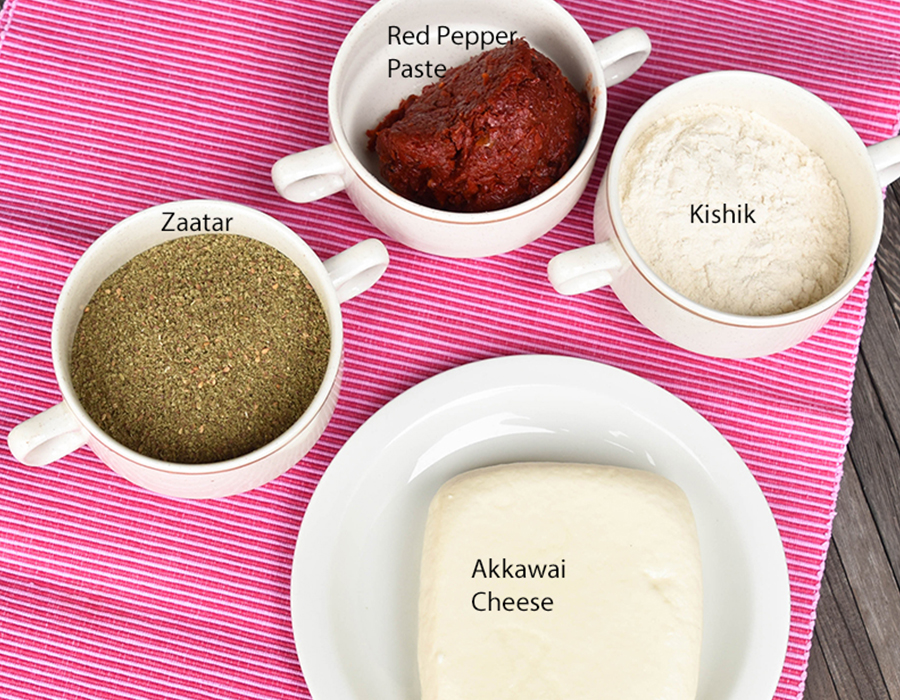
Traditional Manakish Toppings You Must Try
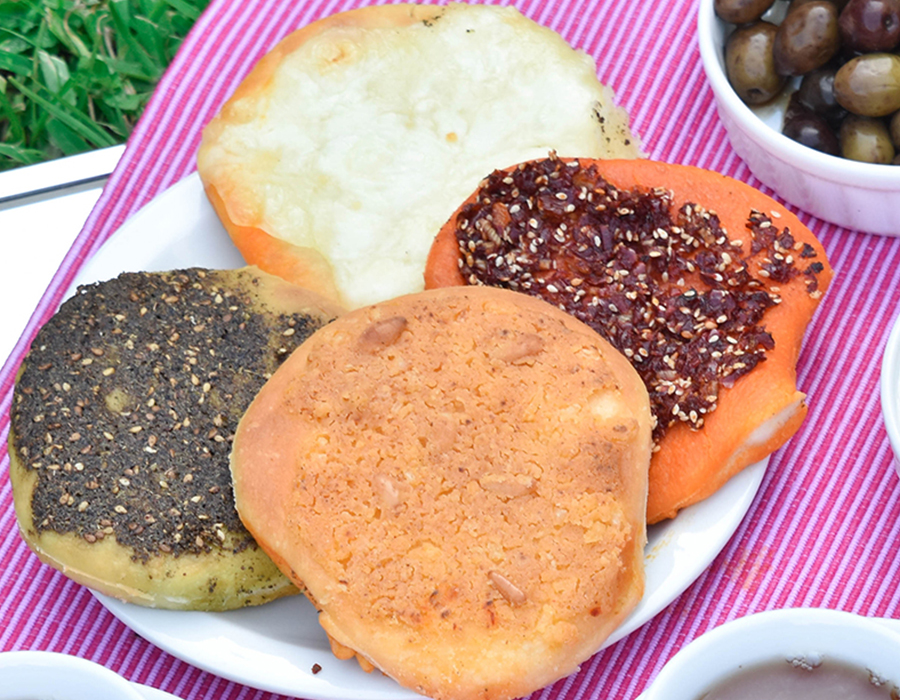
Zaatar Topping
Zaatar manakish are among the most popular varieties, and for good reason! Zaatar is a beloved seasoning blend found in virtually every household throughout the region. It is incredibly versatile, but it is especially famous as the star topping for manakish.
The exact blend varies from country to country and even from one family to another, but the classic ingredients typically include wild thyme, sumac, sesame seeds, and oregano. To make the topping, simply mix the zaatar blend with light olive oil or sunflower oil until it forms a spreadable mixture. Spread it generously over the dough, then bake until the manakish is golden around the edges and the topping is set.
Cheese Topping
The most traditional cheese used for manakish is Akkawi cheese, a mild, stretchy Middle Eastern cheese. Because Akkawi is quite salty, it needs to be desalted before using.
To remove some of the salt, cut the cheese into small pieces, place them in a bowl, and cover with water. Soak the cheese for about 8 hours, changing the water every hour. Drain and pat it dry before using.
If Akkawi cheese is difficult to find, don’t worry! My favorite substitute is a combination of mozzarella and feta cheese. The mozzarella provides that wonderful stretchiness, while the feta adds a delicious salty, tangy flavor.
Kishik Topping
This is my personal favorite manouche, right alongside the classic zaatar!
The topping is made with kishik, onion, tomato paste, light olive oil, and optional pine nuts, seasoned with salt and a little chili for a touch of heat.
Now, you may be wondering: What exactly is kishik?
Kishik is a traditional Middle Eastern fermented mixture made from bulgur and yogurt. The mixture is first fermented, then dried and finally ground into a fine powder. It has a wonderfully distinctive tangy flavor that makes this manakish topping truly special.
You can usually find kishik at Middle Eastern grocery stores and specialty food shops. Once you have it, combine it with the remaining ingredients to create a rich, savory topping that pairs beautifully with the manakish dough.
Red Pepper Paste Topping
This is a wonderfully satisfying topping, especially if you’re in the mood to think a little outside the box!
The star of this mixture is red pepper paste, which is combined with onions, white sesame seeds, walnuts, and light olive oil, then seasoned with salt and chili flakes. The result is a rich, savory, slightly spicy topping with plenty of texture and flavor.
You can use our homemade red pepper paste recipe or a good-quality store-bought red pepper paste. I highly recommend adding your favorite hot pepper to the mixture for an extra kick. Gently heating the topping before spreading it over the dough helps bring out the flavors of the peppers, onions, and spices.
Spread the mixture over the dough, bake until the edges are beautifully golden and the topping is cooked through, and enjoy!
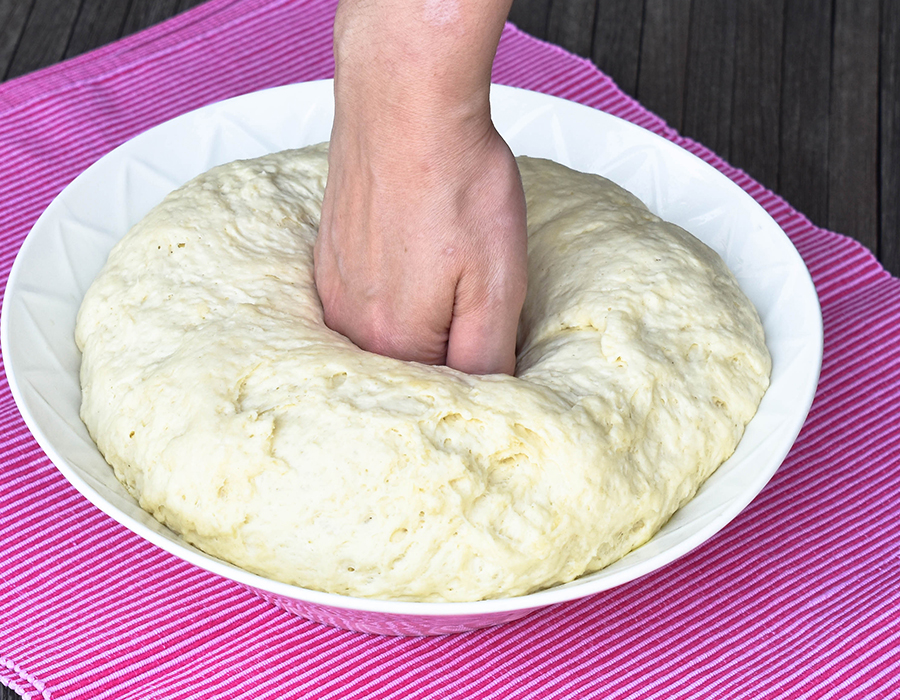
The Secret to the Perfect Manakish Dough
-
In a large bowl, mix the flour, salt, sugar, instant dry yeast, and oil.
-
Add the powdered milk, yogurt, and lukewarm water. Mix well with your hands, making sure all the ingredients are fully incorporated.
Once the mixture starts coming together, knead it thoroughly until you have a soft, pliable dough. If the dough feels too dry, add more water, 1 tablespoon at a time. If it is too sticky to handle, add more flour, 1 tablespoon at a time. Be careful not to add too much extra flour—you want the dough to remain soft and slightly tacky.
Slap the dough against the counter a few times to help strengthen the gluten. Then place it in a lightly greased bowl, cover with plastic wrap, and set aside for 1 hour, or until it has doubled in size.
- Note: Play with the dough a little to achieve the best results. It needs some kneading to come together properly and to develop the gluten. I sometimes slap or beat the dough against the counter several times, but you can also use a stand mixer or dough maker.
- For extra fluffy dough, let it rise twice: first as one ball for 1 hour, then again as individual disks for 20 minutes after adding the toppings. This second rise will give the dough an extra-light and fluffy texture.
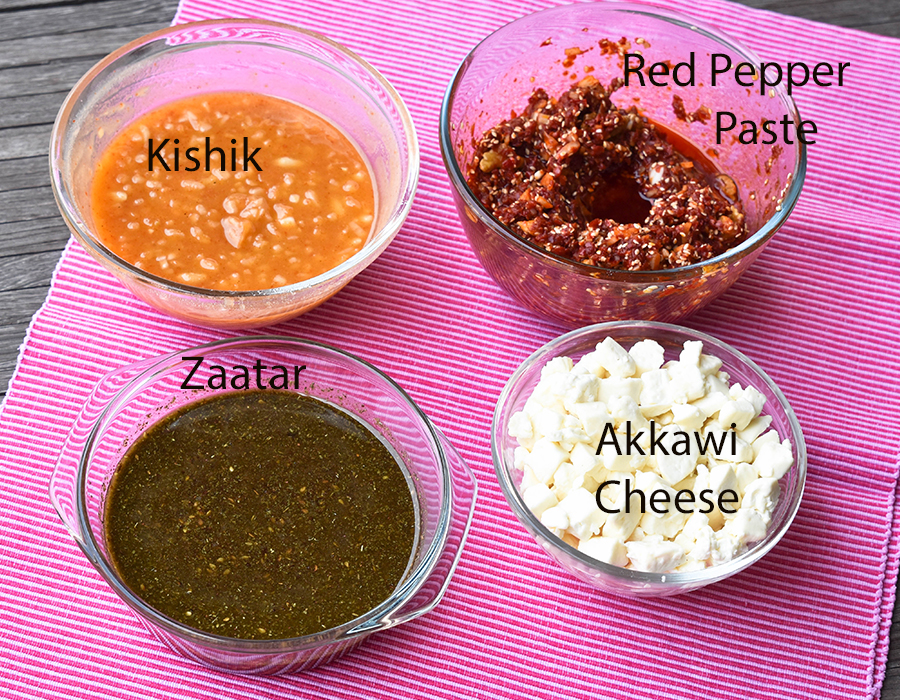
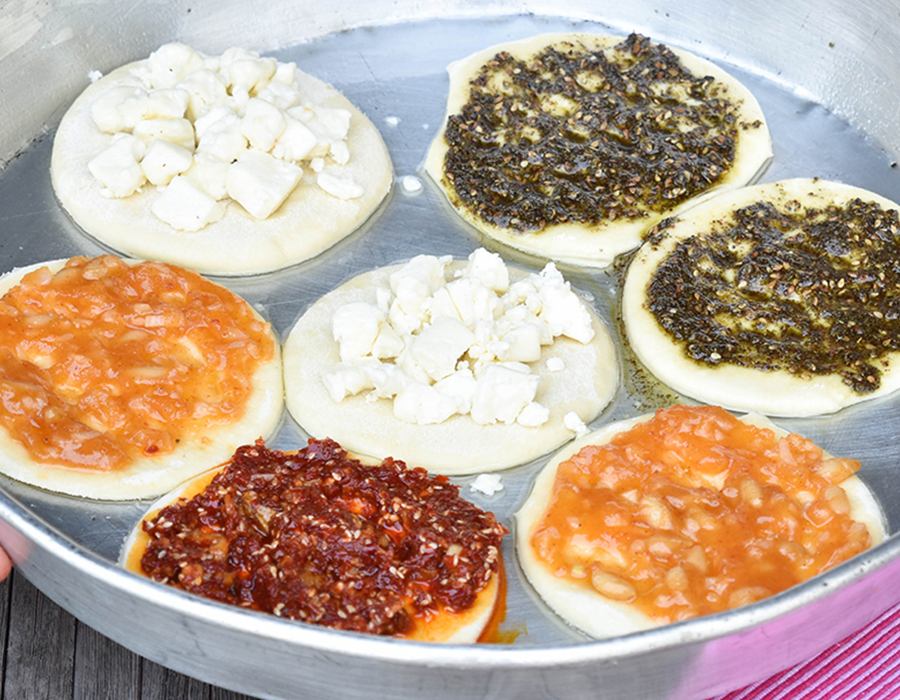
Prepare your toppings while the dough is resting. You can make all of the toppings listed below, or simply choose your favorites.
-
Za’atar Topping: In a bowl, combine the za’atar with olive oil, or a combination of olive oil and sunflower oil, until you have a moderately thick paste. Cover and set aside.
-
Cheese Topping: Cut the cheese into small squares, cover with water, and soak for 8 hours, changing the water every hour to reduce its saltiness. If Akkawi cheese is unavailable, the best substitute is a combination of mozzarella with a small amount of feta cheese.
-
Kishik Topping: In a small bowl, combine the onion, kishik, olive oil, tomato paste, a pinch of salt, cayenne or hot pepper, and pine nuts, if using. Mix well until you have a moderately thick paste. Cover and set aside.
-
Red Pepper Paste Topping: In a small bowl, combine the red pepper paste, onion, sesame seeds, chopped walnuts, olive oil, salt, and your favorite hot pepper, cayenne, or chili flakes. Mix well until all the ingredients are thoroughly combined and you have a moderately thick paste. Cover and set aside.
Step-by-Step Instructions: How to Shape and Bake
-
When the dough has doubled in size, lightly flour a clean work surface and your rolling pin. Divide the dough into 3 equal portions to make rolling easier. Working with one portion at a time, roll the dough to an even thickness of about ½ inch. Cut into large or small circles, depending on your preference. Gather the scraps, re-roll them, and continue until all the dough has been used.
-
Spread about 1–2 tablespoons of your chosen topping over each circle, depending on its size, leaving a ¼-inch border around the edge. Choose your favorite topping, or use all four for a deliciously varied manakish platter.
-
Arrange the unbaked manakish on baking sheets and let them rest for 20 minutes for a second fermentation.
-
Preheat the oven to 500°F (260°C), with a rack positioned in the center.
-
Transfer the manakish to lightly greased baking sheets. Depending on the size of your manakish, you will most likely need more than one sheet.
-
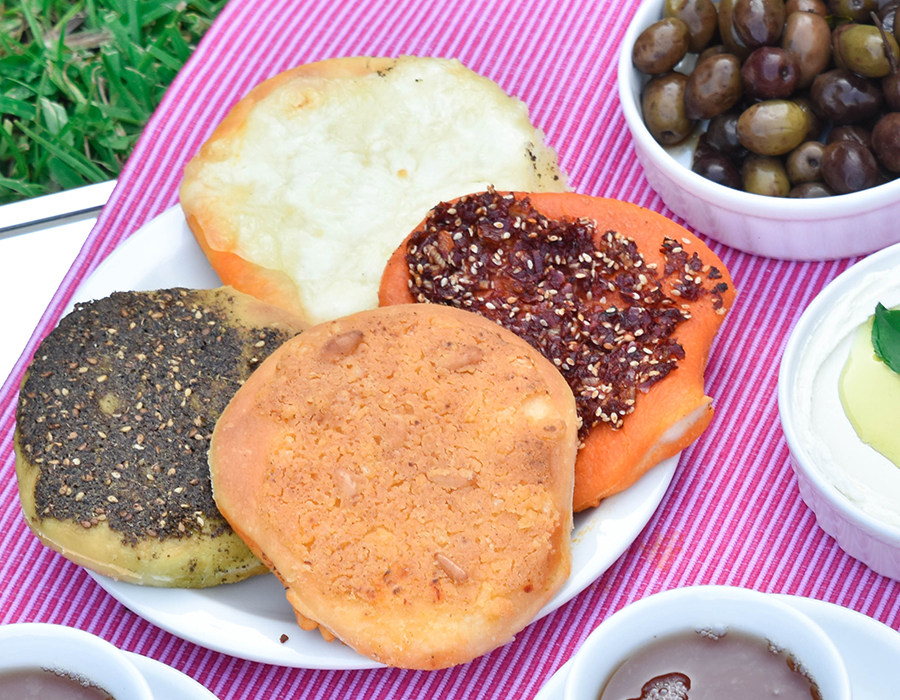
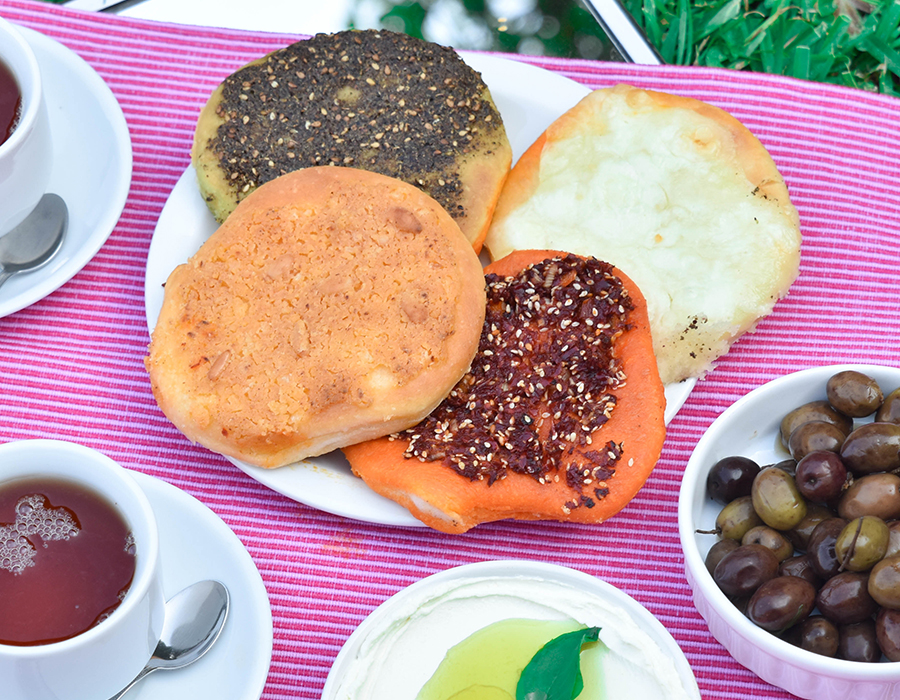
Bake one sheet at a time for about 10 minutes, or until the manakish are lightly browned and crisp around the edges. Remove them from the baking sheet with a spatula and serve warm with labneh, labneh balls, olives, and tea.
Heavenly delicious!

Tips for Serving and Pairing Your Lebanese Flatbread
Tea is the soulmate of manakish! Serve them with labneh, labneh balls, olives, makdous/mamdous zaitoun, and foul medames to create a delicious Lebanese breakfast feast.
Storage
Manakish are best enjoyed fresh, but they can be stored in an airtight container for up to 1 week and briefly reheated in the oven.
For longer storage, let the manakish cool completely after baking, then place them in freezer-safe plastic bags and freeze. Using our method, they will keep beautifully in the freezer for up to 3 months.
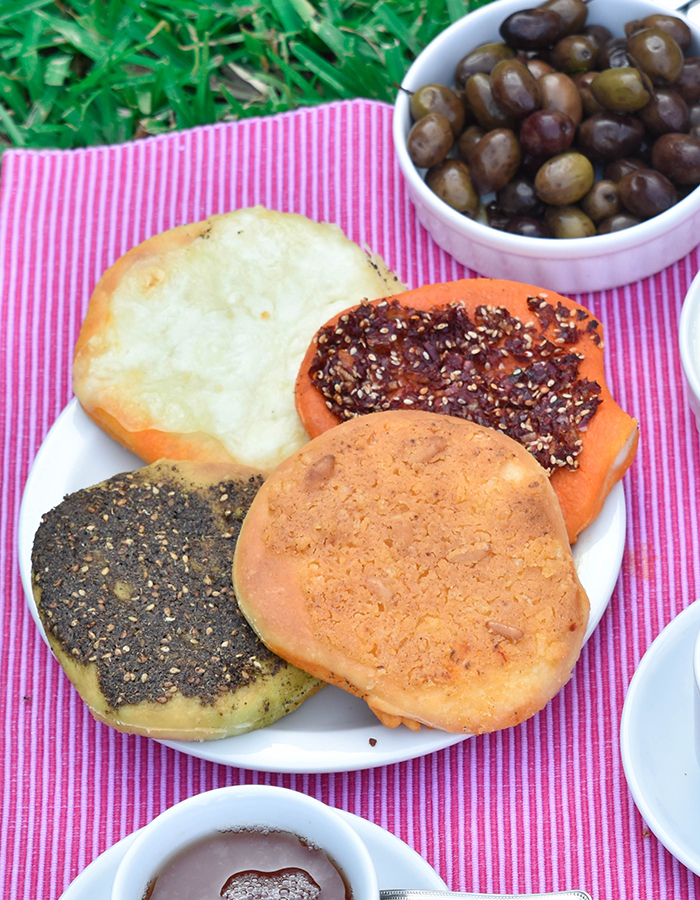
You truly don’t need much to make amazing manakish at home. It all starts with great dough and high-quality toppings. This simple recipe delivers wonderful results every time, making it easy to enjoy delicious homemade manakish right from your own kitchen.
Rate and Review!
If you’ve made this recipe, please leave a rating and review! I love hearing how you’ve adapted my recipes to suit your own tastes, so please share how it turned out for you. Your feedback also helps other readers discover and enjoy my recipes.
Looking for more savory Lebanese baking? We got you covered.
- Sfeeha, Lebanese Meat Pies
- Meat Fatayer, Lebanese Meat Turnovers
- Kalita North Lebanese Flat Kaak
- Kaak Alasrieh
- Vegetable Manakish
 Let’s Stay in Touch!
Facebook, Instagram, YouTube , Pinterest and TikTok!
Manakish
Description
Ingredients
For the Dough
- 1 kg / 2 lb 4 oz all-purpose flour
- 1½ tablespoons instant dry yeast
- 3 tablespoons full-fat powdered milk — please read the note below about the dairy in the dough for substitutes
- 2 tablespoons whole-milk yogurt
- ⅓ cup olive oil
- 3 tablespoons sugar
- 1½ teaspoons salt
- 2¼ cups lukewarm water or as needed to form a cohesive dough. You may need to add more water, depending on the flour you are using. Add more if necessary to achieve a cohesive dough ball.
Toppings
Zaatar Topping
- ½ cup zaatar
- ⅓ cup olive oil or a mixture of olive oil and sunflower oil to prevent the manakish from burning
Cheese Topping
- 250 grams / 9 oz Akkawi cheese
Kishik Topping
- ½ cup kishik
- 1 small onion finely chopped
- ½ teaspoon tomato paste
- ⅓ cup olive oil or more as needed to form a paste
- A dash of chili flakes optional
- 3 tablespoons pine nuts optional
Red Pepper Paste Topping
- ½ cup red pepper paste
- 1 small onion finely chopped
- ¼ cup olive oil or more as needed to form a paste
- 2 tablespoons white sesame seeds
- Crushed habaneros optional
- Salt to taste
Sunflower oil, for greasing the baking sheets
Instructions
To Make the dough:
- In a large bowl, mix the flour, salt, sugar, instant dry yeast, and oil.
- Add the powdered milk, yogurt, and lukewarm water, and mix well, using your hands to incorporate all the ingredients. When the mixture starts to come together, knead it thoroughly until you have a soft, malleable dough. If the dough is too dry, add more water, 1 tablespoon at a time. If it is too sticky to handle, add more flour, 1 tablespoon at a time. Be careful not to add too much extra flour—you want the dough to remain soft and slightly tacky.Slap the dough against the counter a few times to help develop the gluten. Place the dough in a greased bowl, cover with plastic wrap, and set aside for 1 hour, or until it has doubled in size.
Prepare your toppings while the dough is resting. You can make all of the listed toppings or simply choose your favorite.
- The zaatar topping: In a bowl, mix the zaatar with olive oil, or a combination of olive oil and sunflower oil, until you have a moderately thick paste. Cover and set aside.
- The cheese topping: Cut the cheese into squares, cover it with water, and soak it for 8 hours, changing the water every hour to reduce its saltiness. The best substitute for Akkawi cheese is a combination of mozzarella and a small amount of feta cheese!
- Kishik Topping: In a small bowl, mix together the onion, kishik, light olive oil, tomato paste, a pinch of salt, cayenne or hot pepper, and pine nuts (if using) until you have a moderately thick paste. Cover and set aside.
- Red Pepper Paste Topping: In a small bowl, combine the red pepper paste, onion, sesame seeds, chopped walnuts, olive oil, salt, and your favorite hot pepper, such as cayenne or chili flakes. Mix well until the ingredients are thoroughly combined and the mixture reaches a moderately thick, spreadable consistency.
- Now your toppings are ready.
Assemble and Bake!
- When the dough has doubled in size, sprinkle some flour on a clean countertop and dust your rolling pin with flour. Divide the dough into 3 equal portions to make it easier to roll. Working with one portion at a time, roll the dough out to an even thickness of 1/2 inch (13 mm). Cut out large or small circles, depending on your preferred size. Gather the scraps, re-roll them, and continue cutting. Repeat with the remaining dough.
- Lightly grease the oven sheets with sunflower oil, then transfer the round dough onto them. You will need more than one sheet.
- Spread roughly 1–2 tablespoons of your chosen topping, depending on the size of your manakish (choose your favorite, or use all four toppings for a varied manakish platter), over the dough, leaving a ¼-inch border. Dimple the manakish with your fingers.
- Let the unbaked manakish rest for 20 minutes for a second fermentation.
- Preheat the oven to 500°F (260°C), with a rack in the center.
- Bake one sheet at a time for about 8 minutes, until lightly browned and crispy. Remove with an oven spatula.
- Serve warm with labneh, labneh balls, olives, and tea. Heavenly delicious!
Video
Notes





















2 Comments
[…] you’re a regular reader on our blog, you must have encountered our popular oven baked manakish recipe with 4 different toppings. This is equally good but with different dough texture, here is a thin dough similar in a way to […]
[…] Lebanese Manakish (4 Toppings) […]