


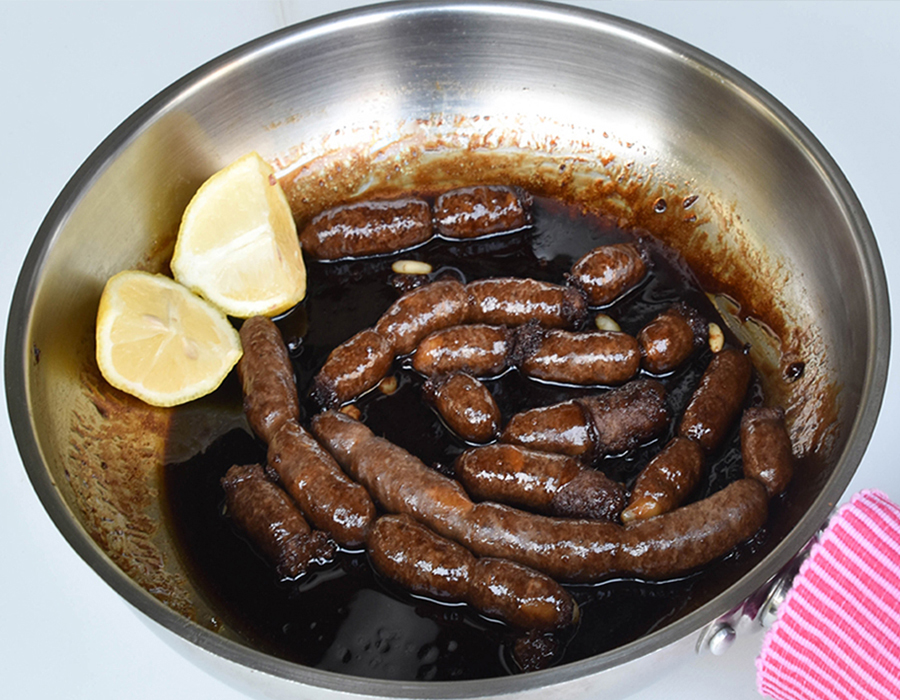
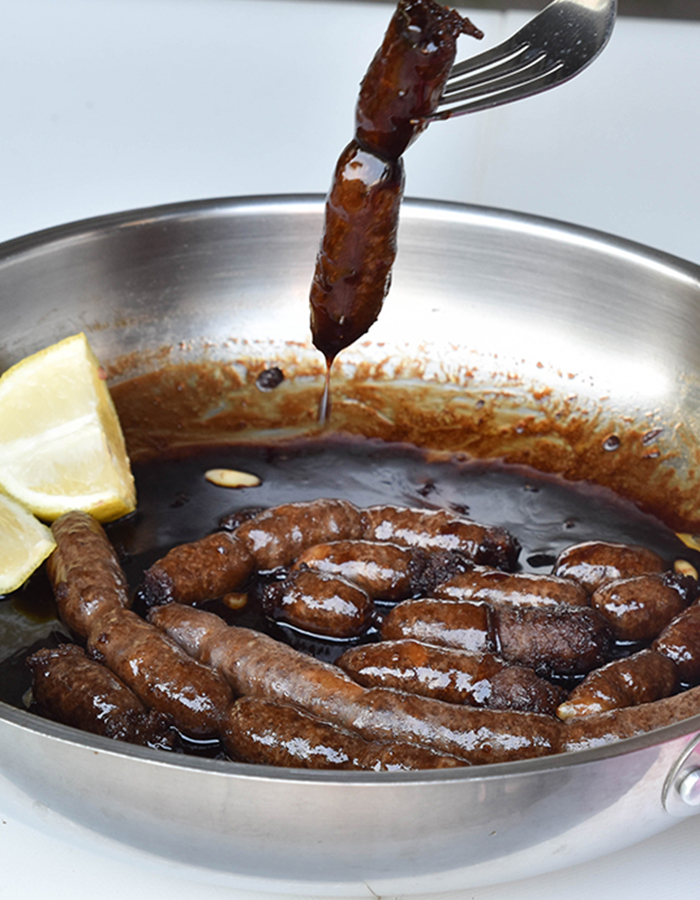
Do you love makanek? These flavorful Lebanese sausages are a classic mezze dish, made with small, juicy sausages sautéed until browned and cooked in their own juices. They’re seasoned with fresh lemon juice and finished with a generous drizzle of pomegranate molasses, creating a rich, tangy sauce that’s irresistible with Lebanese bread. Easy to make and packed with flavor, makanek makes a delicious Lebanese appetizer—or a satisfying meal on its own.

Is It Difficult to Make Makanek at Home?
No, not at all! Making makanek at home may take a few attempts to get the hang of, but it is absolutely doable.
In Lebanon, busy cooks often buy makanek from their local butcher, already stuffed into casings and hung in strings, ready to cook in a skillet—even at the last minute. But if you want to learn how to make Lebanese makanek from scratch, including how to stuff the sausage into casings, this is a rewarding culinary skill to master.
In this post, I’m sharing two ways to make makanek at home. The first is the classic method, using sausage casings to make traditional Lebanese makanek. The second is a simpler shortcut version made without casings. It may be less tedious and not quite as neat-looking as traditional makanek, but it is still delicious.
So, which method should you choose? Try the traditional makanek recipe with casings if you want the classic experience, or go for the casing-free version if you’re looking for an easier way to make makanek at home.
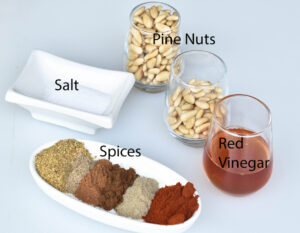
Ingredients to Make Makanek
Ground Meat
A blend of spices
Pine Nuts
Red Vinegar
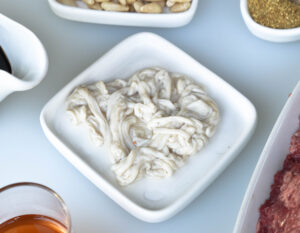
Soak the casings in cold water with a few drops of vinegar for 1 hour, then rinse them thoroughly under running water. Keep the casings wet while working with them, as they are easier to handle and control when wet.
Prepare the mixture.
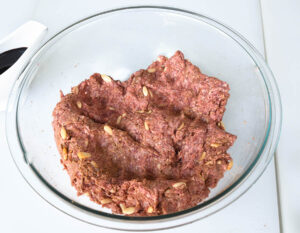
In a bowl, combine the salt, coriander powder, paprika, ground nutmeg, cumin powder, grated black pepper, grated white pepper, clove powder, and red vinegar. Add the minced meat and pine nuts, and stir well until the mixture is thoroughly combined.
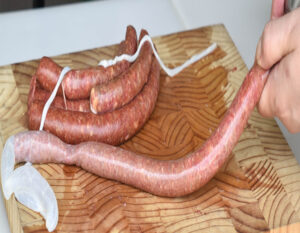
How to Stuff Makanek Sausage Links
Who doesn’t love the classic look of makanek sausage links? Once your meat mixture and sausage casings are ready, it’s time to stuff the makanek and shape them into traditional links.
Pipe the Meat Into the Casing
Pull out a funnel and lightly wet it. Take one sausage casing at a time and attach it to the tip of the funnel. This is a delicate process, so be patient and handle the casing gently.
Fill the funnel with the prepared meat mixture. Gently hold the casing in place on the funnel, or ask someone to hold it for you, while applying just enough pressure to keep it secure. Use one finger to press the meat down through the funnel and into the casing. For a visual demonstration, watch the accompanying video tutorial.
As the makanek sausage mixture begins to fill the casing, hold the end of the casing and gradually draw it out as it fills. When you reach the end of the casing, tie a simple knot.
As the casing fills, it will naturally form a long sausage rope. Aim for a firm sausage, but avoid packing the casing too tightly. Do not overfill the casing, as it can burst.
If the casing bursts, simply cut it at the tear and tie off both ends. Then continue filling the remaining casing still attached to the stuffing funnel.
If the remaining casing tail is too short to tie a knot, squeeze the last bit of meat out of the casing and add it back to the ground meat mixture. You can use it when making your second batch of makanek.
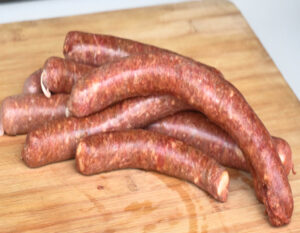
Twisting makanek coils into links! It’s best to make the links while the casing is still wet and pliable.
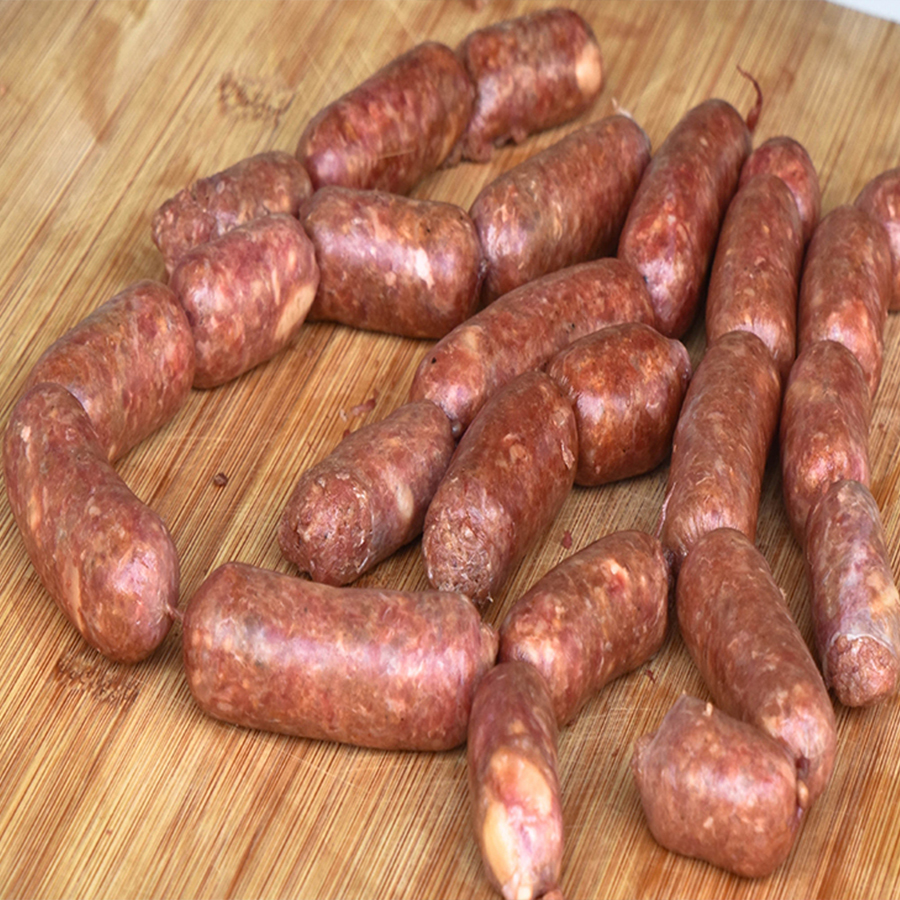
Decide on the desired sausage link length (usually 5 cm). Press down lightly and begin to twist. Twist well, then continue twisting the link for one additional complete rotation. Repeat until the entire coil has been divided into links.
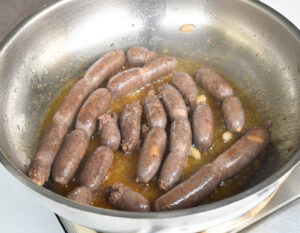
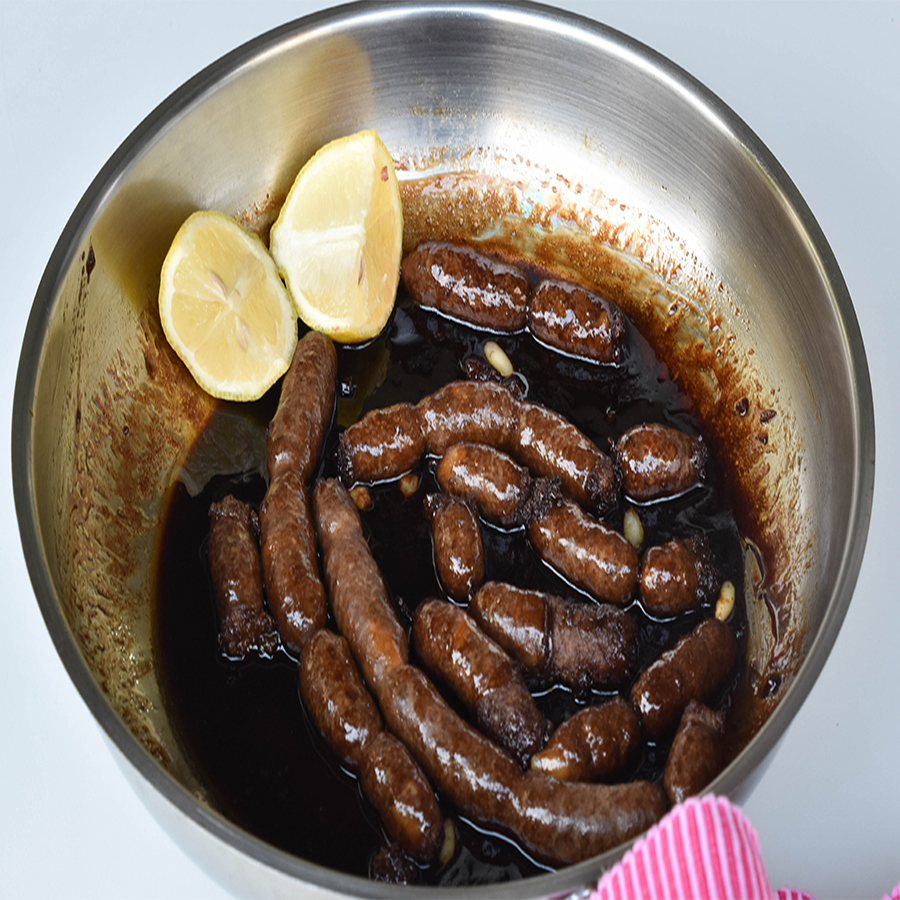
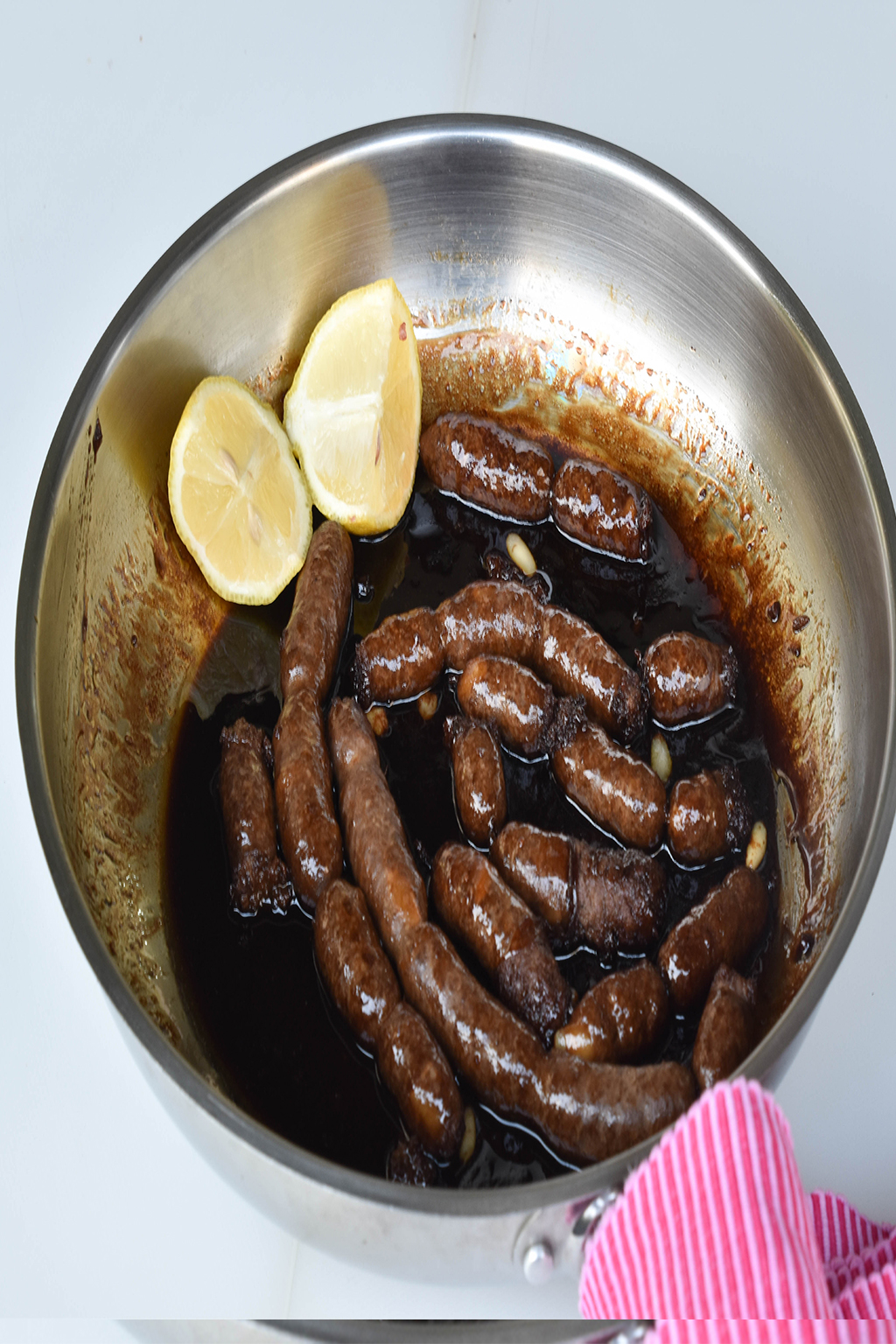
Heat the oil in a large skillet. Add the makanek and sauté over medium heat for about 8–9 minutes, turning them every few seconds to ensure they cook evenly. At this point, the makanek will begin to release their fats and juices. Stir in the freshly squeezed lemon juice and cook for another minute. Drizzle generously with pomegranate molasses, then toss the makanek until they are evenly coated. Serve warm with Lebanese bread and enjoy.
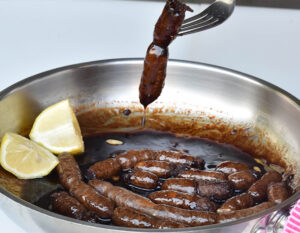
The pomegranate molasses added at the end creates a delicious gravy that gives the makanek a very subtle hint of sweet and tangy flavor.
Looking for more delicious Lebanese meat recipes? We’ve got you covered with a variety of authentic Lebanese meat-based dishes to try at home.
- Sujuk
- Lebanese Fried Kibbeh Balls
- Lebanese Beef Shawarma
- Arayes
- Grilled Kafta Kebabs
- Awarma, Lebanese lamb confit
- Sfeeha, Lebanese meat pies
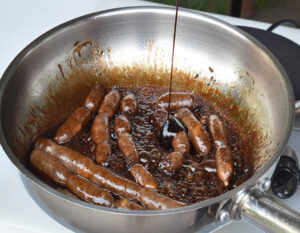
Makanek are delicious mini-style Lebanese sausages made with seasoned minced beef or lamb, traditionally stuffed into sausage casings. In our easy step-by-step video, you’ll learn how to make and encase makanek like a pro—without a sausage machine! All you need is a simple funnel to fill the casings.
We’ve also included an easy, adaptable makanek recipe without casings, giving you a simpler option to enjoy these flavorful Lebanese sausages at home. Choose the method that works best for you and discover how to make authentic Lebanese makanek with ease!
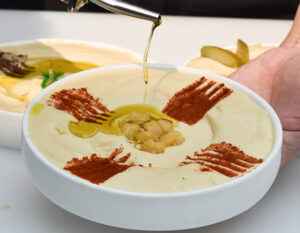
Serve it with our authentic, homemade hummus, freshly made from scratch for a rich and delicious taste.
 Let’s Stay in Touch!
Facebook, Instagram, YouTube , Pinterest and TikTok!
Makanek, Lebanese Mini Sausages
Description
Equipment
- Skillet
- Funnel
Ingredients
For the Makanek
- 1 kg 2 lb 4 oz ground beef or lamb, about 30% fat
- ⅓ cup pine nuts
- 1 teaspoon ground coriander
- 1 teaspoon paprika
- ½ teaspoon ground nutmeg
- ¼ teaspoon ground cumin optional
- ½ teaspoon freshly ground black pepper
- ½ teaspoon freshly ground white pepper
- ¼ teaspoon ground cloves
- ¼ cup red wine vinegar
- 1 tablespoon salt or to taste
2 tablespoons canola or sunflower oil, for frying the makanek
⅓ cup pomegranate molasses
4 tablespoons freshly squeezed lemon juice
Edible sheep casings — ask your butcher to provide them for you
Instructions
- Makanek with casings
- Soak the casings for 1 hour in cold water with a few drops of vinegar, then rinse them thoroughly under running water. Work with the casings while they are still wet, as they are easier to handle and control.
- In a bowl, combine the salt, coriander powder, paprika, ground nutmeg, cumin powder, grated black pepper, grated white pepper, clove powder, and red vinegar. Add the minced meat and pine nuts, and mix well until all the ingredients are evenly incorporated.
- Pull out a funnel and wet it slightly. Take one casing at a time and attach it to the tip of the funnel. This is a delicate process, so please be patient.Fill the funnel with the meat mixture and gently hold the casing in place on the funnel, or ask someone to hold it for you, applying just enough pressure to keep it secure. Use one finger to gently press the meat mixture down through the funnel and into the casing. Watch the video tutorial for guidance.As the meat mixture starts filling the casing, hold the end of the casing and gradually draw it out as it fills. Once you reach the end of the casing, tie a simple knot.
- As the casing fills, it forms a sausage. You’ll want it to be firm, but not too hard, as overfilling will cause the casing to burst.If this happens, cut the casing at the tear and tie it off at both ends. Then, continue filling the remaining casing on the stuffing tube.If the tail end isn’t long enough to tie a knot, squeeze the remaining meat out of the casing and add it back to the ground meat mixture to use in the second batch of makanek.
- Decide on the desired length of each makanek link (usually about 5 cm). Press down lightly and begin twisting. Twist firmly, then continue twisting the link for one additional complete rotation. Repeat until the entire coil has been formed into individual links. Your makanek are now ready to go into the frying pan.
- Heat the oil in a large skillet, add the makanek, and sauté over medium heat for about 8 to 9 minutes, making sure to flip them every few seconds. At this point, the makanek will start to render their fats and juices. Stir in the freshly squeezed lemon juice, cook for an additional minute, then drizzle with a generous amount of pomegranate molasses. Toss the makanek until they are fully coated.Pomegranate molasses is a big deal when it comes to makanek. Serve warm with Lebanese bread and enjoy!
- To make the Naked Makanek:Naked Makanek: This method is much less tedious, although the shape won’t be as perfect as when using casings. The mixture also needs to be refrigerated for at least 24 hours before cooking. The taste is great as well.

- In a bowl, combine the salt, coriander powder, paprika, ground nutmeg, cumin powder, grated black pepper, grated white pepper, clove powder, and red vinegar. Add the minced meat and pine nuts, and stir well until the mixture is thoroughly combined.
- Portion the meat into 10 equal mounds. Transfer one mound of meat onto a piece of plastic wrap. Shape it into a long, single sausage about ¾ inch in diameter, placing it along the near edge of the plastic wrap.Using your hands, create individual links by gently pinching and cutting the meat rope into mini makanek. Smooth each link with your hands. They won’t be as perfectly shaped as the ones made in casings, but they will still cook beautifully.Refrigerate the makanek for a minimum of 24 hours and a maximum of 48 hours. This will help them firm up and hold their shape better.
- Transfer your makanek to a skillet. The uncooked makanek should be cold, straight from the fridge. Be careful not to overcrowd the skillet; if needed, divide the makanek between two wide skillets.Add a drizzle of oil and cook, covered, over low heat for about 10 minutes. The meat and fat inside the makanek will cook, and some shrinkage may occur because, in this case, the meat itself holds in the juices rather than the casing.Raise the heat to high and allow the juices to evaporate considerably. Add a splash of lemon juice, then drizzle generously with pomegranate molasses.Enjoy!
Video
You can obviously see the difference between the picture above and the one below. The one above is made with casings, and the one below no casing is involved.
























1 Comment
Where can I buy already made makanek, online or at a shop in New York area ?