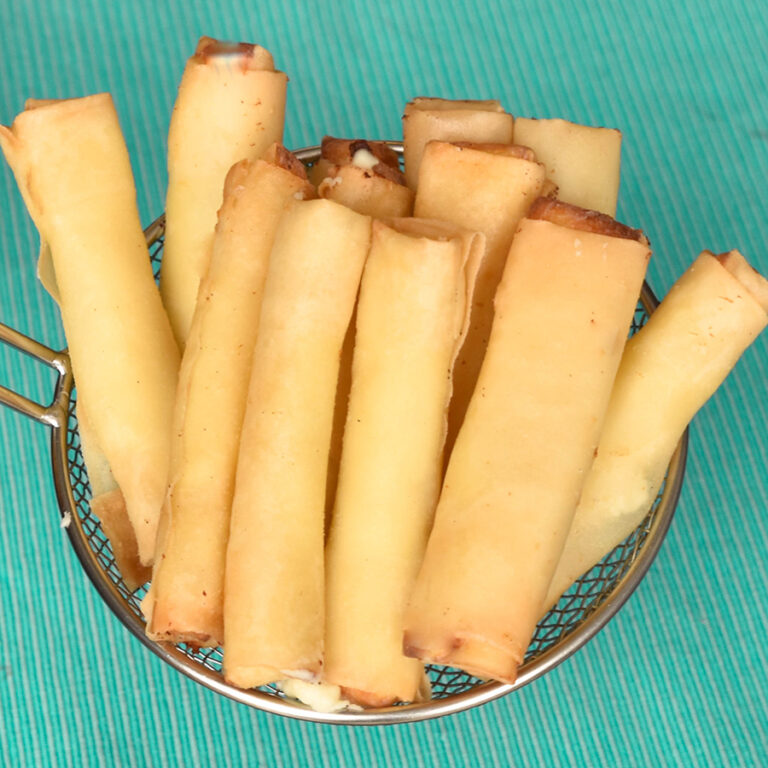


Briouats are traditional Moroccan pastries shaped into triangles and filled with an endless variety of sweet or savory fillings. Traditionally, they are made with a delicate Moroccan pastry called warqa (also known as al waraqa), which means “paper” in Arabic because of its incredibly thin, paper-like texture. This specialty pastry is readily available in Moroccan markets, but phyllo dough makes an excellent alternative and is easy to find.
Moroccan Shrimp Briouats are among my absolute favorite appetizers! These golden, crispy, flaky pastries are filled with perfectly seasoned shrimp and noodles, making every bite incredibly delicious. I’ve included a step-by-step video to guide you through the preparation, along with all my tips for making a batch ahead of time and storing them in the freezer.
They are perfect for preparing in advance for holiday gatherings, festive celebrations, or the holy month of Ramadan. Simply keep them in your freezer until you’re ready to cook and serve. Whether you’re planning a special holiday spread or looking for a delicious Moroccan appetizer to share with family and friends, these shrimp briouats are always a wonderful addition to the table. Trust me, they are seriously good!

Moroccan Briouats: A Ramadan Favorite, Sweet and Savory
My first encounter with Moroccan briouats was at an intimate dinner party hosted by a close Moroccan friend, and the memory of that first bite remains etched in my mind. One crunch into those delicate, paper-thin golden layers, revealing a wonderfully savory, aromatic filling, and I was instantly spellbound. It was pure love at first bite!
Later on, another gathering opened my eyes to the sweet side of these versatile pastries. This time, they came delicately laced with almonds and cinnamon, wrapped in that same signature crispy shell. Discovering that briouats could seamlessly transform from a deeply savory appetizer into a beautifully sweet dessert completely fascinated me.
It was during these shared moments that I learned just how deeply rooted these golden parcels are in Moroccan tradition. My friend shared that briouats are an absolute centerpiece on the Ramadan table, traditionally served at the iftar spread to complement a steaming, fragrant bowl of harira—Morocco’s iconic tomato-based soup. Whether savory or sweet, they are a beautiful testament to the warmth, richness, and generosity of Moroccan hospitality. It is no wonder they left such a lasting impression on my heart and kitchen!
Is It Difficult to Make Moroccan Briouats?
Making Moroccan briouats may seem intimidating at first, especially if you have never folded these delicate pastries before, but they are easier than you might think. The recipe involves just a few simple steps, and believe me, they are well worth the effort! Folding the briouats is probably the trickiest part, but once you get the hang of the technique, it becomes surprisingly easy. My step-by-step video tutorial will guide you through the folding process.

Ingredients Needed to Make Shrimp Briouats
- Glass noodles: They are sold in dried form and have a translucent appearance.
- Alwaraqa sheets, known also as brik pastry, can be found at Moroccan markets, the best substitute is phyllo dough, and that’s what i used in this recipe.
- Shrimp: Use shelled uncooked shrimp, devein if necessary.
- Garlic: Crush the garlic to bring out their flavor.
- Cilantro: adds a depth of agreeable herby taste.
- Spices used, a mix of cumin powder, paprika, cayenne and salt.
- Flour and water to make a paste to secure the briouats after folding.
- Sunflower oil for both filling and deep frying.
- Butter, to add a depth of flavor to the filling

Frequently Asked Questions About Moroccan Shrimp Briouats
Can I bake briouats instead of frying them?
Traditionally, Moroccan briouats are fried until golden and crispy, but you can certainly bake them for a lighter alternative. Keep in mind that baked briouats will have a slightly different flavor and texture compared to their fried counterparts. They may not be quite as crispy, but they are still delicious!
Can I freeze Moroccan briouats?
Absolutely! Briouats are ideal for freezing, making them a wonderful make-ahead appetizer for holidays, gatherings, and Ramadan. For the best results, freeze them before frying. Arrange the assembled briouats in a single layer on a baking tray and freeze uncovered until completely solid. Once frozen, transfer them to a freezer-safe ziplock bag and store them in the freezer until ready to cook.
How do I prevent phyllo dough from drying out?
If you are using phyllo dough instead of traditional Moroccan warqa pastry, thaw it slowly overnight in the refrigerator. This helps the delicate sheets thaw evenly. While working with the dough, keep the unused sheets covered with plastic wrap or a slightly damp kitchen towel to prevent them from drying out, cracking, or becoming difficult to handle.
Should the shrimp filling be hot or cold before folding the briouats?
Always allow the shrimp and noodle filling to cool completely before stuffing and folding the briouats. A hot filling can soften the delicate pastry, making it harder to handle and more likely to tear.
How do I seal Moroccan briouats so the filling doesn’t leak out?
To seal the briouats properly, brush the end of each pastry triangle with a little flour-and-water paste before folding it closed. This acts as a natural glue, helping secure the pastry and preventing the filling from leaking into the frying oil.
What is the ideal oil temperature for frying briouats?
The ideal temperature for deep-frying briouats is approximately 190°C (375°F). If the oil is too cool, the pastries may absorb excess oil and become greasy. If it is too hot, the outside can brown or burn before the pastry cooks evenly.
How do I prevent oil from splattering when frying briouats?
For easier and safer frying, use a deep, heavy-bottomed pot rather than a shallow skillet. Avoid overcrowding the pot, and gently lower the briouats into the hot oil. This also helps maintain a more consistent frying temperature.
How do I drain fried briouats?
Once golden and crispy, remove the briouats from the oil using a slotted spoon and place them on a plate lined with kitchen paper towels. This helps absorb excess oil while keeping the pastries crisp.
Can I use chicken instead of shrimp in briouats?
Yes! You can easily replace the shrimp with cooked chicken for a delicious alternative. Shredded or finely chopped cooked chicken works particularly well with the seasoned noodle filling. Simply follow the same preparation and folding instructions.


More Party Finger Food and Appetizer Recipes to Try
- Lebanese fried kibbeh balls
- Cheese samboussek
- Lebanese meat rolls
- Sfeeha, Lebanese meat pies
- Lebanese meat fatayer
 Let’s Stay in Touch!
Facebook, Instagram, YouTube , Pinterest and TikTok!

Moroccan Shrimp Briouats
Description
Ingredients
- 1 package phyllo dough
- 250 g glass noodles
- 300 g shrimp peeled and deveined
- 1 handful chopped cilantro
- ¼ cup sunflower oil
- 1 tablespoon butter
- ½ teaspoon ground cumin
- 1 tablespoon paprika
- 4 garlic cloves crushed
- Salt to taste
- ½ teaspoon cayenne pepper or to taste
For the flour-water paste:
- ¼ cup all-purpose flour
- ¼ cup water
Instructions
- When working with phyllo dough, always thaw it properly overnight in the refrigerator. This slow, cold process prevents the paper-thin sheets from absorbing excess moisture or drying out and cracking. If you are using brik pastry, you can skip this step entirely.
- Bring water to a boil in a medium pot, add the vermicelli noodles, and remove from the heat. Let the noodles soak for 5 minutes, then strain them thoroughly. Leave them to cool slightly, then roughly chop the vermicelli with a sharp knife.
- Heat the oil in a large skillet, add the butter, and stir in the shrimp. Sauté for just 2 minutes until they turn from translucent to opaque, then remove them with a slotted spoon and set aside. Cut the shrimp into 1-inch pieces.
- To the same skillet, add the crushed garlic, cilantro, ground cumin, cayenne pepper, paprika, and salt. Cook over medium heat for about 3 minutes, stirring frequently, to allow the spices to bloom and fuse with the garlic and cilantro. In Moroccan cuisine, this fragrant spice mixture is known as chermoula."Add the cooked vermicelli and shrimp to the skillet, tossing well to thoroughly infuse them with the flavors of the chermoula. Taste a small bite to adjust the salt to your preference, then remove from the heat and allow the mixture to cool down completely.

- In a small bowl, whisk together the flour and water to form a smooth paste.
- Cut a single phyllo pastry sheet into three equal strips. Immediately cover them with a plastic wrap or a damp kitchen towel to prevent them from drying out. Take two of the strips and lay them directly on top of each other.
- Place a heaping tablespoon of the filling in the bottom right-hand corner of the pastry strip. Fold the corner to the left to form a neat triangle, then flip it upward and to the right. Continue folding the triangle, flipping it right and then left until you reach the end of the strip. Brush the edge with the flour-water paste to securely seal the briouats. Watch the video tutorial below to see exactly how it’s done.
- Heat the oil to a proper frying temperature and fry the shrimp briouats in batches, being careful not to crowd the pan, until they turn a beautiful golden brown. Remove them with a slotted spoon and serve warm. Delicious!

Video