


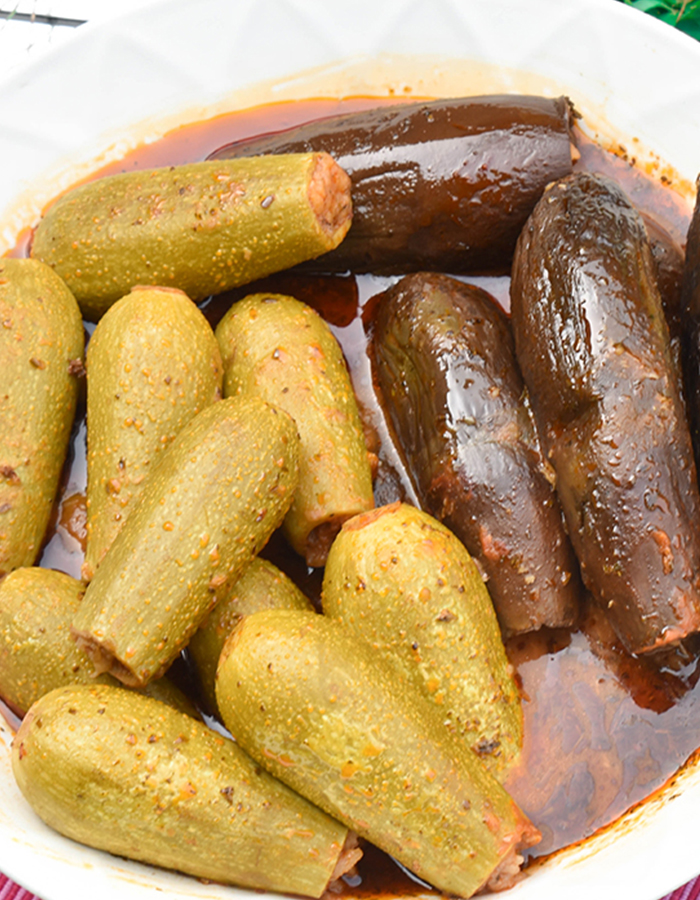
What is Mahshi?
The Best Vegetables for Authentic Mahshi

Key Flavor Enhancers & Ingredient Tips
-
- The Spices: A fragrant combination of Lebanese seven-spice, warm ground cinnamon, and sharp white pepper gives the meat filling its signature Middle Eastern aroma.
- Dried Mint & Garlic: This dynamic duo is responsible for the signature base flavor of the tomato broth.
- The Meat: Minced lamb is traditional and highly recommended for its rich flavor, but ground beef works beautifully too. Look for a blend with around 25% fat to keep the filling juicy.
- The Rice: Always use short-grain rice (such as Egyptian rice or Italian Arborio). Short-grain rice absorbs less liquid structurally, creating a perfectly sticky, cohesive filling inside the core.

How to Upcycle Leftover Zucchini Flesh
How to Make
-
- Wash the zucchini and eggplants thoroughly. Trim the stems and slice off any dried tips.
- Core the Zucchini: Insert a mankara (Middle Eastern zucchini corer) into the top stem end. Carefully hollow out the center by rotating the tool, removing the core while keeping the exterior wall intact. Aim for an interior wall thickness of about ⅓ inch (¾ cm). Take your time so you don’t pierce the bottom or sides!
- Core the Eggplants: Before coring, roll each eggplant back and forth on a flat countertop while applying gentle pressure with your palm. This softens the flesh inside, making it significantly easier to hollow out using your mankara.
-
- Place the short-grain rice in a colander and rinse under cold water. Rub the grains gently to wash away excess surface starch, then drain completely.
- In a medium mixing bowl, combine the rinsed rice, minced meat, ghee (or oil), seven-spice, cinnamon, white pepper, and salt. Mix thoroughly with your hands until uniform.
-
- Using your fingers, gently push the meat and rice mixture into the hollowed zucchini and eggplants.
- Crucial Tip: Leave about a ¼ inch (½ cm) gap at the very top of each vegetable. Do not overstuff or pack the filling too tightly; the short-grain rice needs room to expand as it absorbs the cooking liquid.
-
- Arrange the stuffed vegetables neatly in a large, deep pot, keeping the open, stuffed ends facing upward if possible.
- Whisk the tomato paste and crushed garlic into 8 cups of water until fully diluted. Gently pour this tomato broth over the vegetables until they are nearly submerged.
- Bring the liquid to a rolling boil over medium-high heat.
- Once boiling, sprinkle the dried mint leaves over the top and season the broth with salt to taste.
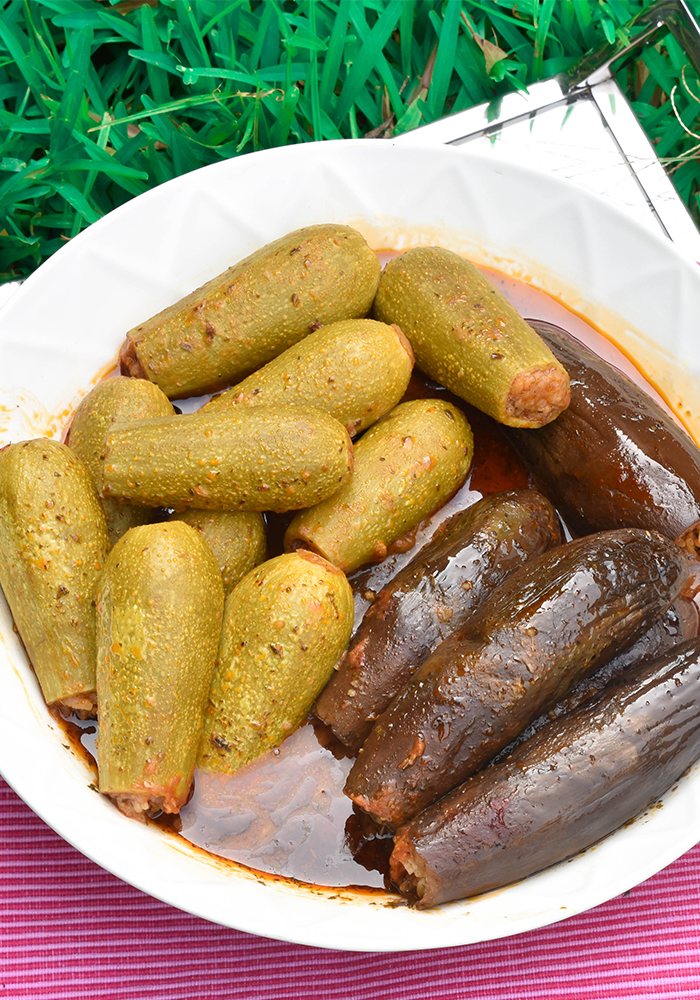
- Reduce the heat to low, cover the pot with a tight-fitting lid, and let it simmer slowly for 1½ to 2 hours. The vegetables are done when they are completely tender and the rice filling is fully cooked.
Storage and Freezing Instructions
-
- To Store: Allow the dish to cool completely to room temperature. Transfer the vegetables and tomato sauce into airtight containers and refrigerate for up to 4–5 days. The flavors deepen and taste even better the next day!
- To Freeze: Store the cooked batch in a freezer-safe container for up to 3 months. Note that freezing may slightly soften the texture of the vegetable skins upon thawing.
Frequently Asked Questions
How do I prevent my stuffed zucchini and eggplant from splitting while cooking?
The key is to avoid overstuffing the vegetables. Leave about a ¼-inch (½ cm) gap at the top to allow the rice to expand. Also, maintain a gentle simmer rather than a rapid boil to help the zucchini and eggplants hold their shape.
Can I make Kousa Mahshi ahead of time?
Absolutely! You can core and stuff the zucchini and eggplants up to 24 hours ahead. Arrange them in your cooking pot, cover, and refrigerate until ready to cook. Once prepared, the dish also tastes wonderful the next day, as the flavors have more time to develop.
Can I make a vegetarian version of Kousa Mahshi?
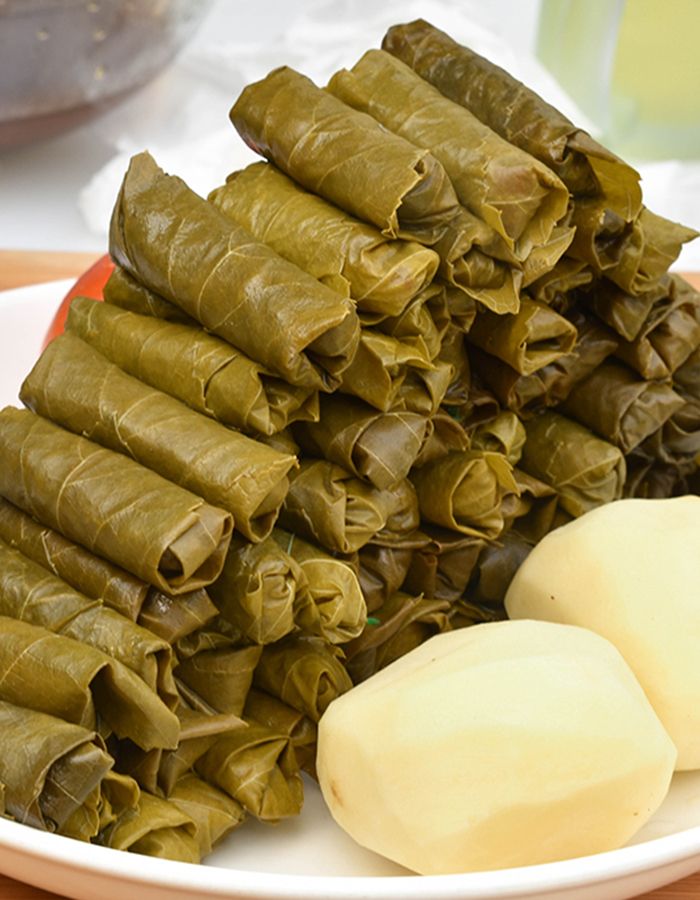
Yes! For a vegetarian variation, known as Kousa Mahshi bil Zeit, use the rice and herb filling from my Lebanese Vegetarian Stuffed Grape Leaves (Warak Enab). It combines short-grain rice, tomatoes, fresh herbs, olive oil, lemon juice, and pomegranate molasses. Stuff the vegetables loosely and simmer in the garlicky tomato broth until tender.
What should I serve with Lebanese Kousa Mahshi?
Kousa Mahshi wa Batenjan is a satisfying one-pot meal, traditionally served with cold plain laban (yogurt) to complement the savory tomato broth. Lebanese Fattoush salad and warm pita bread are also lovely accompaniments.
More Authentic Lebanese Zucchini Recipes to Try
 Authentic Kousa Ablama Bil Laban (Meat-Stuffed Zucchini in Yogurt)
- Stuffed Zucchini and Grape Leaves (Kousa wa Warak Inab)
- Authentic Lebanese Kousa Ablama (Meat Stuffed Zucchini)
- Kousa Bil Laban (Lebanese Stuffed Zucchini in Yogurt)
- Zucchini Scrambled Eggs (Kousa Wbeid)
- Lebanese Zucchini Fritters
- Lebanese Stewed Zucchini in Tomatoes
 Let’s Stay in Touch!
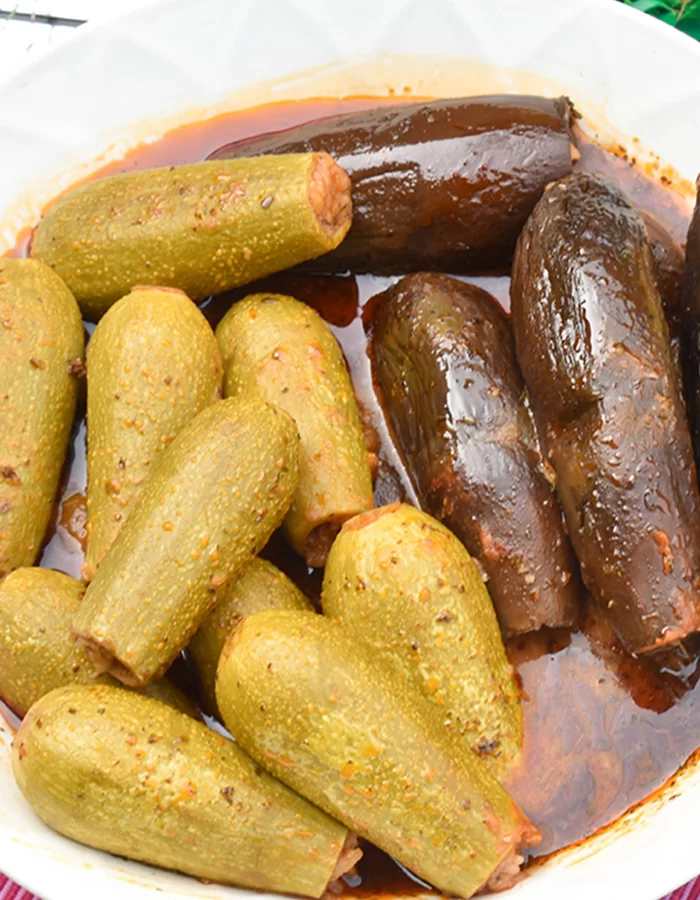
Authentic Kousa Mahshi (Lebanese Stuffed Zucchini & Eggplant)
Description
Equipment
- vegetable corer
- Pot
Ingredients
- 1 kg / 2 lb 4 oz small Lebanese zucchini grey squash
- 1 kg / 2 lb 4 oz slim eggplants
- 500 g / 1 lb 2 oz lamb or beef either works well; preferably about 25% fat
- 1 level teaspoon seven-spice
- ½ teaspoon ground cinnamon
- A pinch freshly grated white pepper
- Salt to taste
- ¼ cup sunflower oil
- 8 garlic cloves crushed
- 1 tablespoon dried mint leaves
- 1 tablespoon ghee or butter
- 2 cups short-grain rice such as Arborio or Egyptian rice
- 2 heaping tablespoons tomato paste
Instructions
- Separately wash the zucchini and eggplants. Trim the ends, cutting off the stalk ends and any dried tips.
- Start by coring the zucchini: Using a mankara (a tool traditionally used in the Middle East to core the pulp out of zucchini and eggplants), try to hollow out the zucchini just as you would when carving a pumpkin. Hollow out the center, leaving about 1/3 inch (¾ cm) of flesh around the interior wall—and maybe more if you can manage it without poking through the zucchini.It is simple, but it is a skill that takes a bit of practice to master.
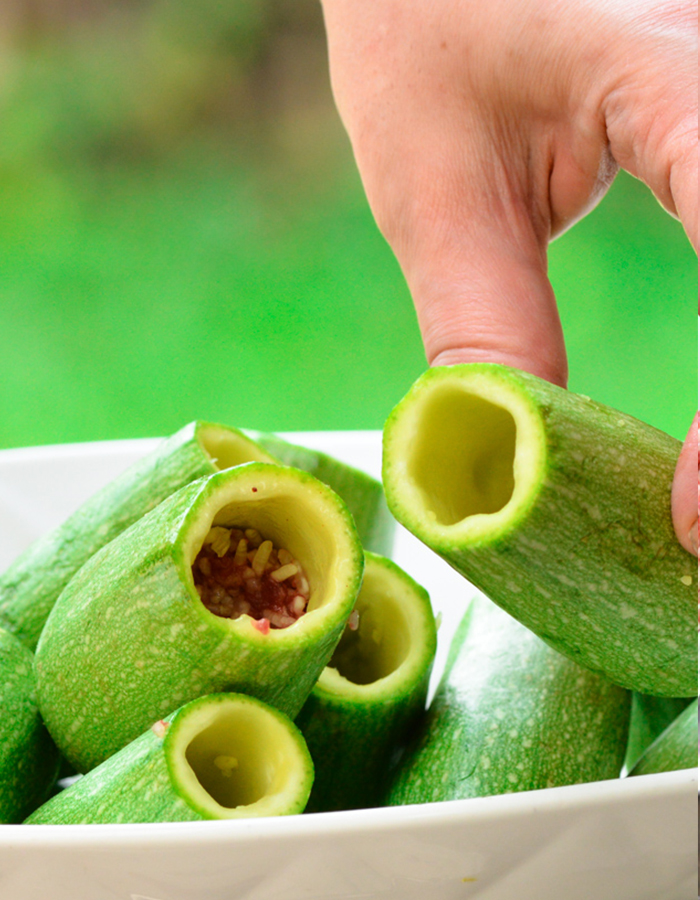
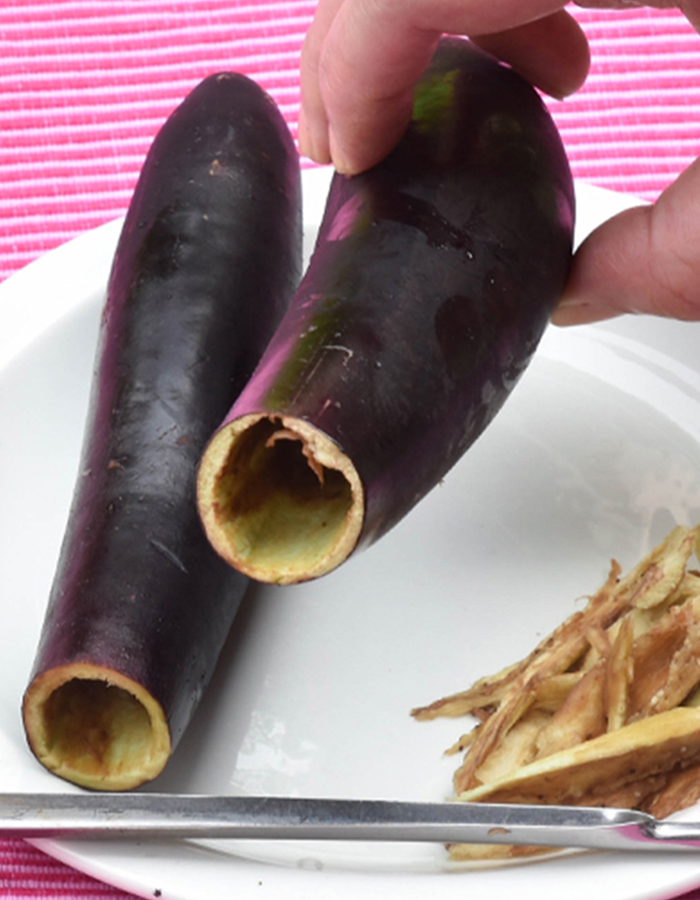
- To core the eggplants: Roll the eggplants on a countertop, one at a time, back and forth, applying pressure with your hand. This will make the eggplants more tender, which makes the coring process much easier. Hollow them out using the same method you used with the zucchini, and perhaps hollow out a little more around the interior walls of the eggplants.
- In a colander, rinse the rice under cold running water, rubbing it gently with your hands to remove as much excess starch as possible. Drain well. Mix the rice with the minced meat and oil, then season with spices and salt. Your filling is now ready.
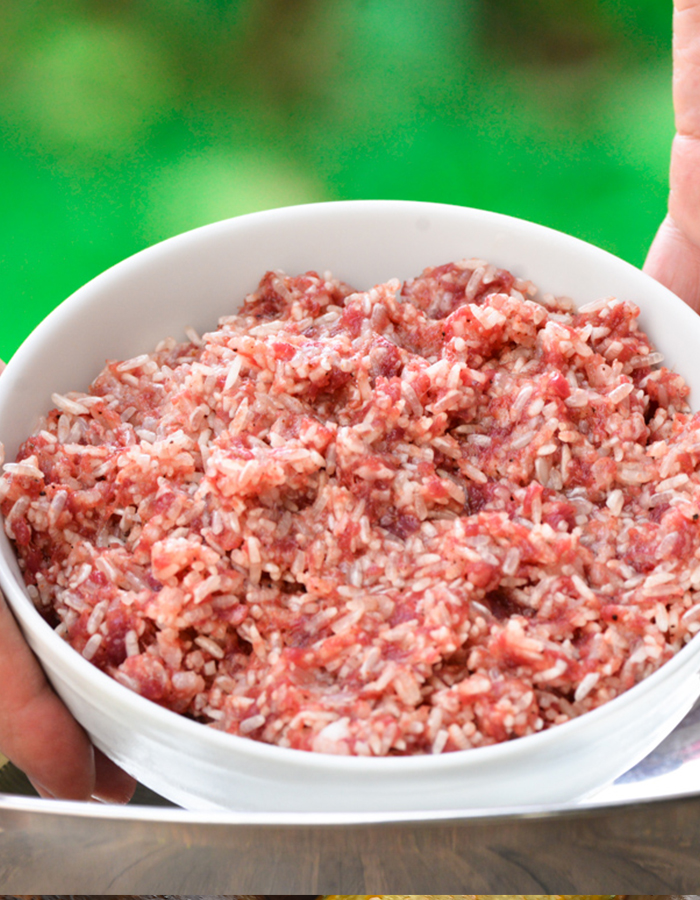
- Using your finger, stuff each zucchini and eggplant with the rice and meat filling, leaving about ¼ inch (½ cm) of space at the top to allow for the rice to expand as it cooks. It is important not to overstuff.
- Transfer the stuffed vegetables to a large pot that can accommodate them. Dilute the tomato paste in the 8 cups of water, add the crushed garlic, and whisk to combine. Gently pour the mixture over the vegetables, almost covering the zucchini (kousa) and eggplants. Make sure the stuffed ends are facing up
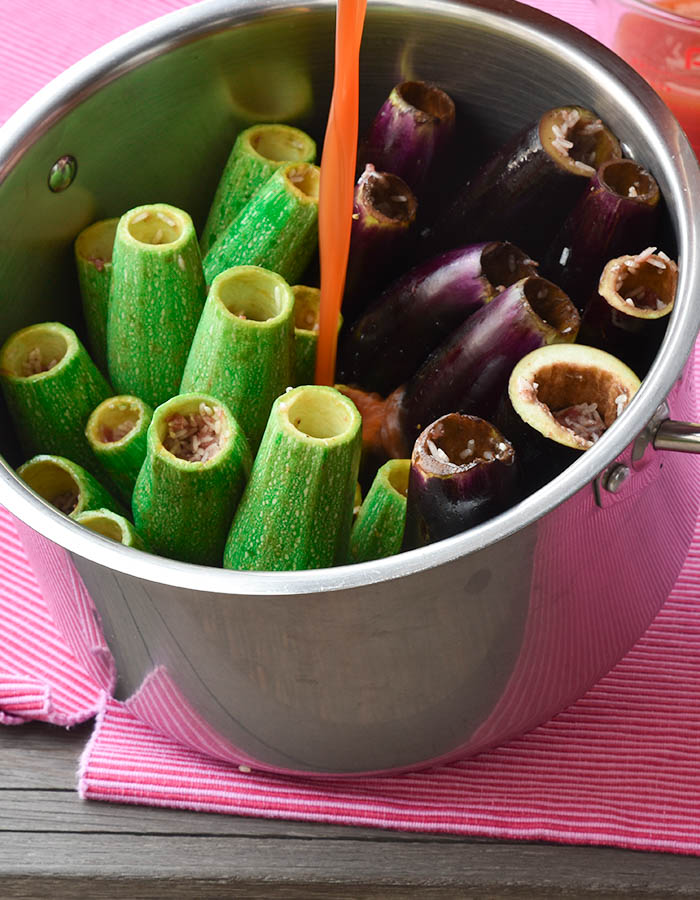
- Once the mixture comes to a boil, sprinkle with dried mint, add the ghee or butter, and adjust the salt to your taste. Reduce the heat to low, cover, and let it simmer for 1½ to 2 hours, allowing the zucchini to cook through and the flavors to mellow and develop together. Watch the detailed video tutorial below. Serve with laban!
Video
Notes






















9 Comments
Just like my mum made
Just like Mum made
Great Carol, it’s a delectable dish.
[…] Lebanese Stuffed Zucchini and Eggplant […]
[…] dishes. My aunt and mom would prepare koussa bil banadoura (zucchini stewed with tomatoes), koussa mahshi (stuffed zucchini), koussa w bayd (zucchini with eggs), and so much more. It was, without a doubt, a day devoted […]
Best kousa wa batemjan. Excellent recipe.
Thank you, Rawad, for the feedback.
What a délectable kousa. The is the first time I pair eggplants with squash, I will be forever following this recipe.
Thank you so much, John, for your lovely comment! I’m delighted you enjoyed the kousa mahshi. Pairing eggplants with squash is such a wonderful combination, isn’t it? I’m thrilled this recipe has won you over, and I hope you enjoy making it for years to come!