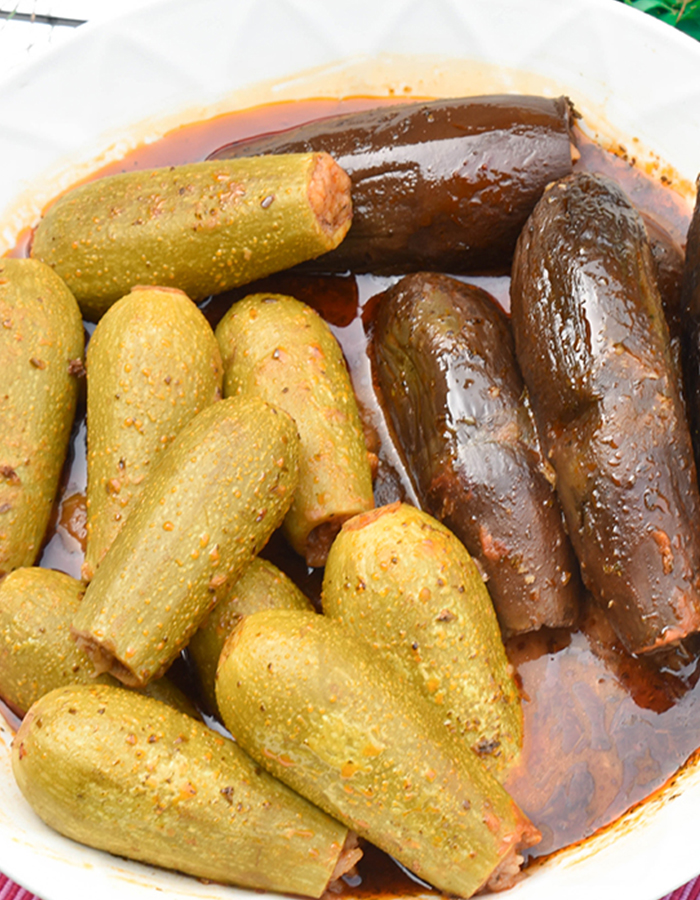
Authentic Kousa Mahshi (Lebanese Stuffed Zucchini & Eggplant)
Description
Stuffed Zucchini and Eggplant, or Koussa Mahshi wa Batenjan, reminds me of home. It was a regular part of my mother’s monthly dinner rotation. Just thinking about it brings back images of my mother wearing her apron at the stove, carefully preparing a batch.I’ve always loved Lebanese Stuffed Zucchini and Eggplant, or Mahshi Koussa wa Batenjan. Every bite of this dish is pure comfort. It’s warm, hearty, and packed with flavor, making it the perfect weeknight meal. It’s also nourishing enough to satisfy and fuel the whole family.
Equipment
- vegetable corer
- Pot
Ingredients
- 1 kg / 2 lb 4 oz small Lebanese zucchini grey squash
- 1 kg / 2 lb 4 oz slim eggplants
- 500 g / 1 lb 2 oz lamb or beef either works well; preferably about 25% fat
- 1 level teaspoon seven-spice
- ½ teaspoon ground cinnamon
- Salt to taste
- ¼ cup sunflower oil
- 8 garlic cloves crushed
- 1 tablespoon dried mint leaves
- 1 tablespoon ghee or butter
- 2 cups short-grain rice such as Arborio or Egyptian rice
- 2 heaping tablespoons tomato paste
Instructions
- Separately wash the zucchini and eggplants. Trim the ends, cutting off the stalk ends and any dried tips.
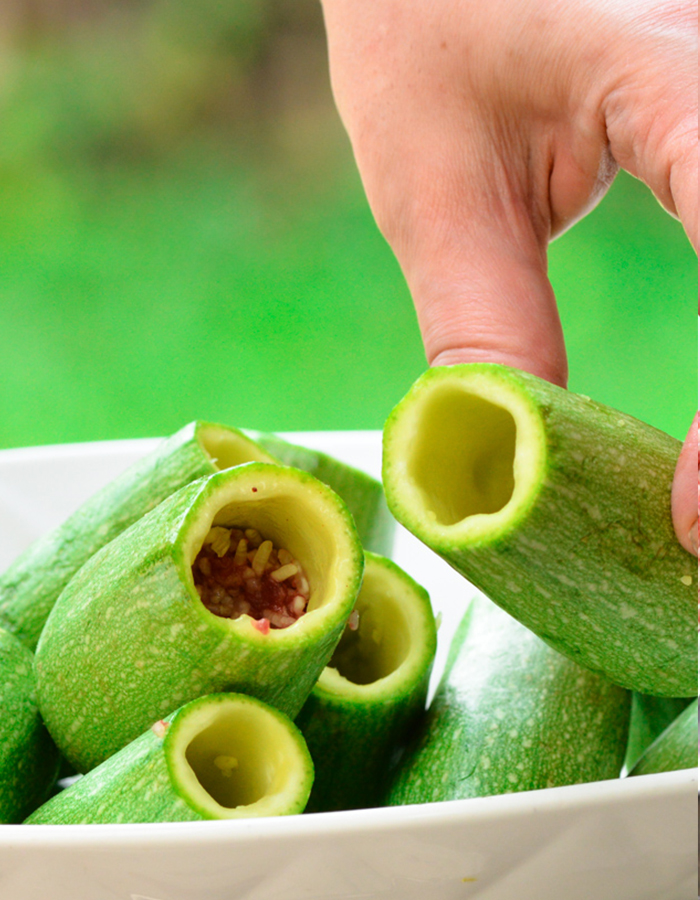
- Start by coring the zucchini: Using a mankara (a tool traditionally used in the Middle East to core the pulp out of zucchini and eggplants), try to hollow out the zucchini just as you would when carving a pumpkin. Hollow out the center, leaving about 1/3 inch (¾ cm) of flesh around the interior wall—and maybe more if you can manage it without poking through the zucchini.It is simple, but it is a skill that takes a bit of practice to master.
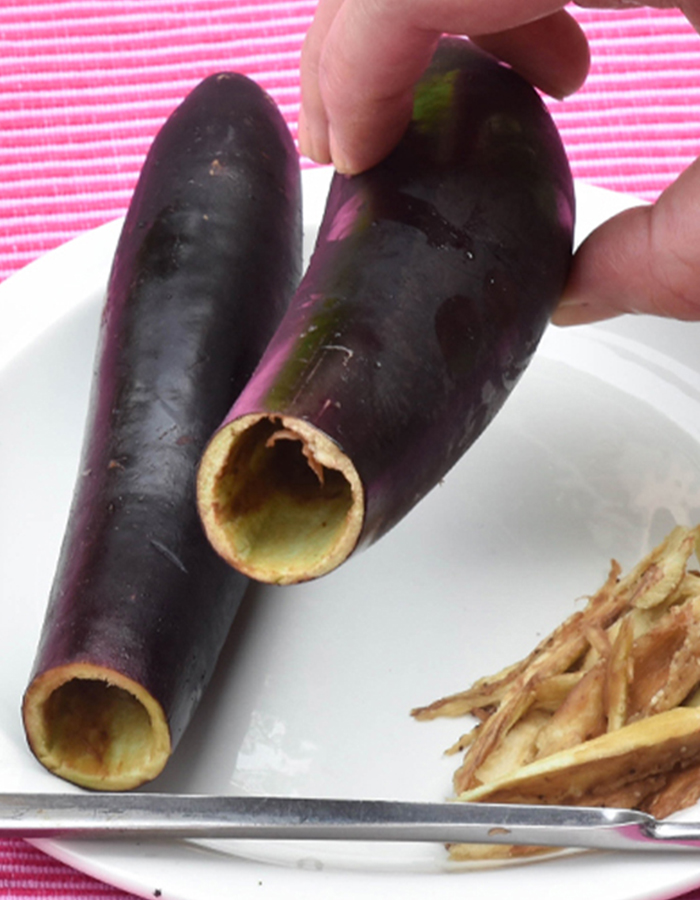
- To core the eggplants: Roll the eggplants on a countertop, one at a time, back and forth, applying pressure with your hand. This will make the eggplants more tender, which makes the coring process much easier. Hollow them out using the same method you used with the zucchini, and perhaps hollow out a little more around the interior walls of the eggplants.
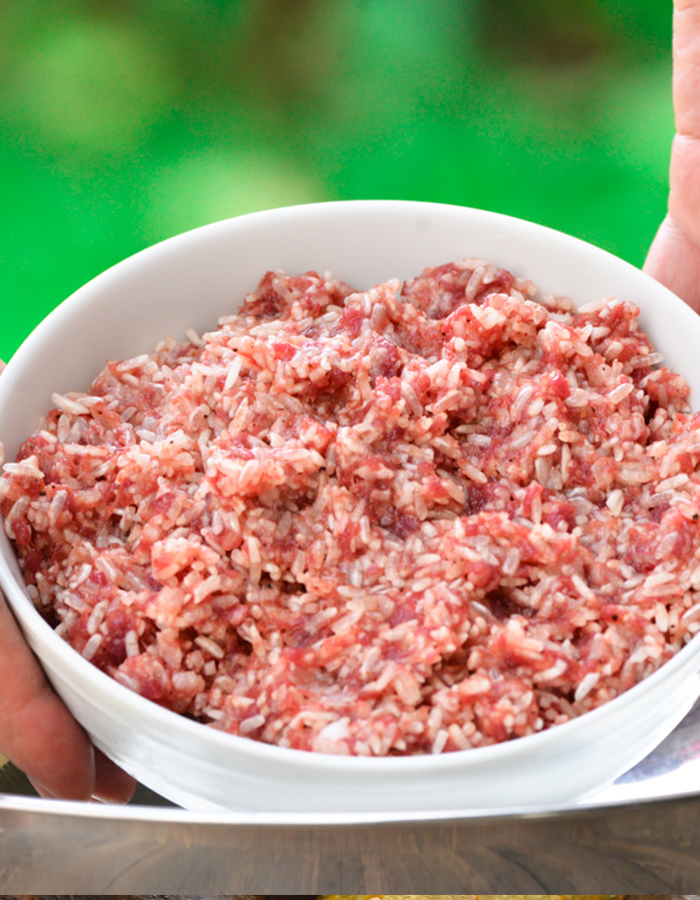
- In a colander, rinse the rice under cold running water, rubbing it gently with your hands to remove as much excess starch as possible. Drain well. Mix the rice with the minced meat and oil, then season with spices and salt. Your filling is now ready.
- Using your finger, stuff each zucchini and eggplant with the rice and meat filling, leaving about ¼ inch (½ cm) of space at the top to allow for the rice to expand as it cooks. It is important not to overstuff.
- Transfer the stuffed vegetables to a large pot that can accommodate them. Dilute the tomato paste in the 8 cups of water, add the crushed garlic, and whisk to combine. Gently pour the mixture over the vegetables, almost covering the zucchini (kousa) and eggplants. Make sure the stuffed ends are facing up
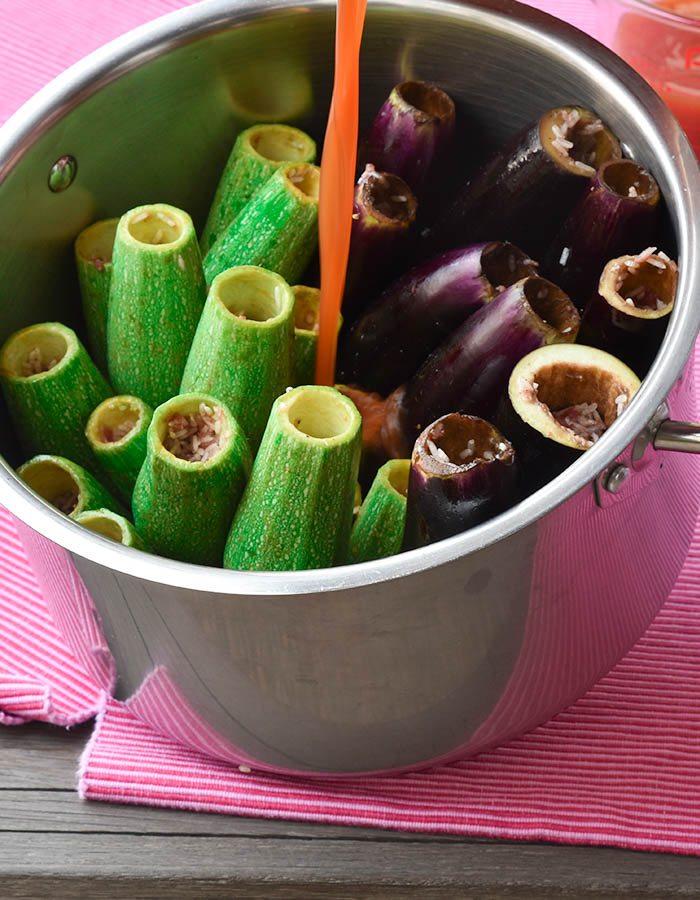
- Once the mixture comes to a boil, sprinkle with dried mint, add the ghee or butter, and adjust the salt to your taste. Reduce the heat to low, cover, and let it simmer for 1½ to 2 hours, allowing the zucchini to cook through and the flavors to mellow and develop together. Watch the detailed video tutorial below. Serve with laban!
Video
Notes
Another great recipe worth learning: Vegetarian Stuffed Grape Leaves
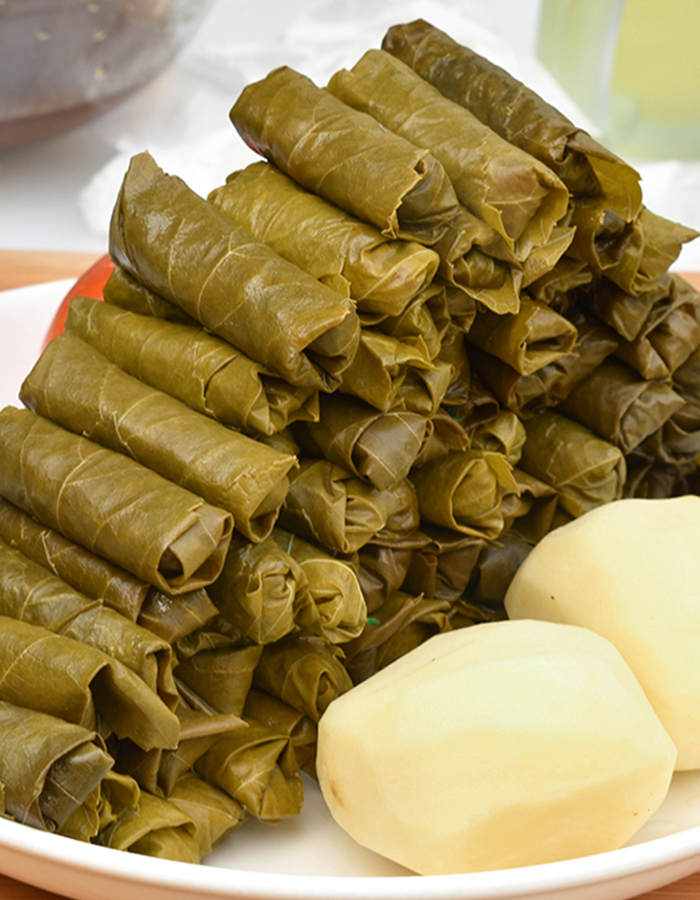 Looking for another Lebanese classic to learn about? Kousa Bil Laban , zucchini in yogurt!
 If you make the "Koussa wa Batenjan Mahshi", leave a comment below, or share your pictures on Facebook! I would love to see your creations!! Hashtag, #Hadia’s lebanese Cuisine
Looking for another Lebanese classic to learn about? Kousa Bil Laban , zucchini in yogurt!
If you make the "Koussa wa Batenjan Mahshi", leave a comment below, or share your pictures on Facebook! I would love to see your creations!! Hashtag, #Hadia’s lebanese Cuisine Tried this recipe?Let us know how it was!