



Kamounit Banadoura, also known as Kibbet Banadoura or Lebanese Tomato Kibbeh, is a traditional Southern Lebanese recipe made with fresh tomatoes, onions, fine bulgur wheat, extra-virgin olive oil, and aromatic Lebanese kibbeh spices.
Rich in the natural goodness of tomatoes, bulgur, and olive oil, this wholesome Lebanese recipe is a beautiful example of traditional home cooking. It is the kind of dish you are unlikely to find on a Lebanese restaurant menu, yet it holds a special place in the kitchens and food memories of Southern Lebanon. I grew up eating Kamounit Banadoura, and it remains a delicious reminder of the food I enjoyed as a child.
Growing up in a Lebanese household meant enjoying good food, and I am grateful for the healthy upbringing my mother gave me. Mom belongs to a school of cooking where junk food was simply not allowed. Everything was prepared from scratch, with no processed foods in sight. I wish I could be as strict as she was when it comes to maintaining healthy eating habits!
Kamounit Banadoura is a perfect example of wholesome Lebanese food at its best: simple ingredients, traditional flavors, and nourishment straight from the earth to the table.

The Secret to Flavorful Lebanese Tomato Kibbeh
Kibbeh spice takes Kamounit Banadoura to another level, adding the distinctive aroma and depth of flavor that make this traditional Southern Lebanese dish so special. It is a staple in all my kibbeh recipes, and I always recommend using whole spices and grinding them fresh to capture their full aroma. Trust me, it is well worth the extra effort!

Frequently Asked Questions
Why can’t I find this dish on a Lebanese restaurant menu?
This dish is a hidden gem of authentic home cooking rather than restaurant menus. It is a humble, traditional meal deeply rooted in the kitchens and food memories of families from Southern Lebanon.
Is Kamounit Banadoura suitable for vegetarians and vegans?
Yes, this is a naturally vegan and vegetarian dish made entirely from simple, plant-based ingredients straight from the earth.
Why should the tomatoes be completely red and ripe?
Red-ripe tomatoes are essential because they provide the natural sweetness, rich flavor, and abundant juices needed to hydrate and soften the dry bulgur wheat. Pale or underripe tomatoes will result in a bland flavor and won’t produce enough moisture for the dish.
Why must the ripe tomatoes also be firm?
Firmness prevents the tomatoes from turning into mush when diced and mixed. Using firm tomatoes ensures the dish retains a beautiful, distinct texture instead of becoming a watery paste.
Why do some recipes puree or grind the tomatoes, while this recipe uses hand-chopped tomatoes?
Both versions are authentic. Depending on the region or family tradition, you can find a smooth, pureed tomato version or a textured version. This recipe features the rustic, hand-chopped version that preserves the distinct texture of the tomatoes, which is exactly how I grew up eating it.
What type of bulgur wheat do I need?
You must use fine bulgur wheat (#1 grind). Coarse bulgur will not soften properly without being boiled, leaving the dish with an unpleasantly crunchy texture.
Can I substitute standard cooking oil for extra-virgin olive oil?
Substituting is highly discouraged because a fine quality extra-virgin olive oil is a foundational ingredient that carries the flavors of the spices and tomatoes.
What makes Southern Lebanese kibbeh spice unique?
This regional blend stands out because it combines aromatic herbs and floral notes like cumin seeds, dried edible rosebuds, dried basil, dried marjoram, dried mint, black peppercorns, and allspice.
What is “Kamouneh”?
Kamouneh is the fragrant spice and herb paste that serves as the flavor engine for the dish. It is made by blending half of the onions, fresh mint, a tablespoon of bulgur, and the spice blend together in a food processor.
Do I need to cook the bulgur wheat?
No, this recipe requires zero cooking. The fine bulgur wheat “cooks” naturally by absorbing the raw juices of the diced tomatoes during its resting time.
Why does the tomato and bulgur mixture need to sit in the fridge for an hour?
This one-hour resting step gives the dry bulgur wheat enough time to soak up the juices from the diced tomatoes, making it soft and pleasant to eat.
Why should I buy whole spices and grind them fresh?
Whole spices retain their natural oils and aromatic compounds better than pre-ground spices, giving your Southern Lebanese kibbeh spice blend a fresher aroma and deeper, more vibrant flavor. Grinding the spices just before use brings out their full fragrance and makes a noticeable difference in the taste of Kamounit Banadoura and other traditional Lebanese kibbeh recipes.
Can I make the Southern Lebanese kibbeh spice blend in advance?
Absolutely! You can prepare the spice blend ahead of time to make cooking easier. Combine the whole spices and dried herbs, then store them in a clean, airtight jar in the refrigerator. Keep the mixture whole and grind only the amount you need when preparing your recipe. This helps preserve its aroma and makes it convenient to enjoy the distinctive flavor of Southern Lebanese kibbeh whenever you like.
How should I serve Kamounit Banadoura?
Spread the mixture into a serving bowl, drizzle it generously with extra-virgin olive oil, garnish with fresh mint leaves, and serve alongside warm pita bread.
What should I do if my tomato kibbeh tastes dry?
If the mixture feels too dry, mix in a little bit more extra-virgin olive oil to help bring the texture together.
How long can I store leftovers?
Cover and store leftovers promptly in an airtight container in the refrigerator, and consume them within 2 days for the best flavor and safety.

Explore More Lebanese Kibbeh Recipes
- Lebanese Fried Kibbeh Balls
- Potato Kibbeh (Lebanese Kibbet Batata)
- Lebanese Grilled Kibbeh
- Fried Potato Kibbeh
- Pumpkin Kibbeh
- Avocado Kibbeh
 Let’s Stay in Touch!
Facebook, Instagram, YouTube , Pinterest and TikTok!

Kamounit Banadoura (Lebanese Tomato Kibbeh)
Description
Ingredients
Ingredients for Kamounit Banadoura
- 1 kg 2 lb 4 oz ripe tomatoes, finely diced
- ⅓ cup fine bulgur wheat
- 2 medium onions finely chopped
- ⅓ cup extra-virgin olive oil plus extra for serving
- 1 tablespoon Southern Lebanese kibbeh spice blend see recipe below
- 1 tablespoon fine bulgur wheat for the kamouneh
- 1 teaspoon salt or to taste
- A dash of cayenne pepper or to taste
- 1 handful Fresh mint leaves divided between the kamouneh and garnish
Homemade Southern Lebanese Kibbeh Spice Blend
This aromatic blend of herbs and spices is a staple in many Southern Lebanese dishes, including Kamounit Banadoura. Prepare it ahead of time and keep it on hand to add the distinctive flavor of traditional Southern Lebanese cooking to your favorite recipes.
Ingredients
- 2 tablespoons cumin seeds
- 8 dried edible rosebuds
- 1 teaspoon dried basil
- 1 teaspoon dried marjoram
- ½ teaspoon dried mint
- 4 black peppercorns
- 2 dashes of allspice
Instructions
How to Prepare and Store the Kibbeh Spice Blend
- Combine all the whole spices and dried herbs in a bowl.
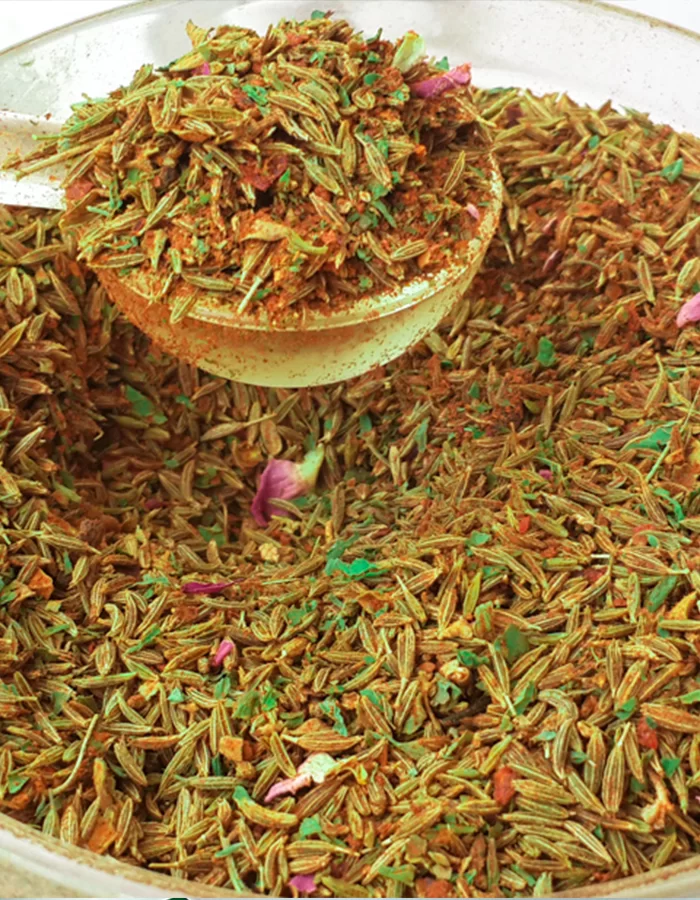
- Transfer the mixture to a clean, airtight jar and store it in the refrigerator. Keep the spices whole until you are ready to use them to preserve their aroma and flavor.
- When preparing Kamounit Banadoura, measure out 1 tablespoon of the spice blend and grind it in the food processor with the ingredients for the kamouneh, as directed below. Keep the remaining blend for future use.
How to Make Kamounit Banadoura
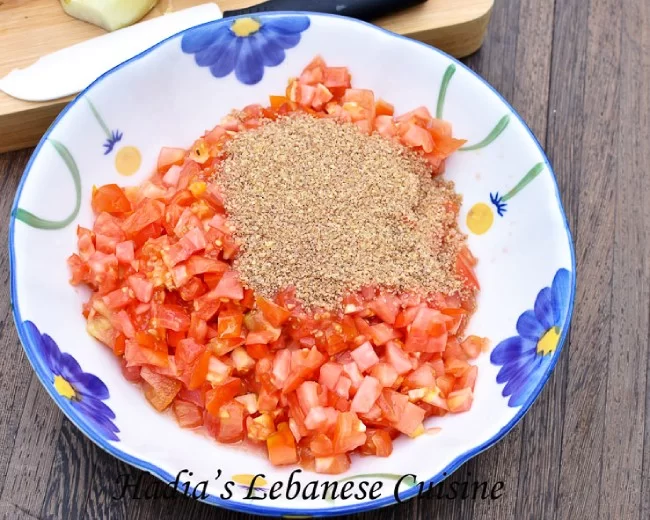
- Combine the tomatoes and bulgur. Place the finely diced tomatoes in a large bowl. Add ⅓ cup of fine bulgur wheat and mix well. Cover and refrigerate for 1 hour to allow the bulgur to absorb the tomato juices.
- Prepare the kamouneh. Place half of the chopped onions and some of the fresh mint leaves in a food processor. Add 1 tablespoon of fine bulgur wheat and 1 tablespoon of the whole kibbeh spice blend. Process until the spices are finely ground and the ingredients form a well-combined mixture. This aromatic mixture is called kamouneh.

- Combine the ingredients. Remove the tomato and bulgur mixture from the refrigerator. Add the remaining chopped onions and the prepared kamouneh. Mix well with a fork until evenly combined.
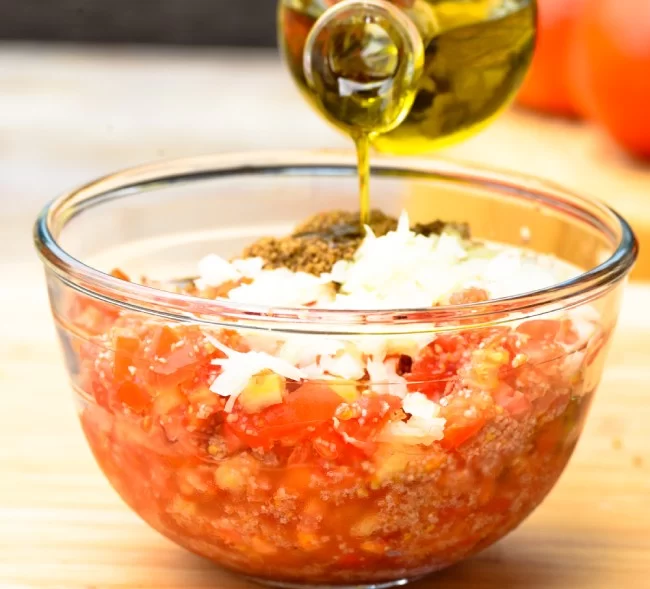
- Season the tomato kibbeh. Add the salt, cayenne pepper, and olive oil. Mix thoroughly and taste, adjusting the seasoning as needed.
- Garnish and serve. Transfer the tomato kibbeh to a serving bowl. Drizzle with a little extra-virgin olive oil and garnish with fresh mint leaves. Serve with pita bread and enjoy this delicious taste of Southern Lebanon!
Storage
- Kibbeh spice blend: Store the whole, unground spice mixture in a clean, airtight jar in the refrigerator. Grind the required amount just before use for the best aroma and flavor.























7 Comments
[…] Kamounit Banadoura – a lovely Lebanese dish with tomatoes, seasonings and bulgur. from Hadia’s Lebanese Kitchen […]
excellent Tomato Kibbeh, thank you ….
I didn’t grow up eating kamounit banadoura but my husband did. When I made it for him, hecwas was blown away. He told me it tasted just like his grandmother’s. Thank you Hadia. 5 stars, well deserved.