


Sayadieh, Lebanese-Style Fish and Rice
Are you ready to make one of the most delicious fish and rice meals on earth? Consider making Sayadieh! Trust me, it’s showy and memorable, making it perfect for a weekend cooking project or a dinner party. This is the kind of dish that will impress your family and friends.
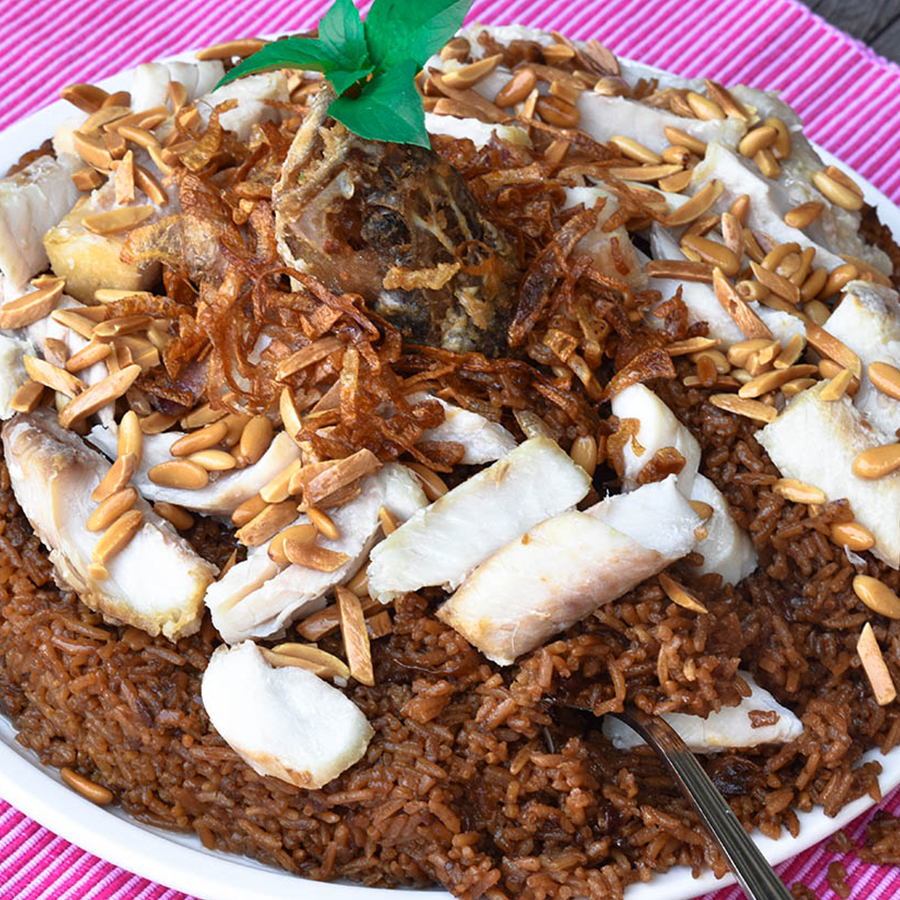
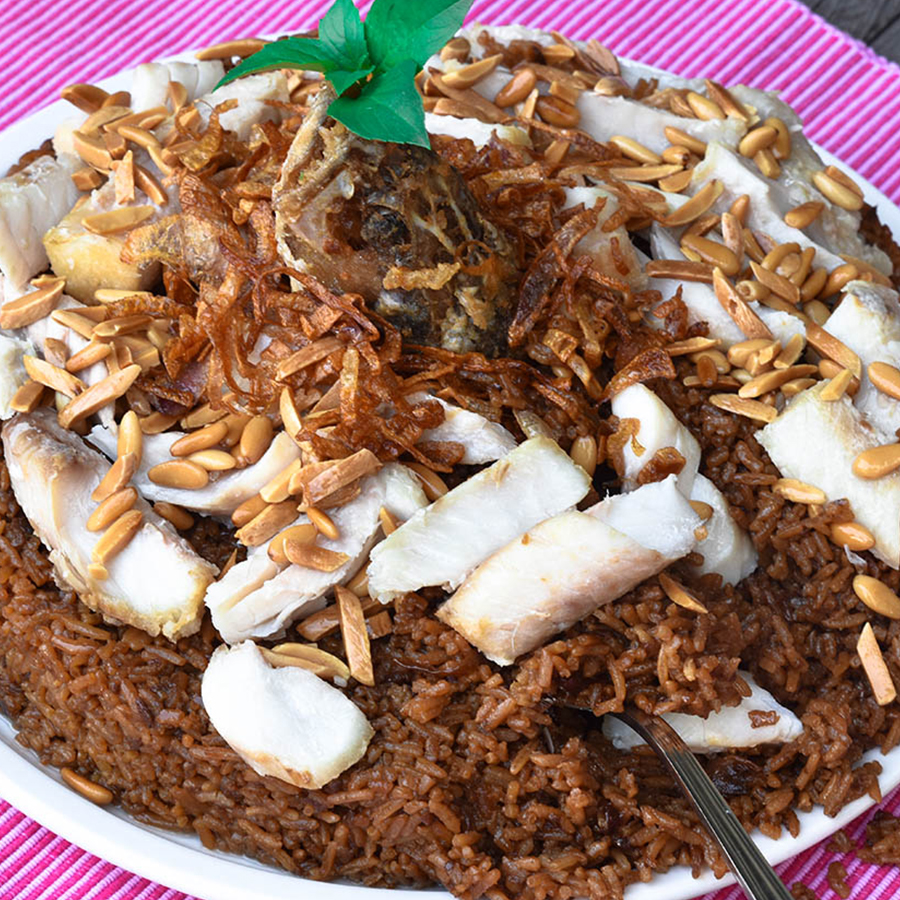
A hearty, one-pot rice dish cooked with caramelized onions, topped with fried fish, and garnished with toasted nuts, Sayadieh is a beloved dish in Lebanon and throughout the Middle East. There are several versions of Sayadieh, but nothing quite compares to the Beiruti style—a dish with roots that go back generations.
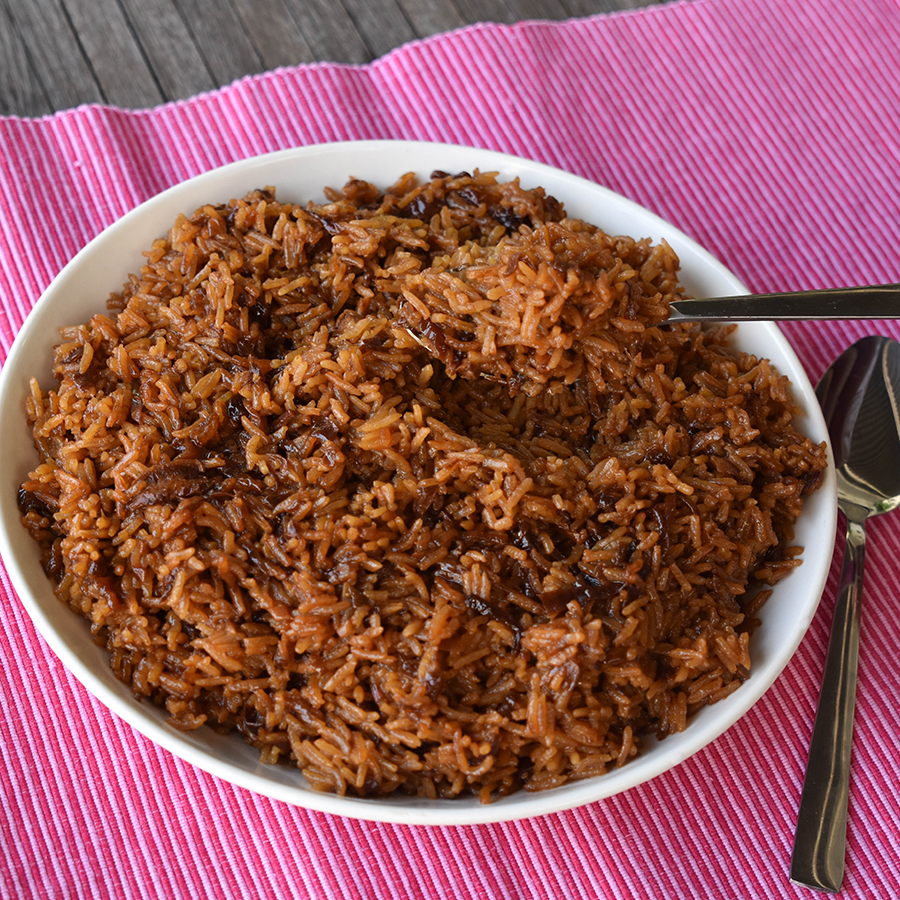
The rice gets its beautiful dark-brown color and distinctive, earthy flavor from a generous amount of fried onions. Yes, it is unlike any other rice dish! One of the reasons Sayadieh is such a festive dish in Lebanon is its ability to take on layers of rich, aromatic flavors, making it a true signature of Lebanese cuisine.
The name Sayadieh comes from the Arabic word sayyad, meaning “fisherman,” and the dish beautifully captures the flavors of the sea. It’s a wonderful fish recipe for Ramadan—or any time you’re craving a memorable Lebanese meal!
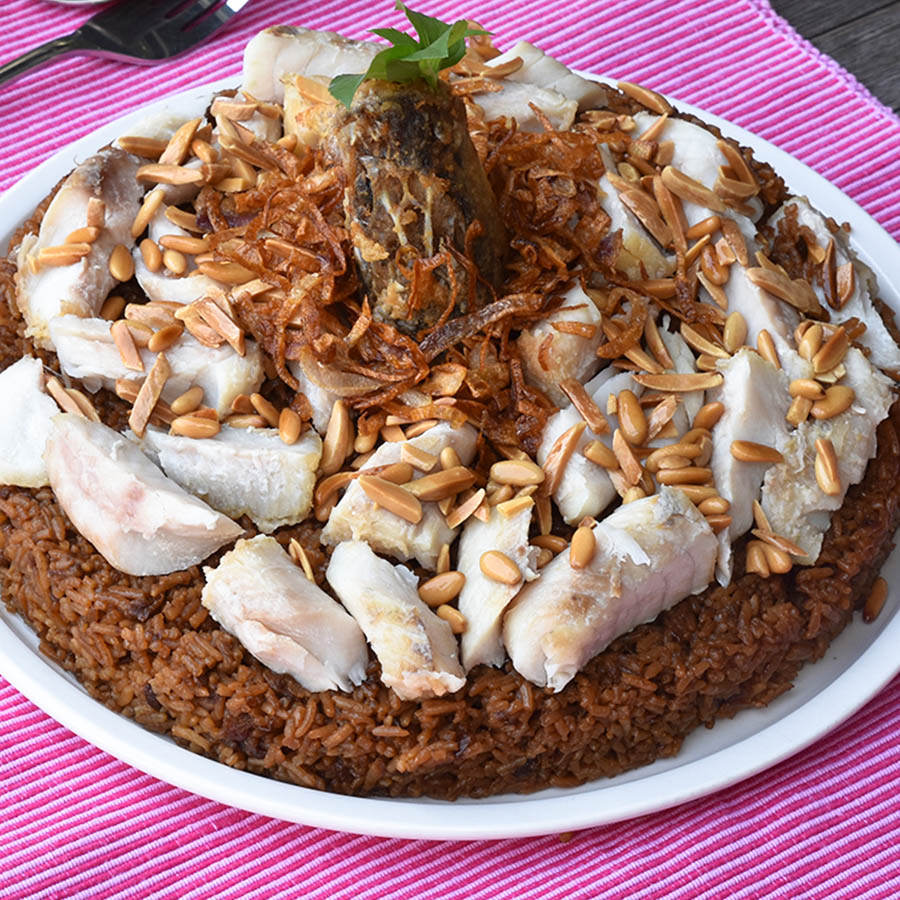
Why You’ll Love Sayadieh
This is the kind of meal I turn to when entertaining—it’s always a huge hit.
Sayadieh makes dinner feel like a celebration, yet it’s satisfying enough to enjoy as leftovers. And count yourself lucky if you happen to have any leftovers of this flavorful, comforting meal!
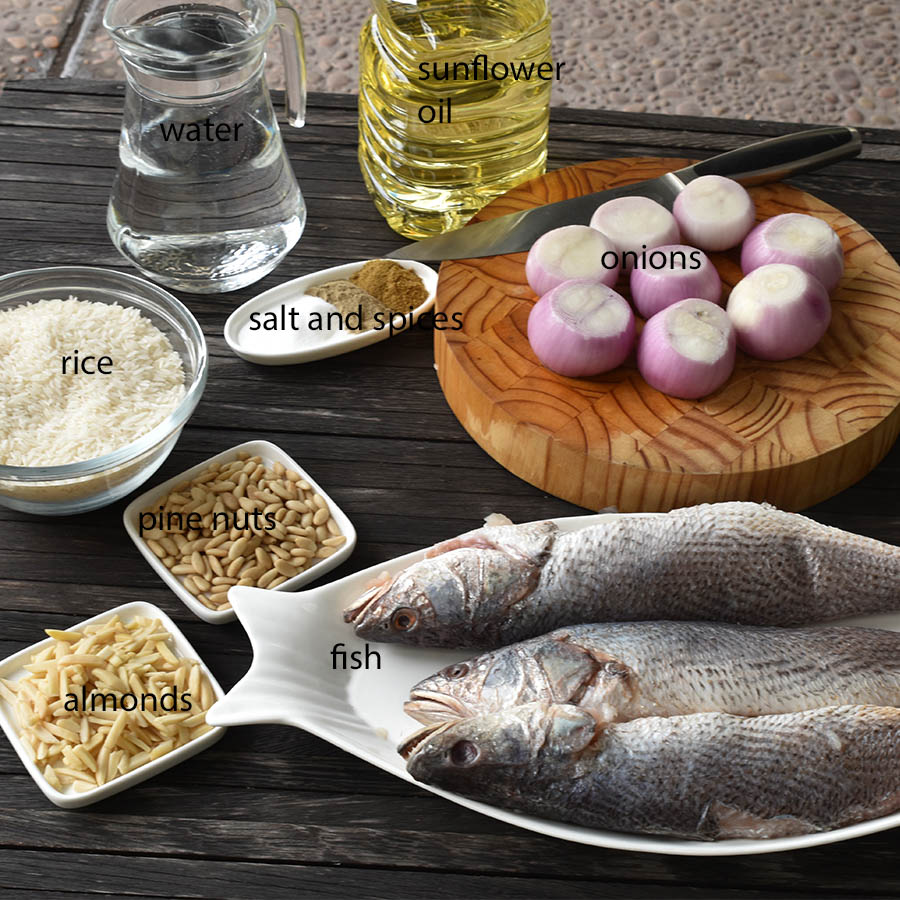
Ingredients Needed to Make Sayadieh
-
Whole sea bass, or any flaky fish such as cod, haddock, or halibut.
-
Jasmine rice — you can use your favorite type of rice, but keep in mind that different varieties may require more or less water or broth, and they can have different textures and flavors. If you want the same result as mine, I recommend using jasmine rice.
-
Yellow or red onions — both work well.
-
Neutral oil, such as canola or sunflower oil, for frying the fish.
-
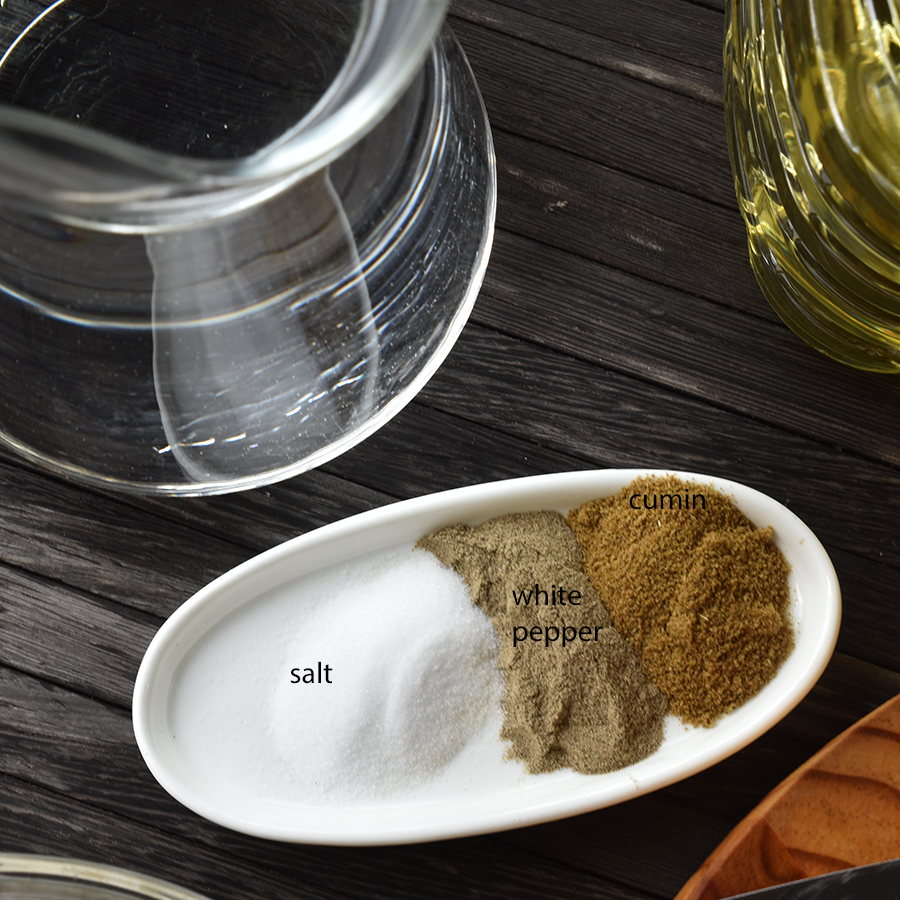
Ground cumin, white pepper, and salt — for perfectly seasoned sayadieh.
-
Water, for making the fish broth and cooking the rice.
-
Pine nuts or blanched almonds.
-
All-purpose flour, for dusting the fish before frying.
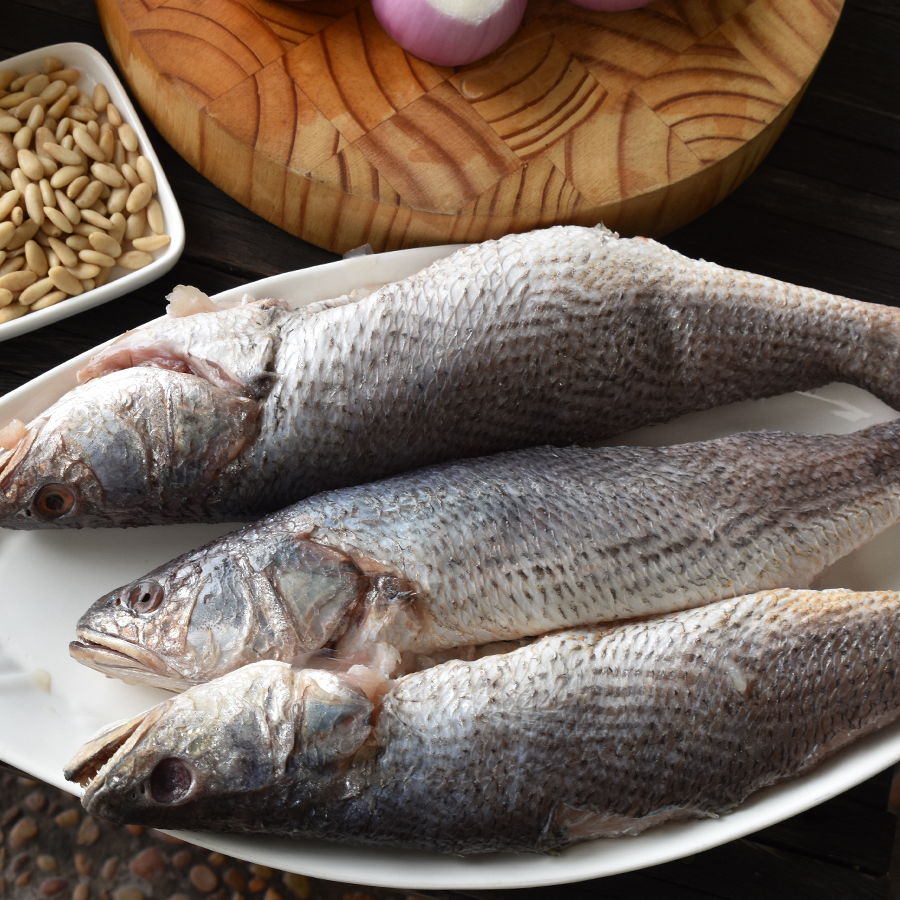
Clean the fish yourself, or ask your fishmonger to gut, scale, and clean it for you. Here’s how to clean it:
Run the back of a sharp knife from the tail toward the head, repeating as necessary to remove as many scales as possible. Turn the fish over and repeat the process on the other side.
Using a spoon, carefully remove all the entrails, making sure to remove everything and leave only the flesh.
Rinse the cavity thoroughly under running water. This helps remove any blood or remaining internal parts, which is important for both flavor and food safety. Drain well.
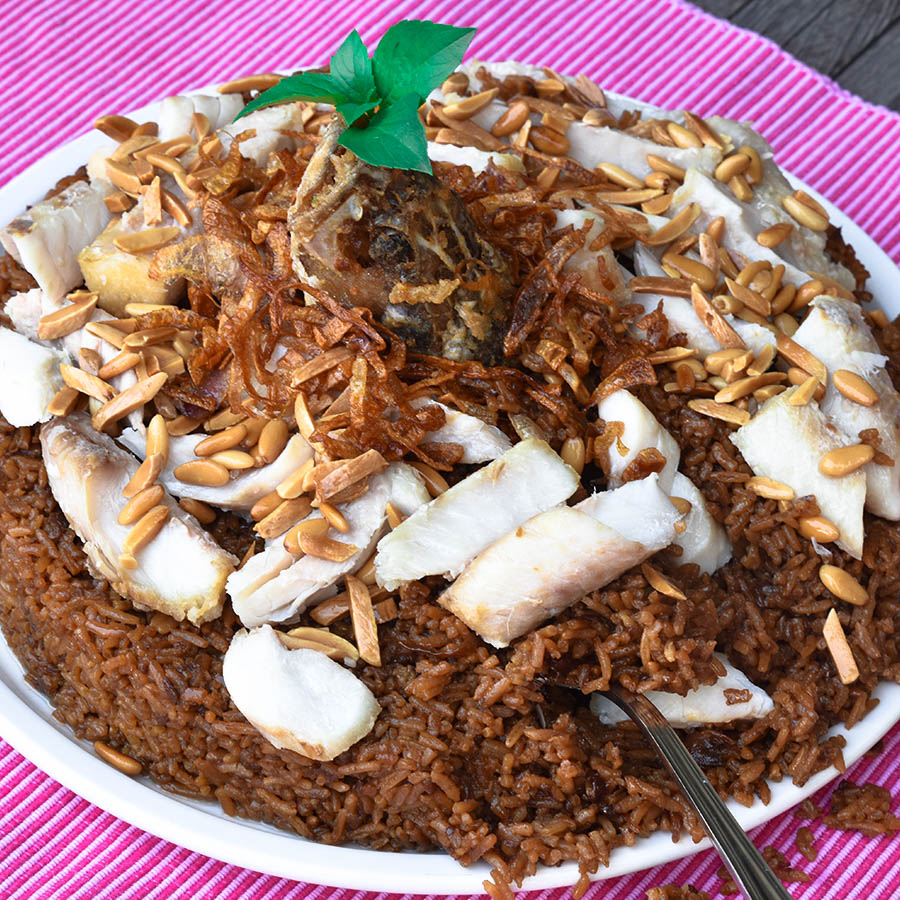
How to Make Sayadieh
Clean the fish
Clean the fish as mentioned above, or ask your fishmonger to clean it for you. Rinse it under cold running water and drain well. Pat dry with kitchen paper towels.
Cut the fish into large chunks, including the head.
Coat the fish
Coat the fish pieces with flour on both sides, then shake off any excess flour.
Fry the fish
Heat the oil in a large pot to 180°C (350°F). Add the fish pieces in batches, making sure there is enough oil to cover the fish. Deep-fry until golden brown and cooked through.
Remove the fish from the oil and place it on a plate lined with kitchen paper towels to drain.
Make the fish stock
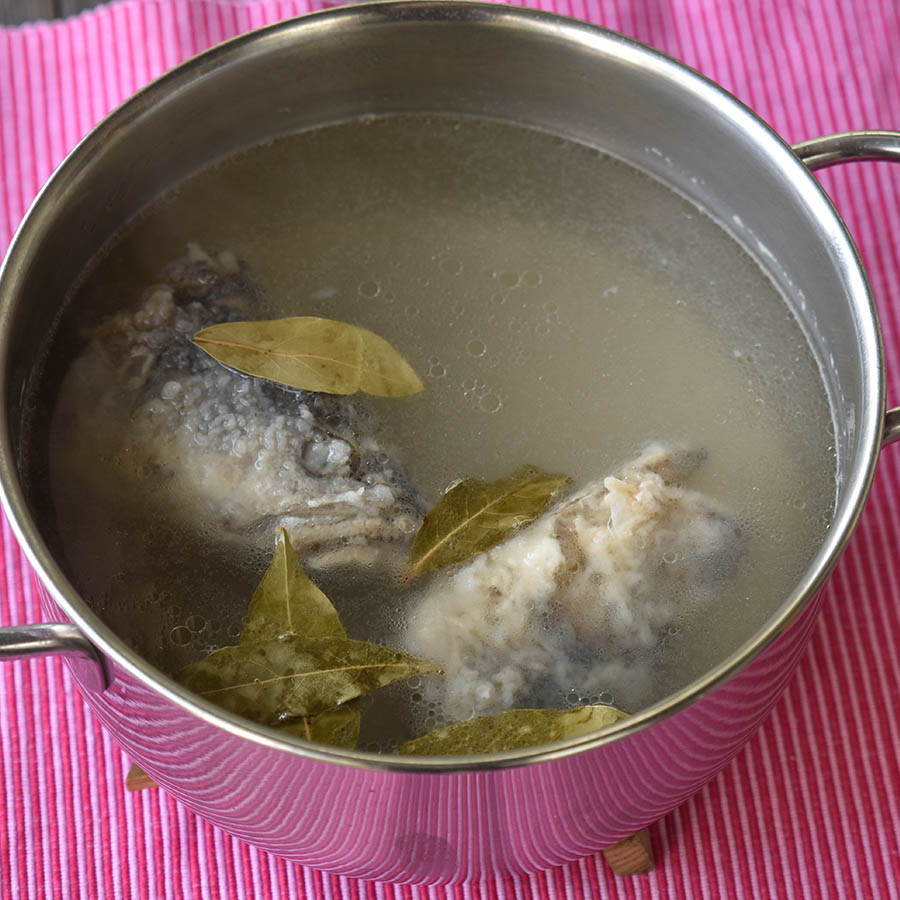
Transfer the fried fish head or heads to a pot. Add 6 cups of water and bring to a boil. Reduce the heat to medium and cook for 15 minutes.
Strain the stock and measure out 5 cups to use later for cooking the rice.
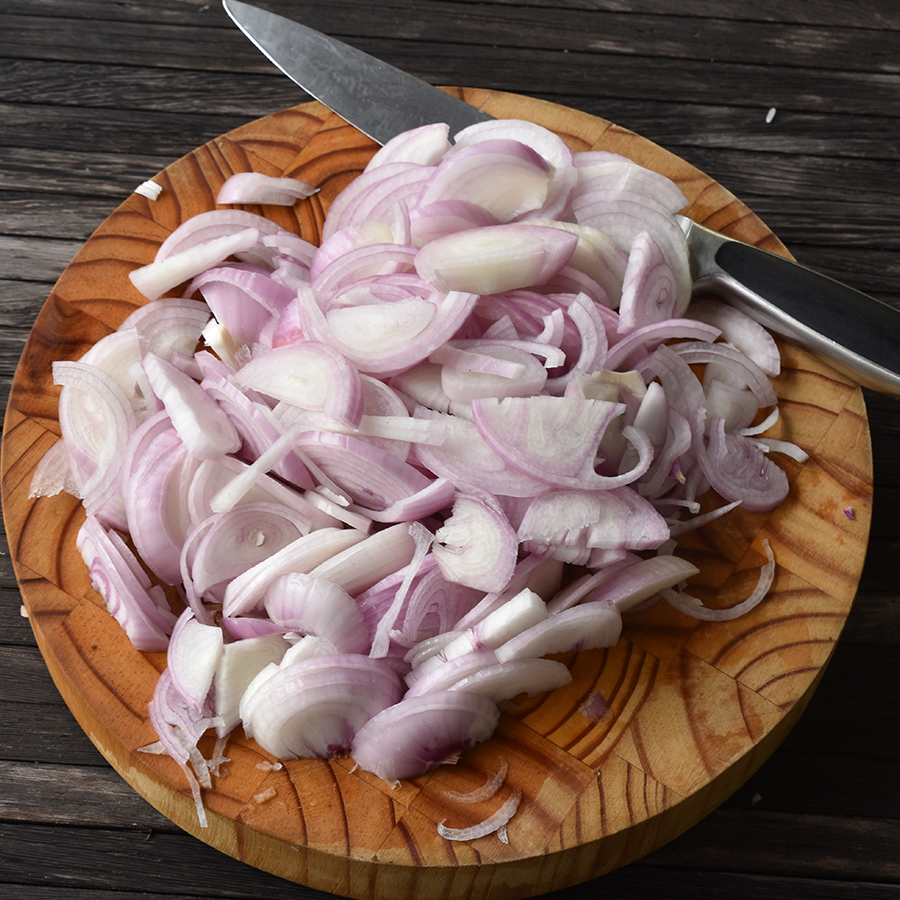
Julienne the onions
Cut each onion in half and place the halves flat-side down on a cutting board. Starting from one end, slice the onions into long, thin strips.
Rinse and drain the rice
Place the rice in a strainer and rinse it thoroughly under cold running water, agitating it with your hands, until the water running through the strainer becomes clear.
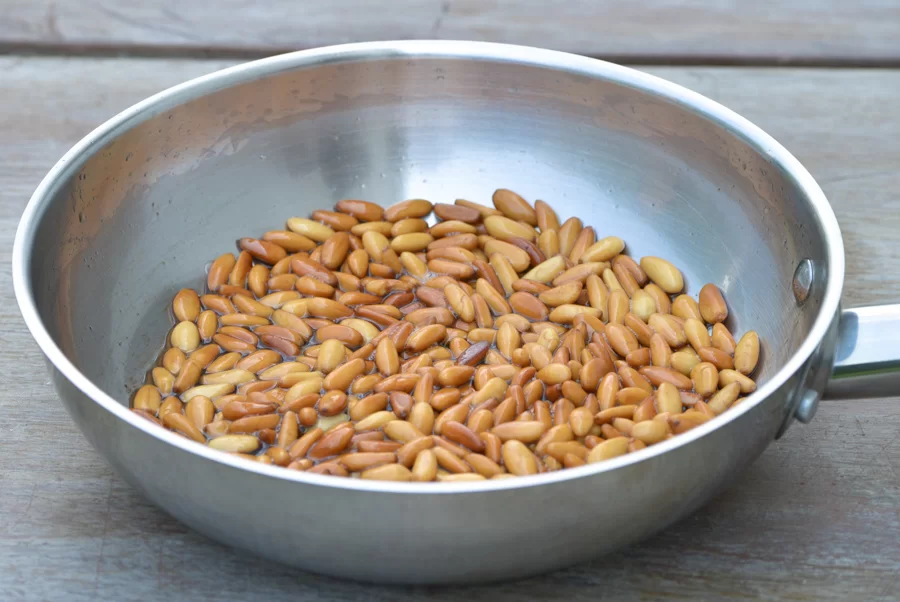
Toast the pine nuts and almonds
Transfer ½ cup of the oil used to fry the fish to a stockpot and heat over medium heat. Add the pine nuts and toast until golden brown.
Remove them with a slotted spoon and set aside. Repeat with the almonds.
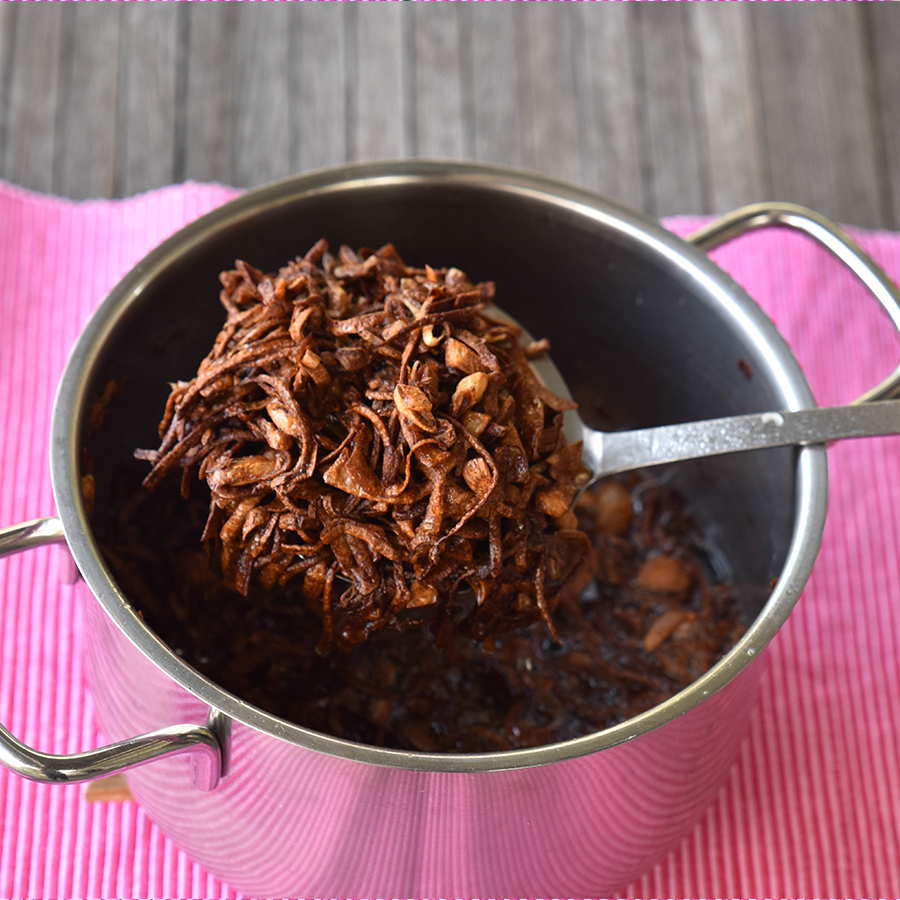
Caramelize the onions
Add the onions to the same pot and cook for about 10 minutes, stirring every few minutes.
Continue cooking and scraping the bottom of the pot until the onions turn a deep, dark brown, being careful not to burn them. This step is crucial for achieving the characteristic flavor and color of sayadieh.
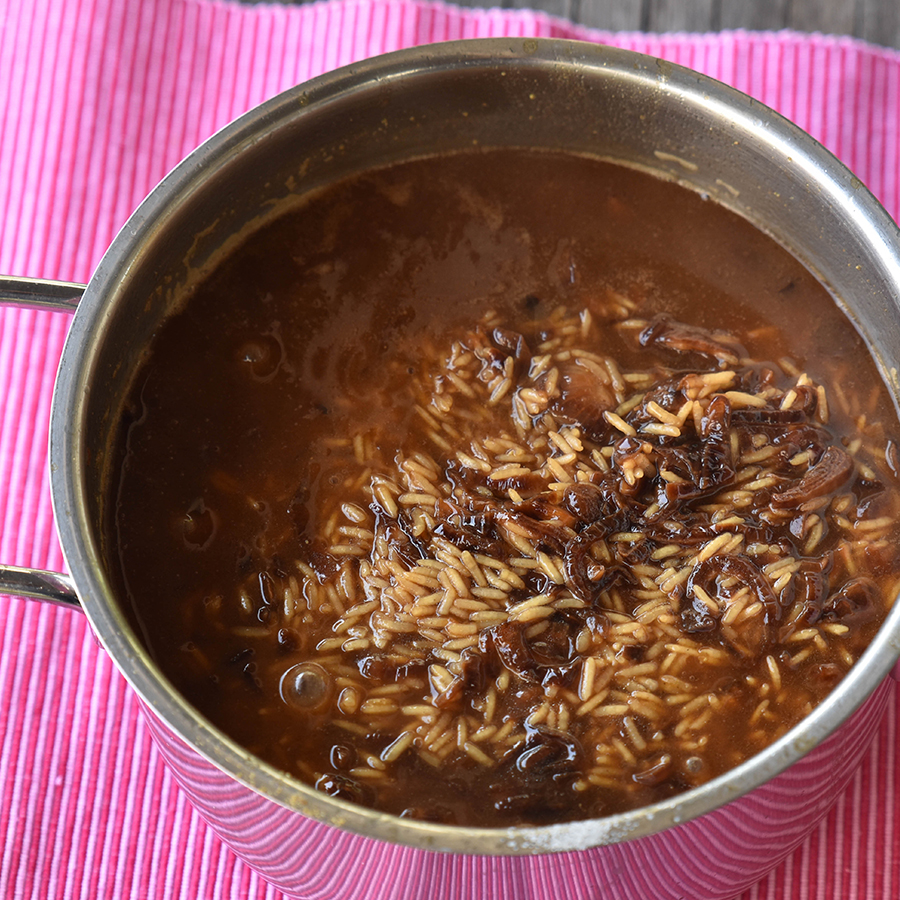
Cook the rice
Add the drained rice and stir for about 10 seconds. Pour in the 5 cups of fish stock, then season with salt, cumin powder, and white pepper.
Stir gently with a fork to combine everything. Once the mixture comes to a boil, reduce the heat to low, cover the pot, and simmer for 25–30 minutes, or until the rice is fully cooked and has absorbed the liquid.
Debone the fish
Once the fried fish has cooled enough to handle, carefully remove the bones and separate the fish into large pieces.
Serve the sayadieh
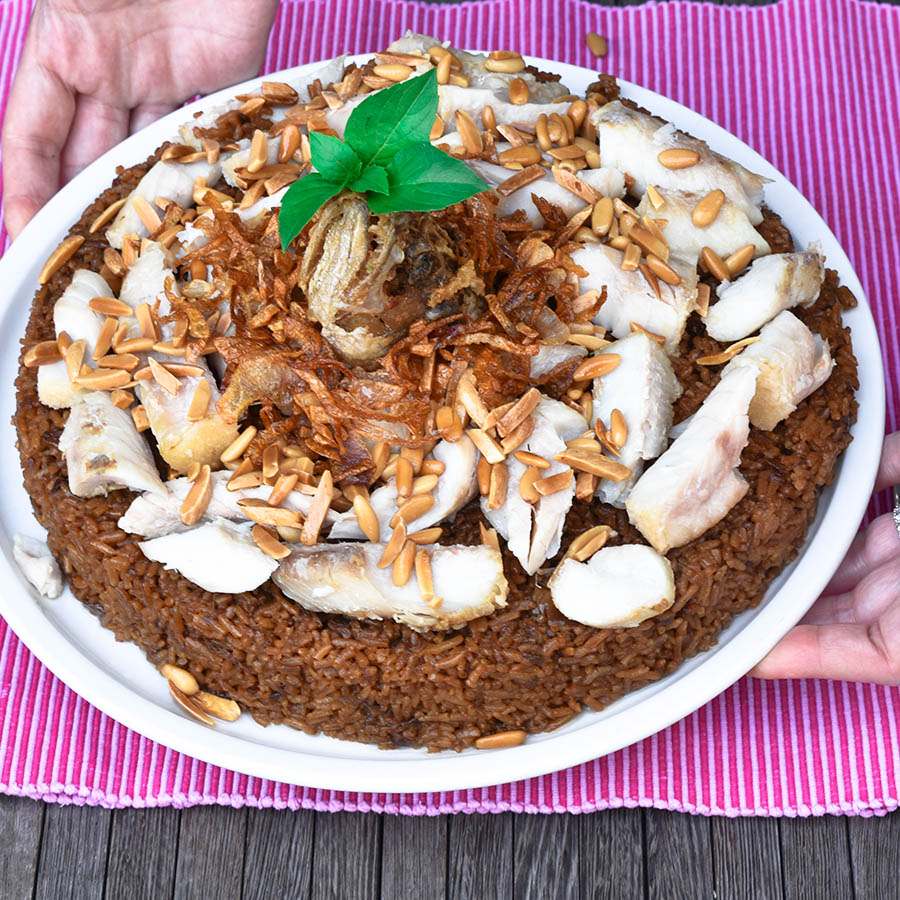
Transfer the cooked rice to a serving platter and top with the fried fish pieces. Garnish with the toasted pine nuts and almonds.
How to Store Leftover Sayadieh
Transfer the cooled sayadieh to an airtight container and store it in the refrigerator. Do not refrigerate hot rice; allow it to cool first.
The leftovers will keep in the refrigerator for 3–4 days.
How to Reheat Leftover Sayadieh
There are two ways to reheat sayadieh. For food safety and quality, avoid reheating rice more than once.
Bake in the oven
Transfer the rice to an oven-safe baking dish and add a small splash of water. Use a fork to gently break up any large clusters of rice, then cover the dish with aluminum foil.
Bake at 300°F (150°C) for about 20 minutes, or until the rice is heated through.
Reheat on the stovetop
Transfer the rice to a saucepan and add a small splash of water. Use a fork to break up any large clusters of rice.
Cover the pan and heat over low heat, stirring occasionally, until the rice is heated through.
Can I Bake the Fish Instead of Frying It?
Yes, you can bake the fish instead of frying it. However, frying gives the fish a richer flavor and a more traditional texture.
Can I add more spices than those mentioned in the recipe?
There’s always room for personal preference, but believe me, the spices listed are just what you need for a perfectly balanced and flavorful sayadieh.
Looking for more festive rice recipes, we got you covered!
-
Tips to Consider
-
For the best results, use a 250 ml measuring cup to measure the rice and fish stock.
-
Traditionally, Arborio or Egyptian rice is used to make sayadieh, but I prefer fragrant Jasmine rice. It gives the sayadieh a lighter texture and a lovely nutty aroma. You can, of course, use other varieties of rice as well.
-
Rinse the rice thoroughly to avoid a goopy or mushy texture. Rinsing removes excess surface starch and helps the rice cook into separate, fluffy grains.
-
Use whole, fresh fish with firm flesh, bright red gills, and no unpleasant odor.
-
This rice is delicious seasoned with cumin powder and white pepper, which impart a subtle, distinctive spiciness.
-
Traditionally, sayadieh is made with whole fish that is deep-fried. I like to stay true to the way we grew up eating it, so I keep it traditional. Cooking the fish on the bone gives a better result, both in flavor and in keeping the fish from drying out. For a quicker approach, you can use fish fillets instead. Simply dust the fillets with flour and fry them as needed.
-
The rice is cooked with stock made from the fried fish head, which adds an incredible depth of flavor.
-
Flaky white fish is ideal for sayadieh, such as sea bass, cod, haddock, or halibut.
-
Darker-fleshed and oily fish, such as salmon, tuna, and mackerel, are not typically used in a classic sayadieh.
-
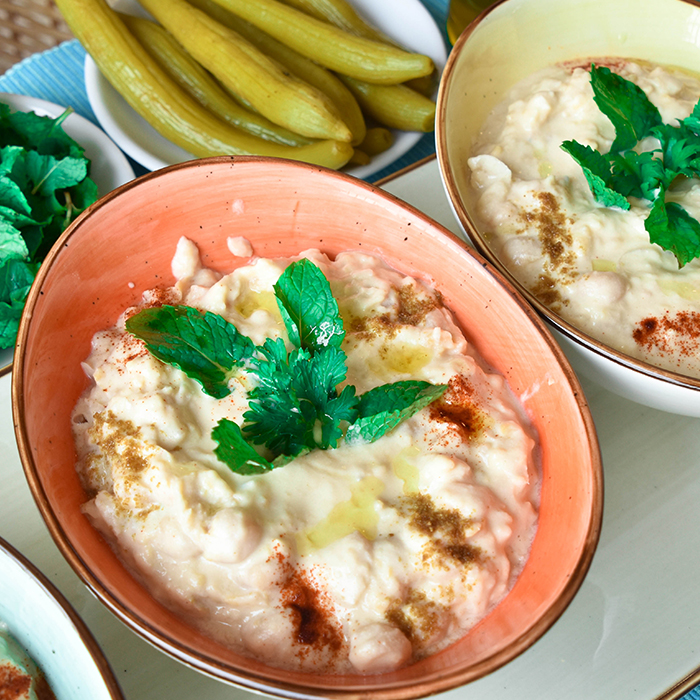
Serve sayadieh with tarator (a lemony tahini sauce) and fattoush, or your favorite leafy green salad.
-
Unlike other versions of sayadieh, Beiruti-style sayadieh does not include turmeric.
-
 Let’s Stay in Touch!
Facebook, Instagram, YouTube , Pinterest and TikTok!
Sayadieh
Description
Ingredients
- 2 kg / 4 lb 8 oz whole sea bass or another large white fish such as snapper or cod, gutted and scaled
- 3 cups jasmine rice
- 8 medium-sized onions
- Sunflower oil for deep-frying
- 1 heaped teaspoon cumin powder
- 1 teaspoon white pepper
- 1 tablespoon salt
- ¼ cup pine nuts
- ¼ cup blanched almonds
- 5 cups water
- ½ cup all-purpose flour or as needed, for dusting the fish
Instructions
- Cut the fish into large chunks, including the head.
- Coat the fish: Coat both sides of the fish with flour, then shake off any excess flour.
- Fry the fish: Heat enough oil in a large pot to fully cover the fish, bringing it to 180°C (350°F). Add the fish chunks in batches, making sure not to overcrowd the pot. Deep-fry until golden brown and cooked through. Remove the fish from the oil and place it on a paper towel-lined plate to drain.
- For the fish stock: Transfer the fried fish heads to a pot, add 6 cups of water, and bring to a boil. Reduce the heat to medium and simmer for 15 minutes. Strain the stock and measure out 5 cups to use later for cooking the rice.
- Julienne the onions: Cut each onion in half and place the halves flat-side down on the cutting board. Starting at one end, slice the onion into long, thin strips.
- Rinse and drain the rice: Place the rice in a strainer and rinse it thoroughly under cold running water, using your hands to agitate the rice, until the water runs clear.
- Toast the pine nuts: Transfer 3/4 cup of the oil used to fry the fish to a stockpot and heat over medium heat. Add the pine nuts and toast until golden. Remove with a slotted spoon, then repeat with the almonds.
- Add the onions to the same stockpot and cook for about 10 minutes, stirring every few minutes. Continue cooking and scraping the bottom of the pot until the onions turn dark brown without burning. This step is crucial for achieving the characteristic flavor and color of a traditional sayadieh.
- Cook the rice: Add the drained rice and stir for 10 seconds. Stir in the fish stock, then season with salt, cumin powder, and white pepper. Gently stir with a fork to combine. Once the mixture comes to a boil, reduce the heat to low, cover the pot, and simmer for 25–30 minutes.
- Let the fried fish cool slightly, then gently pull away the flesh with a fork or your fingers, following the bones. Remove the backbone and any small pin bones, checking carefully before serving.
- Serve the sayadieh: Transfer the cooked rice to a platter.
- Top with fried fish chunks and garnish with toasted pine nuts and almonds.























2 Comments
This sounds like a true Lebanese classic! I bet the fried onions really bring out the flavors in the rice. Perfect for impressing guests!
This Sayadieh recipe sounds amazing! I love how it’s a perfect blend of crispy fish and savory rice. The toasted nuts on top really seem to elevate the dish to another level!