


During Ramadan, I typically find myself immersed in Lebanese sweet-making, preparing multiple batches of znoud el set, maamoul, knafeh, ghraybeh, maamoul mad, halawet el jibn, and mafroukeh to share with family and friends.
If you are a regular reader here, you are probably familiar with these delectable sweets. But “Brown Mafroukeh” might be something new to you—unless you were raised in Lebanon or happen to have some Lebanese ancestry!
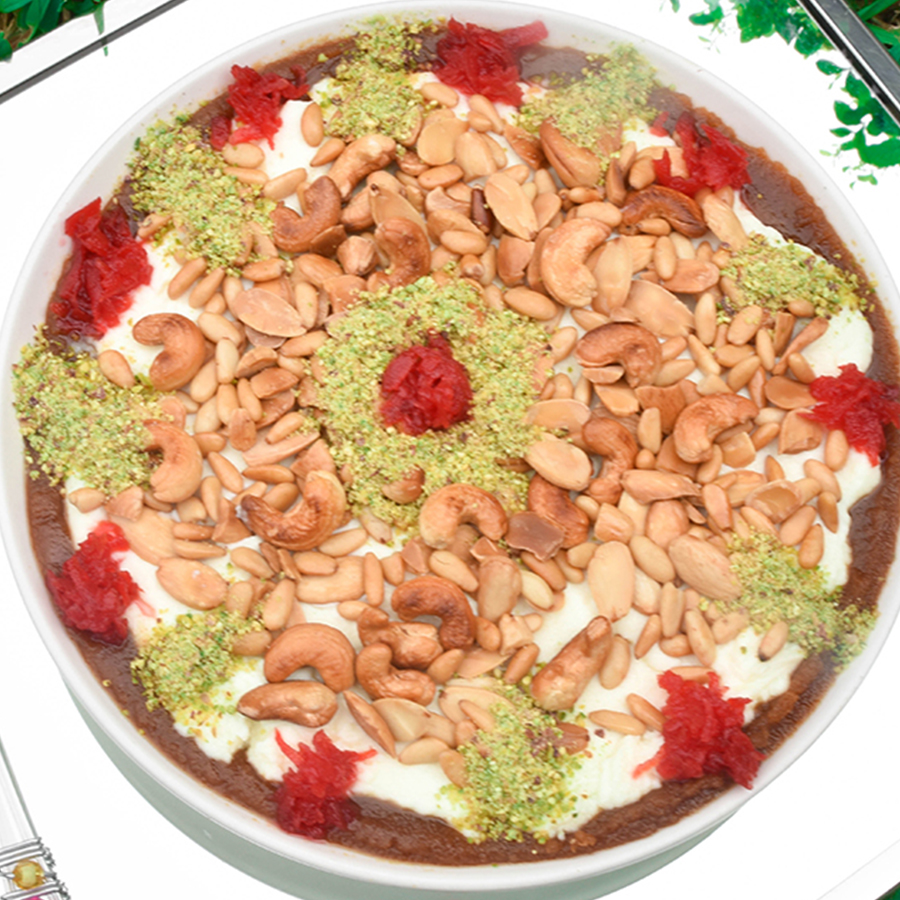
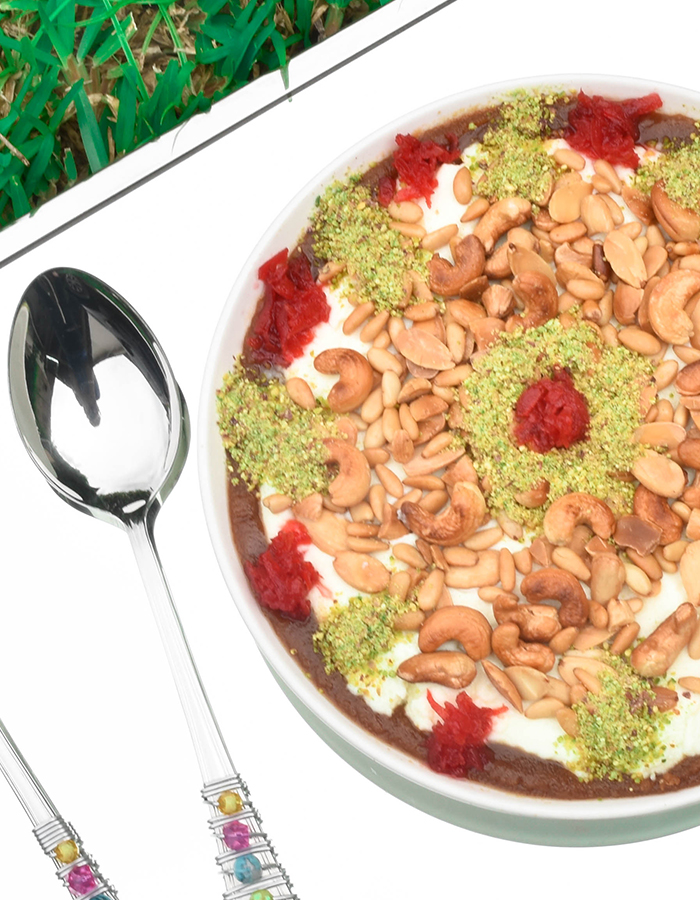
Brown Mafroukeh has been a staple of Lebanese cuisine for generations. It features a sweet, golden-brown, thick, pudding-like base, crowned with creamy ashta (Lebanese clotted cream) and generously studded with toasted nuts. It is rich, comforting, and utterly irresistible!
May we have a show of hands: Who thinks knafeh is the best of all Lebanese sweets? Now, who thinks mafroukeh is the best? Not as many hands in the air, but mine is one of them! To me, mafroukeh is a special occasion all on its own.
You’ll love the crunchy blend of toasted nuts, the irresistible texture of the sweet, crumbly pudding base, and, of course, the rich ashta (Lebanese clotted cream) that tops it all off and balances the sweetness.
This is a make-ahead dessert, which makes it perfect for parties and holidays, especially Ramadan gatherings and Eid al-Fitr. Although it’s often served on special occasions, I make it all year long! It looks fancy, but it’s actually quite simple to make.
If you’ve never had mafroukeh before, you’re in for a treat!
Ingredients Needed to Make Mafroukeh
-
Homemade ashta (Lebanese clotted cream), recipe below
-
Farek knafeh or farina
-
Granulated white sugar
-
Butter
-
A mix of almonds, pine nuts, and cashews—you can combine all three or use just one type of nut
-
Raw, shelled pistachios
-
Boiling water
-
Orange blossom water
-
4 tablespoons sunflower oil, for toasting the nuts
-
Orange blossom petal jam, optional
Farek Knafeh or Farina?
Traditionally, brown mafroukeh is made with farek knafeh (فرك كنافه) rather than farina. However, finding farek al knafeh can be difficult in the West. In Lebanon, farek al knafeh is usually purchased ready-made.
After much testing, I found that farina makes a great substitute. If you can find farek knafeh, though, don’t hesitate to use it!
Now, let’s get started! Follow the step-by-step instructions, and you’ll be a mafroukeh pro in no time!
How to Make Ashta (Lebanese Clotted Cream)
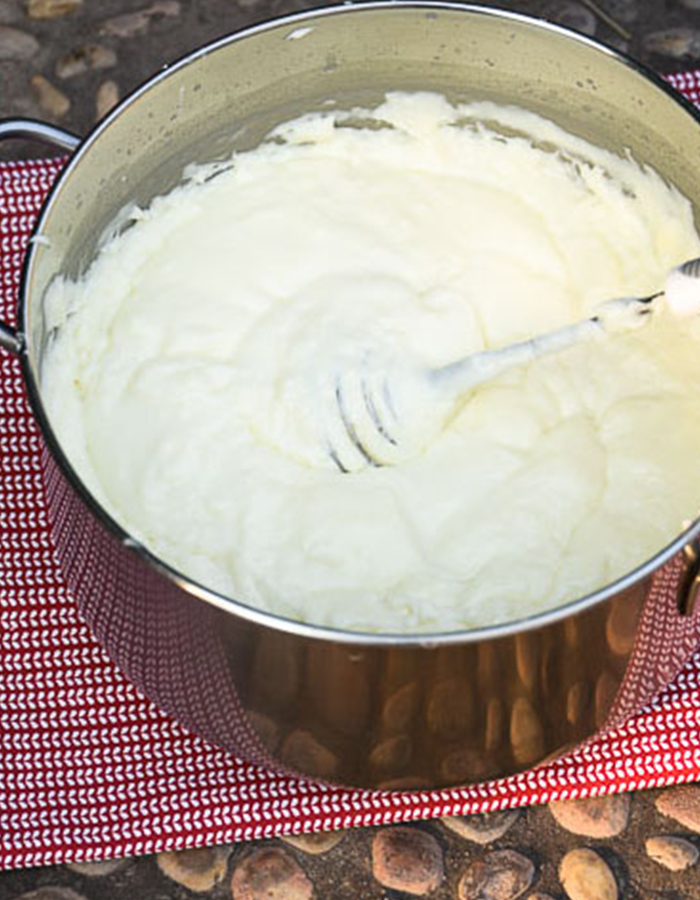
Place the milk, heavy cream, cornstarch, and mastic in a saucepan over medium heat. Whisk constantly to prevent the mixture from scorching or sticking to the bottom of the pan.
Once the mixture comes to a boil, it will begin to thicken. Keep whisking until it becomes very thick and creamy.
Remove from the heat and set aside. Cover the surface with a piece of parchment paper to prevent a skin from forming on top. Let it cool completely.
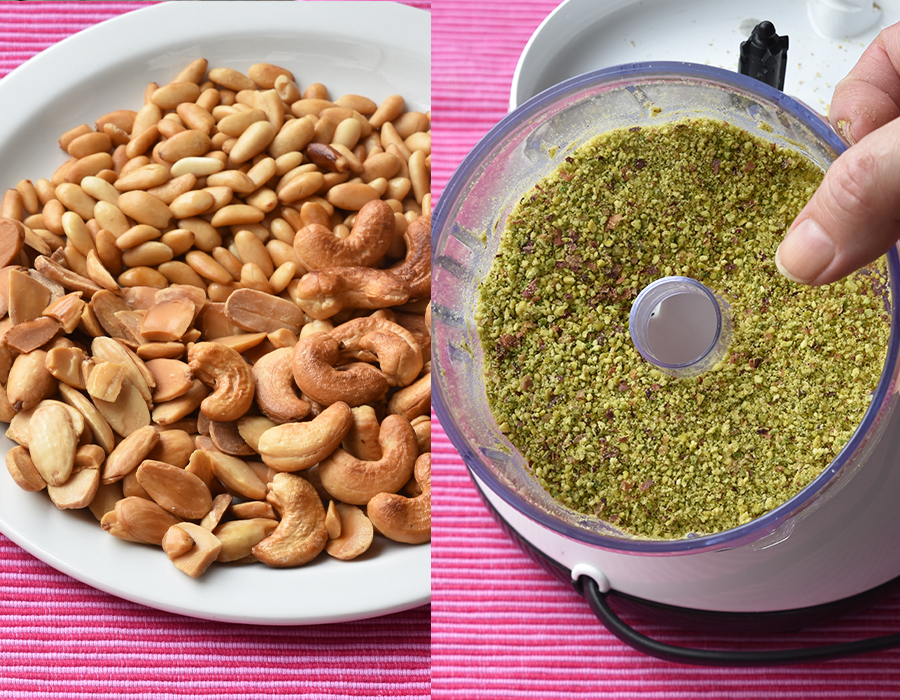
Toast the nuts and grind the pistachios.
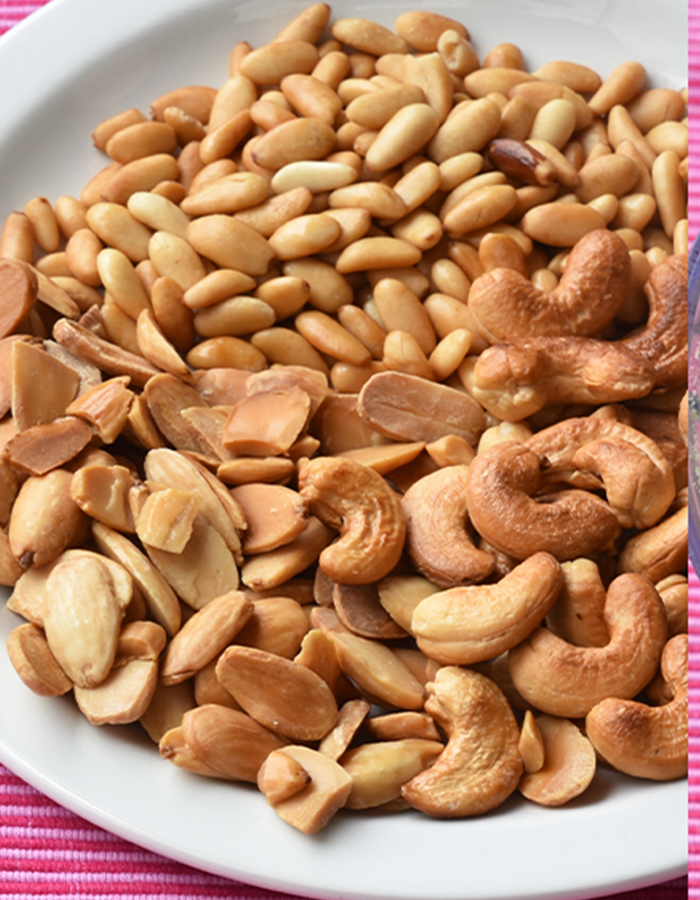
Heat the oil in a skillet over medium heat. Add the pine nuts, reduce the heat to low, and cook, stirring constantly, until golden brown. Remove with a slotted spoon and set aside to cool. Repeat the process with the almonds and cashews, cooking each separately. Drain the nuts on paper towels.
Transfer the pistachios to a food processor and process until they break down into a smooth powder.
Before diving into making the bottom layer, please read these tips—they could be very helpful!
You need to be attentive as you make the caramelized bottom farina layer. It should have a pudding-like consistency and a beautiful brown color, with absolutely no hint of a burnt flavor. Caramelizing sugar can go from perfectly golden to burnt in a flash, so it’s important to be very careful while heating the caramel. Once it develops a burnt or bitter flavor, it cannot be saved. Follow these tips for the best results:
-
Use a heavy-bottomed skillet or pan. This will help distribute the heat evenly and ensure the sugar cooks at a steady rate.
-
Never melt the sugar on your stove’s highest setting. Use medium to medium-low heat and follow the instructions carefully. High heat can cause the sugar to scorch and develop a burnt taste.
-
Choose the right sugar. Granulated white refined sugar is definitely the best choice, as it melts easily and creates a smooth, silky caramel.
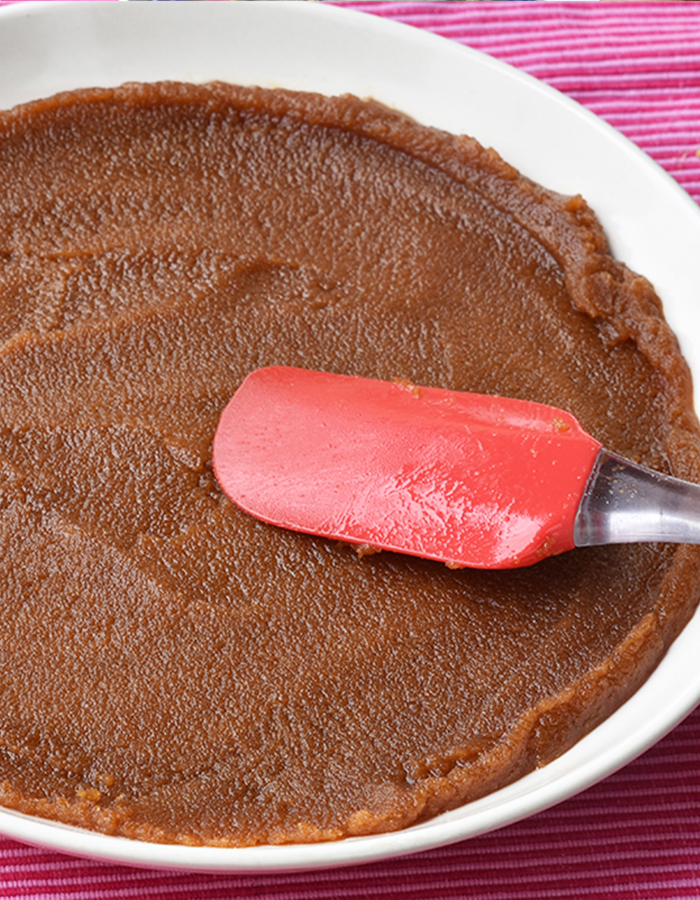
To make the bottom layer, there are a few steps to follow, but for me, they are part of the pleasure of making this dish. It is well worth the time and effort!
Place the sugar in a heavy-bottomed, large saucepan and cook over medium-low heat. At the beginning, swirl the saucepan rather than stirring. When the edges start to turn golden, begin stirring until the sugar has completely dissolved and turns a beautiful golden color.
Note that the sugar may crystallize, but that’s okay. Keep stirring until no lumps remain; this should take about 5 minutes. Be careful not to burn the sugar, as this will negatively affect the flavor of your mafroukeh.
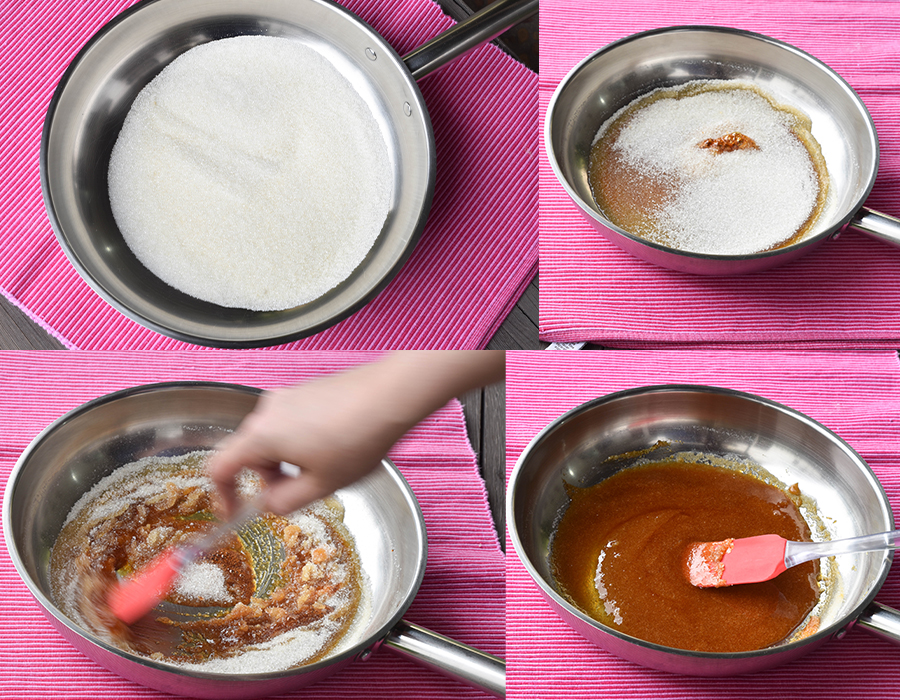
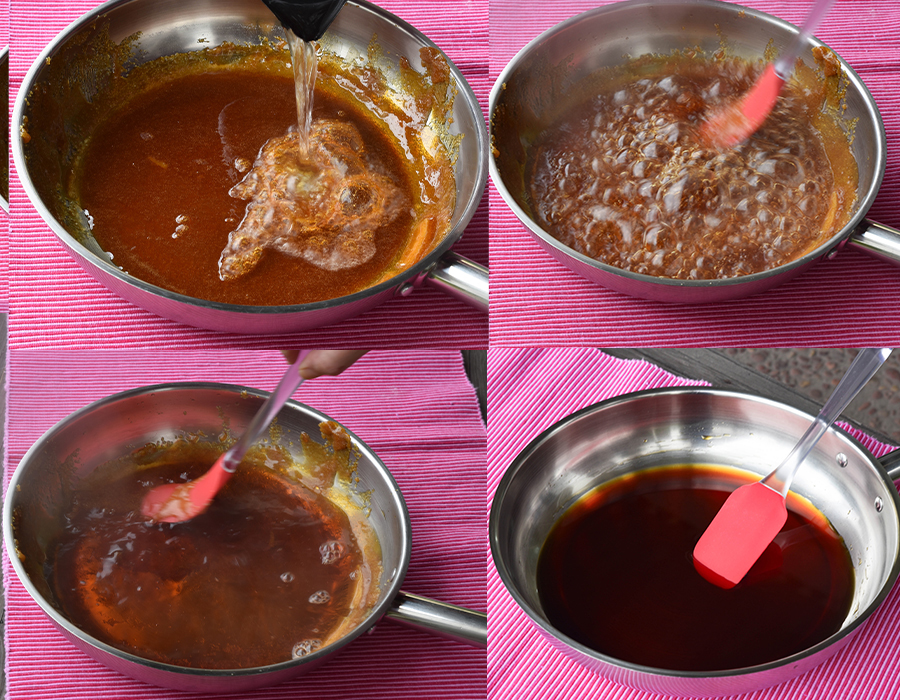
Once the sugar is completely melted, immediately stir in the boiling water. Be careful during this step, as the caramel will bubble rapidly when the water is added. If the sugar clumps up, keep whisking until it comes back together into a smooth caramel liquid with no visible lumps. Set aside.
Place the dry farina in a large, wide skillet over medium-low heat. Stir constantly until the farina begins to release its earthy aroma and turns a dark beige color. This should take about 6 minutes, but use your senses rather than relying strictly on the stated cooking time.
Add the butter and stir until it is fully incorporated and infused into the farina. At this stage, the mixture will resemble breadcrumbs.
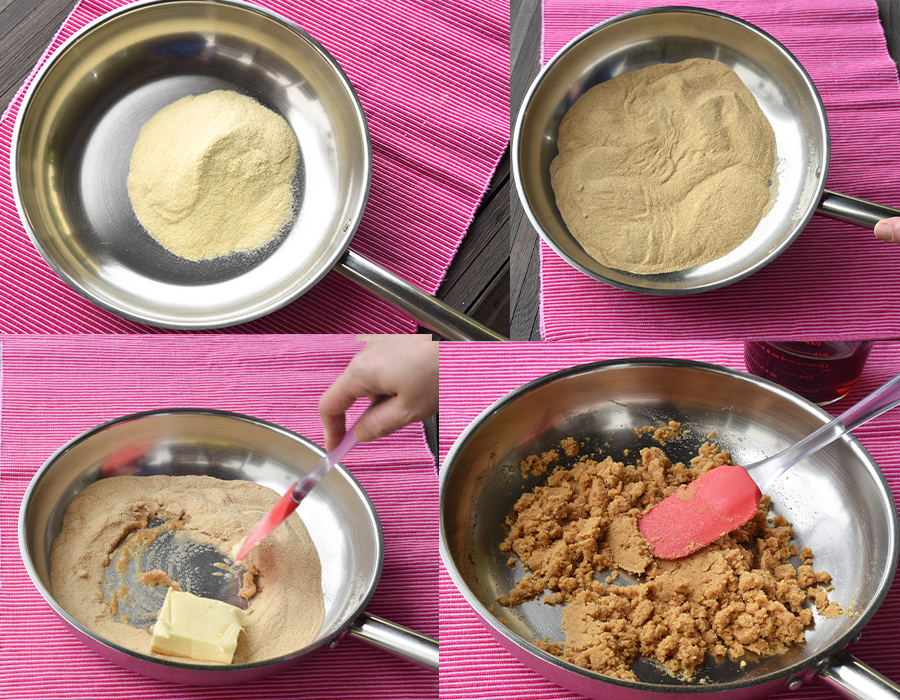
Drizzle in the caramel you prepared and stir well to ensure everything is thoroughly combined. At this stage, the mixture will look very runny, so keep stirring. Make sure the heat is kept low to prevent the mixture from burning. Add the orange blossom water and continue stirring.
The pudding is ready as soon as all the syrup has been absorbed and the mixture has thickened considerably. Keep in mind that it will thicken further as it cools.
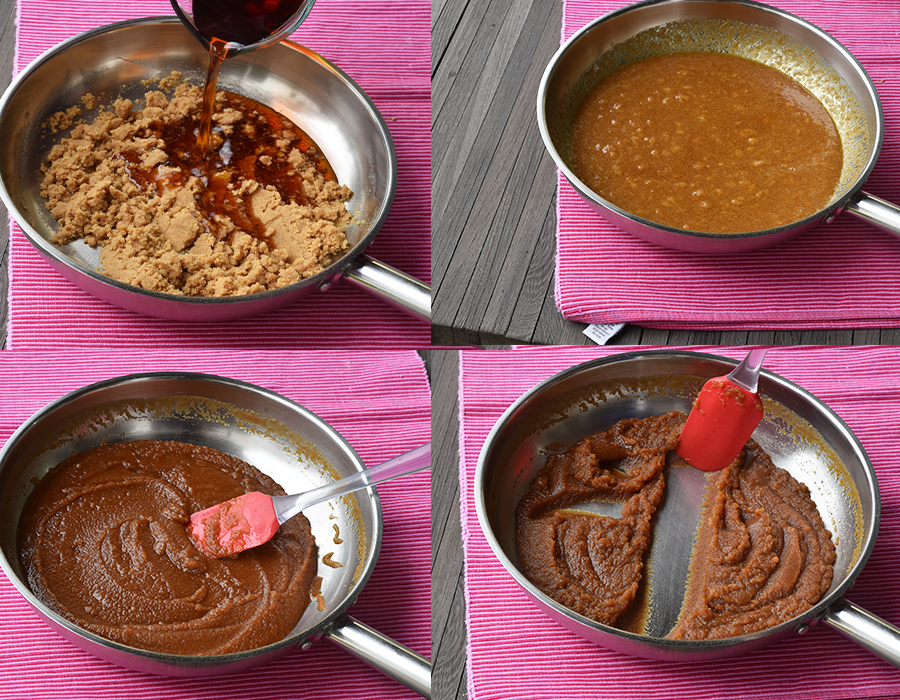
Pile the caramelized farina mixture into a wide, shallow plate, flattening it gently with the back of a spoon.
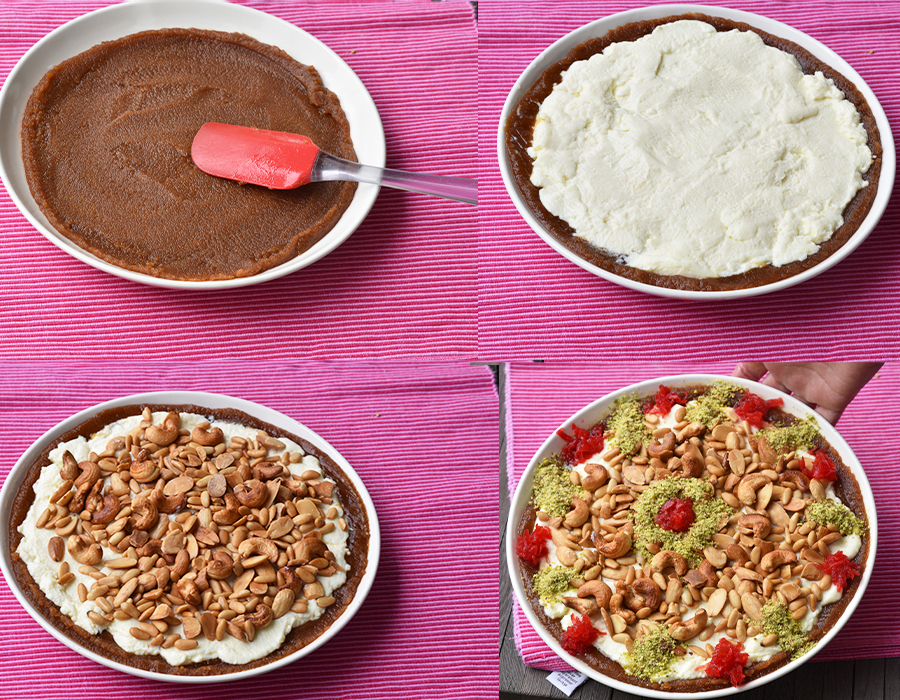
Once the base is ready, it’s time to add the creamy ashta. This layer is key, as it balances and breaks up the richness of the bottom layer. Dollop the Lebanese clotted cream (ashta) into the centre of the plate, then use a spoon or spatula to spread it evenly toward the edges.
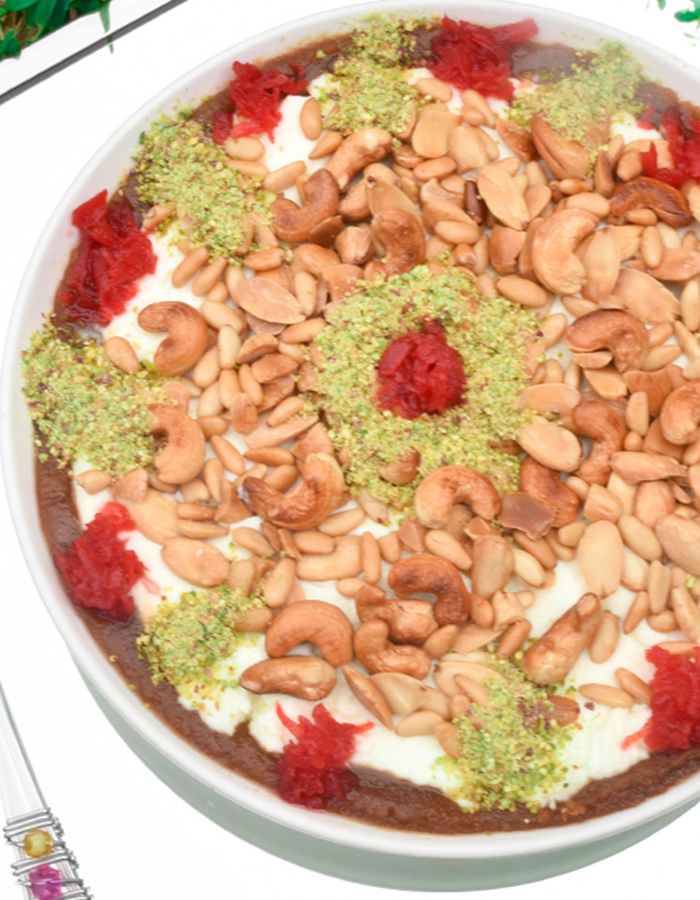
Scatter the toasted nuts randomly over the ashta, then delicately garnish the sides with orange blossom petal jam, as shown in the photos.
Mafroukeh is a blanket term for two different sweets, so a quick guide can come in handy for anyone traveling to Lebanon. Before ordering this popular sweet, you’ll want to identify which version is being referred to when you hear the name mafroukeh, simply because there are two different mafroukeh sweets.
One is made with farek knafeh and caramelized sugar, which I’m happy to share with you here. The other is a delicious pistachio mafroukeh, which, as the name suggests, is made with pistachios and farek kunafah (finely ground kataifi dough).
Both are amazing! You’ll find the recipe for pistachio mafroukeh in my book.
 Let’s Stay in Touch!
Facebook, Instagram, YouTube , Pinterest and TikTok!
Lebanese Brown Mafroukeh
Description
Equipment
- Skillet
Ingredients
To Make the Lebanese Clotted Cream (Ashta)
- 1½ cups milk
- ½ cup heavy cream
- 2 heaping tablespoons cornstarch
- ¼ teaspoon mastic gum crushed with a pinch of sugar
To Make the Semolina Bottom Layer
- 1 cup sugar
- 1 cup boiling water
- 1 cup farik knafeh or farina
- Traditionally mafroukeh is made with farik knafeh, but I used farina as a substitute.
- 100 grams 3.5 oz butter, at room temperature
- 2 tablespoons orange blossom water
For the Upper Layer
- ¼ cup sliced almonds
- ¼ cup pine nuts
- ¼ cup cashew nuts
- Orange blossom jam mrabba zahr al-laymoun, optional
- 4 tablespoons sunflower oil for toasting the nuts
Instructions
To toast the nuts:
- Place the sunflower oil in a large skillet over medium heat. Add the pine nuts and toast, stirring regularly, until golden. Remove with a slotted spoon and set aside. Toast the cashews and almonds separately, stirring frequently, until they are a lovely golden color. Keep the heat low throughout to prevent the nuts from burning.
To make the ashta (Middle Eastern clotted cream):
- Place the milk, heavy cream, cornstarch, and mastic in a saucepan over medium heat, whisking constantly to prevent scorching. Once the liquid comes to a boil, the mixture will begin to thicken. (It should thicken considerably.) Remove from the heat, cover with a piece of parchment paper pressed directly onto the surface to prevent a skin from forming, and set aside to cool completely.
To make the caramelized farina bottom layer:
- Place the sugar in a large, heavy-bottomed saucepan and cook over medium-low heat. At the beginning, swirl the saucepan occasionally rather than stirring. Once the edges start to turn golden, begin stirring until the sugar has completely dissolved and turns a lovely golden color. This should take about 5 minutes.Be careful not to let the sugar burn, as this will negatively affect the flavor of your mafroukeh.
- Once the sugar has completely melted, immediately stir in the boiling water. Be careful during this step, as the caramel will bubble rapidly when the water is added. If the sugar clumps up, continue whisking until it melts back into a smooth caramel liquid with no visible lumps. Set aside.
- Place the farina in a large, wide, dry skillet over medium-low heat. Stir constantly until the farina begins to turn a dark beige color.Add the butter and stir well to combine, allowing the butter to infuse the farina. At this stage, the mixture should resemble breadcrumbs.Drizzle in the prepared caramel and stir thoroughly to combine and homogenize everything. The mixture will look very liquid at this stage, but keep stirring. Reduce the heat to low to prevent the mixture from burning.Add the orange blossom water and continue stirring. The pudding is ready when all the syrup has been absorbed and the mixture has thickened considerably.Keep in mind that the pudding will thicken further as it cools.
To assemble:
- Pile the caramelized farina mixture into a wide, shallow plate, flattening it with the back of a spoon.
- After the base, it’s time to add a layer of creaminess: ashta. This layer is key, as it helps balance the richness of the bottom layer. Dollop the Lebanese clotted cream (ashta) into the center of the bowl, then use a spoon or spatula to gently spread it all the way to the edges.
- Randomly scatter the toasted nuts over the ashta (Lebanese clotted cream), and delicately garnish the sides with orange blossom petal jam, as shown in the photos.
Notes




















1 Comment
Elle a l air délicieuse et je l ai goûter 1fois à Batroun comme déjeuner à la place de mon meilleur desert kneffe et j’étais pas du tout dessus elle était tellement bonne que je ne l’oublierais pas