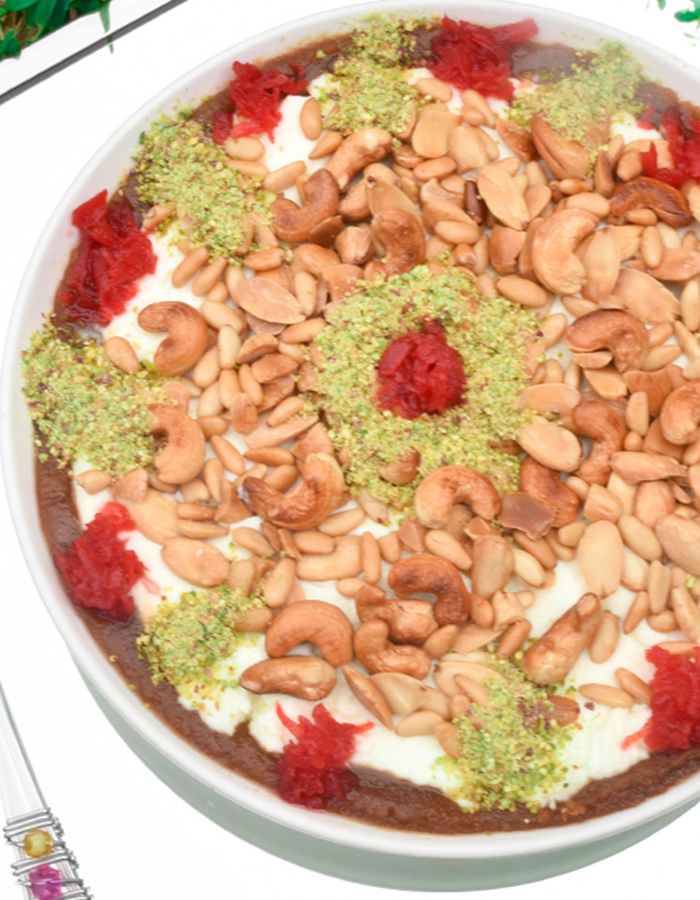
Lebanese Brown Mafroukeh
Description
Brown mafroukeh is a wonderfully indulgent Lebanese dessert with a sweet, dense, pudding-like base, topped with silky ashta (Lebanese clotted cream) and generously scattered with crunchy toasted nuts. Its combination of flavors and textures makes it truly distinctive, yet it is surprisingly simple to prepare.
Equipment
- Skillet
Ingredients
To Make the Lebanese Clotted Cream (Ashta)
- 1½ cups milk
- ½ cup heavy cream
- 2 heaping tablespoons cornstarch
- ¼ teaspoon mastic gum crushed with a pinch of sugar
To Make the Semolina Bottom Layer
- 1 cup sugar
- 1 cup boiling water
- 1 cup farik knafeh or farina
- Traditionally mafroukeh is made with farik knafeh, but I used farina as a substitute.
- 100 grams 3.5 oz butter, at room temperature
- 2 tablespoons orange blossom water
For the Upper Layer
- ¼ cup sliced almonds
- ¼ cup pine nuts
- ¼ cup cashew nuts
- Orange blossom jam mrabba zahr al-laymoun, optional
- 4 tablespoons sunflower oil for toasting the nuts
Instructions
To toast the nuts:
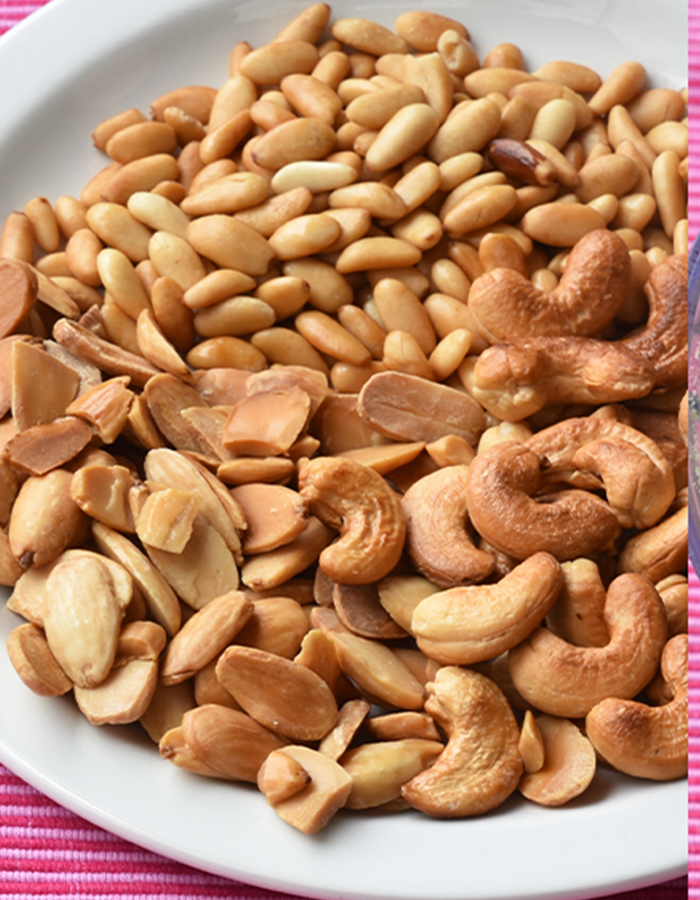
- Place the sunflower oil in a large skillet over medium heat. Add the pine nuts and toast, stirring regularly, until golden. Remove with a slotted spoon and set aside. Toast the cashews and almonds separately, stirring frequently, until they are a lovely golden color. Keep the heat low throughout to prevent the nuts from burning.
To make the ashta (Middle Eastern clotted cream):
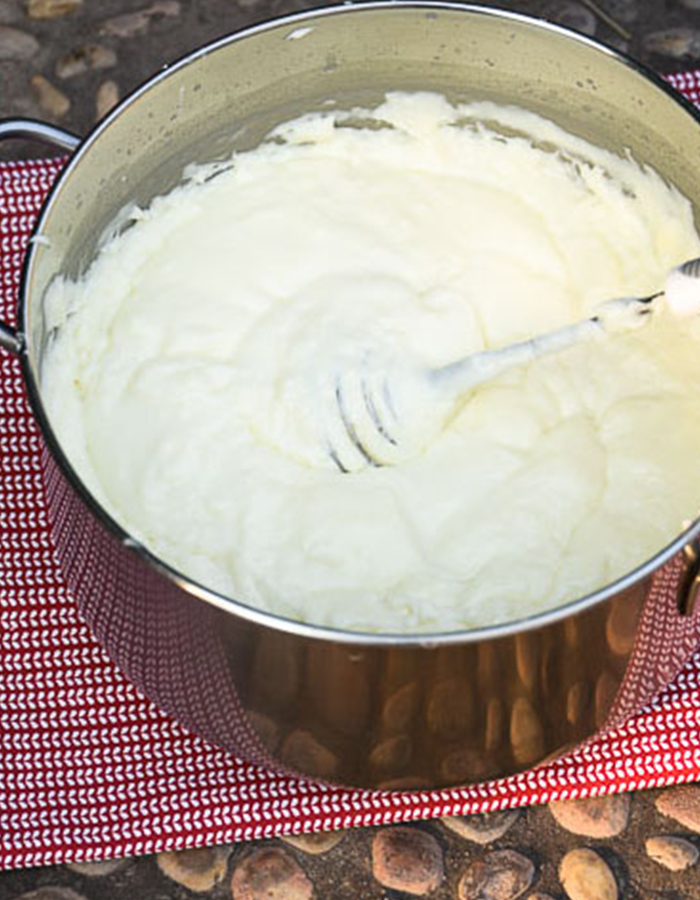
- Place the milk, heavy cream, cornstarch, and mastic in a saucepan over medium heat, whisking constantly to prevent scorching. Once the liquid comes to a boil, the mixture will begin to thicken. (It should thicken considerably.) Remove from the heat, cover with a piece of parchment paper pressed directly onto the surface to prevent a skin from forming, and set aside to cool completely.
To make the caramelized farina bottom layer:
- Place the sugar in a large, heavy-bottomed saucepan and cook over medium-low heat. At the beginning, swirl the saucepan occasionally rather than stirring. Once the edges start to turn golden, begin stirring until the sugar has completely dissolved and turns a lovely golden color. This should take about 5 minutes.Be careful not to let the sugar burn, as this will negatively affect the flavor of your mafroukeh.
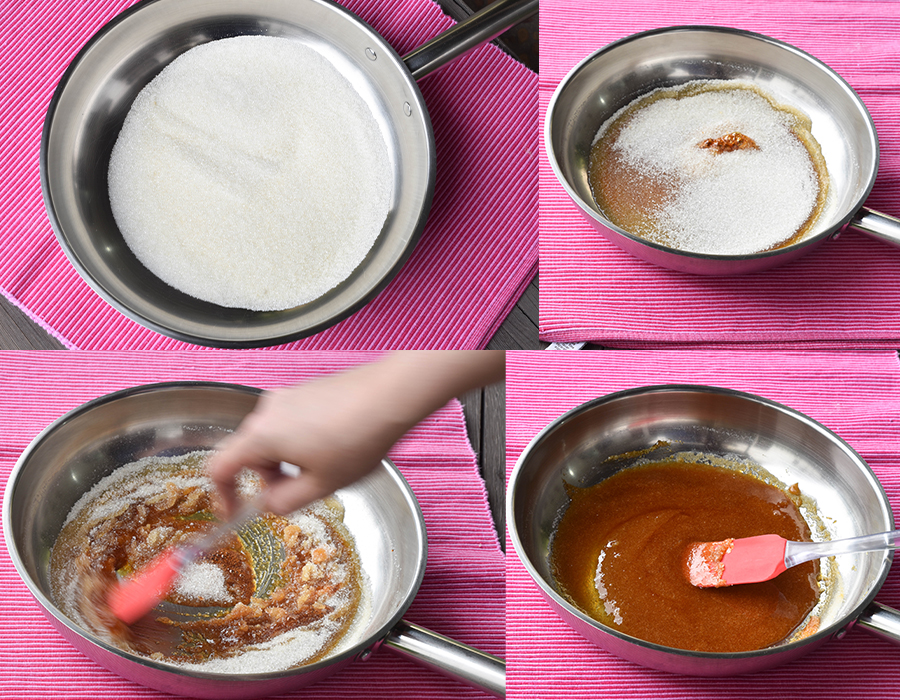
- Once the sugar has completely melted, immediately stir in the boiling water. Be careful during this step, as the caramel will bubble rapidly when the water is added. If the sugar clumps up, continue whisking until it melts back into a smooth caramel liquid with no visible lumps. Set aside.
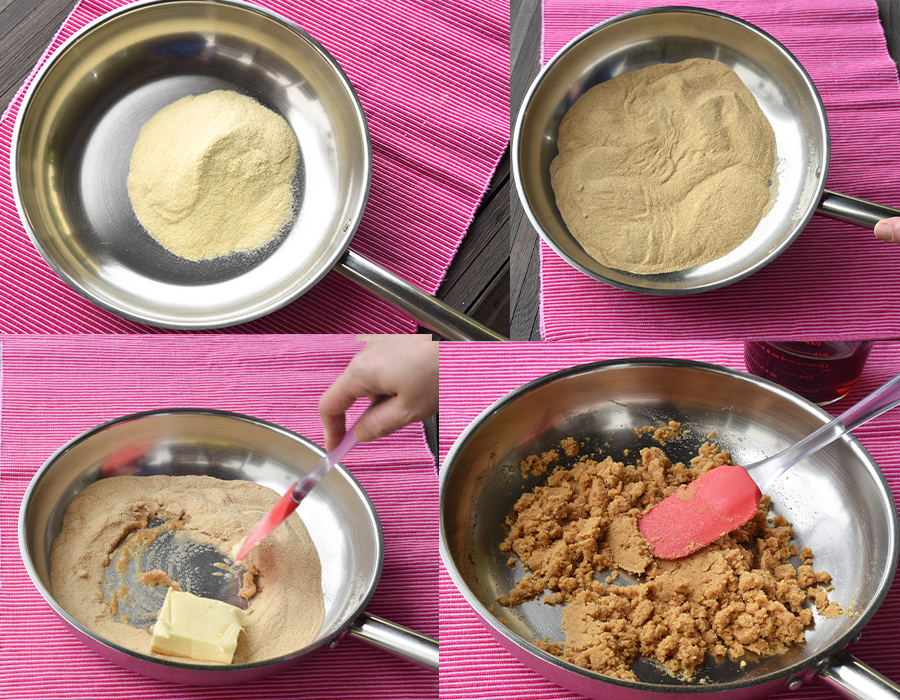
- Place the farina in a large, wide, dry skillet over medium-low heat. Stir constantly until the farina begins to turn a dark beige color.Add the butter and stir well to combine, allowing the butter to infuse the farina. At this stage, the mixture should resemble breadcrumbs.Drizzle in the prepared caramel and stir thoroughly to combine and homogenize everything. The mixture will look very liquid at this stage, but keep stirring. Reduce the heat to low to prevent the mixture from burning.Add the orange blossom water and continue stirring. The pudding is ready when all the syrup has been absorbed and the mixture has thickened considerably.Keep in mind that the pudding will thicken further as it cools.
To assemble:
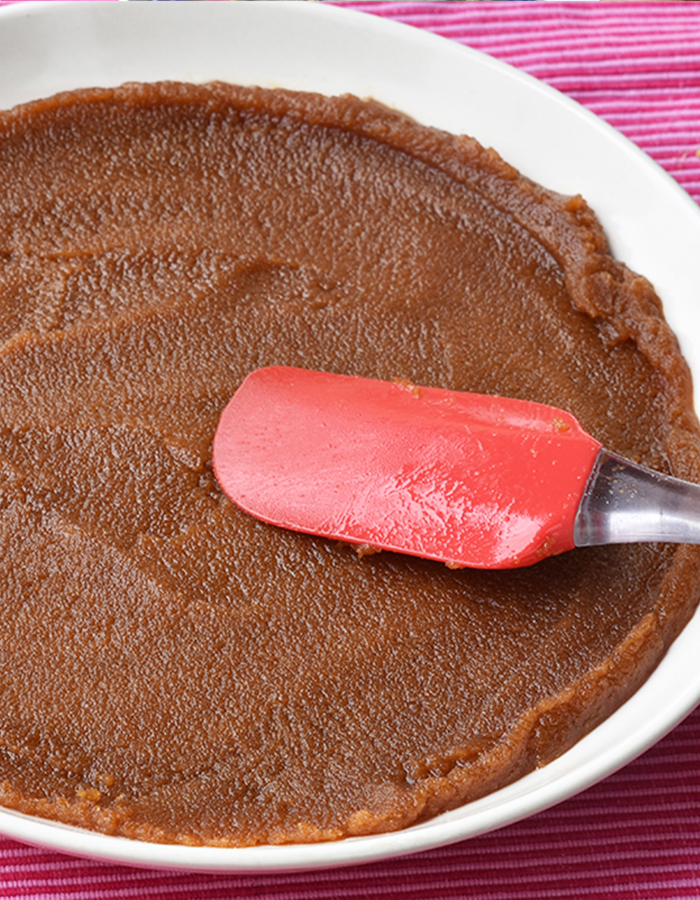
- Pile the caramelized farina mixture into a wide, shallow plate, flattening it with the back of a spoon.
- After the base, it’s time to add a layer of creaminess: ashta. This layer is key, as it helps balance the richness of the bottom layer. Dollop the Lebanese clotted cream (ashta) into the center of the bowl, then use a spoon or spatula to gently spread it all the way to the edges.
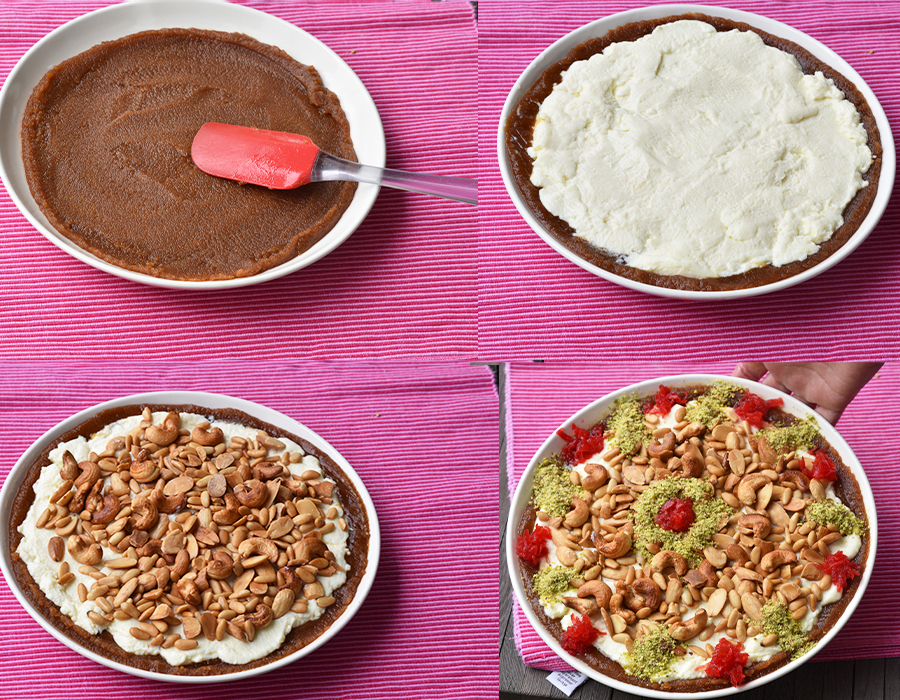
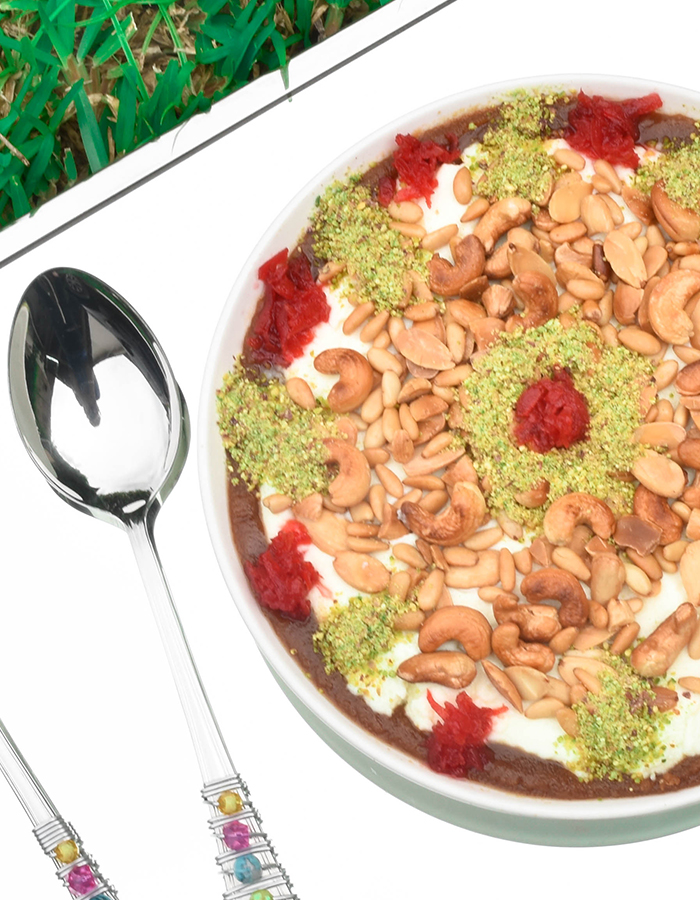
- Randomly scatter the toasted nuts over the ashta (Lebanese clotted cream), and delicately garnish the sides with orange blossom petal jam, as shown in the photos.
Notes
Note: Traditionally, brown mafroukeh is made with farek knafeh rather than farina. However, finding farek al knafeh can be difficult in the West. After much testing, I found farina to be a good substitute. If you can find farek knafeh, don’t hesitate to use it.
Tried this recipe?Let us know how it was!