


Knafeh, also spelled kunafa, is a beloved Middle Eastern dessert traditionally made with a crisp, golden layer of semolina dough (farik), filled with gooey melted cheese or rich clotted cream and drizzled with fragrant sugar syrup. This bread knafeh is an easier variation of the traditional dessert, using bread instead of semolina dough to create a deliciously soft, cheesy center with a beautifully golden top.
Traditionally, cheese knafeh is made with Akkawi cheese, which must be soaked in water to remove excess salt. Mozzarella makes a convenient alternative, offering that irresistible stretchy, melted-cheese texture we all love.

This addictive Middle Eastern dessert is popular across several countries, including Lebanon, Syria, and Turkey. Depending on the country of origin, it is known by different names, such as kunafa, knafe, and knafeh.
In Lebanon, knafeh is traditionally enjoyed for breakfast, and local sweet shops in Beirut serve it early in the morning, tucked inside a soft sesame bun. Once the warm, golden knafeh is ready, it is generously drizzled with sugar syrup flavored with orange blossom water. The moment you walk through the doors of one of these sweet shops, you are greeted by the heavenly aroma of freshly made knafeh and the delicate, fragrant scent of orange blossom water. It is an irresistible experience that captures the charm of Lebanese food culture!
In Lebanon, few people bother making knafeh at home because it is so readily available at local sweet shops. However, this easy bread knafeh recipe offers a delicious way to recreate the beloved Lebanese treat in your own kitchen.

My Sister-in-Law’s Easy Homemade Knafeh
My sweet sister-in-law, Hoda, generously shared this recipe with me after I tasted it at her house during a ladies’ gathering. Although I wouldn’t claim that this version is exactly like the traditional knafeh we enjoy at sweet shops in Beirut, I can honestly say that it exceeded my expectations! It is, without a doubt, one of the best shortcut versions of Lebanese knafeh you can make at home when you crave this beloved treat without going through the traditional preparation.
Frequently Asked Questions About Lebanese Knafeh
1. What is the difference between traditional knafeh and bread knafeh?
Traditional Lebanese knafeh is commonly prepared with fine semolina-based dough or shredded pastry, depending on the style, and filled with melted cheese or ashta (Arabic clotted cream). Bread knafeh is a convenient homemade variation that uses bread instead, making it easier to prepare while still delivering the delicious combination of a golden topping, gooey cheese, and sweet syrup.
2. What time of day do you eat knafeh?
In Lebanon, knafeh is traditionally enjoyed for breakfast, often tucked inside a soft sesame bun and served warm with a drizzle of fragrant sugar syrup. It is also a wonderful choice for brunch, an afternoon treat, or dessert. Although it may seem unusual to eat a syrup-soaked sweet for breakfast, it is a cherished Lebanese tradition that generations have grown up enjoying!
3. Why do Lebanese eat knafeh for breakfast?
If you find it strange to eat something drenched in sugar syrup for breakfast, think about it: don’t you enjoy waffles or pancakes drizzled with honey or maple syrup? In Lebanon, enjoying knafeh for breakfast is simply part of our food culture. This warm, cheese-filled pastry is often tucked inside a soft sesame bun and generously drizzled with fragrant sugar syrup flavored with orange blossom water. Just as you might enjoy sweet waffles with your morning coffee, we Lebanese enjoy our beloved knafeh! Of course, you can always adjust the amount of syrup to suit your taste. It’s a delicious tradition that brings a little sweetness to the start of the day.
4. Can you eat knafeh cold or should it be warm?
Yes! Knafeh is at its best when served warm, when the cheese filling is soft and gooey and the top is beautifully golden. As it cools, the cheese firms up and becomes less stretchy, while the bread topping may lose some of its crispness. For the most enjoyable texture, serve it shortly after baking.
5. How long does leftover knafeh last in the fridge?
Because this bread knafeh contains cheese, refrigerate leftovers in an airtight container within two hours of baking. It is best enjoyed within 3–4 days when properly refrigerated at 40°F (4°C) or below. For the best texture and flavor, reheat only the portion you plan to serve.
6. What is the best way to reheat cheese knafeh?
For the best results, reheat knafeh in an oven preheated to 325°F (165°C) until warmed through and the cheese softens again. Cover it loosely with foil if the top is browning too quickly, then uncover it briefly to restore some of its crispness. You can also reheat an individual portion in the microwave, although the topping may become softer. Add a little sugar syrup after reheating if needed.
7. Can I make bread knafeh ahead of time?
Yes. You can assemble the knafeh ahead of time and refrigerate it until you are ready to bake, provided the ingredients and preparation method are suitable for advance assembly. For the best texture, bake it shortly before serving. If you prepare it in advance, keep the sugar syrup separate and add it just before serving or according to your recipe instructions.
8. What kind of cheese is best for knafeh?
Akkawi cheese is traditionally used in many Lebanese knafeh recipes, but it needs to be soaked and rinsed as necessary to remove excess salt. Mozzarella is a convenient alternative because it melts beautifully and gives the filling a lovely stretchy texture. For this homemade bread version, choose a mild cheese that melts well and is not overly salty.
9. Should I pour the sugar syrup over knafeh before or after baking?
The sugar syrup is generally added after baking, while the knafeh is still hot or warm, allowing it to absorb the sweetness. Add it gradually to suit your taste and the texture you prefer. If your recipe specifies a particular method, follow that method for the best result.
10. Can I serve knafeh without a sesame bun?
Absolutely! Although serving warm knafeh inside a sesame bun is a much-loved tradition in Beirut, you can serve this homemade bread knafeh directly from the platter. Cut it into squares or wedges and enjoy it with a fork, either for breakfast or as a dessert.
11. Can I freeze leftover knafeh?
You can freeze leftover knafeh, although its texture may change slightly after thawing, especially the bread topping and cheese filling. Cool it promptly, divide it into portions, wrap them well, and store them in a freezer-safe airtight container. For the best quality, use within 2–3 months. Thaw in the refrigerator and reheat in the oven until hot throughout. If possible, freeze it without the sugar syrup and add fresh syrup after reheating.
Make-Ahead Lebanese Sugar Syrup (Ater)
Prepare the sugar syrup (ater) ahead of time—you can even make it up to two weeks in advance! Let it cool completely, then transfer it to a clean, airtight container and store it in the refrigerator. It is wonderfully convenient to have this fragrant syrup on hand whenever you crave a Lebanese or Middle Eastern dessert, whether it is knafeh, baklava, or another syrup-soaked sweet.

How to Make Easy Bread Knafeh
Step 1: Preparing the Easy Bread Knafeh
Tear the bread into small pieces. Add the melted butter and knead with your hands until the mixture is evenly combined and forms a uniform dough.

Step 2: Layering the Bread Base and Cheese

Grease a 30 cm (12-inch) round baking tin with a little butter, then press the bread mixture evenly into the bottom of the tin.
Arrange the sliced mozzarella over the bread layer, covering it almost completely.

Step 3: Cooking the Semolina Pudding Layer
If using mastic gum, crush it with a mortar and pestle until finely ground.
Melt the butter in a heavy-bottomed saucepan over medium heat. Add the milk, semolina, heavy cream, sugar, cheese, and crushed mastic gum, if using. Whisk constantly over medium heat until the cheese melts and the mixture thickens into a smooth pudding.
Pour the prepared pudding evenly over the sliced mozzarella in the baking pan.

Step 4: Bake the Knafeh
Preheat the oven to 200°C (400°F). Position the oven rack in the lower third of the oven, just below the center. Loosely cover the knafeh with aluminum foil and bake for 30–35 minutes, or until the bottom layer is deep golden brown.
Carefully invert the knafeh onto a flat serving platter. Garnish with ground pistachios, then cut into slices and drizzle each serving with sugar syrup (atter) to taste. Enjoy!
 Let’s Stay in Touch!
Facebook, Instagram, YouTube , Pinterest and TikTok!
More Lebanese Knafeh and Middle Eastern Dessert Recipes to Try
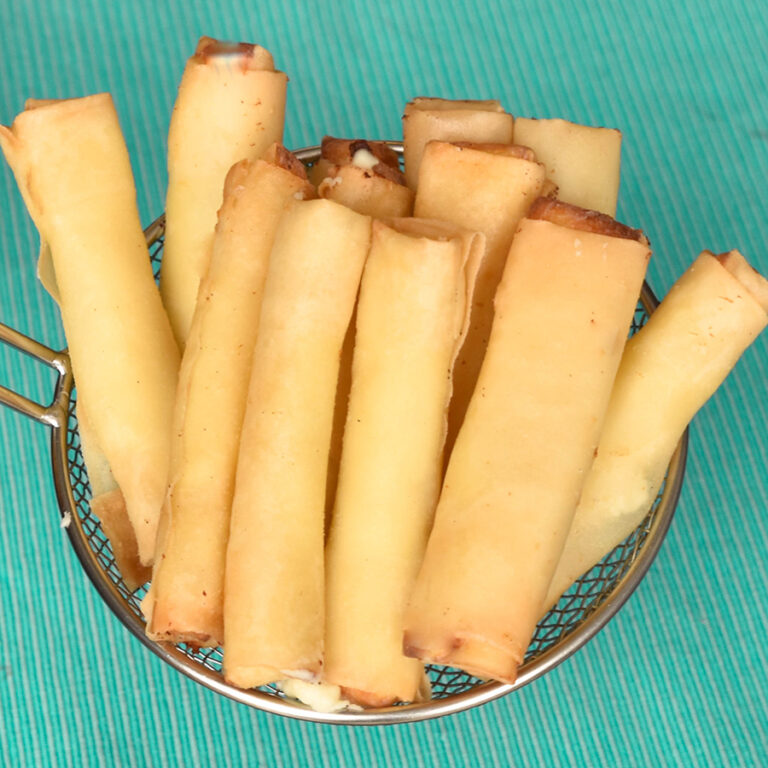
Enjoy exploring these delicious Middle Eastern sweets, from traditional Lebanese knafeh to crispy pastry nests filled with creamy, irresistible goodness!

Easy Lebanese Bread Knafeh (Cheese Kunafa)
Description
Ingredients
For the sugar syrup (Attar):
- 2 cups granulated sugar
- 1 cup water
- 2 tablespoons freshly squeezed lemon juice
- 1 tablespoon orange blossom water or rose water
For the bottom bread layer:
- 500 g 1 lb 2 oz white bread, crusts removed and torn into pieces
- 200 g 7 oz unsalted butter, melted
For the middle cheese layer:
- 400 g 14 oz mozzarella cheese, sliced (or Akawi/Nabulsi cheese, desalted)
For the pudding layer:
- 1 cup coarse semolina
- ½ cup granulated sugar
- 1 tablespoon unsalted butter
- 2 cups whole milk
- ½ cup heavy cream
- 200 g 7 oz mozzarella cheese, diced
- A pinch of ground mastic gum optional
For garnish:
- ⅓ cup raw pistachios coarsely ground (optional)
Instructions
- Cut into slices and drizzle sugar syrup over each serving. Enjoy!

Prepare the Sugar Syrup (Attar)
- Dissolve: Place the sugar, water, and lemon juice in a saucepan over medium heat. Stir with a wooden spoon until the sugar dissolves.
- Simmer: Bring to a boil, then reduce the heat to low. Simmer uncovered for 7 minutes.
- Finish: Stir in the orange blossom water and simmer for 1 more minute. Remove from heat and set aside to cool completely.
Assemble the Base & Cheese Layers
- Prep the Bread: Tear the crustless white bread into small pieces. Pour in the melted butter and knead by hand until it forms a uniform, cohesive dough.
- Press: Grease a 30 cm (12-inch) round baking tin with a small piece of butter. Firmly press the bread dough evenly into the bottom of the tin.
- Layer Cheese: Arrange the sliced mozzarella cheese in an even layer over the bread, covering it almost completely. Set aside.
Cook the Pudding Layer
- Prep Mastic: If using mastic gum, crush it into a fine powder using a mortar and pestle.
- Combine & Whisk: Melt the butter in a heavy-bottomed saucepan over medium heat. Add the milk, heavy cream, semolina, sugar, diced mozzarella, and crushed mastic.
- Thicken: Whisk constantly over medium heat until the cheese completely melts and the pudding becomes thick and smooth.
- Pour: Immediately pour the hot pudding evenly over the sliced mozzarella layer in the baking tin.
Bake & Serve
- Preheat: Preheat your oven to 200°C (400°F) and position the oven rack in the lower third.
- Bake: Cover the knafeh loosely with aluminum foil. Bake for 30–35 minutes, or until the bottom bread layer turns a deep golden brown.
- Flip & Garnish: Carefully invert the hot knafeh onto a flat serving platter. Garnish the top with the coarsely ground pistachios.
- Serve: Slice into portions and drizzle the cooled sugar syrup over each serving. Serve warm.
Video
Notes





















28 Comments
I always wanted to make kunafa and thought that making it at home would be the most challenging task, and I am glad I found your easy to follow recipe. I can`t wait to make it
Hi Hadia, I am an Italian married to a Lebanese. Just made your knafah and my husband loved it. I love your recipes and your photography is gorgeous.
I hope you enjoy it as much as we do, Lisa!
That is great to hear, Manuella! Thank you for the feedback and welcome dear!
This looks wonderful!
Thank you Ann, and it tastes just as it looks!!
Looking forward to trying out your kunafah.It looks absolutely amazing.
I hope you like it Elsie as much as we do! Let me know how it turns out for you!
I love that you put all the measurements in imperial and metric Units. It makes it so much easier for me as a german to recook your recipe^^ awesome!
Hii Hadias cuisine!! This looks amazing!! A small clarification-what kind of akkawi do you use? Chiki?? Thanks a lot
Hi, I can not get Akkawi cheese where I live but you say a mix of mascarpone and mozzarella can be used as a substitute.
Please can you tell me in what quantities each would need to be.
thanks
Hi wondering if I this can be prepped ahead of time. Would I do all up to step 9 then refrigerate till I need to bake – will it be okay to keep uncooked but assembled over night?
By the way, I have made this before and it was excellent. I did make small additions to cheese. Thanks.
Hi Hadia, lovely recipe, can’t wait to try this.
I had a question, is it possible to freeze akkawi cheese? I suppose it might affect the flavour, but apart from that, is it okay?
Hi!
Thank you for the great recipe! This is my go to kunafa recipe now!
Hi,
I kept the baked kunafah in refrigerator. But after I reheat it, the cheese became hard. I used cream cheese. How to prevent it from being hard?
Hello, I love your page! I would like to try this recipe. What kind of bread is used?
This is an unforgettable dessert. I ate it in Jerusalem Old City, a genuine Knafe Nabulsiye. Now I have a way of making it myself. Thanks to this recipe!
This looks so delicious, I used to buy it from a Lebanese family store in NYC long years ago. How much mastic gum do you add? This brings so many memories, thank you.
Can you give an idea of quantities of mozzarella/ricotta to use to substitute for the cheese? My grocery store stopped carrying it 🙁 thanks!