


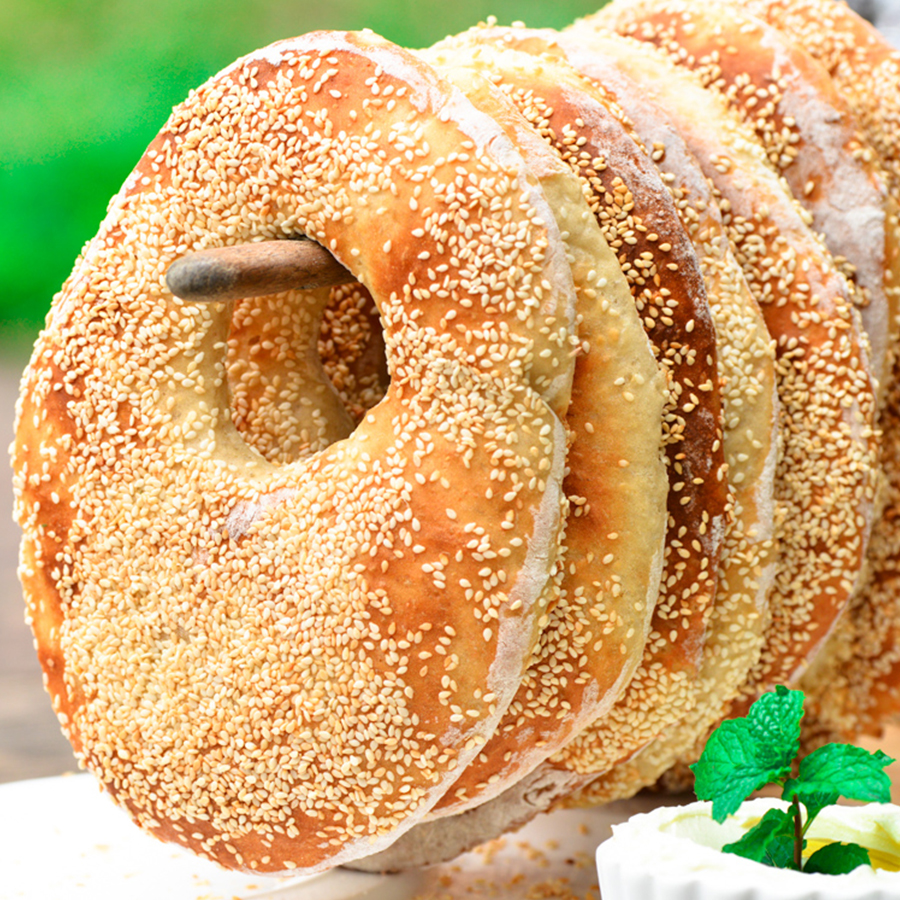
Kaak Al Asreya is the quintessential Lebanese street bread! Shaped like a little handbag and generously coated with sesame seeds, this beloved bread boasts a crispy exterior and a slightly chewy interior. Traditionally baked in a flame oven and sold by street vendors pushing carts through the streets of Beirut, kaak is an iconic Lebanese street food and a delicious snack to enjoy on the go. Eaten by hand, it is equally delightful for breakfast, especially when paired with a cup of tea.
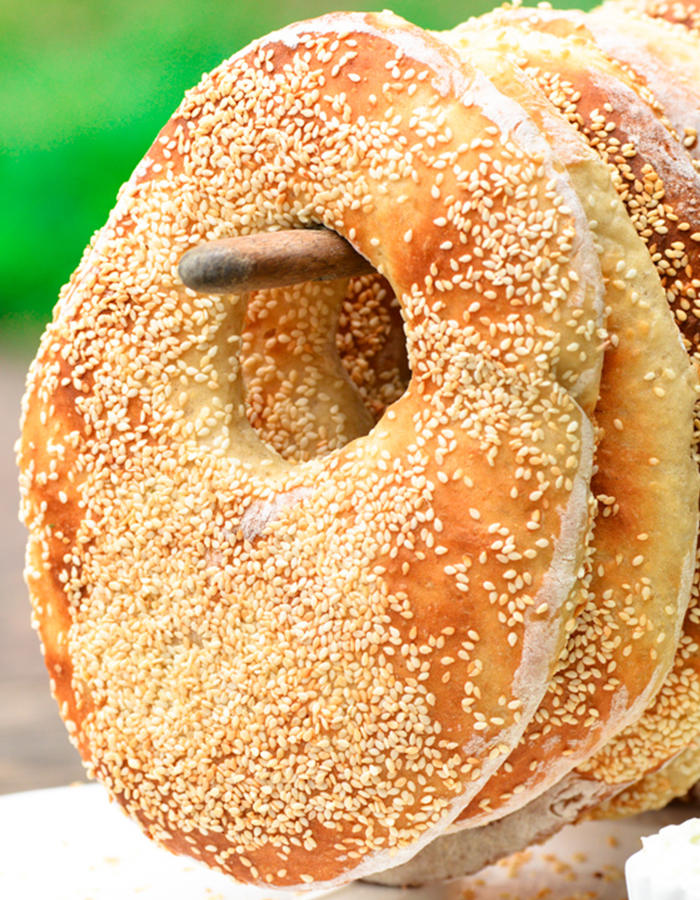
Kaak Al Asreya: Lebanese Street Bread, Memories, and Homesickness
If you ever visit Lebanon, don’t miss this incredibly delicious Lebanese kaak (Kaak Al Asreya), and try to enjoy it fresh and warm! In Lebanon, few people bother making kaak at home when it is so easy to buy it freshly baked from street vendors. But when you live abroad, there is always a special food you miss, a familiar taste you find yourself craving.
Have you ever experienced one of those moments when homesickness hits, and all you can think about is the flavor of something you grew up eating? Food has such a powerful place in our lives. It is part of our identity, and some of our most cherished memories are tied to the dishes we grew up enjoying. Every dish has a story to tell, and some of those stories stay with us for a lifetime.
For me, it is the memories and experiences associated with Lebanese kaak that make it so near and dear to my heart—and most probably to the hearts of many Lebanese expats around the world who grew up enjoying this beloved street bread!
Kaak Al Asreya tastes absolutely delicious, especially when it is still warm from the oven. Put the kettle on, brew yourself a cup of tea, and enjoy your freshly baked kaak with za’atar, labneh, or your favorite spreadable cheese. It is a simple pleasure that brings a little taste of Lebanon right into your home!
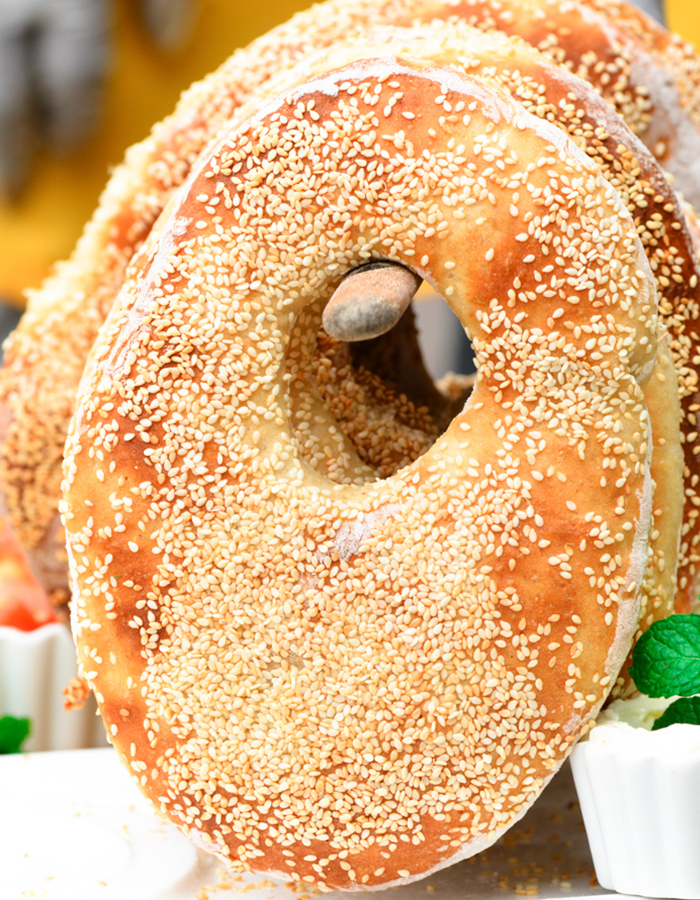
Ingredients for Lebanese Kaak (Kaak Al Asreya)
- Flour: Use all-purpose flour to achieve the right texture for your kaak.
- Yeast: Use instant yeast, which can be mixed directly into the dry ingredients without being dissolved in water first.
- Sugar: Use the specified amount to add a subtle sweetness and help achieve the characteristic flavor of Lebanese kaak.
- Water: Use lukewarm water, never hot or boiling. Excessively hot water can kill the yeast and prevent the dough from rising properly.
- Salt: Salt strengthens the gluten structure and helps regulate yeast activity, contributing to a well-structured dough. Stick to the specified amount for the best results.
- Sesame Seeds: Sesame seeds give kaak its signature coating, adding a delicious nutty flavor and a distinctive finish.
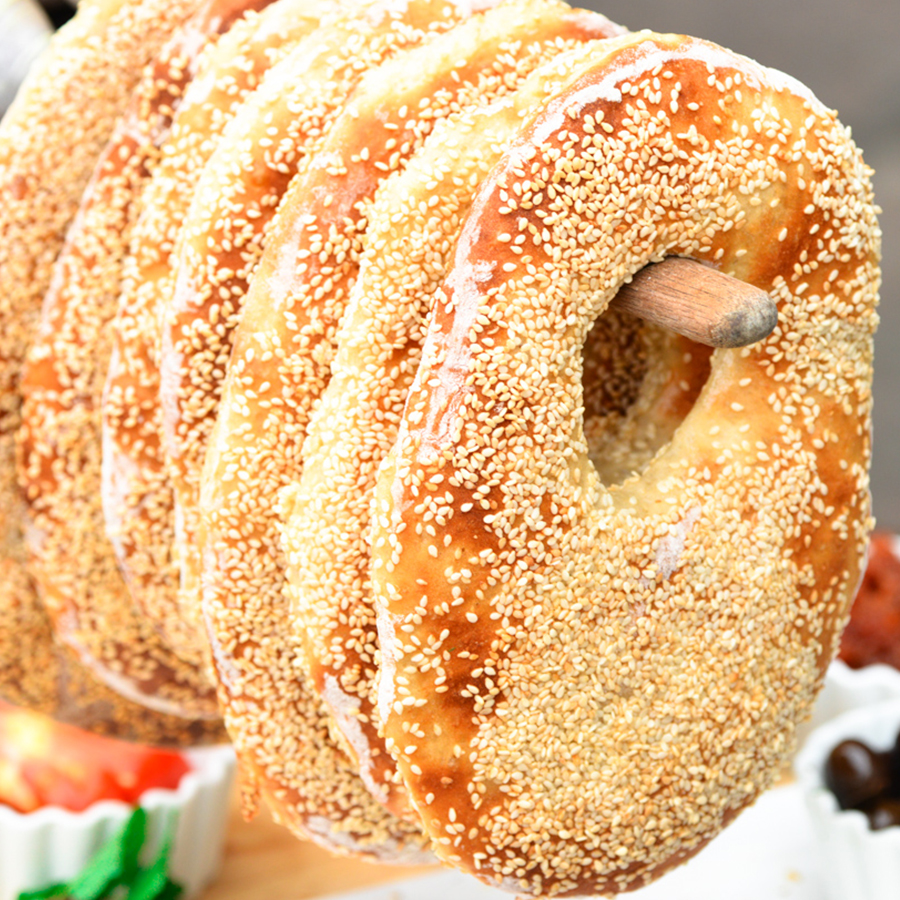
Tips for Making Lebanese Kaak (Kaak Al Asreya) at Home
And now, let’s get started! Before diving into the recipe, here are a few helpful tips to ensure your homemade Lebanese kaak turns out beautifully.
- Kneading the Dough: I prefer to knead the dough by hand—old school! However, if you prefer, you can use a stand mixer or a hand mixer fitted with dough hooks, provided your mixer is suitable for kneading bread dough.
- Check the Yeast: Make sure to check the expiration date on your yeast packet to ensure it is still suitable for use. If you are using active dry yeast rather than instant yeast, follow the package instructions for activating it.
- Allow a Second Rise: After shaping the kaak, let the dough rise a second time before baking. This allows the dough to relax and rise further, helping produce a lighter texture.
- Prepare the Glaze: You will need a glaze made with flour, oil, salt, and water. It helps the sesame seeds adhere to the surface of the dough and gives the kaak its beautiful, shiny, golden finish.
- Bake at a High Temperature: Bake the kaak in a properly preheated oven at the temperature specified in the recipe. The high heat helps the bread develop its characteristic crust while allowing the dough to expand during the initial stage of baking.
- Enjoy It Fresh: Like most homemade bread, Lebanese kaak is at its best on the day it is baked. If you plan to freeze it, slightly underbake it by about a minute so it will not become overly browned when reheated.
- Watch the Recipe Video: Be sure to watch the video accompanying this recipe for a helpful visual guide to shaping and preparing your kaak.
Step-by-Step Instructions
Step 1: Mix the Dough Ingredients
-
- In a large ceramic bowl, mix the flour, salt, yeast, and sugar.
- Add the lukewarm water and combine all the ingredients with your hands. (You may need to add more water than called for. The amount of moisture in the flour determines how much water you need to add.)
Step 2: Knead and First Proofing
-
- Knead the dough thoroughly by hand on a clean surface. Press into it and fold it over itself until it becomes soft, pliable, and smooth.
- Shape the dough into a ball and return it to the bowl.
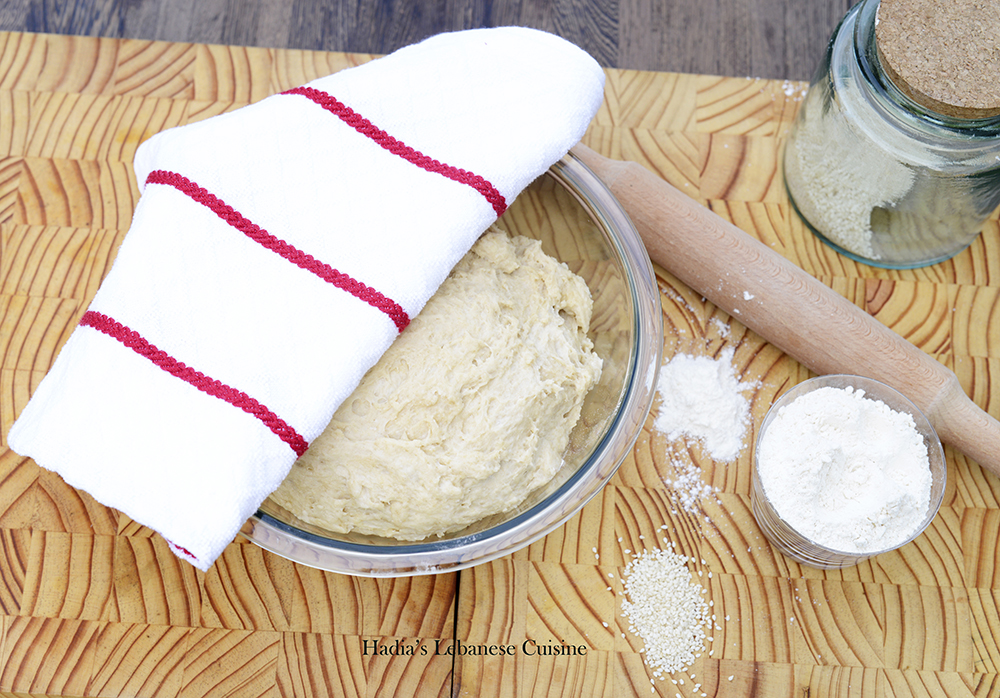
- Cover the bowl with a clean kitchen towel. Let the dough rest in a warm area for roughly 1 hour, or until it has doubled in size.
Step 3: Divide and Roll the Dough
-
- Lightly flour your countertop or work surface.
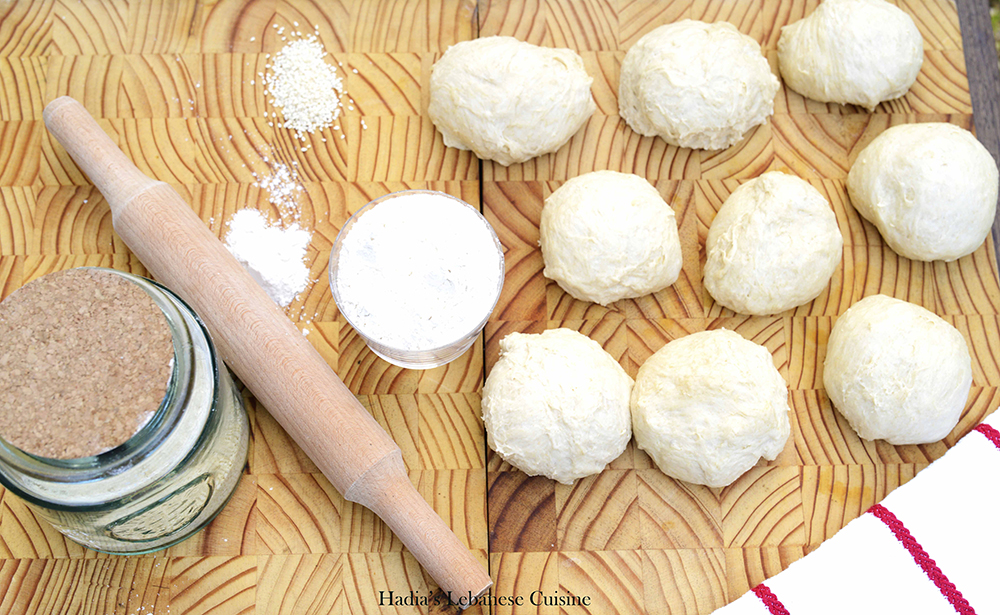
- Punch down the risen dough and divide it equally into 9 portioned pieces.
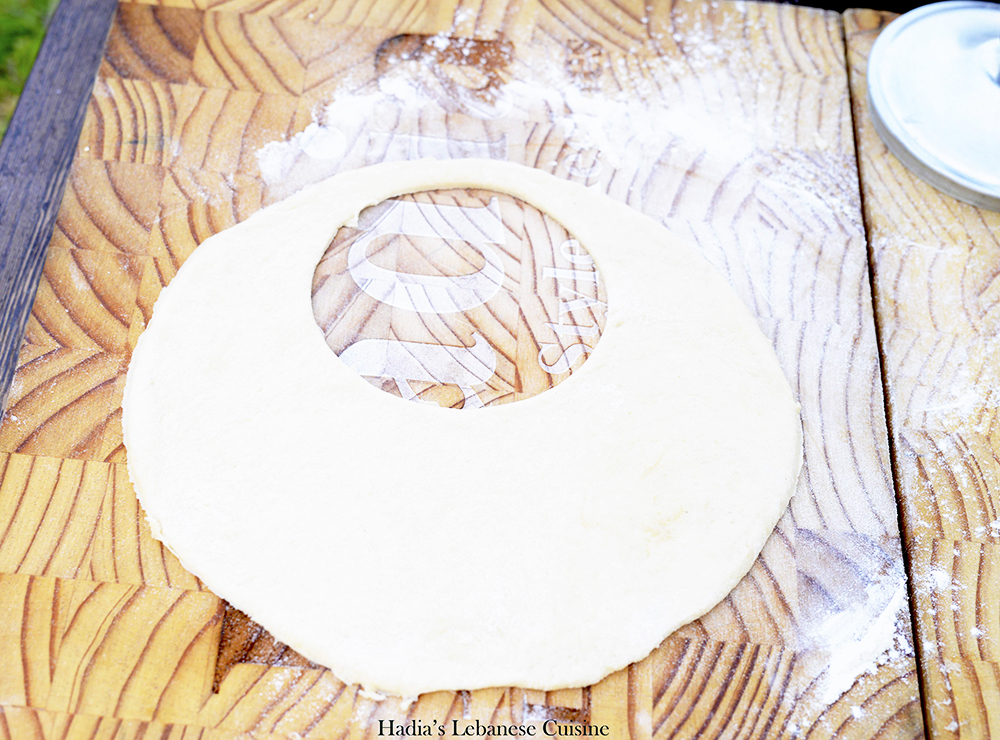
- Working with one piece at a time, roll the dough out into a flat circle measuring roughly 20 cm (8 inches) in diameter and 1.5 cm (½ inch) thick.
Step 4: Shape the Authentic Lebanese Kaak “Handbag”
-
- Take a 10 cm (4-inch) round cookie cutter.
- Cut a clean hole near the top edge of your rolled dough circle to create the traditional street-bread handle shape.
- Carefully transfer the shaped piece to a baking sheet lined with parchment paper or a silicone baking mat. Repeat for all remaining portions.
Step 5: Prepare the Glaze and Coat with Sesame Seeds
-
- Whisk the glaze ingredients (1 cup water, 2 tablespoons flour, 2 tablespoons olive oil, and a pinch of salt) in a small saucepan over medium heat. Simmer and stir continuously until a thin, smooth paste forms. Let it cool slightly.
- Using a pastry brush, lightly coat the surface of each shaped kaak with the warm flour glaze.
- Generously sprinkle the top with white sesame seeds, gently patting them down with your hands to ensure they stick firmly to the dough.
Step 6: Second Proofing
-
- Set the glazed and seeded kaak aside to rest uncovered for 30 minutes.
- This second rise allows the gluten to relax, resulting in a lighter and softer internal bread texture once baked.
Step 7: Bake to Golden Perfection
- Preheat your oven to a high baking temperature—typically 425°F (220°C) to mimic a traditional flame oven.
- Bake the bread for approximately 8 to 10 minutes until the outer crust turns a deep, shiny golden brown.
- Remove from the oven and serve warm with your favorite spreadable cheeses, labneh, or za’atar.
Oh, there is something so comforting about the aroma of kaak baking in the oven; it takes me right back to the streets of Lebanon, where freshly baked kaak is one of those simple pleasures we never forget. Follow the instructions, and you’ll soon be enjoying your own homemade kaak, warm, fragrant, and generously coated with sesame seeds. Trust me, it’s easier to make than you might think, and every bite is worth the effort!
Frequently Asked Questions (FAQs)
What can I use as a substitute if I don’t have a 10 cm cookie cutter?
Can I substitute all-purpose flour with bread flour or whole wheat flour?
My sesame seeds keep falling off after baking. How do I fix this?
Why is my kaak dough too sticky to roll out?
More Authentic Kaak Recipes
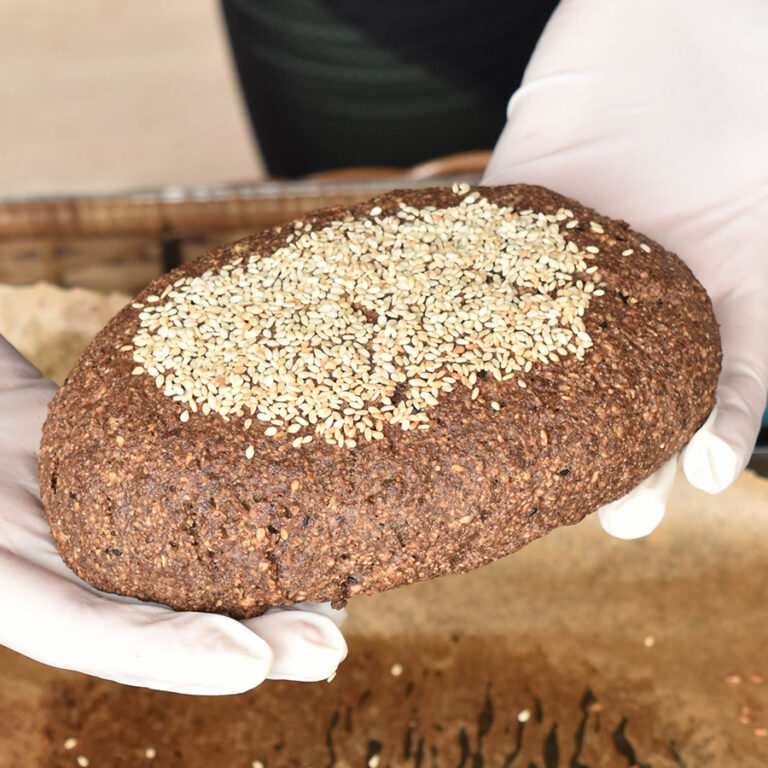
- Carob Molasses Kaak
- Lebanese Sweet Kaak
- Lebanese Milk Kaak
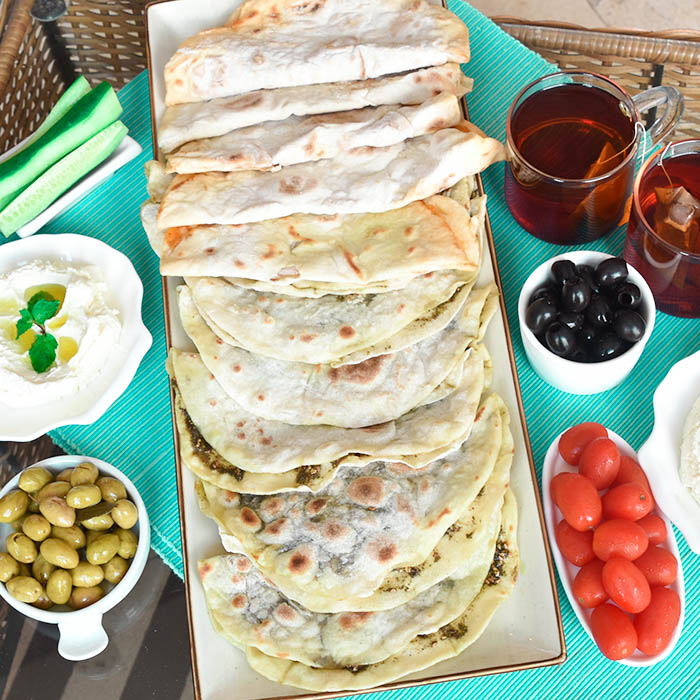
- Northern Lebanese Flat Kaak
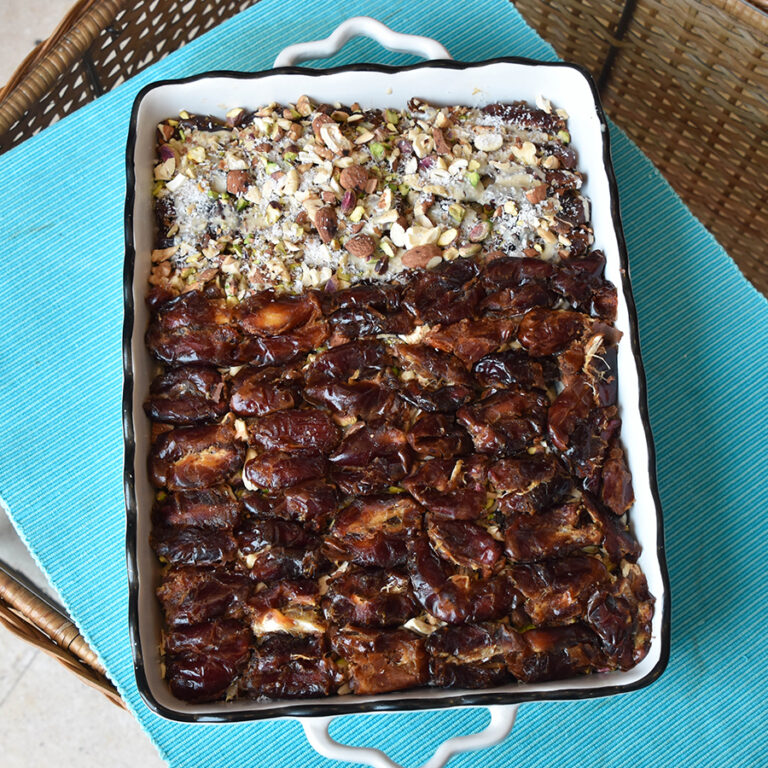
- Farida’s Date Ring Kaak
 Let’s Stay in Touch!
Facebook, Instagram, YouTube , Pinterest and TikTok!
Kaak/ Kaak Alasreya/ Lebanese Street Bread
Description
Ingredients
For the Dough
- 1 kg 2 lb 4 oz All-purpose flour
- 2 tablespoons Instant yeast
- 1/3 cup 100 g / 3.5 oz Sugar
- 2 teaspoons Salt adjusted for 1kg flour
- 2.5 to 3 cups Lukewarm water adjusted for proper dough hydration
- 1 cup White sesame seeds reserved for the topping
For the Filling
- Za'atar spreadable cheese cream cheese, or your favorite savory dip.
For the Flour Glaze (To help sesame seeds stick)
- 1 cup Water
- 2 tablespoons All-purpose flour
- 2 tablespoons Olive oil
- A pinch of Salt
Instructions
- Check the yeast expiration date to ensure it is active.
- In a large ceramic bowl, combine the flour, salt, yeast, and sugar. Add the lukewarm water and mix everything together with your hands until a dough begins to form. You may need to add a little more water than the recipe calls for, depending on the flour’s moisture content.
- Once the mixture starts coming together, knead the dough thoroughly, pressing into it with your hands and folding it over itself until it becomes soft, smooth, and pliable.
- Cover the bowl with a clean kitchen towel and set it aside for about 1 hour, or until the dough has doubled in size.
How to Shape and Bake the Kaak
- Preheat the oven to 230°C (450°F).
- Position the oven rack in the lower third of the oven, just below the center.
- Prepare the glaze: Combine the glaze ingredients in a small saucepan and whisk until smooth. Bring the mixture to a boil, stirring constantly, until it reaches the consistency of thick cream. Remove from the heat and set aside to cool slightly before using.
- Once the dough has doubled in size, lightly flour your countertop and divide the dough into nine equal portions.
- Place one piece of dough on the lightly floured surface. Using a rolling pin, roll it out into a circle about 20 cm (8 inches) in diameter and 1.5 cm (½ inch) thick. Then, using a 10 cm (4-inch) round cookie cutter, cut out a hole near the top edge of the dough.
- Carefully transfer the shaped dough to a baking sheet lined with parchment paper or a silicone baking mat, handling it gently to preserve its shape.
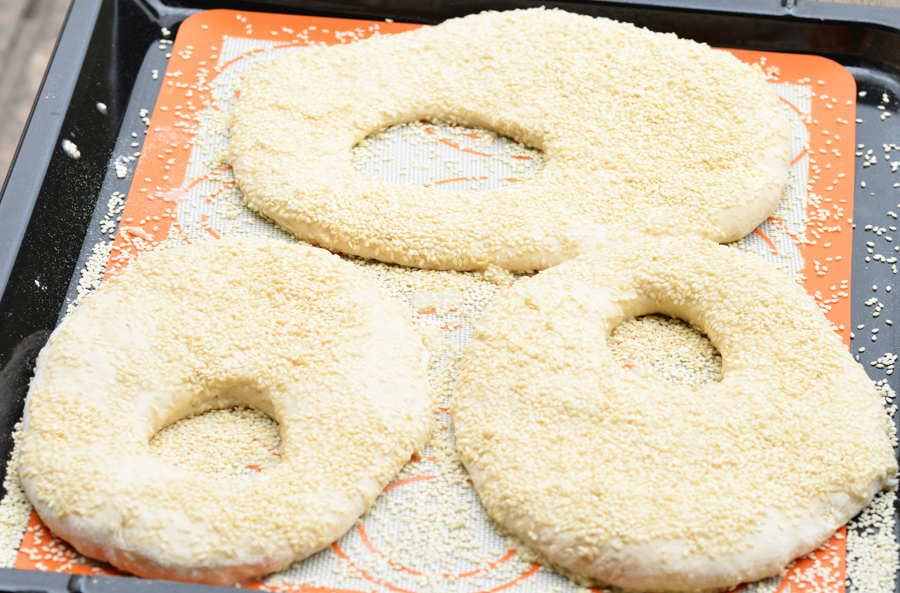
- Using a pastry brush, gently coat the surface of the kaak with the prepared glaze. Generously sprinkle with sesame seeds, then lightly pat them with your hands to help them adhere to the dough. Set the kaak aside for 30 minutes to rise a second time. This final rise helps create a lighter texture and contributes to the kaak’s delicious flavor.
- Bake for 7–10 minutes, or until the kaak puffs up and turns a beautiful golden brown. Keep a close eye on it, as baking times may vary from one oven to another!
- Remove the kaak from the oven and, once cool enough to handle, carefully open a small hole in the center and fill it with some za’atar. Give it a little shake to distribute the za’atar, then enjoy your kaak while it’s still warm. Repeat with the remaining dough. Oh, how delicious!
Video
Notes





















18 Comments
Hi im going to try ur reciepe are u sure its 11 tablespoons or is it a typing error
Hi Mervat, it is 1+ 1/2 tablespoons active dry yeast! Let me know how it works for you!
Thank you for the recipe. All looked well until end of baking, kaak came out too dry and didn’t rise and sesame didn’t hold at all. Please advise
Made these with son. They were great. Turns out amazing even for my neigjbor who never had kaak. They taste as the ones I used to have at Al Manara in Beirut. Thanks a lot for the recipe. Love them and your website.
Hello! Thank you for the recipe 🙂 Can I just ask you how many Kaaks does this recipe make? around 10 ?
Hi lady
1- why you mix the salt and yeast together
2- for the oven heat is it upper and lower together ON
3- can I freeze it for later
Thanks
Hi lady
I have made the kaaek today with high protein flour it came out delicious
Thanks a lot
Hi again Hadia. If I were to use Za’atar as a filing, would I slice the bread in half to open it up and then sprinkle Olive Oil and then the Za’atar? Thanks so much
Hi Hadia
How long should I knead the dough for? Thanks so much for your time and beautiful recipes!
Hi Hadia,
It’s difficult to find active dry yeast here in australia, would normal dry yeast be a suitable substitute?
Thank you
Kindest regards
Reet
[…] goodies they served were brimming with soul and simplicity: lupin beans, boiled corn on the cob, kaak, nuts, coffee, tea, and much more. […]
[…] oven! Sold by street vendors throughout the city, simit is a beloved Turkish staple, much like our kaak bread in Beirut. It is traditionally enjoyed for breakfast with white cheese, […]