


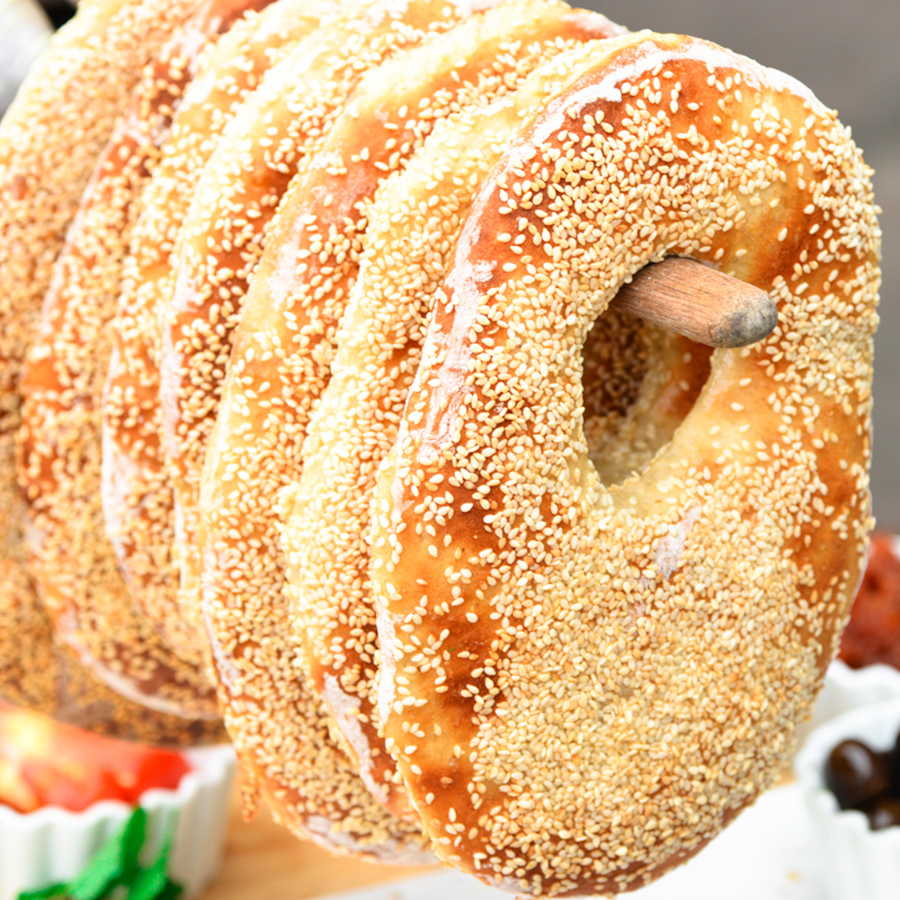
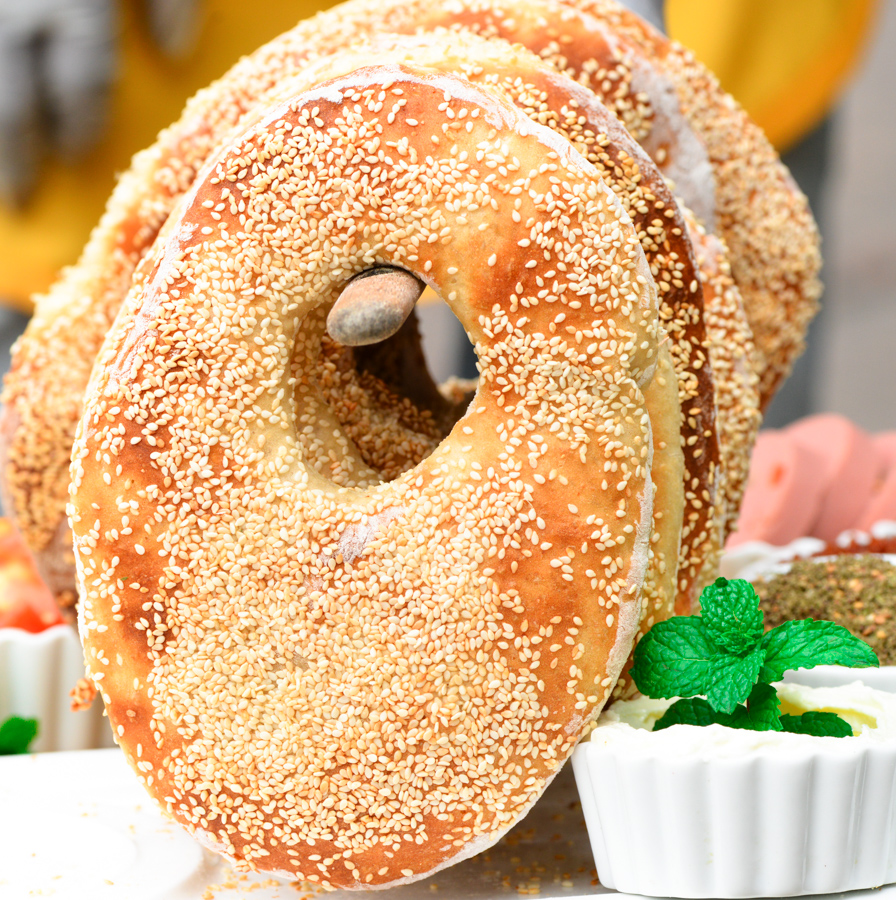
Kaak (Kaak Al Asreya), Lebanese Street Bread — the quintessential Lebanese street bread! A handbag-shaped savory bread covered with sesame seeds, crispy on the outside and slightly chewy inside. Traditionally baked in a flame oven and sold by cart vendors in Beirut, kaak is a beloved street food and an ideal snack on the go. Usually eaten by hand, it is equally delicious for breakfast, especially when paired with a cup of tea.
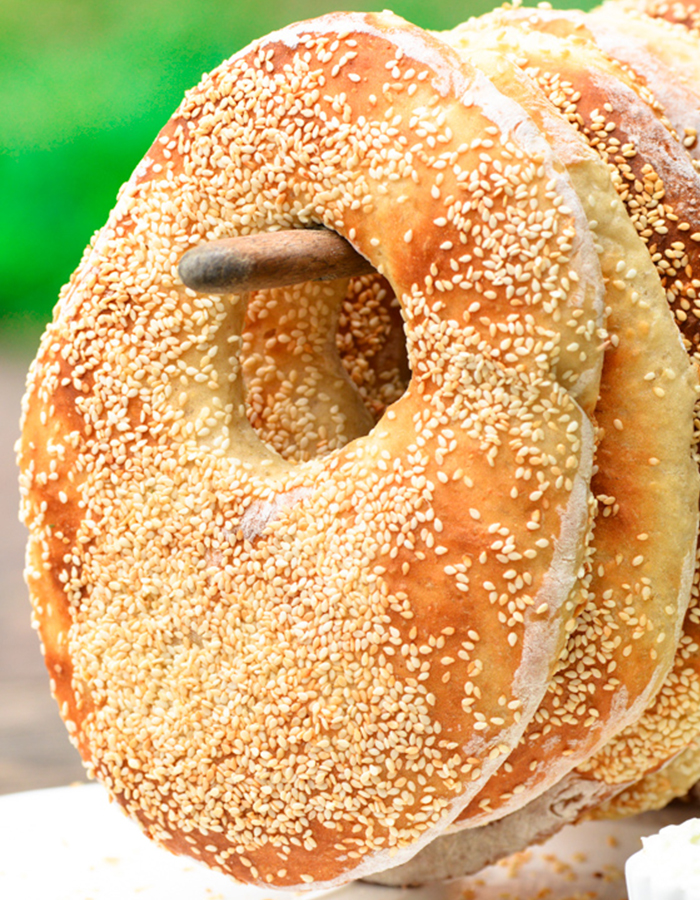
Kaak / Kaak Alasreya / Lebanese Street Bread (Video)
If you visit Lebanon, don’t miss these insanely delicious treats, and try to get them fresh and warm. In Lebanon, no one really bothers to make them at home, as it’s much easier to buy them ready-made. But when living abroad, there’s always a kind of food that we miss and crave.
Have you ever experienced one of those cravings when homesickness hits and you desperately long for the flavors you grew up eating? Food plays such a powerful role in our lives. It is part of our identity, and some of our dearest memories can be found in a dish. Every dish has a story that stays with us for life.
It is the experiences created while enjoying kaak that make it so near and dear to my heart—and most probably to the hearts of many Lebanese expats around the world who grew up eating it!
It tastes incredibly good. Put the kettle on, make yourself a cup of tea, and enjoy the kaak right out of the oven with zaatar, labneh, or any spreadable cheese!
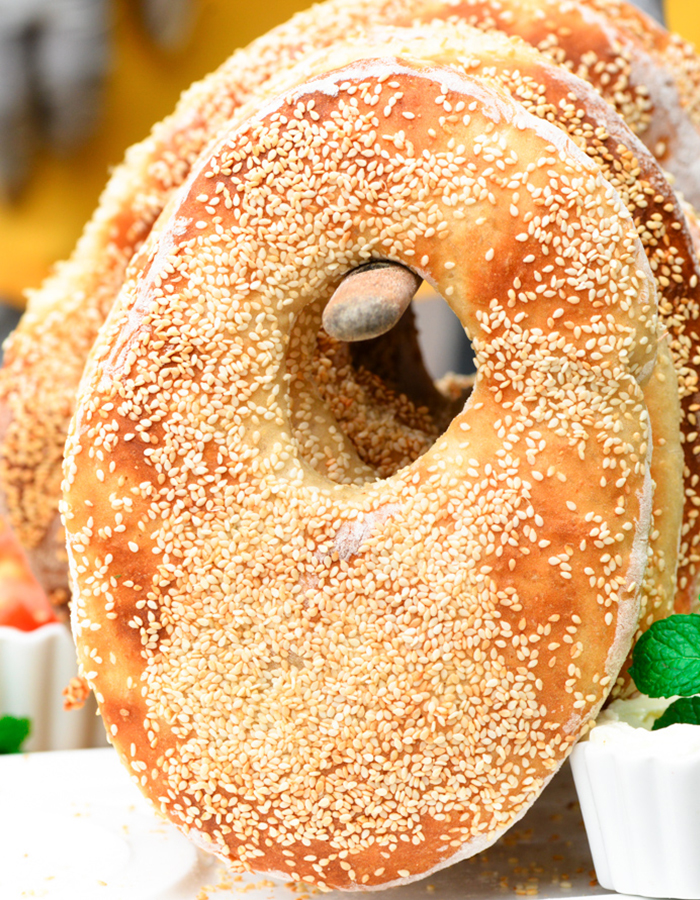
Ingredients
- Flour: Use all-purpose flour.
- Yeast: Use instant yeast, which can be incorporated directly into the dough without first proofing it in water.
- Sugar: Use the specified amount to add a hint of sweetness and achieve the desired kaak flavor.
- Water: The water should be lukewarm, never boiling or hot. Hot water will kill the yeast, preventing your kaak from rising.
- Salt: Salt helps strengthen the gluten structure and supports the dough in maintaining good volume. However, don’t be tempted to add more than the specified amount.
- Sesame Seeds: Sesame seeds add a pleasant, nutty flavor.
And now, let’s get started! But before you dig into the recipe, please consider these tips:
-
I prefer to knead the dough by hand—old school! But if you prefer, you can knead it with a hand mixer fitted with a dough hook.
-
Make sure to check the expiration date on the packet of active dry yeast to ensure that it is still active and suitable for use.
-
After shaping the dough, it should be given a second rise before baking. This allows the yeast to become more active, resulting in better flavor and texture.
-
You need to make a glaze composed of flour, oil, salt, and water. Without the glaze, the sesame seeds will not stick to the bread. Besides helping the sesame seeds adhere, the glaze also gives the kaak its beautiful, shiny, golden look.
-
Bake the dough at a high temperature to achieve a delicious, crusty bread. The warmer the temperature, the more active the yeast will be, allowing the dough to rise more quickly as it bakes.
-
Like all bread, kaak tastes best on the day it is made. However, if you need to freeze it, reduce the cooking time by a minute so that it won’t become too browned when you reheat it.
-
Watch the video I provided with this recipe to make the process easier to understand. And now, let’s get started!
In a large ceramic bowl, mix the flour, salt, yeast, and sugar. Add the lukewarm water and combine all the ingredients with your hands. You may need to add more water than called for; the amount of moisture in the flour determines how much water you will need.
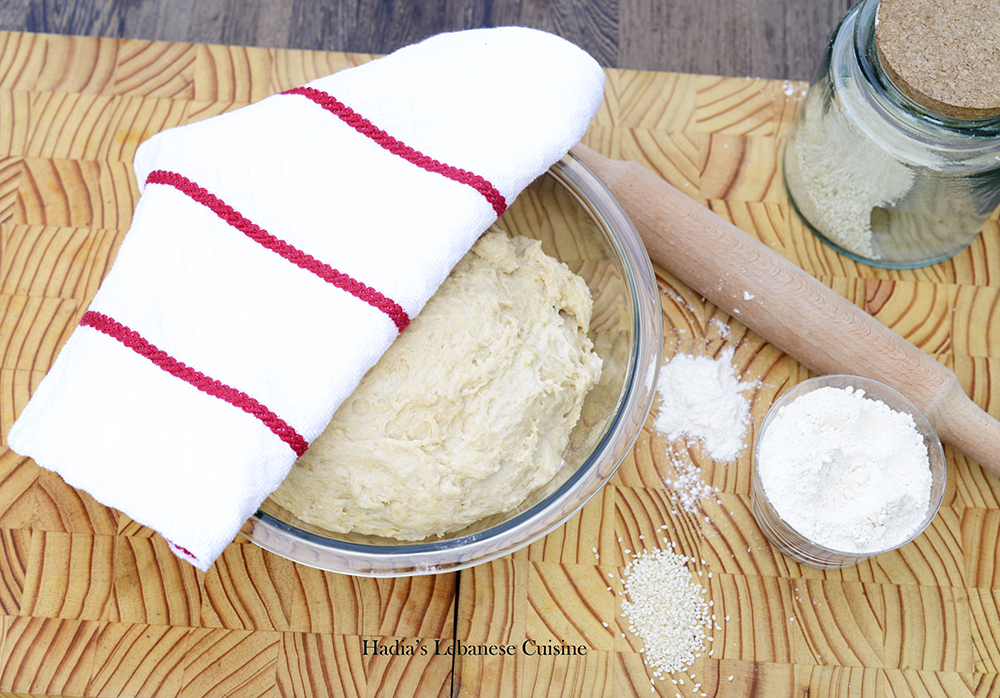
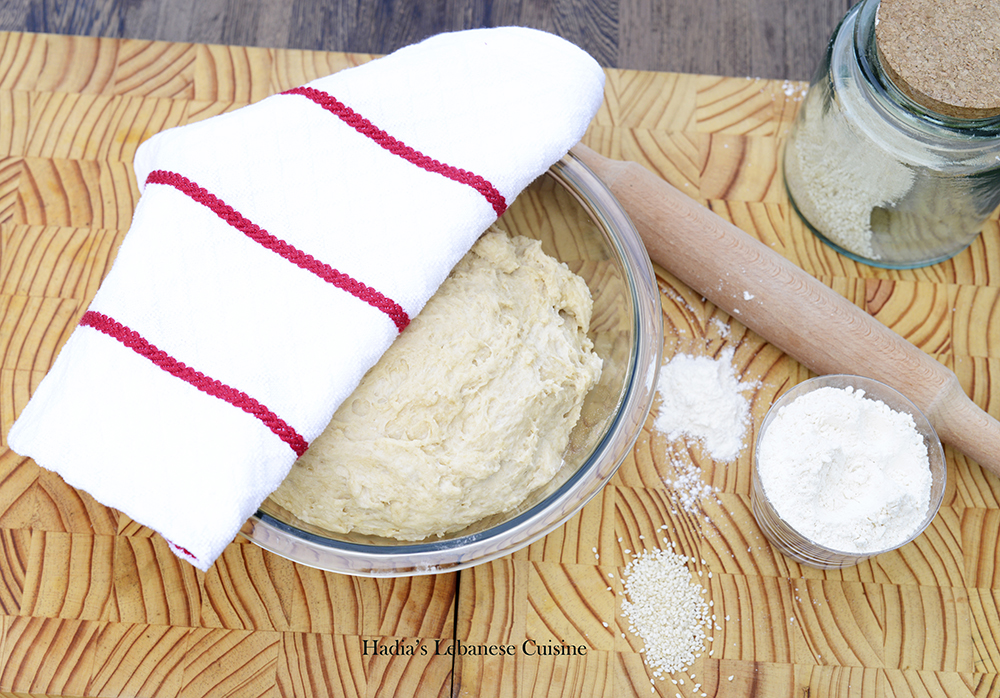
When the mixture starts coming together, knead it thoroughly, pushing your hands into the dough and curving your fingers over it until you achieve a soft, malleable dough. Cover the bowl with a kitchen towel and set it aside for 1 hour, or until the dough doubles in size.
When the dough has doubled in size, sprinkle some flour on a countertop and divide the dough into nine equal portions.
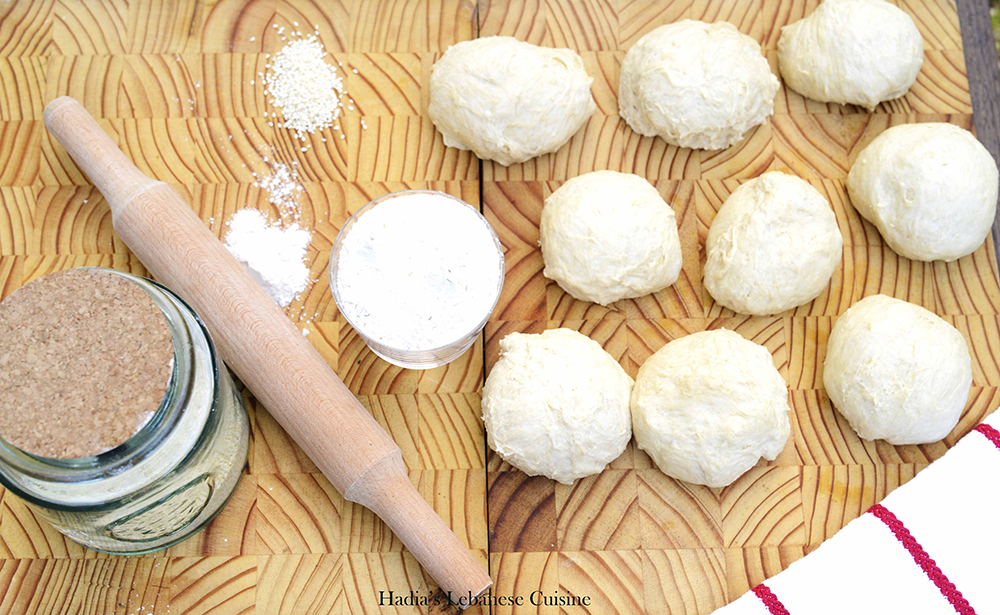
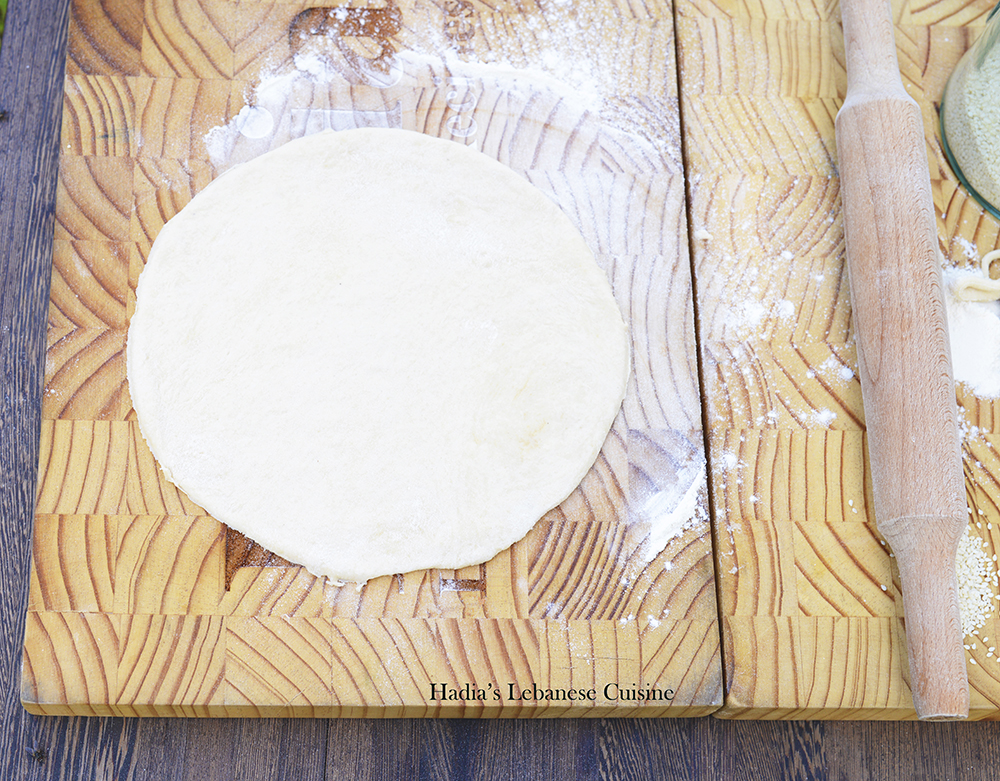
Place one dough at a time on the floured surface and stretch it with a rolling pin. Roll it into a round circle about 20 cm (8 inches) in diameter and about 1.5 cm (½ inch) thick.
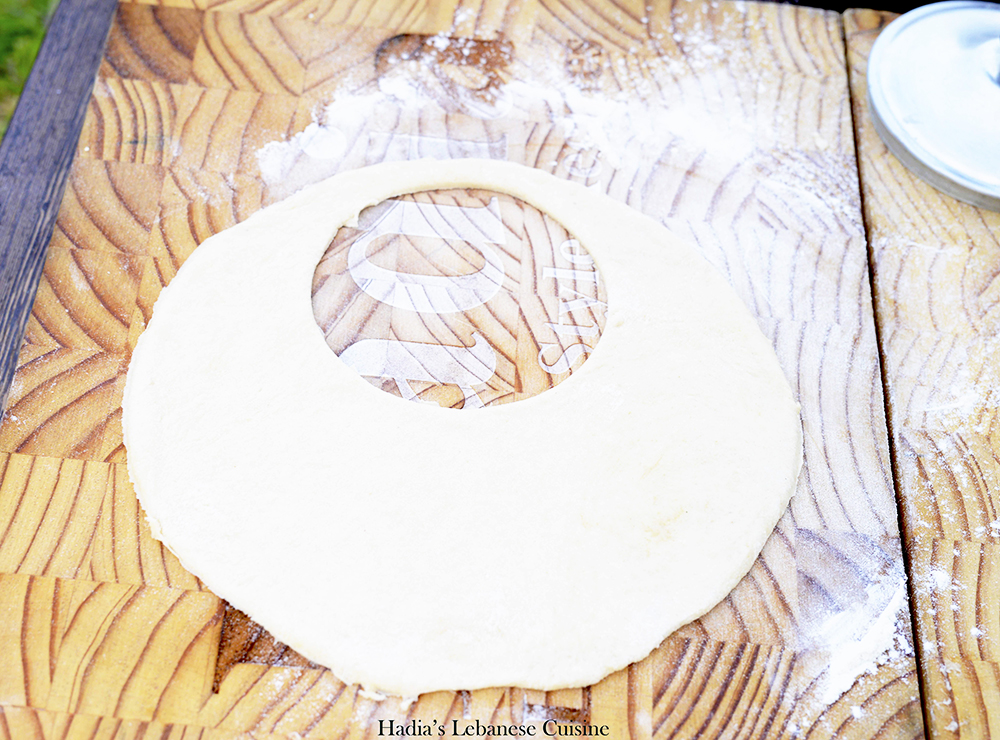
Using a 10 cm (4-inch) round cookie cutter, create a hole close to the upper edge.
Place the round dough on a parchment-lined baking sheet or silicone mat. Transfer it delicately to the sheet to help maintain its shape. Using a brush, gently brush the surface of the kaak with the prepared glaze. Generously sprinkle with sesame seeds, then gently tap the bread with your hands to help the sesame seeds stick to the surface. Set aside for 30 minutes for a second rise. This will help develop a lighter and fluffier kaak!
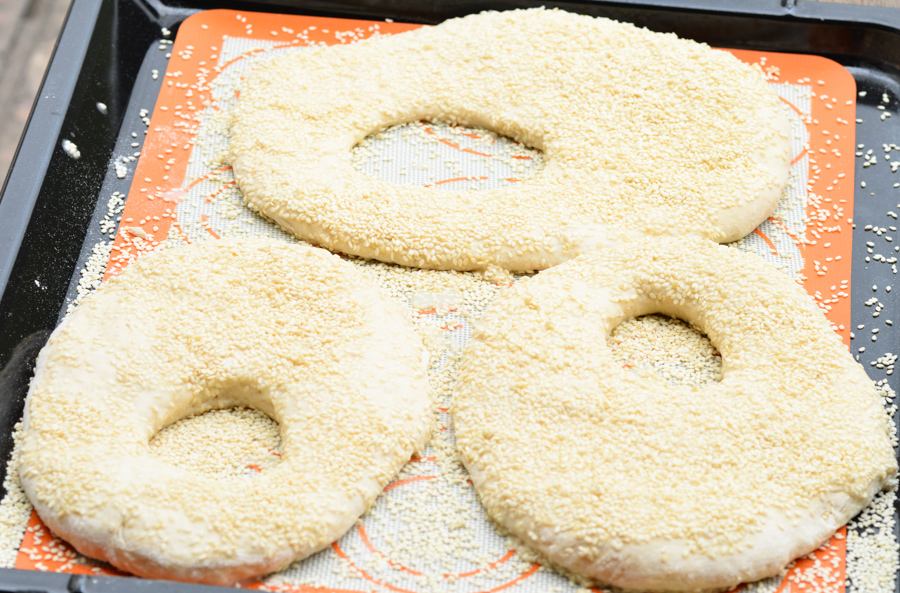
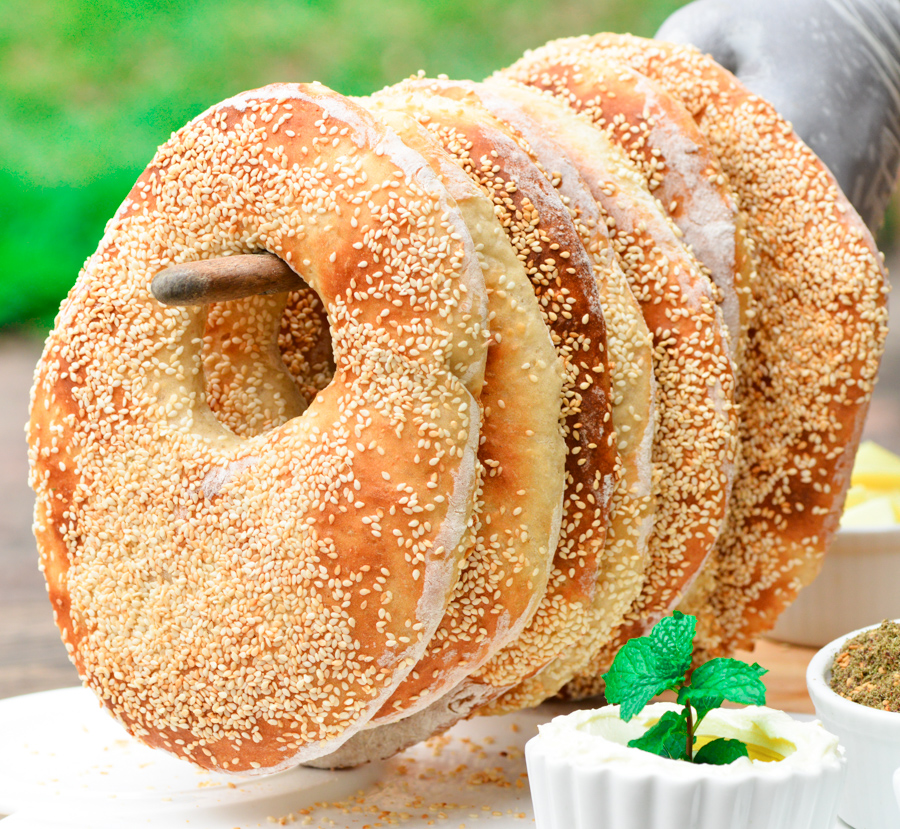
Bake this Lebanese classic—nothing beats the aroma of kaak baking in the oven! Follow the instructions; it’s simple and nearly fail-proof!

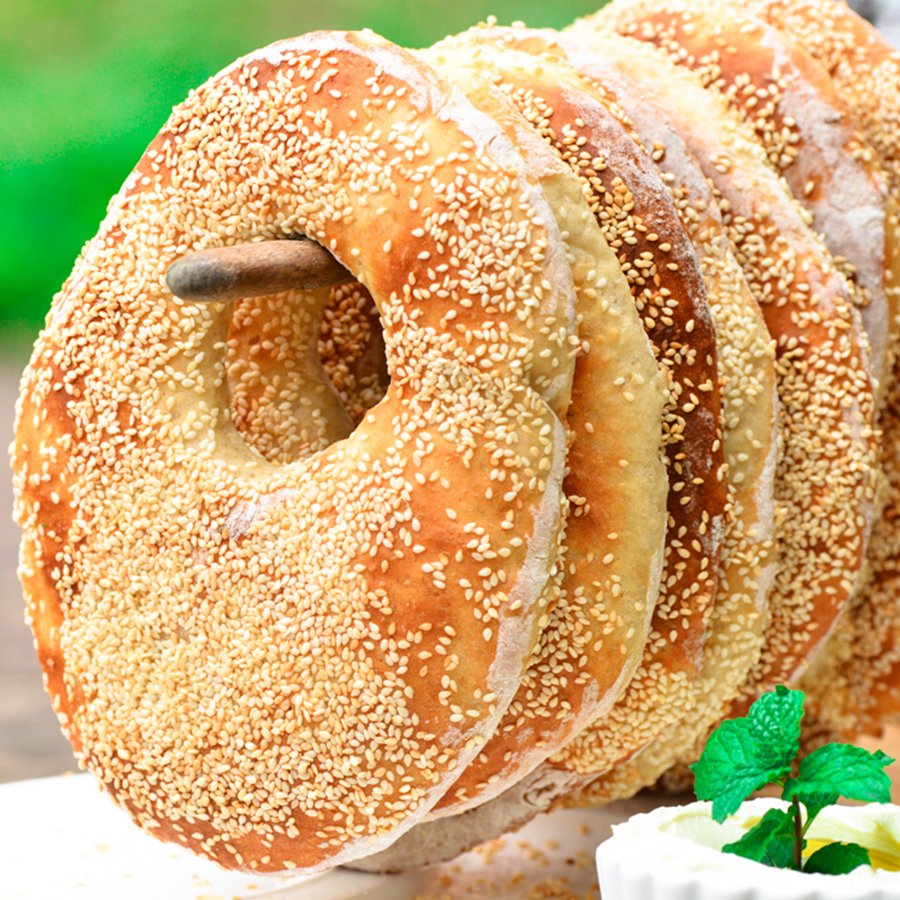
Kaak/ Kaak Alasreya/ Lebanese Street Bread
Description
Ingredients
- 1 kg / 2 lb 4 oz all-purpose flour
- 1/2 teaspoon salt
- 1/3 cup / 100 g / 3.5 oz sugar
- 2 cups lukewarm water
- 1 cup white sesame seeds
- 2 tablespoons instant yeast
For the filling:
- Zaatar spreadable cheese, your favorite dip, or whatever your heart desires. This is a versatile bread, and it goes well with almost any dip.
For the glaze:
- 1 cup water
- 2 tablespoons flour
- 2 tablespoons olive oil
- A pinch of salt
Instructions
- First off, check the expiration date on the package of yeast.
- In a large ceramic bowl, mix the flour, salt, yeast, and sugar. Add the lukewarm water and combine all the ingredients with your hands. (You may need to add more water than called for. The amount of moisture in the flour determines how much water you need to add.)
- When the mixture starts coming together, knead it thoroughly, pushing your hands into the dough and curving your fingers over it until you achieve a soft, malleable dough.
- Cover with a kitchen towel and set aside for 1 hour, or until doubled in size.
To roll and bake:
- Preheat the oven to 230°C/450°F.
- Place the rack in the lower third, just below center of the oven.
- Prepare the glaze: Combine the glaze ingredients in a saucepan, whisk, and bring to a boil. It should have the consistency of thick cream. Remove from the heat and set aside.
- When the dough has doubled in size, sprinkle some flour on a countertop and divide the dough into nine equal portions.
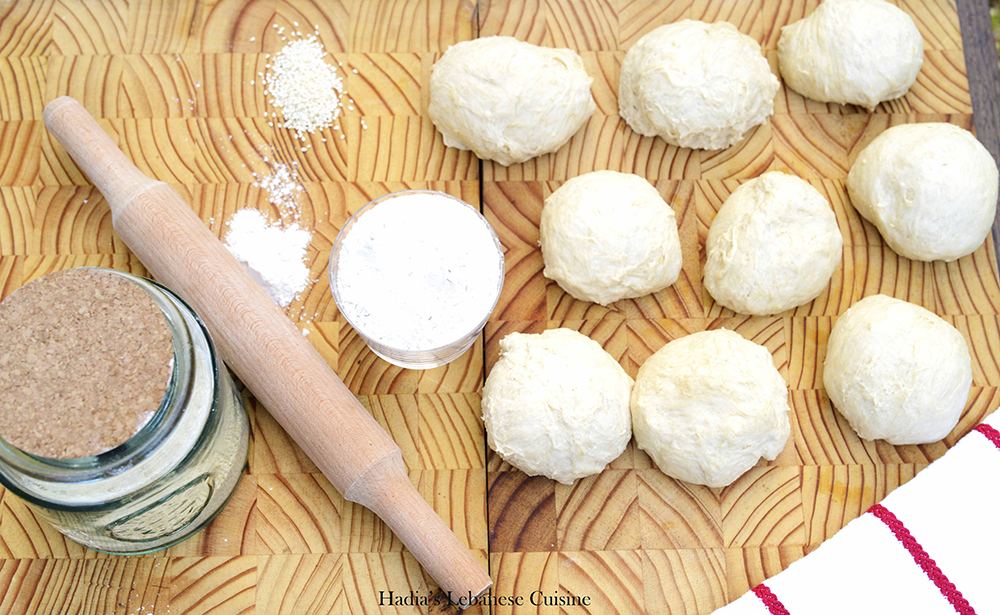
- Place one of the dough pieces on the floured surface. Using a rolling pin, roll it into a round circle about 20 cm (8 inches) in diameter and 1.5 cm (½ inch) thick. Using a 10 cm (4-inch) round cookie cutter, create a hole near the upper edge.
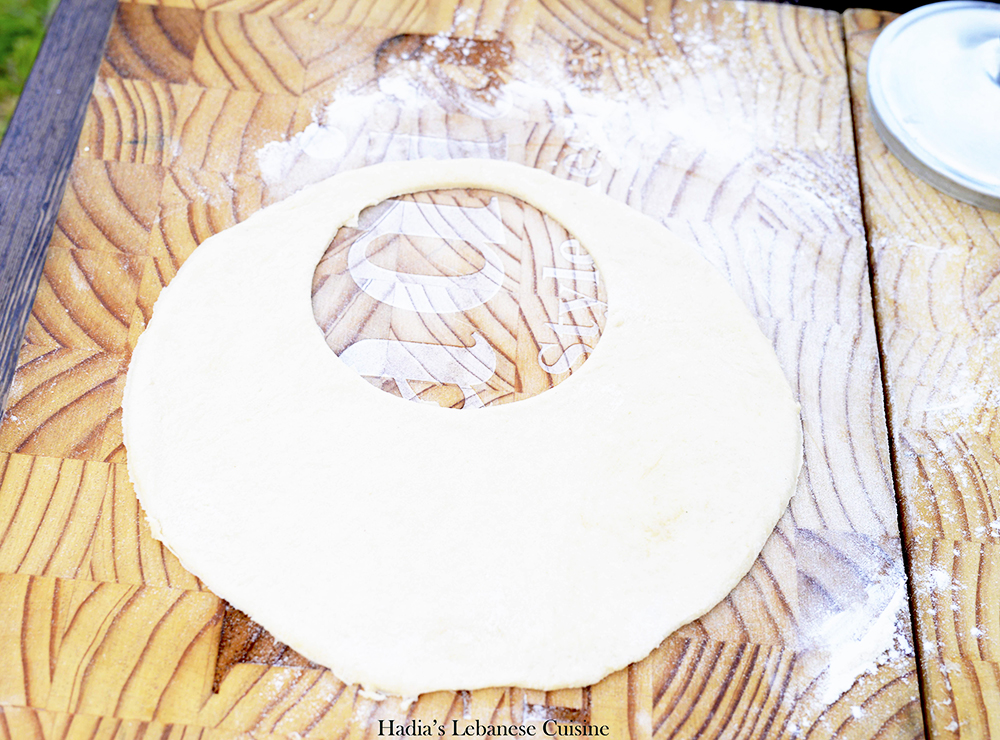
- Place the round dough on a parchment-lined baking sheet or a silicone baking mat. Transfer it delicately to the sheet to maintain its shape.
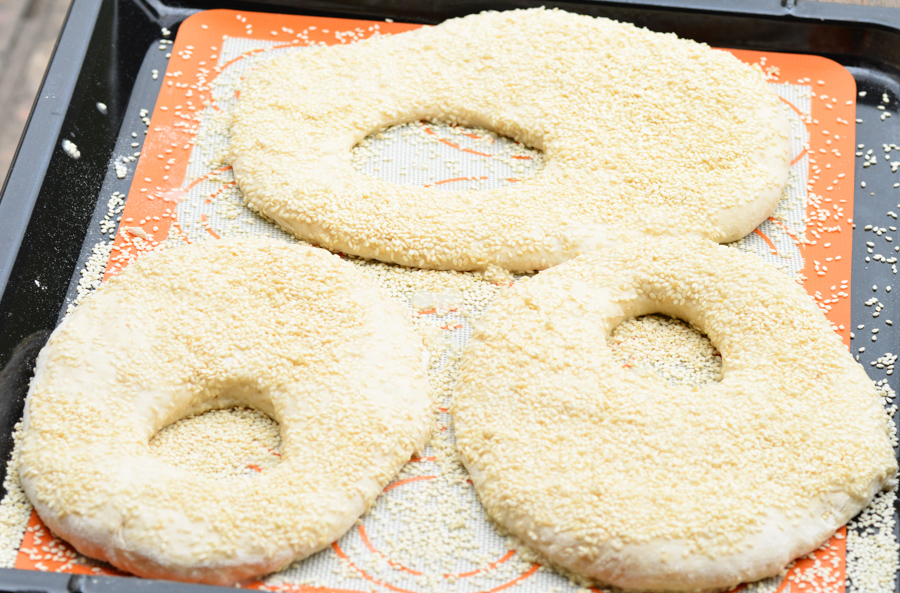
- Using a brush, delicately brush the surface of the kaak with the prepared glaze. Generously sprinkle with sesame seeds, then gently tap the bread with your hands to help the sesame seeds stick to the surface. Set aside for 30 minutes for a second rise. This will allow the yeast to activate further during baking, resulting in better flavor and texture.
- Bake until the dough is puffed and golden brown, about 7–10 minutes. Keep an eye on your oven!
- Remove from the oven and, once cool enough to handle, create a small hole in the center of the kaaki and add some zaatar. Give it a little shake and enjoy warm. Repeat with the remaining dough. How delicious!
Video
Notes
 The recipe for the “Kaak alasreya/ Kaak/ Lebanese Street Bread” was posted on July, 2015, photos and text were updated on September 2020.
You might like to learn about Kaleeta/ North Lebanese Flat Kaak
The recipe for the “Kaak alasreya/ Kaak/ Lebanese Street Bread” was posted on July, 2015, photos and text were updated on September 2020.
You might like to learn about Kaleeta/ North Lebanese Flat Kaak
 You might also like to check the recipe of the Lebanese Sweet Kaak.
 If you make this recipe, share your pictures on Facebook! I would love to see your creations!Hashtag them #Hadia's Lebanese Cuisine






















17 Comments
Hi im going to try ur reciepe are u sure its 11 tablespoons or is it a typing error
Hi Mervat, it is 1+ 1/2 tablespoons active dry yeast! Let me know how it works for you!
Thank you for the recipe. All looked well until end of baking, kaak came out too dry and didn’t rise and sesame didn’t hold at all. Please advise
Made these with son. They were great. Turns out amazing even for my neigjbor who never had kaak. They taste as the ones I used to have at Al Manara in Beirut. Thanks a lot for the recipe. Love them and your website.
Hello! Thank you for the recipe 🙂 Can I just ask you how many Kaaks does this recipe make? around 10 ?
Hi lady
1- why you mix the salt and yeast together
2- for the oven heat is it upper and lower together ON
3- can I freeze it for later
Thanks
Hi lady
I have made the kaaek today with high protein flour it came out delicious
Thanks a lot
Hi again Hadia. If I were to use Za’atar as a filing, would I slice the bread in half to open it up and then sprinkle Olive Oil and then the Za’atar? Thanks so much
Hi Hadia
How long should I knead the dough for? Thanks so much for your time and beautiful recipes!
Hi Hadia,
It’s difficult to find active dry yeast here in australia, would normal dry yeast be a suitable substitute?
Thank you
Kindest regards
Reet
[…] goodies they served were brimming with soul and simplicity: lupin beans, boiled corn on the cob, kaak, nuts, coffee, tea, and much more. […]