


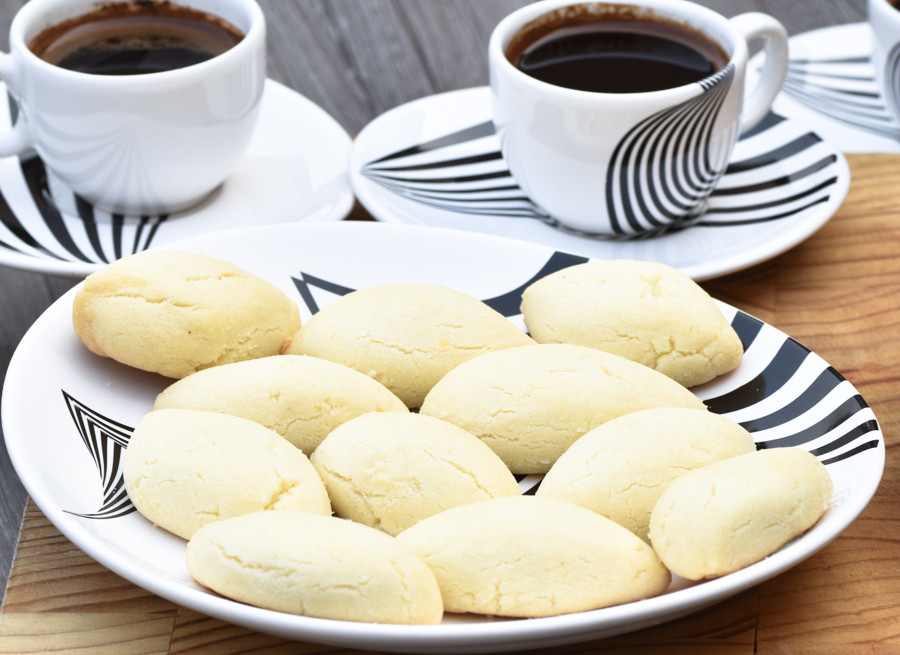
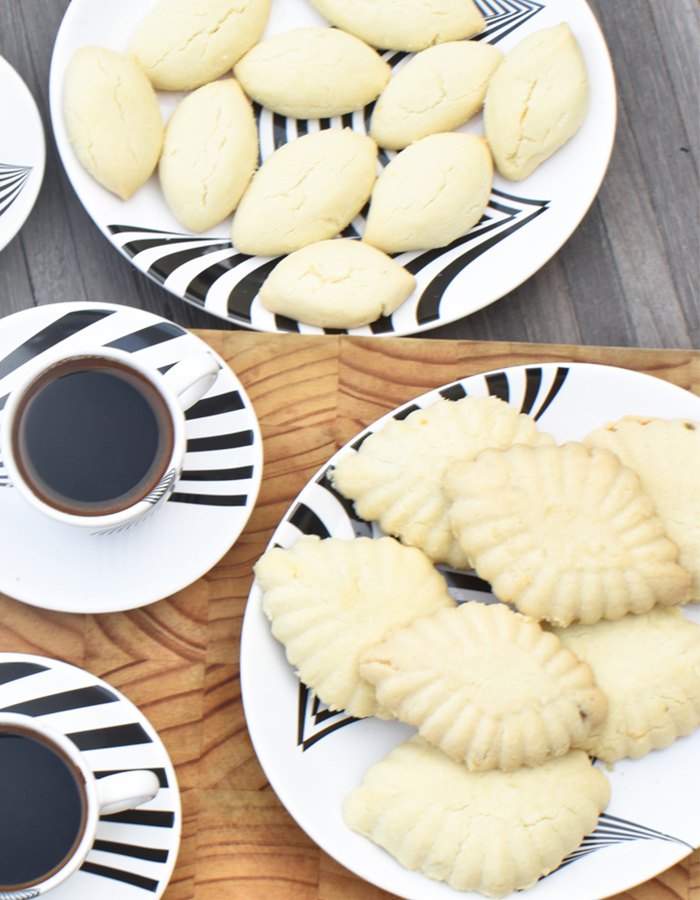
Plain and Pistachio-Filled Sanioura (Video)
Sanioura is a shortbread cookie that hails from Saida (Saidon), in southern Lebanon. The city has a reputation for being home to some of the finest Lebanese sweets, and Sanioura is one of its most celebrated desserts.
I’m sharing two famous variations: plain Sanioura and Sanioura filled with a sweet pistachio surprise. The same dough can be used to make both! If you’d like some of each, simply divide the dough into two portions.
Watch the video tutorial below and see how easy it is to make these delightful Lebanese cookies.
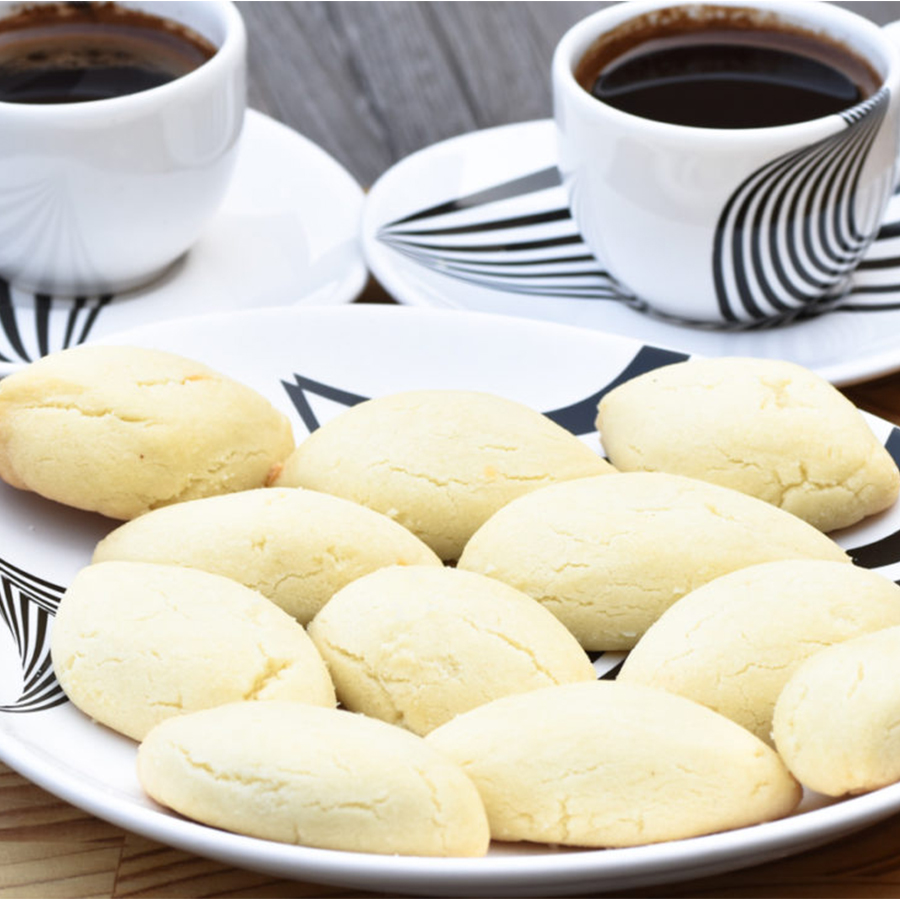
The dough is easy to make, with just three simple ingredients, and everything comes together in one bowl. Start by adding the ghee and powdered sugar, then add the flour. Using your fingers, mix everything together until you have a crumbly dough that comes together when you press it between your fingers.
Cover the dough with plastic wrap and chill for 30 minutes. Chilling solidifies the fat in the dough, helping the cookies retain their shape and preventing them from spreading in the oven. Thirty minutes is all you need to do the trick.
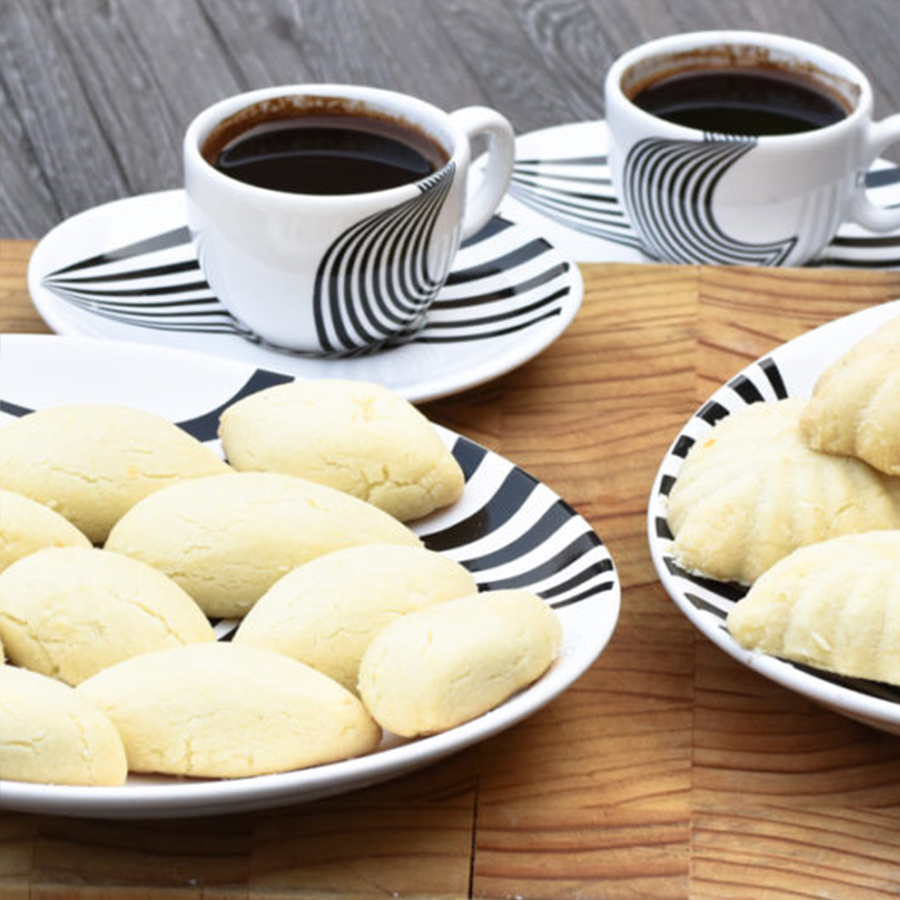
Tips for Perfect Sanioura Cookies
Here are a few small but important tips that can make a noticeable difference in the final result of your sanioura:
Use room-temperature ghee: When making sanioura, it’s very important to use room-temperature ghee rather than melted ghee. This helps achieve the right dough consistency and contributes to the delicate texture of the cookies.
Chill the dough: Chilling the sanioura dough helps prevent the cookies from spreading, which is a common problem when making sanioura and ghraybe. I recommend chilling the dough in the refrigerator for 30 minutes before portioning and shaping. This helps the cookies hold their shape during baking.
Make the cookies uniform: The best way to ensure even baking is to make sure your sanioura cookies are uniform in size and thickness. If some cookies are thicker or larger than others, they will bake at different rates.
Bake just until done: The temperature and baking time should be just enough to cook the cookies through while keeping them beautifully pale. Overbaking will make sanioura hard and dry instead of delicate and melt-in-your-mouth.
I found that 160°C / 320°F for about 15 minutes worked perfectly in my oven. However, remember that every oven is different. As soon as you notice the slightest browning on the bottom of the cookies, remove them from the oven.
Rotate the baking sheet: Bakery ovens are often equipped with fans that circulate hot air throughout the baking chamber, creating more uniform heat distribution. Some commercial ovens even have rotating racks to ensure everything bakes evenly.
Home ovens generally don’t have the same setup, so it’s a good idea to rotate your baking sheet halfway through baking. This helps the cookies bake more evenly, especially if your oven has hot spots.
Use a timer and check early: With sanioura, just a minute or two in the oven can be the difference between perfectly tender, melt-in-your-mouth cookies and cookies that are too hard. These cookies bake quickly, so I highly recommend using a timer.
Start checking them at around 12 minutes. If needed, you can let them bake a little longer, but keep in mind that sanioura should not brown on top.
The best way to know they’re done is to gently roll one cookie over and check the bottom. It should be just slightly golden brown. Once you see that minimal browning, take the cookies out of the oven and let them cool.
How to Make Pistachio Sanioura Cookies
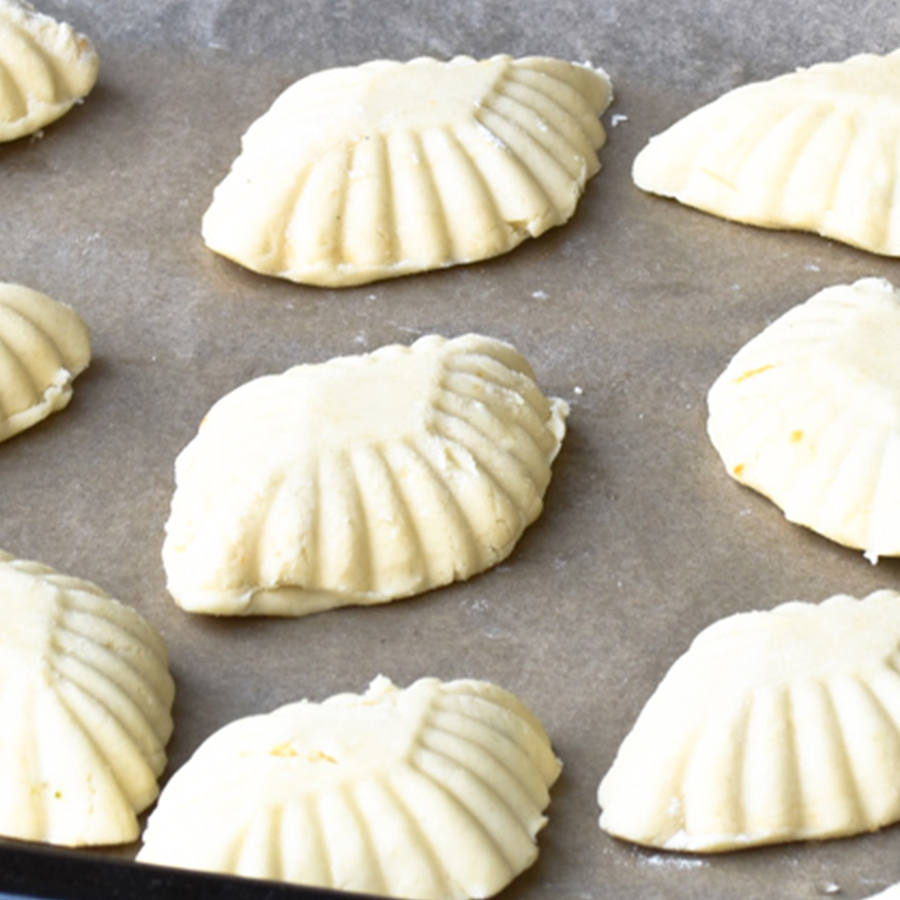
Unlike plain sanioura, which doesn’t require a mold for shaping, pistachio-filled sanioura is traditionally shaped using a special stainless-steel oval mold. I bought my mold in Saida, Lebanon, last year.
Take a small handful of dough, about the size of a ping-pong ball. Make a hole in the center with your finger, then fill it with about 1 teaspoon of the pistachio filling. Carefully seal the opening by patching the dough together, then roll it gently into a ball.
Lightly dust the stainless-steel mold with flour before filling it. This will make it easier to release the cookie after shaping.
Place the filled dough ball into the mold and press it lightly until the surface is level with the mold. Invert the mold and tap it gently a couple of times to release the cookie.
As you continue shaping the pistachio sanioura, dust the mold lightly with flour as needed. Be sure to stop frequently to brush or shake off any excess flour from the decorative patterns so the imprint remains clean and well defined.
Watch the video tutorial to see exactly how to fill, mold, and shape the pistachio sanioura!
How to Make Plain Sanioura
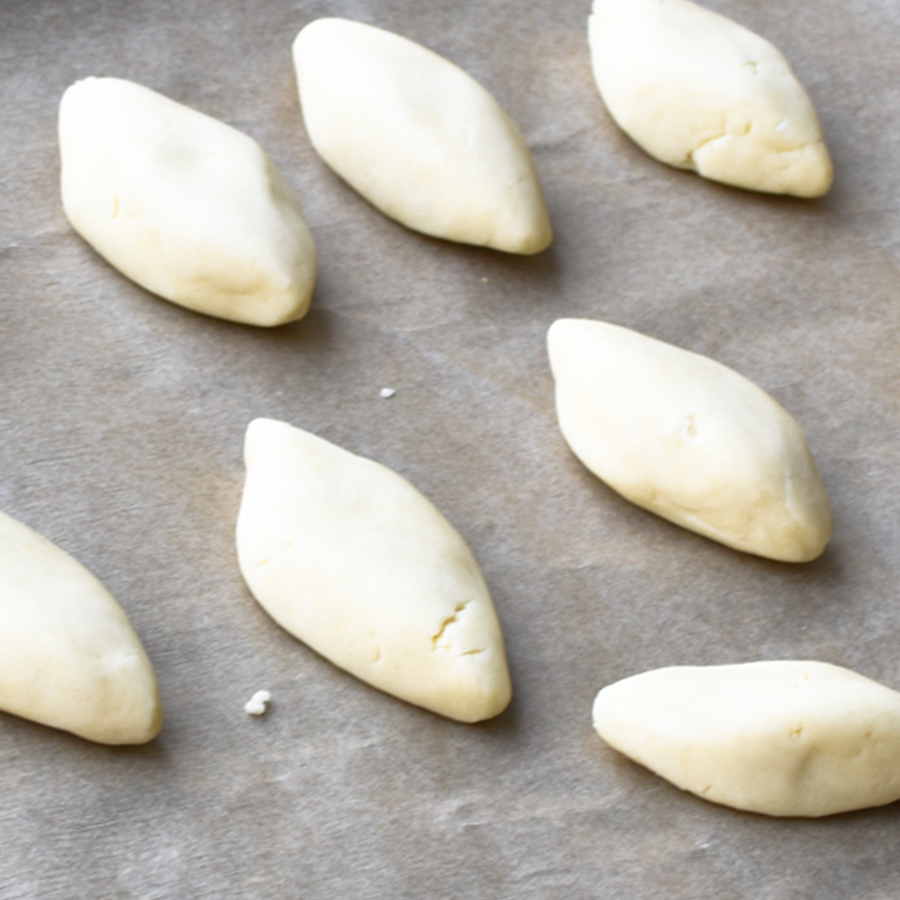
Take a small handful of dough, roughly the size of a ping-pong ball. Roll it gently between your palms to form a smooth ball.
Lightly flatten the dough to about 2 cm (0.8 inch) thick. Carefully shape each flattened piece into a rhombus (diamond) shape by gently adjusting the edges. For a visual guide, watch the video tutorial.
Place the shaped Sanioura on a baking sheet lined with parchment paper, leaving a little space between each piece.
More Lebanese & Middle Eastern Shortbread Cookies
FAQ:
Can I use butter instead of ghee for Sanioura cookies?
It is highly recommended to use ghee (clarified butter). Regular butter contains water and milk solids, which will alter the dough’s moisture levels. This can cause your cookies to spread, lose their shape, or become tough instead of crumbly and melt-in-your-mouth.
Why did my Sanioura cookies flatten or spread out in the oven?
Why are my Lebanese shortbread cookies dry and hard?
Overbaking is the primary cause of hard Sanioura cookies. Because these cookies should remain beautifully pale on top, they bake very quickly. Start checking them at 12 minutes; they are done the moment the very bottom turns a light golden brown.
How long do Sanioura cookies last?
Plain Sanioura can be stored in an airtight container for at least 2 weeks, provided it is stored properly.
 Let’s Stay in Touch!
Plain and Pistachio Filled Sanioura
Description
Equipment
- sanioura mold to shape the pistachio filled sanioura
Ingredients
For the Dough
- 500 g 3½ cups all-purpose flour
- 250 g 1½ cups ghee
- 250 g 1½ cups powdered sugar
For the Pistachio Filling
- ¾ cup shelled raw pistachios
- ¼ cup sugar
- 1 teaspoon ghee
Instructions
To make the dough:
- Place the ghee and powdered sugar in a large bowl and mix together with a spatula until well combined. Add the flour a little at a time, mixing with your fingertips as you go. The mixture will initially look crumbly; continue kneading until it comes together into a smooth, cohesive dough. Knead a little longer until the dough becomes soft and malleable.Alternatively, you can use a stand mixer to make the dough.Transfer the dough to a bowl, cover with plastic wrap, and refrigerate for at least 30 minutes and up to 12 hours. Chilling the dough helps prevent spreading, which is a common issue when making saniora and ghraybeh. This step will help ensure that the cookies hold their shape and don’t spread during baking.
- Preheat the oven to 160°C (320°F) with a rack positioned in the center of the oven.
- Line two baking sheets with parchment paper.
- Place the raw pistachios in a food processor and pulse a few times until finely ground. Transfer to a bowl, add the sugar and ghee, and mix well until fully incorporated.
- Knead the dough well again. You will notice that chilling has solidified the fat in the dough; this will ensure that the sanioura keep their shape and don’t spread.
- Divide the dough into two equal portions. Use half of the dough to make pistachio-filled saniora, and reserve the other half for making plain saniora.
To make the pistachio-filled sanioura:
- Unlike plain sanioura, which requires no mold for shaping, pistachio-filled sanioura is traditionally shaped using a specific stainless-steel oval mold. Last year, I bought this mold in Saida, Lebanon.Take a small handful of dough, roughly the size of a ping-pong ball. Make a hole in the center with your finger, then fill the hole with about a teaspoon of pistachio filling. Seal the opening by gently patching the dough together, then roll it into a smooth ball.Transfer the ball into the mold and press it in lightly, leveling the surface with the mold. Invert the mold and tap it a couple of times to release the cookie.Before filling the mold, lightly dust it with flour. This will help the pistachio-filled sanioura release easily. When imprinting the dough with the mold, stop frequently to dust off any excess flour that has accumulated on the pattern.Watch the video tutorial to see exactly how it’s done!
- Bake in the oven for about 12–15 minutes. Halfway through baking, rotate the cookie sheet. Bakery ovens often have rotating racks, which help ensure that everything bakes evenly. Home ovens typically do not, so rotating the cookie sheet halfway through baking is advisable for even cooking.Check the cookies after 12 minutes. If necessary, bake them for a few minutes longer, but note that the cookies should not brown on top. The best way to check if they are done is to gently turn one over and check the bottom—it should be just slightly brown.Remove the cookies from the oven and let them cool completely.
- To make the plain sanioura:
To Make the Plain Sanioura
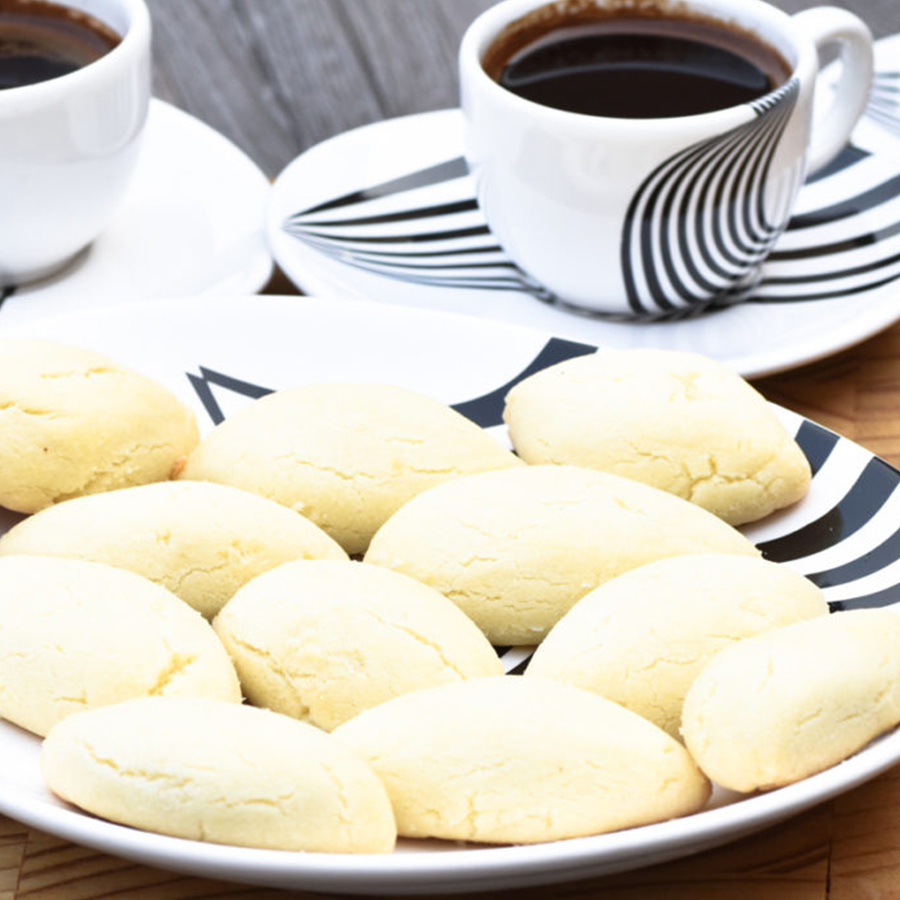
Take a small handful of dough, roughly the size of a ping-pong ball. Roll it gently between your palms, then lightly flatten it to about 2 cm (0.8 inch) thick.Try to shape it into a rhombus by delicately shaping the edges—watch the video tutorial for guidance!Place the sanioura on a parchment-lined baking sheet, leaving some space between each one. Bake for 12–15 minutes. As mentioned in the pistachio sanioura recipe, the cookies should not brown on top.The only way to know for sure that they’re done is to gently turn one over and check that the bottom is just slightly browned.Remove from the oven and let them cool completely before transferring them to a serving plate.Serve with a cup of Lebanese coffee. Heavenly!
Video
Notes
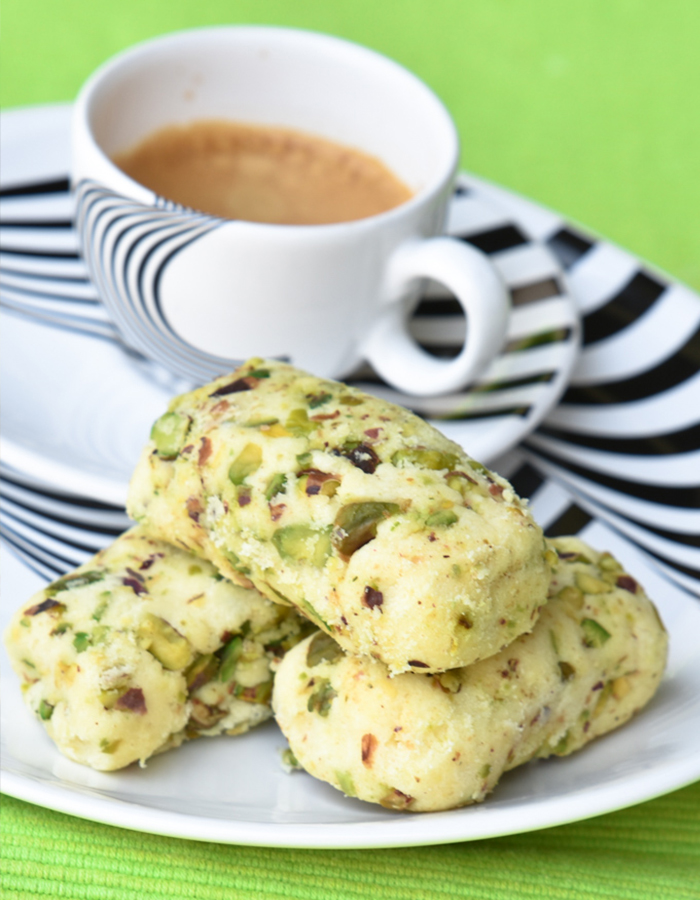 If you make these "Plain and Pistachio Filled Sanioura", share your pictures on Facebook! I would love to see your creations!Hashtag them #Hadia's Lebanese Cuisine




















1 Comment
[…] addition to these, Saida is also famous for its ‘Sanioura‘, a type of dry cake made from semolina, tahini, and sugar, typically enjoyed with a cup of […]