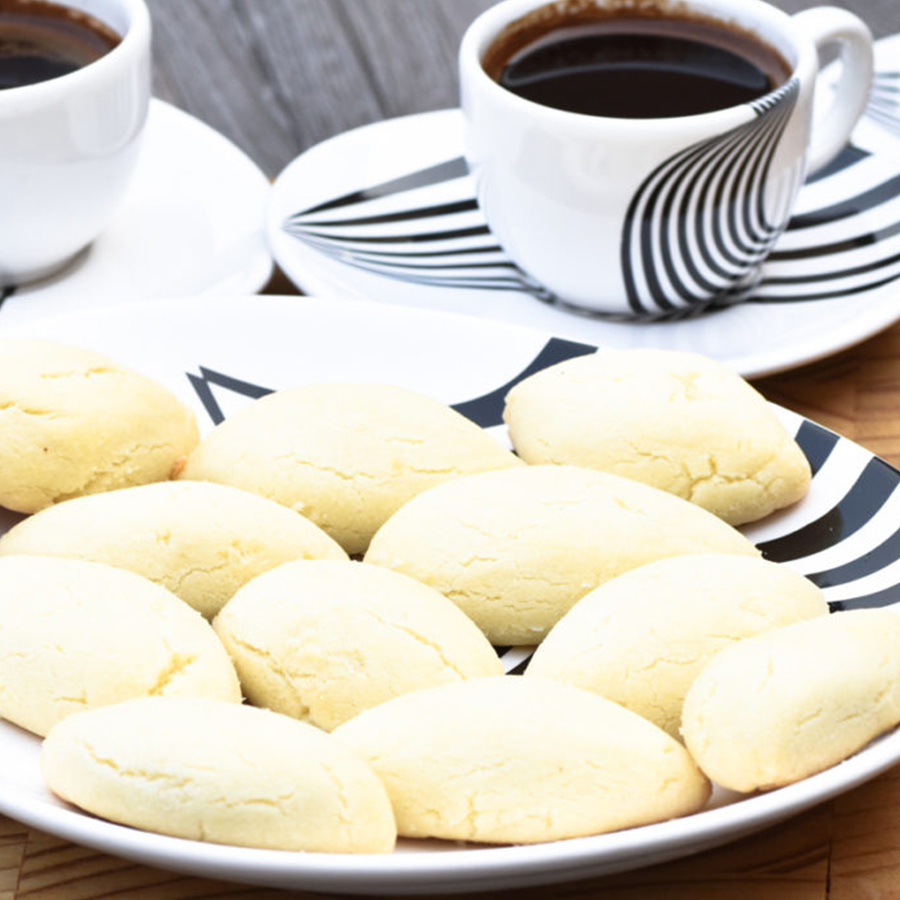
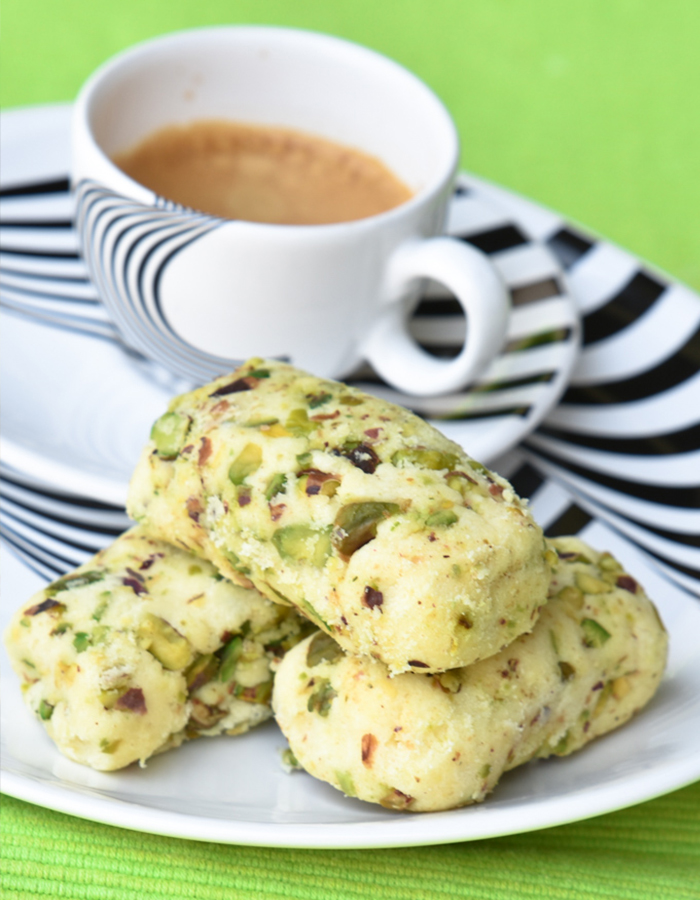
Plain and Pistachio Filled Sanioura
Description
For the most accurate results, I recommend using a kitchen scale to measure the dough ingredients for this recipe. Weighing your ingredients is much more precise than using measuring cups, helping you achieve the correct dough consistency and ensuring you can follow the recipe exactly as written.
Equipment
- sanioura mold to shape the pistachio filled sanioura
Ingredients
For the Dough
- 500 g 3½ cups all-purpose flour
- 250 g 1½ cups ghee
- 250 g 1½ cups powdered sugar
For the Pistachio Filling
- ¾ cup shelled raw pistachios
- ¼ cup sugar
- 1 teaspoon ghee
Instructions
To make the dough:
- Place the ghee and powdered sugar in a large bowl and mix together with a spatula until well combined. Add the flour a little at a time, mixing with your fingertips as you go. The mixture will initially look crumbly; continue kneading until it comes together into a smooth, cohesive dough. Knead a little longer until the dough becomes soft and malleable.Alternatively, you can use a stand mixer to make the dough.Transfer the dough to a bowl, cover with plastic wrap, and refrigerate for at least 30 minutes and up to 12 hours. Chilling the dough helps prevent spreading, which is a common issue when making saniora and ghraybeh. This step will help ensure that the cookies hold their shape and don’t spread during baking.
- Preheat the oven to 160°C (320°F) with a rack positioned in the center of the oven.
- Line two baking sheets with parchment paper.
- Place the raw pistachios in a food processor and pulse a few times until finely ground. Transfer to a bowl, add the sugar and ghee, and mix well until fully incorporated.
- Knead the dough well again. You will notice that chilling has solidified the fat in the dough; this will ensure that the sanioura keep their shape and don’t spread.
- Divide the dough into two equal portions. Use half of the dough to make pistachio-filled saniora, and reserve the other half for making plain saniora.
To make the pistachio-filled sanioura:
- Unlike plain sanioura, which requires no mold for shaping, pistachio-filled sanioura is traditionally shaped using a specific stainless-steel oval mold. Last year, I bought this mold in Saida, Lebanon.Take a small handful of dough, roughly the size of a ping-pong ball. Make a hole in the center with your finger, then fill the hole with about a teaspoon of pistachio filling. Seal the opening by gently patching the dough together, then roll it into a smooth ball.Transfer the ball into the mold and press it in lightly, leveling the surface with the mold. Invert the mold and tap it a couple of times to release the cookie.Before filling the mold, lightly dust it with flour. This will help the pistachio-filled sanioura release easily. When imprinting the dough with the mold, stop frequently to dust off any excess flour that has accumulated on the pattern.Watch the video tutorial to see exactly how it’s done!
- Bake in the oven for about 12–15 minutes. Halfway through baking, rotate the cookie sheet. Bakery ovens often have rotating racks, which help ensure that everything bakes evenly. Home ovens typically do not, so rotating the cookie sheet halfway through baking is advisable for even cooking.Check the cookies after 12 minutes. If necessary, bake them for a few minutes longer, but note that the cookies should not brown on top. The best way to check if they are done is to gently turn one over and check the bottom—it should be just slightly brown.Remove the cookies from the oven and let them cool completely.
- To make the plain sanioura:
To Make the Plain Sanioura
Take a small handful of dough, roughly the size of a ping-pong ball. Roll it gently between your palms, then lightly flatten it to about 2 cm (0.8 inch) thick.Try to shape it into a rhombus by delicately shaping the edges—watch the video tutorial for guidance!Place the sanioura on a parchment-lined baking sheet, leaving some space between each one. Bake for 12–15 minutes. As mentioned in the pistachio sanioura recipe, the cookies should not brown on top.The only way to know for sure that they’re done is to gently turn one over and check that the bottom is just slightly browned.Remove from the oven and let them cool completely before transferring them to a serving plate.Serve with a cup of Lebanese coffee. Heavenly!
Video
Notes
Try these amazing “Tamara Graybeh” recipe! If you’re looking for something sophisticated to enjoy with coffee or tea, a thoughtful edible gift to share with friends or neighbors, or simply a fun baking project, these cookies are just the thing. They’re a wonderful recipe to learn, make, and keep in your baking repertoire.
 If you make these "Plain and Pistachio Filled Sanioura", share your pictures on Facebook! I would love to see your creations!Hashtag them #Hadia's Lebanese Cuisine
If you make these "Plain and Pistachio Filled Sanioura", share your pictures on Facebook! I would love to see your creations!Hashtag them #Hadia's Lebanese Cuisine Tried this recipe?Let us know how it was!