


What Is Red Pepper Paste?
A classic Turkish, Armenian, and Middle Eastern concentrated red pepper paste, this flavorful condiment is mainly used to add depth and a delicious punch to all kinds of dishes. Use it on grilled potatoes, spoon it over grilled kebabs, cutlets, and chicken, or add it to soups, stews, and pasta sauces for an extra layer of flavor.
How to Use Red Pepper Paste
You can use it pretty much anywhere, but it is especially stellar smothered onto Lebanese bread and grilled until golden and fragrant. It makes a delicious accompaniment to grilled shish tawook, chicken shawarma, or kafta kebabs.
Just a few tablespoons can dramatically enhance the flavor of countless dishes. It delivers such a bold, savory punch that it can take a good recipe you’ve made and turn it into something truly special.
Why Make Homemade Red Pepper Paste?
Although it is readily available at Middle Eastern markets, there’s something especially satisfying about making a batch at home.
What Peppers Are Best for Red Pepper Paste?
I used Aruba red peppers, but red bell peppers work beautifully as well. And if you’re anything like me and prefer a little more heat, mix in some hot peppers. They add a splash of fiery goodness that brings us a lot of joy every time we eat it!
Red Pepper Paste Cooking Methods

Red Pepper Paste Ingredients
Red Peppers: I used Aruba red peppers, but you can also use red bell peppers or any other variety of red pepper you prefer. If you like your paste spicier, you can mix in a few hot peppers.
Salt: Salt is an essential ingredient for both flavor and fermentation. Pickling salt is recommended because it is free of additives and anti-caking agents, making it well suited for fermenting foods. If you can’t find pickling salt, kosher salt is a good alternative.
Vinegar: Vinegar is added to the red pepper paste to help extend its shelf life. White vinegar works well, but apple cider vinegar can also be used.
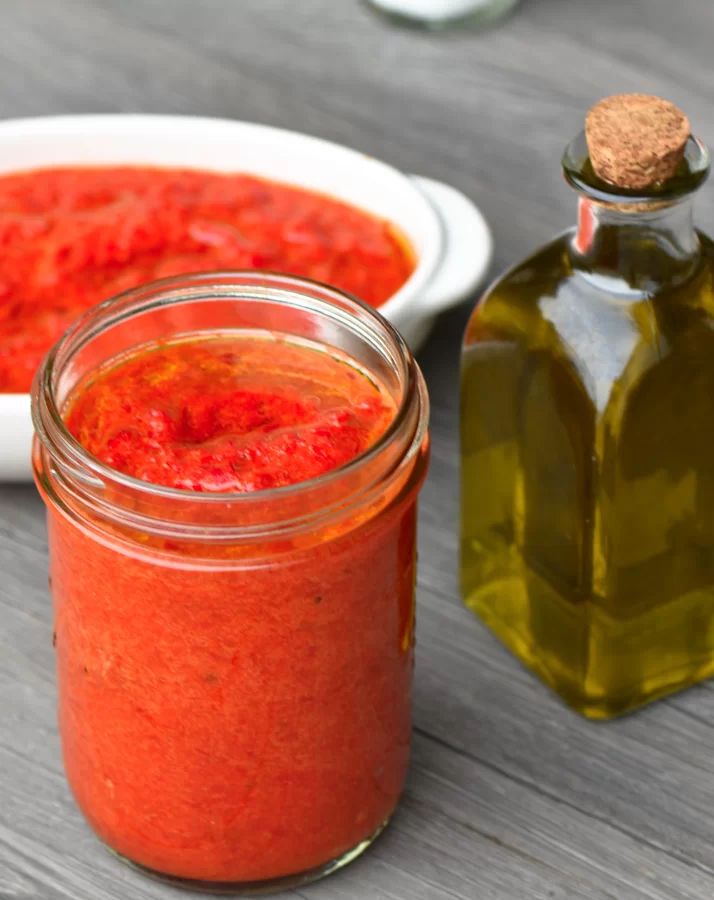
Olive Oil: Once the paste has been transferred to a jar, add a layer of olive oil on top. This helps protect the paste from air and helps preserve its fresh flavor.

How to Make Red Pepper Paste
Step 1: Prepare the Red Peppers
Select fresh, firm red peppers that are free from blemishes or damage. Wash the peppers thoroughly and drain well. Cut each pepper in half lengthwise and remove the seeds.
Step 2: Cook the Peppers
Transfer the peppers to a pot large enough to accommodate them. Add enough water to come halfway up the sides of the pot. Cover and simmer for 60 minutes, or until the peppers are completely softened.
Drain the peppers in a colander to remove the excess liquid and set aside.
Step 3: Purée the Peppers Using a Food Mill
Transfer the peppers, in batches, to a food mill. Secure the food mill over a bowl and turn the crank to purée the peppers. A food mill has two main functions when making red pepper paste. It purées the peppers without incorporating as much air as a food processor or blender, resulting in a smooth, bright-red purée. It also removes the pepper skins and seeds, eliminating the need to strain the purée afterward.
Step 4: Reduce the Pepper Purée
Return the pepper purée to the pot and cook, uncovered, over low heat, stirring frequently.
It is important to cook the purée gently. If the heat is too high, the peppers can brown rather than slowly cook and concentrate. Continue cooking until the sauce thickens to a loose paste.
Step 5: Season the Red Pepper Paste
Remove the paste from the heat and season with pickling salt while it is still warm. Taste and add more salt if needed.
Stir in the white vinegar and set the paste aside.
How to Make Red Pepper Paste in the Oven
Alternatively, you can dehydrate the red peppers in the oven at a very low temperature. Keep the temperature low and watch the peppers carefully to prevent them from charring.

How to Store Red Pepper Paste
Allow the paste to cool completely before transferring it to jars. Portion the paste into small, clean glass jars and top with a layer of olive oil.
For longer storage, freezing the paste is a convenient option. You can also freeze it in ice-cube trays and remove individual portions whenever you need them.
How to Use Frozen Red Pepper Paste
Freeze the paste in small portions or ice-cube trays. Whenever you need red pepper paste, simply remove one or more portions from the freezer as needed.
Is Red Pepper Paste the Same as Shatta?
Red pepper paste and shatta are not the same. Red pepper paste is a thick, concentrated pepper condiment, while shatta is generally a hot pepper sauce or condiment with a different preparation and consistency.

Frequently Asked Questions About Red Pepper Paste
What Is Red Pepper Paste Used For?
Red pepper paste can be used in kebabs, grilled meats, chicken, soups, stews, sauces, marinades, potatoes, and sandwiches.
Is Red Pepper Paste Spicy?
It depends on the peppers you use. Red bell peppers produce a mild paste, while adding hot peppers gives it a spicy kick.
Can I Use Red Bell Peppers to Make Red Pepper Paste?
Yes. Red bell peppers work beautifully and produce a naturally sweet, flavorful paste.
Can I Freeze Red Pepper Paste?
Yes. Freezing the paste in small portions or ice-cube trays makes it easy to use whenever needed.
More Red Pepper Recipes:
Muhammara Spread
Turkish Red Lentil Soup
Makdous (Authentic Lebanese Preserved Eggplants in Oil)
Gaziantep Lahmacun
 Let’s Stay in Touch!
Facebook, Instagram, YouTube , Pinterest and TikTok!
Red Pepper Paste
Description
Ingredients
- 1 kg / 2 lb 4 oz fresh red peppers plus a few extra hot peppers if you like a little heat
- ⅓ cup white vinegar
- 1½ tablespoons pickling salt or kosher salt
- Olive oil for drizzling over the top of the jars before sealing
Instructions
- Select and Prepare: Select fresh, firm red peppers that are free from blemishes or damage. Wash thepeppers thoroughly and drain well. Cut each pepper in half lengthwise, thenremove the seeds.
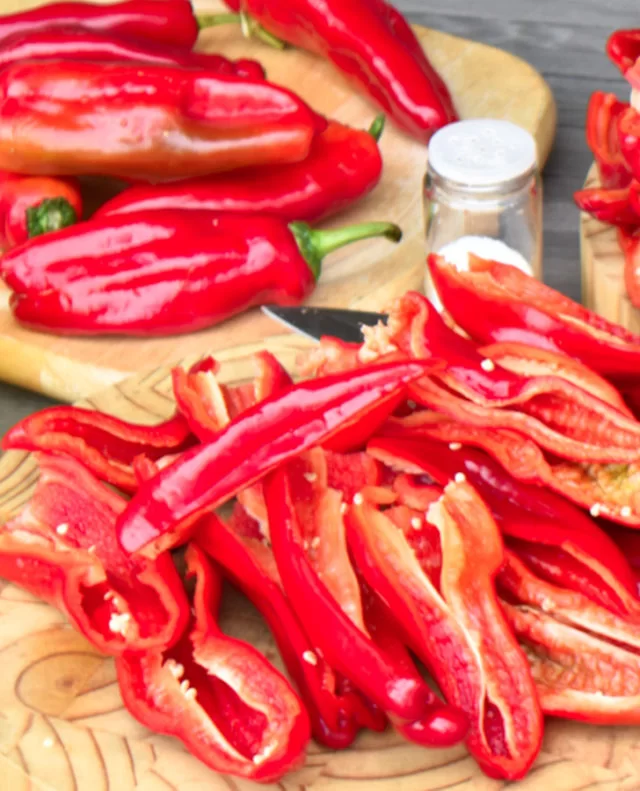
- Simmer the Peppers: Transfer the peppers to a pot large enough to accommodate them. Add enough water to come halfway up the sides of the pot. Cover with a lid and simmer for 60 minutes, until the peppers have completely softened. Drain in a colander to remove the excess liquid, then set aside.
- Purée via Food Mill: Transfer the peppers, in batches, to a food mill. Secure the food mill over abowl, then turn the crank to neatly purée the peppers, scraping any remainingpulp from the bottom. The seeds and skins will be removed, leaving you with asmooth, bright-red pepper sauce that is still slightly watery
- Return the pepper sauce to the pot and cook, uncovered, over low heat, stirring frequently. Keep the heat gentle so the mixture slowly concentrates without browning or scorching. Continue cooking until the sauce naturally thickens into a rich, dense, and concentrated paste.
- Remove the paste from the heat and season with the pickling salt while it is still warm. Taste and add more salt if needed. Stir in the white vinegar and allow the red pepper paste to cool completely. Portion into small, clean glass jars and top with a protective layer of olive oil before sealing tightly.
Notes






















4 Comments
Your book is not available on Amazon anymore
Is this pepper sauce the same as Shatta?