


Are you looking for an easy homemade quince jam recipe? Look no further! There is something truly magical about the fragrance of quince simmering away in a pot, filling the kitchen with its wonderful aroma. Known in Arabic as Mraba Al Safarjal (مربى السفرجل), this traditional Lebanese recipe is a delicious way to enjoy the fruit’s naturally sweet, fragrant flavor. With its beautiful reddish color and thick, sticky texture, this authentic Middle Eastern preserve brings a taste of home to every single spoon.
We had just returned from a visit to Beirut and Paris, where we spent precious family time with my mom and my in-laws. While we were there, Mama made quince jam using the wonderfully fragrant fruit that was sitting in her kitchen basket. My mom is incredibly creative and passionate about making jams, and watching her turn seasonal fruits into jars of homemade goodness is always a pleasure.
Old Recipe Sheets, Childhood Memories, and the Taste of Home
One of my favorite things to do when I visit her is to browse through her old, tattered recipe sheets and vintage cooking magazines. I don’t know exactly why I enjoy it so much! Perhaps it’s because these little treasures take me back to fond childhood memories and remind me of the delicious dishes we grew up enjoying. Some recipes are more than just instructions on a page; they carry the flavors, stories, and memories of home.
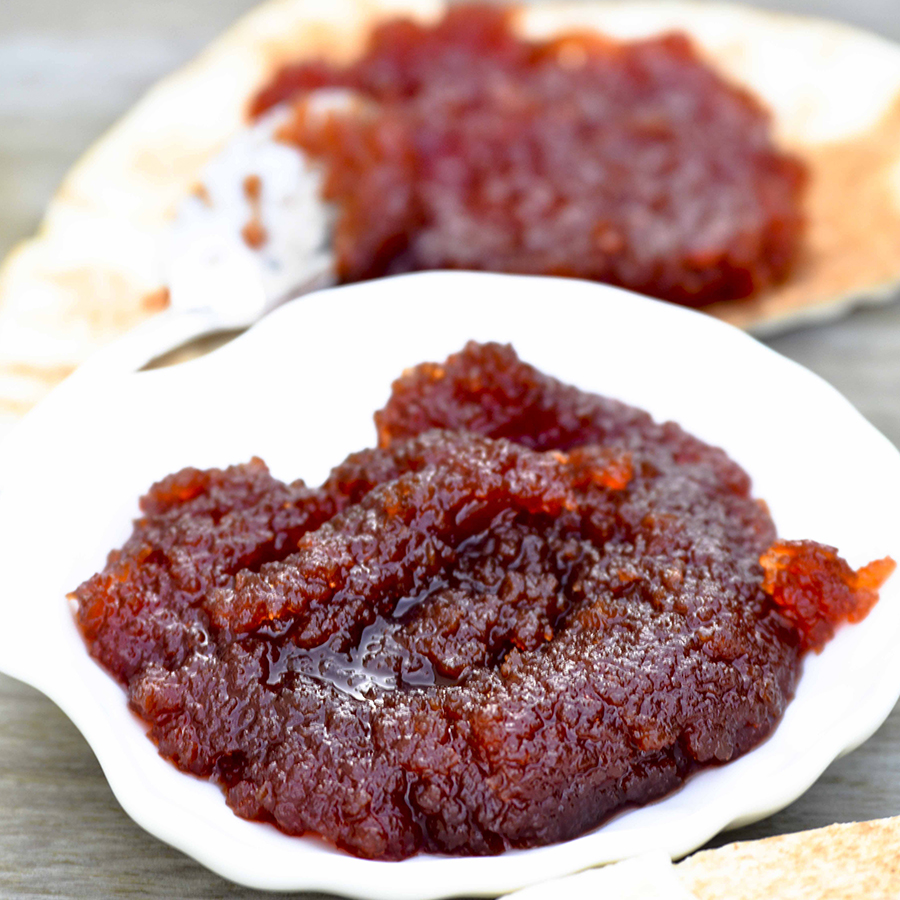
Quince Jam: A Naturally Thick, Fragrant Jam with Mastic
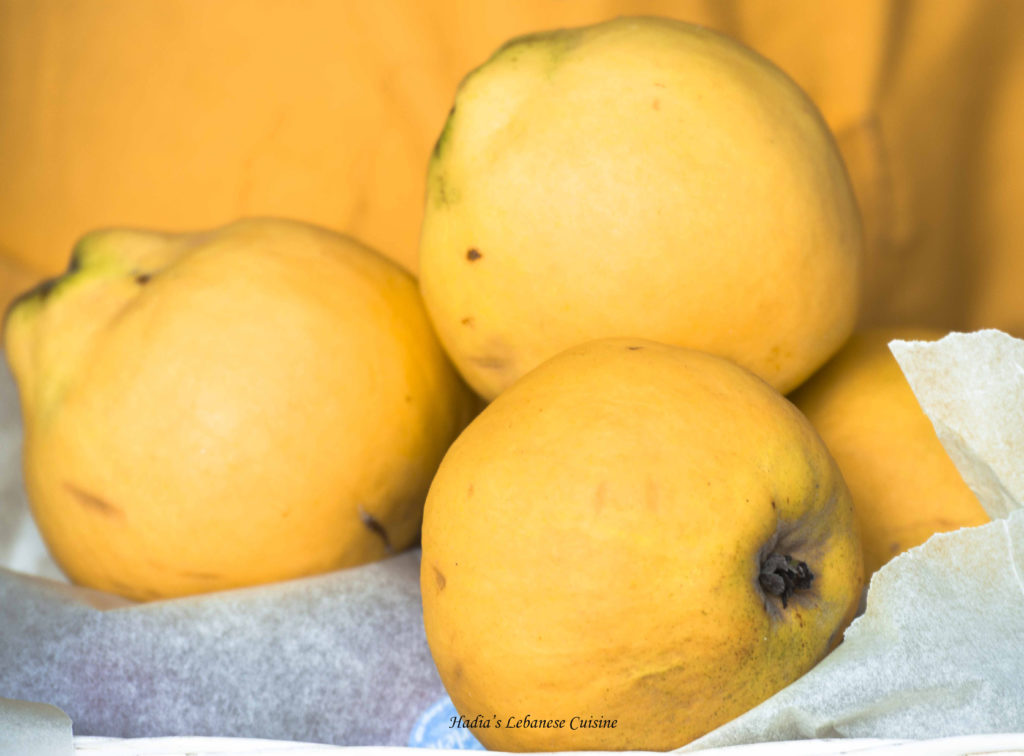
Quinces, close relatives of apples and pears, make a wonderful homemade jam with a thick, sticky, spreadable consistency. Although the fruit can be quite tart and mouth-puckering when eaten raw, it transforms beautifully when cooked. Native to the region stretching from the Caucasus to parts of Western Asia, quinces have long been cherished in Lebanon and throughout the Middle East. They are naturally rich in pectin, which helps the jam thicken as it cooks.
Why Quince Jam Turns Naturally Red
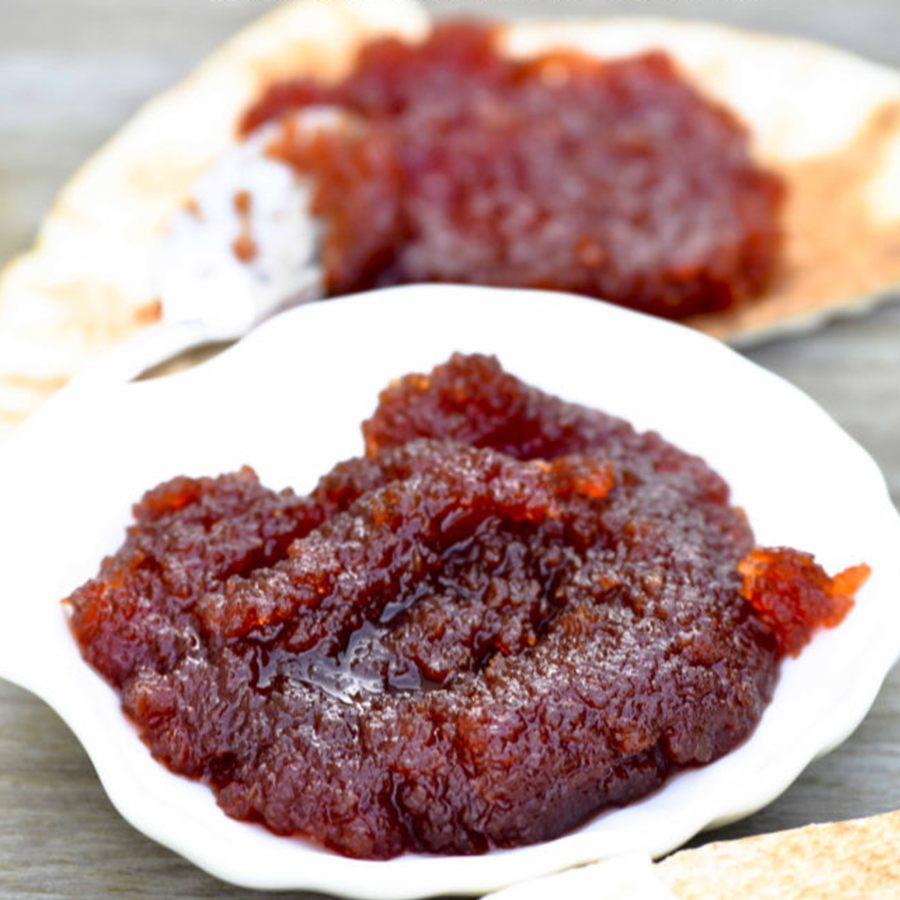
One of the wonderful things about homemade quince jam is that you don’t need any food coloring or added pectin to achieve its beautiful color and thick consistency. When you cut a raw quince, you’ll notice that its flesh is pale beige, but as the fruit slowly cooks, it transforms into a lovely rosy-red to deep reddish-amber hue. This natural color change is part of the magic of making quince jam! The fruit also releases its natural pectin as it cooks, helping the jam thicken into a rich, sticky, spreadable preserve without the need for any additional thickening agents.
The Secret Ingredient: Mastic Gum
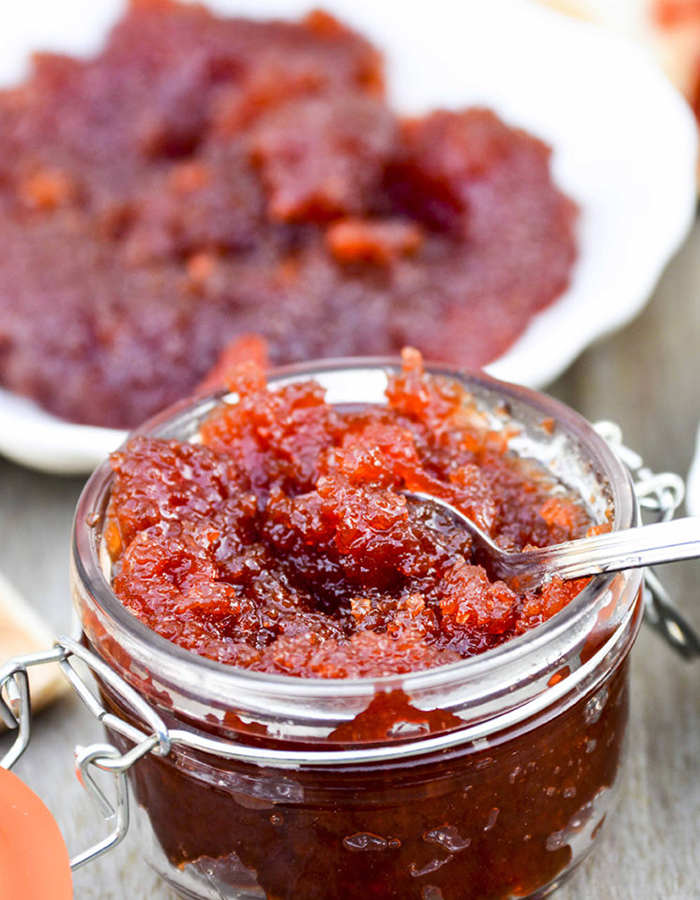
I love flavoring my quince jam with mastic gum, a traditional ingredient that gives the jam a distinctive, aromatic note and an extra layer of flavor. Mastic has a delicate, slightly pine-like fragrance that pairs beautifully with the natural sweetness and fruity aroma of cooked quinces. Just a small amount goes a long way, adding a subtle Mediterranean touch that makes this homemade quince jam even more special.
How to Serve Homemade Quince Jam
This homemade quince jam is delicious spread on warm Arabic bread, toasted slices of bread, freshly baked scones, or a crusty French baguette. It is also lovely served with crackers for a simple breakfast or an afternoon treat. But you know what? Sometimes, the best way to enjoy it is straight out of the jar with a spoon! Hmm, yes, I do that, too! The sweet, fragrant flavor and sticky texture make this quince jam almost impossible to resist.
➡️ Lebanese Dried Fig Jam Recipe (Mraba El Teen) — Click here
 Let’s Stay in Touch!
Facebook, Instagram, YouTube , Pinterest and TikTok!
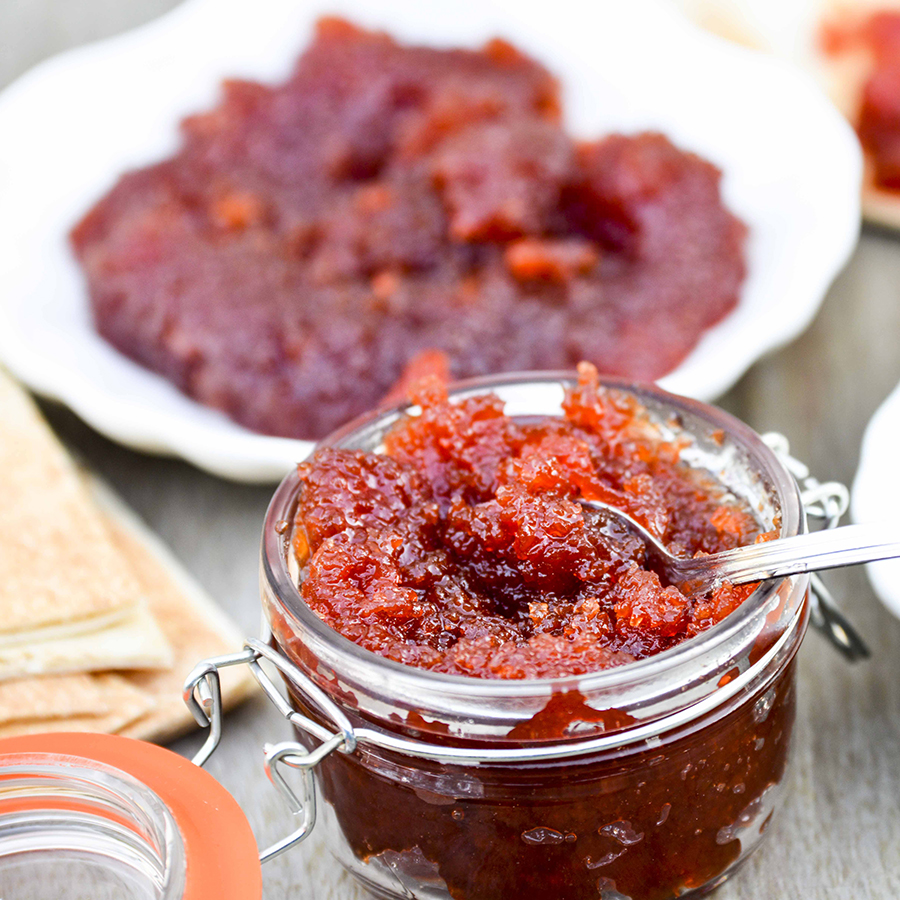
Quince Jam, Mraba Al Safarjal
Description
Ingredients
- 1 kg 2 lb 4 oz quince, washed, with the peel left on
- 1 kg 2 lb 4 oz granulated sugar
- ¼ tsp citric acid hamod allaymoun OR ¼ cup freshly squeezed lemon juice
- 8 mastic gum pods crushed with a pinch of sugar
- 1 tbsp freshly squeezed lemon juice to be added at the end of cooking
Instructions
- Prep the Quince: Wash and pat dry the quinces. Cut each fruit in half, remove the cores, and grate using the large holes of a box grater.
- Macerate Overnight: Toss the grated quince with the sugar in a large bowl. Cover and let the mixture sit overnight in the refrigerator to draw out the juices.
- Bring to a Boil: Transfer the quince-sugar mixture to a heavy-bottomed saucepan. Add the citric acid (or ¼ cup of lemon juice) and bring to a boil over medium-high heat.
- Simmer and Thicken: Once boiling, reduce the heat to low. Cook uncovered for 1 ½ hours, stirring occasionally. The quince will gradually turn a deep pinkish-red and thicken to a beautifully clotted consistency.
- Infuse and Finish: Finely crush the mastic gum pods with a pinch of sugar. Stir the crushed mastic and the remaining tablespoon of freshly squeezed lemon juice into the jam.
- Cool and Store: Remove the saucepan from the heat. Allow the jam to cool completely before transferring it into sterilized glass jars. Store in the refrigerator, where it will keep perfectly for up to 1 year.





















6 Comments
Quinces are incredible good!
Where I”m leaving quine jelly was popular at granmother times, but then it almost disappeared from the homemade recipes.
Now I noticed that more and more quices trees appears in the garden; that quince jam, quince jelly and quince paste are highly appreciated.
A cute quince jam jar makes a wonderful gift!
I have never used madtic ( I know this from the Greek cuisine) but I” m sure that this would be a great addition: I have to try this!
On Crete I”ve noticed that “scented geranium” leaves are used to perfume spoon sweets with quinces.
Thanks for the very informative post and for promoting quinces! 🙂
3 tweaks:
1. keep the quince seeds, put them in a tea bag and cook them with the other ingredients. The seeds release polysaccharide which is a good jelling agent.
2. try less sugar (i.e. 600gr per kilo of quince). It will bring out more of the quince taste.
3. add a dash of orange blossom water (or extract) for taste…
I loved this recipe of all the ones I tried, for the grated effect. I added a few spices and am making it again this year
Thank you, Pam, for the feedback. I am happy you liked.