


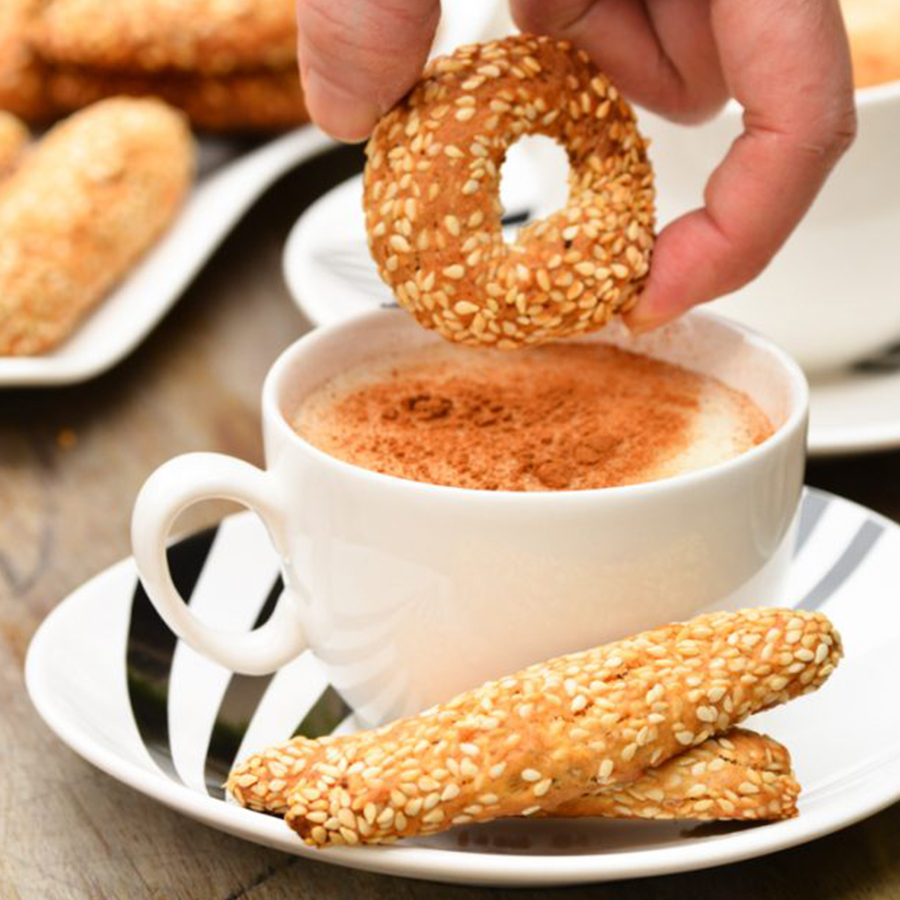
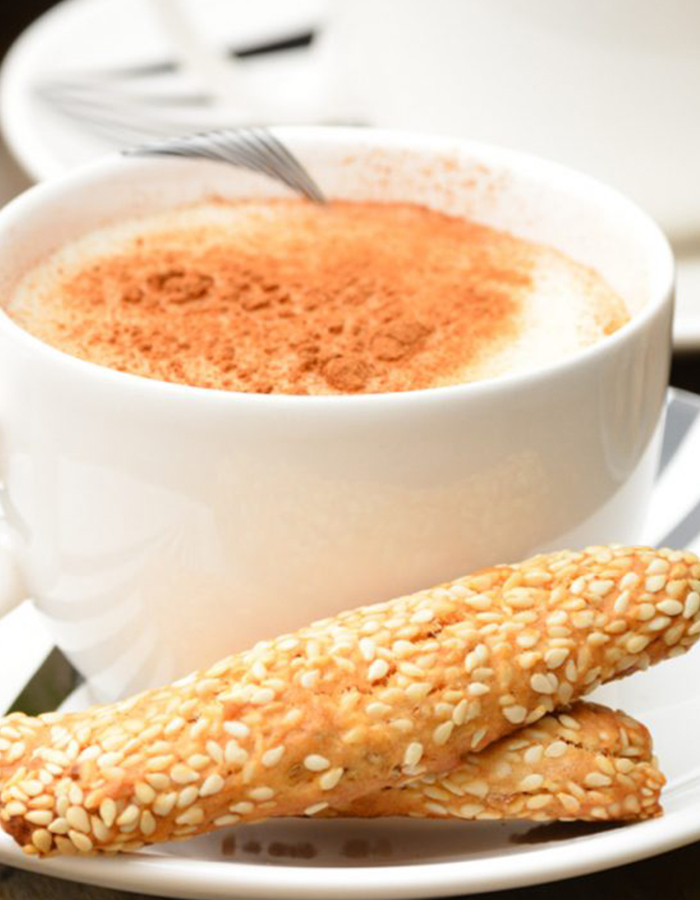
Crispy, crunchy Lebanese sweet kaak cookies that pair beautifully with tea and are perfect for dunking into a cup of hot salep or serving as part of your afternoon snacks and nibbles!
To be more accurate, though, perhaps I shouldn’t classify them as cookies, since they are not your ordinary soft, chewy kind. They are meant to be slightly hard and crispy, with a pleasant crunch in every bite.
Seasoned with anise seeds and mahlab, their flavor is warm and fragrant, while a coating of sesame seeds adds a lovely nutty character. If you were raised in Lebanon, you must have seen them gracing the windows of most Lebanese bakeries.
Watch the video tutorial to learn how to make them!
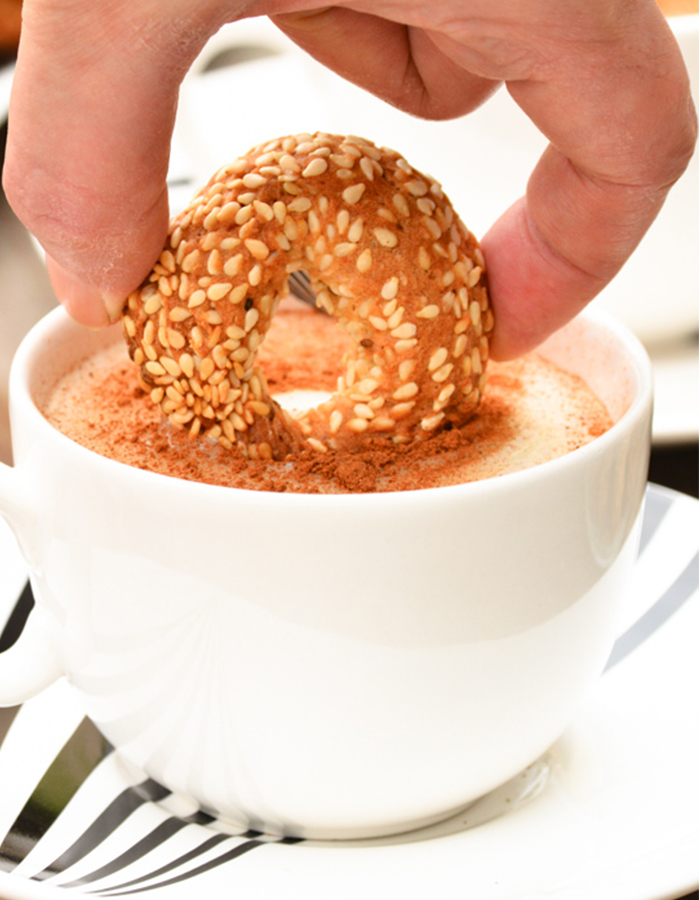
Lebanese Sweet Kaak (Video)
I get enormous satisfaction from putting a lot of time into a recipe and having it turn out perfectly. This is one of the recipes from my cookbook, and I remember testing more than 20 versions before settling on this quick and easy recipe.
One of the great things about this recipe is that you don’t need to wait for the dough to rise. Simply mix the ingredients together, and you’ll end up with a sticky dough. Then, you can immediately start shaping your kaak into logs or rings.
If you’ve never had kaak, roll up your sleeves and give this Lebanese classic a try. They’re not difficult to make, even if you’re a beginner baker!
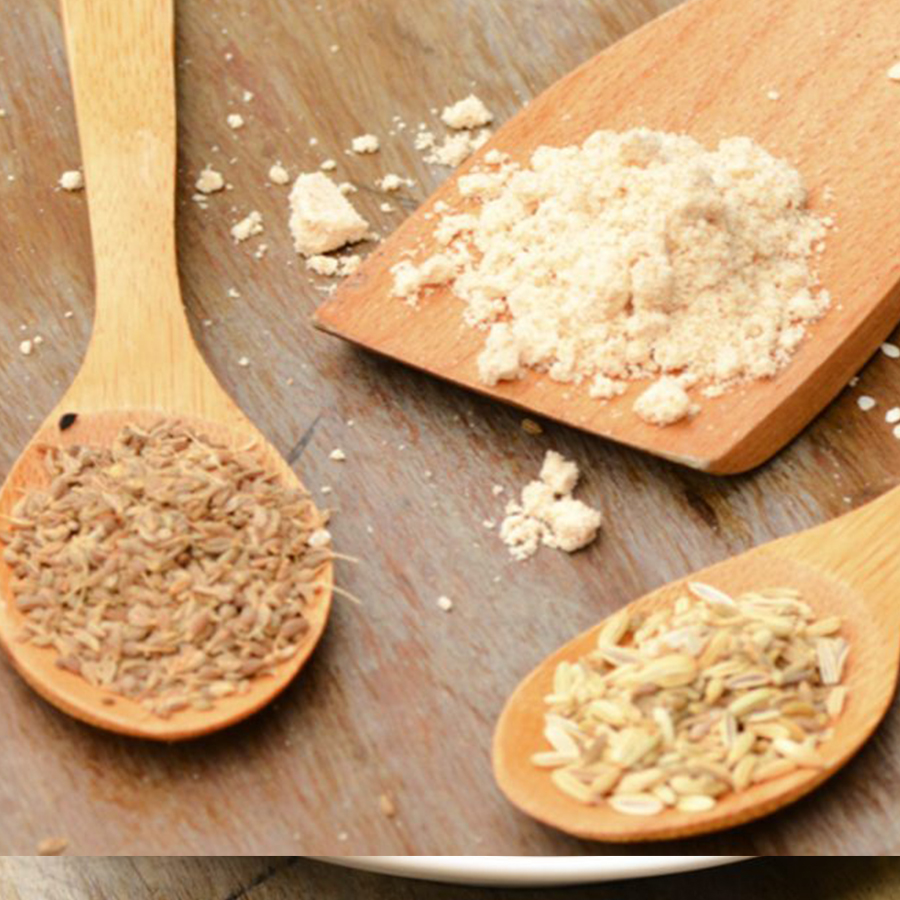
Spices and Seeds for Lebanese Sweet Kaak
Both anise seeds and mahlab are staples in Middle Eastern baking. They are the secret to giving sweet kaak an extra punch of flavor. A small amount of fennel seeds adds a pleasant flavor without being overpowering, while sesame seeds give the kaak a satisfying nutty flavor and a delicate crunch.
Mahlab (or mahleb): An aromatic spice made from the kernels of a particular type of cherry pit, commonly used in Middle Eastern baked goods.
Anise seeds: A spice native to the eastern Mediterranean and Southwest Asia, known for its mild, fragrant aroma and sweet flavor reminiscent of licorice.
Dried fennel seeds: The dried seeds of the fennel plant. They are highly aromatic and have a mildly sweet flavor.
White sesame seeds: Sesame is considered one of the oldest oilseed crops known to humanity and is a common ingredient in many cuisines. These tiny seeds add a nutty flavor and a pleasant crunch to baked goods.
How to Make Lebanese Sweet Kaak
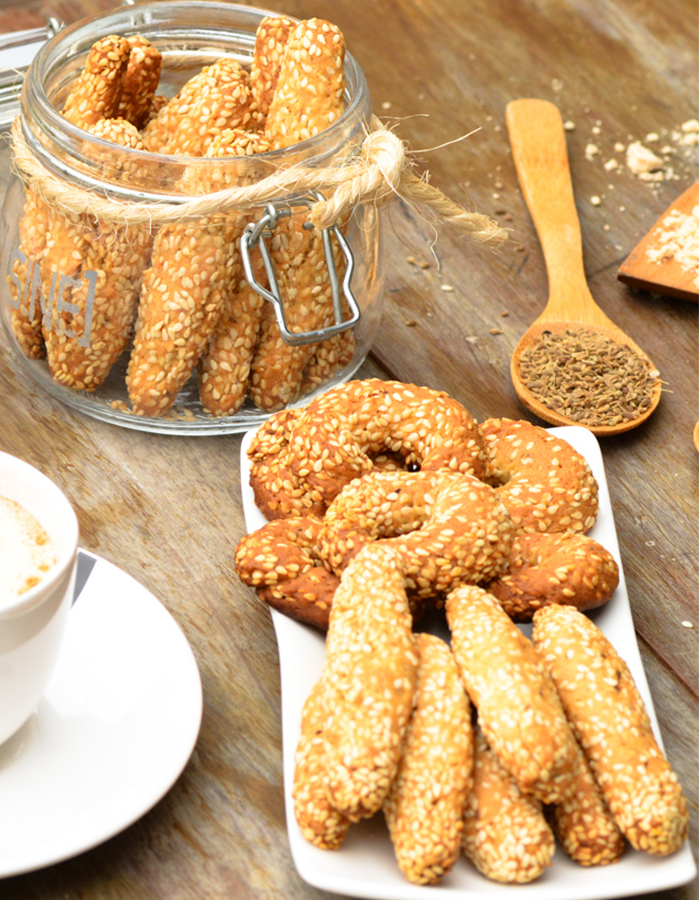
Two Ways to Shape Lebanese Sweet Kaak
Lebanese sweet kaak can be shaped in two different ways: into simple logs or into rings. Both shapes are traditional and equally delicious, so you can choose whichever you prefer.
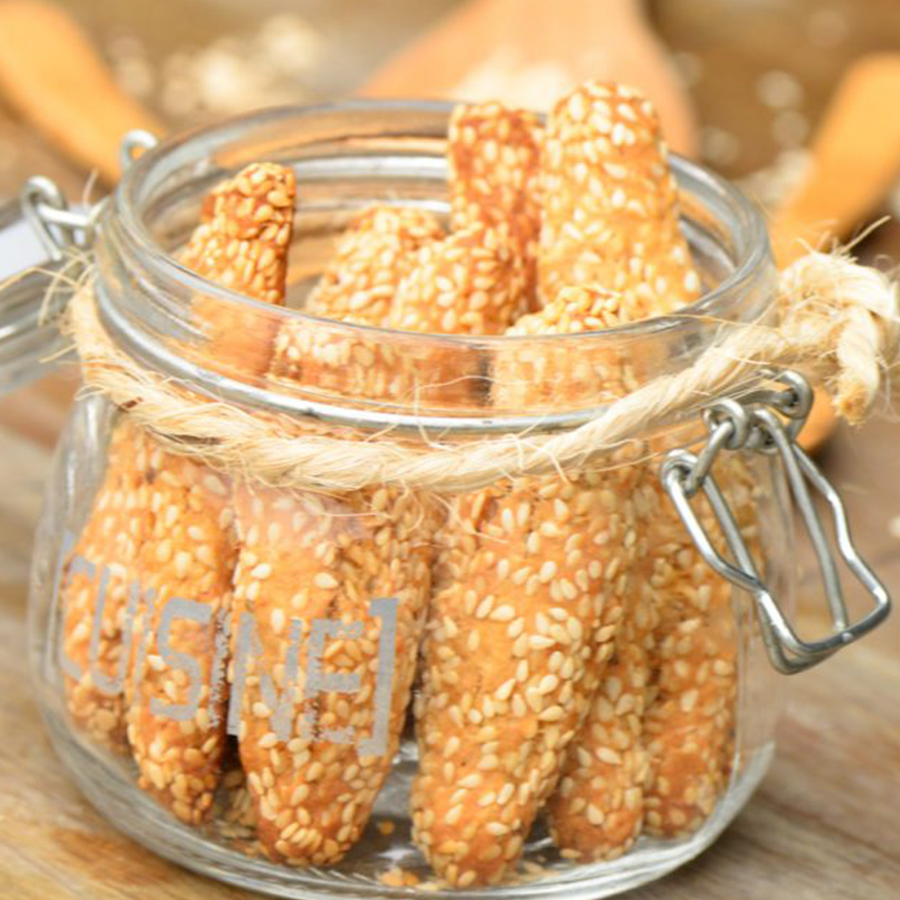
The log shape: Roll each ball of dough between your palms to form an elongated rope about 7 cm (2.5 inches) long. Dip it in sesame seeds, making sure to coat both sides. It’s now ready to go into the oven.
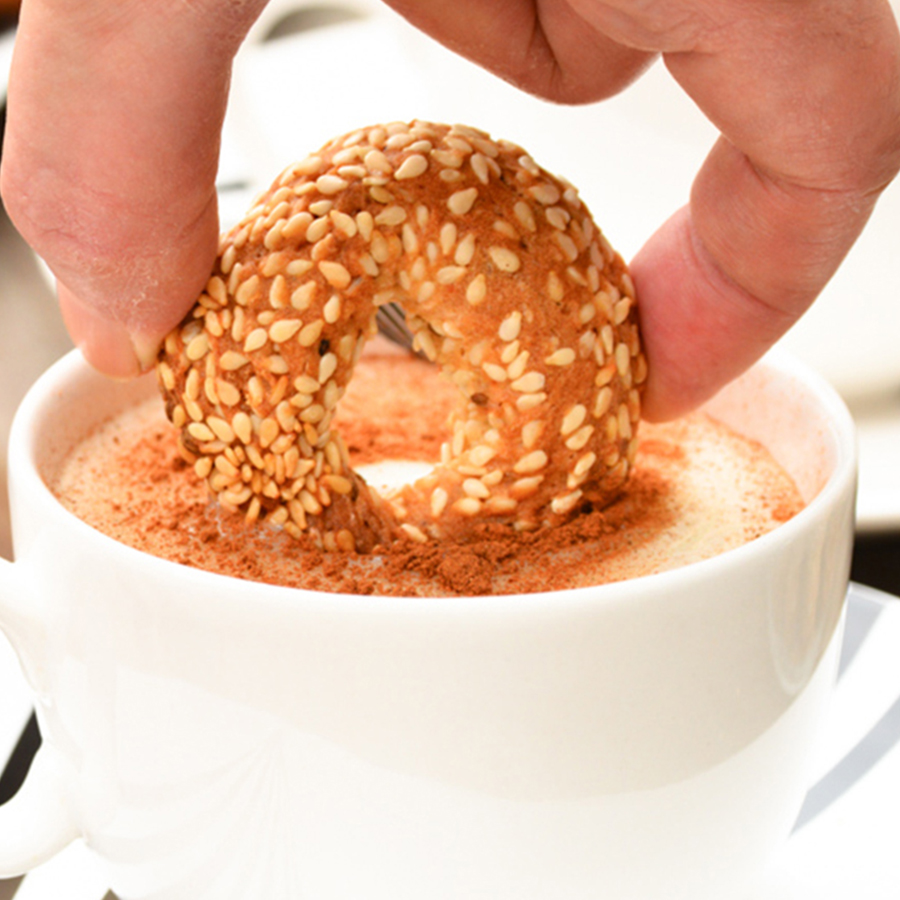
The ring shape: Roll each ball of dough between the palms of your hands to form a rope about 7 cm (2.5 inches) long. Pinch the ends together to form a circle. I prefer the kaak to have a nice, round shape. Dip the kaak in sesame seeds, making sure to coat both sides. It’s now ready to go into the oven.
How Long Can I Keep Kaak?
Kaak are dry cookies that store well. Make sure they have cooled completely before storing them to prevent them from softening. Store them in an airtight glass container, and they will keep for up to 2 weeks.
More Delicious Treats to Enjoy With Your Morning Coffee:
- Satisfy your sweet tooth with these delicate Almond Paste Stuffed Cookies.
- Add a chocolate twist to your afternoon tea with these easy Chocolate Chip Crescent Cookies.
- Learn how to bake these beautiful, swirling Black and White Pinwheel Cookies.
- Try a classic, melt-in-your-mouth Middle Eastern favorite: Date Filled Ghraybeh Cookies.
 Let’s Stay in Touch!
Facebook, Instagram, YouTube , Pinterest and TikTok!
Lebanese Sweet Kaak
Description
Ingredients
- 2½ cups all-purpose flour
- ⅓ cup sunflower oil
- ⅓ cup 70 g / 2.5 oz unsalted butter
- 1 egg lightly beaten
- ½ teaspoon baking soda or baking powder see the tips above to choose your preference
- 3 tablespoons anise seeds
- 1 tablespoon mahlab
- 1 teaspoon fennel seeds optional
- ¾ cup sugar
- ½ teaspoon vanilla extract
- ¼ teaspoon salt
- ⅓ cup water plus 1–2 tablespoons more if needed
- 1 cup white sesame seeds
Instructions
- Preheat the oven to 200°C (400°F).
- First, clarify the butter (if you are using store-bought ghee, skip this step). In a small saucepan, melt the butter over medium-low heat. Skim off any white foam that rises to the top. Transfer the melted butter to a small glass container and let it sit for about 10 minutes. Once the milk solids have completely settled to the bottom, carefully pour the clear, golden liquid into a separate bowl, leaving the white solids behind. Discard the solids.
- In a large bowl, combine the flour, salt, your prepared clarified butter, sunflower oil, sugar, the lightly beaten egg, anise seeds, mahlab, vanilla extract, baking soda, and water. Knead the mixture just until you obtain a soft, cohesive, and slightly sticky dough.
- Divide the dough into equal portions, shaping them into balls roughly the size of a ping-pong ball (or slightly smaller). From here, you can shape your kaak in one of two ways:
- For traditional ring-shaped kaak: Roll a dough ball between your palms to form an elongated rope about 7 cm (2.5 inches) long. Pinch the two ends of the rope firmly together to form a clean circle. I prefer my kaak nice and round!
- For log-shaped kaak: Simply roll the ball between your palms until it forms a straight, elongated rope about 7 cm (2.5 inches) long.
- Dip each shaped piece of kaak into the sesame seeds, pressing gently to ensure both sides are evenly coated. Arrange them on parchment-lined baking sheets, leaving a bit of space between each piece.
- Bake for 20–25 minutes or until they turn a beautiful, pale golden brown. Keep a close eye on them toward the end, as every oven behaves a little differently!
- Happy eating!





















14 Comments
Surprised how good these were, though I am not a dough person, made the ring shaped and used baking powder,option, super crunchy and yummy. I am wondering if I can double the recipe. Thank you Hadia for another great recipe.
These little bites are perfect for tea! I love that they’re small and will be perfect for having the girls over.
My mom loved baking sesame seed cookies!! And I loved eating them. These sweet gems look delicious!
I love cookies that can be dunked in a nice cup of tea and I love the flavours in your kaak. Hadia your pics are beautiful.
Hi Haida, these were my favorite growing up and now I want to make my own but I’m plant based for health reasons. Do you have a good alternative for the butter and the egg?
anybody try to make this with sourdough?
Hi Hadia, if I use ghee, do I also take 70 grams? Or did you measure the butter after clarifying?
So simple and works out great.
Thank you for the feedback, I am happy to know you liked .