


Kibbeh Bil Laban (Lebanese Kibbeh in Yogurt Sauce)
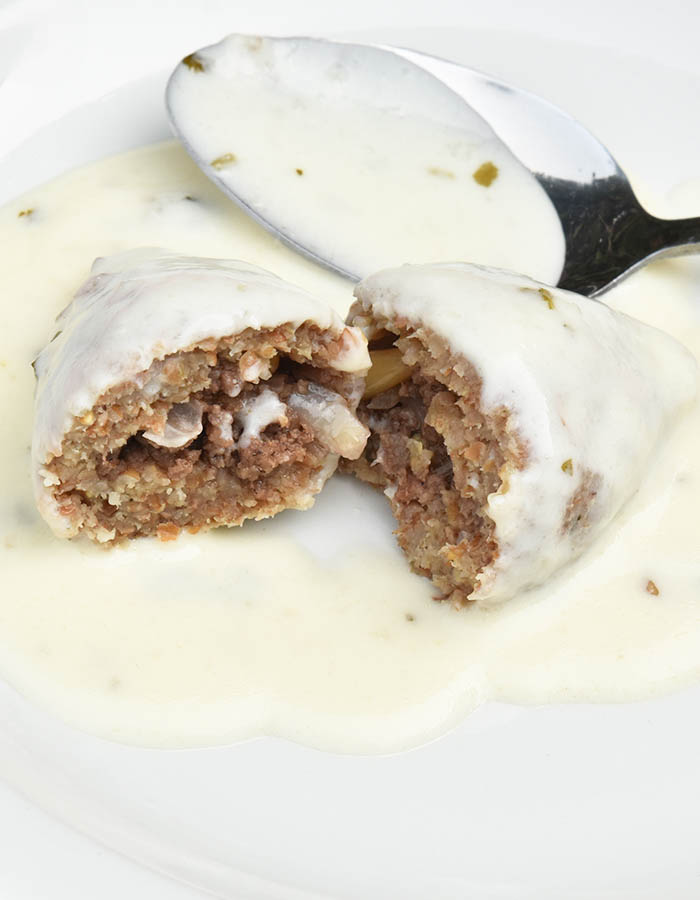
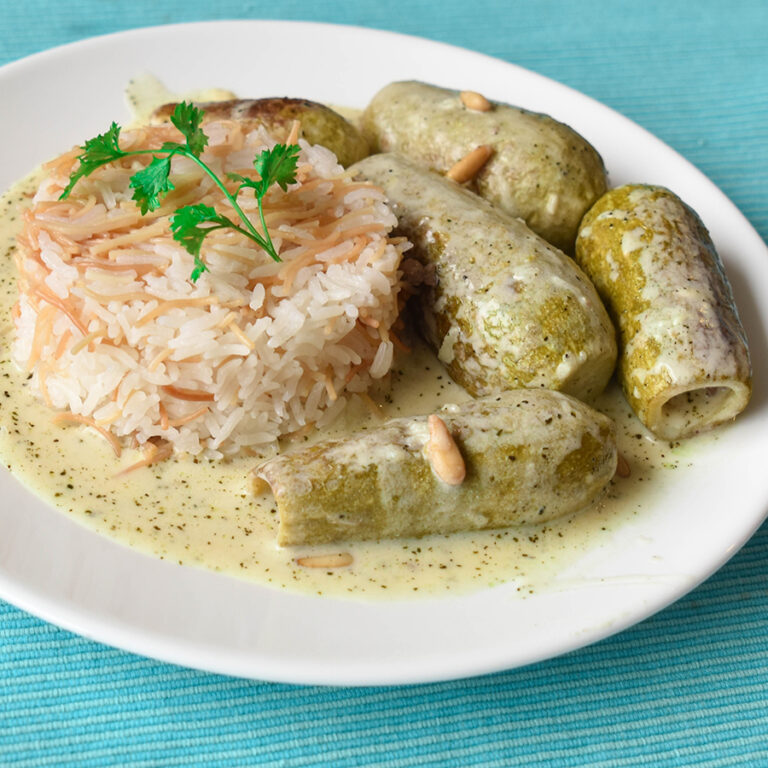
Are you ready to take your taste buds on an adventure? This flavorful Lebanese dish, kibbeh bil laban, or kibbeh labanieh, as some call it, is packed with kibbeh balls simmered in a creamy yogurt sauce and perfumed with sautéed garlic and cilantro. The result is a creamy, tangy, and meaty concoction that, in my humble opinion, ranks among the world’s most satisfying culinary experiences.
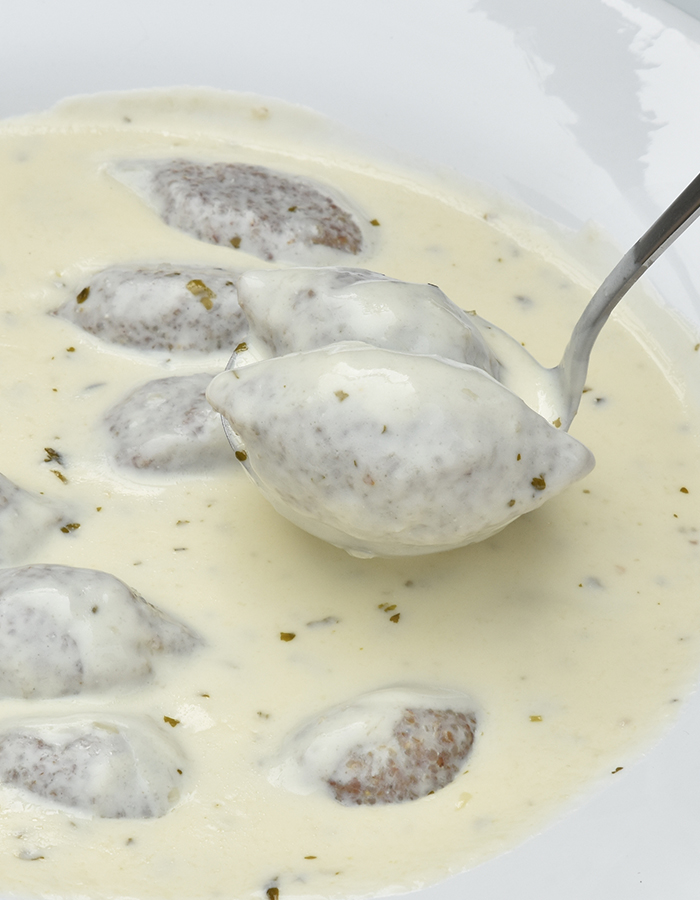
The kibbeh balls are cooked in a refreshing yogurt sauce spiked with fried cilantro and garlic, leaving you with a deeply complex and unexpectedly crowd-pleasing dish. If there is such a thing as a quintessential Lebanese home-style comfort food, it’s kibbeh bil laban. Get creative and try this savory Lebanese classic for dinner—you’ll be proud to serve it to your family. Watch the detailed video tutorial below.
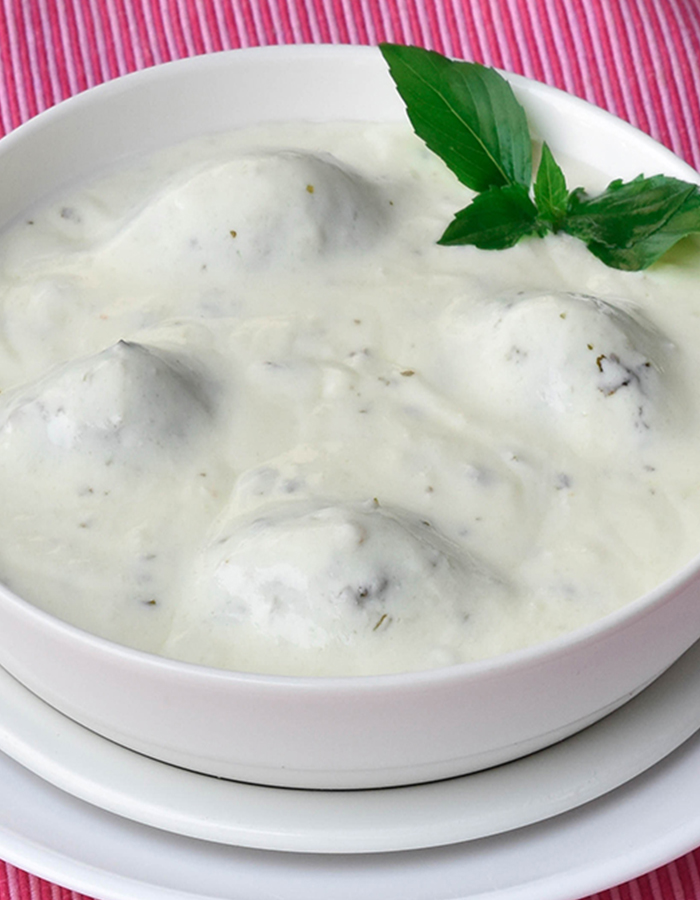
Making Kibbeh Bil Laban goes through four phases. The only real trick is learning how to make the kibbeh balls. Check out this detailed post on the blog and take a look at the video on YouTube. It’s a helpful guide that makes the process much easier to follow.
- Phase 1: Make the kibbeh balls and bake them in a preheated oven on parchment paper, just until they firm up slightly. Alternatively, you can keep them raw and cook them directly in the yogurt.
- Phase 2: Cook the yogurt, whisking constantly, until it comes to a rolling boil.
- Phase 3: Add the kibbeh balls and simmer them in the yogurt for 15 to 20 minutes.
- Phase 4: Sauté the garlic and cilantro with butter and oil. Add them to the pot with the kibbeh and yogurt, and cook everything together for another 10 minutes
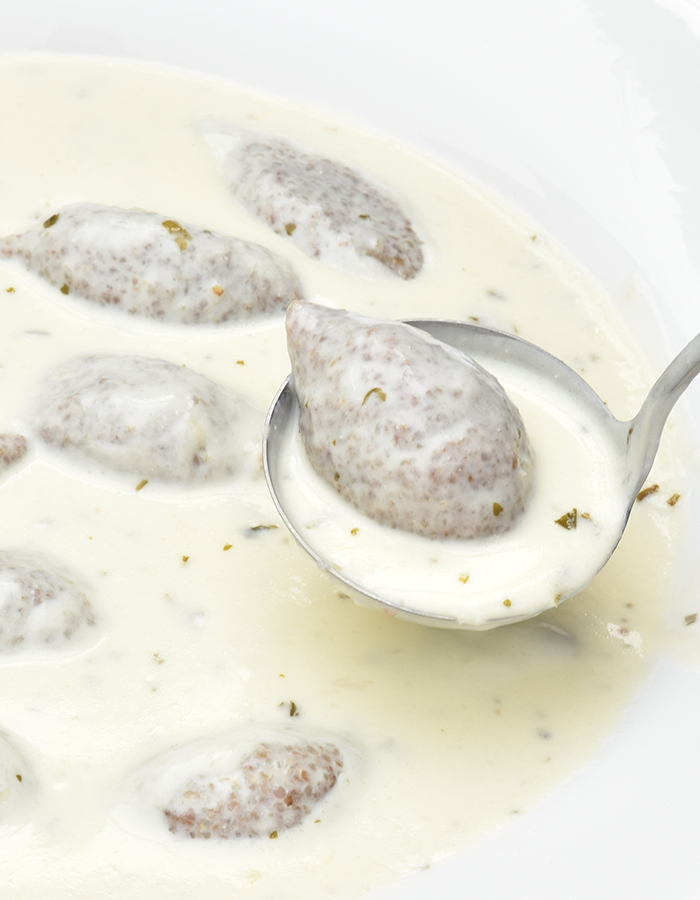
This dish is part of my classic collection of Lebanese yogurt-based dishes, like Shish Barak, Koussa Bil Laban, and Shrimp Fatteh.
Kibbeh Bil Laban is a great option when you want a make-ahead recipe to feed a crowd. You can prepare the kibbeh the day before, then cook it on the stovetop and serve it hot or at room temperature when your guests arrive.
It can be eaten right away, piping hot from the pot, at room temperature, or cold, straight from the fridge. In Lebanon, it is common practice to serve yogurt-based dishes straight from the fridge, especially on warm summer days. In winter, serve it piping hot—it will warm your belly and please your senses.
As the Kibbeh Bil Laban simmers, it will fill your house with warm, savory aromas. Once it’s done, serve yourself a small bowl to taste. You may need to add a little more salt, if needed.
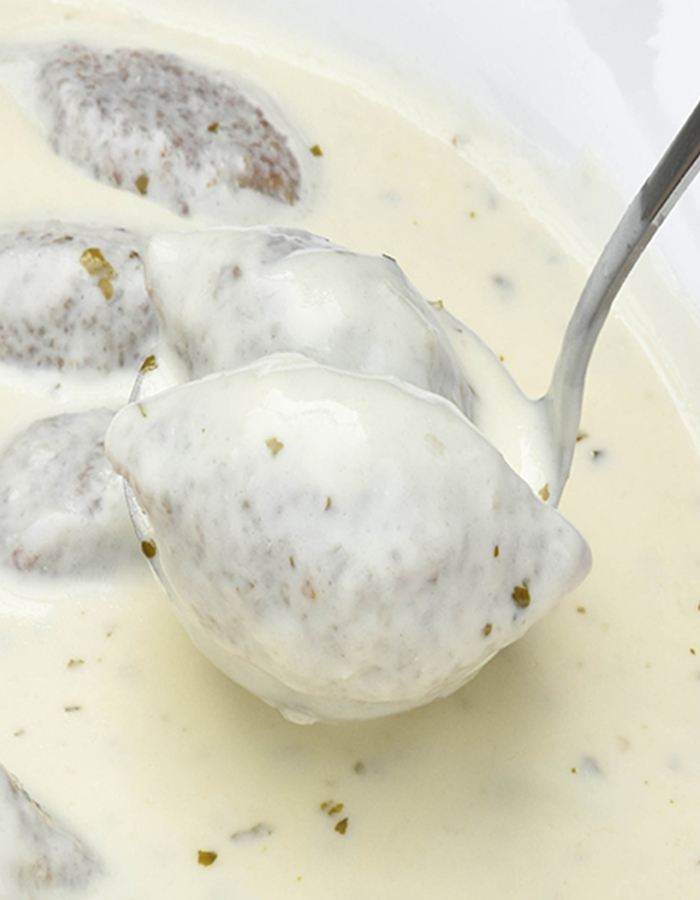
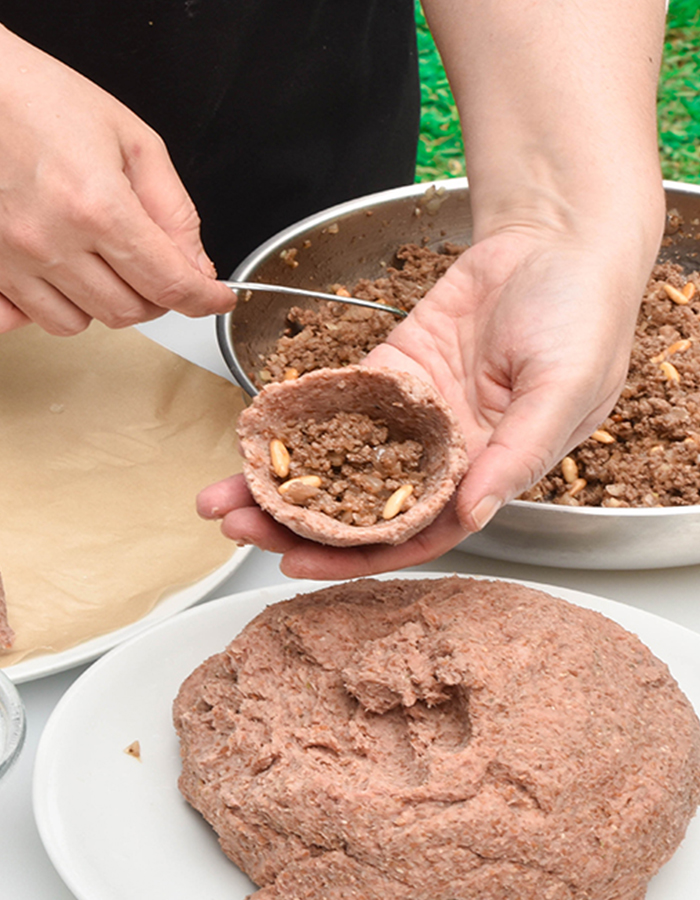
Here is a detailed recipe for making kibbeh balls. It is an art that is perfected with practice, but the video tutorial is detailed and informative, with plenty of tips and tricks to help you master the technique. And believe me, you’ll be surprised at how meditative the process of hand-crafting dozens of kibbeh can be.
To make kibbeh bil laban, I cut the recipe in half and scaled it to yield 4 to 5 servings.
A Labor-Intensive Recipe, But Here’s a Strategy to Break Down the Work!
Now, I know what you’re thinking — that sounds like a lot of work. So, here’s my advice: Read the recipe from start to finish and see what you can break down into smaller, more manageable steps.
The kibbeh balls can be made a day ahead and refrigerated overnight. Alternatively, you can prepare the kibbeh balls and freeze them for later. Whenever you’re ready to make kibbeh bil laban, simply reach into your freezer and pull out a batch.
The rest of the recipe comes together in relatively quick and easy steps.
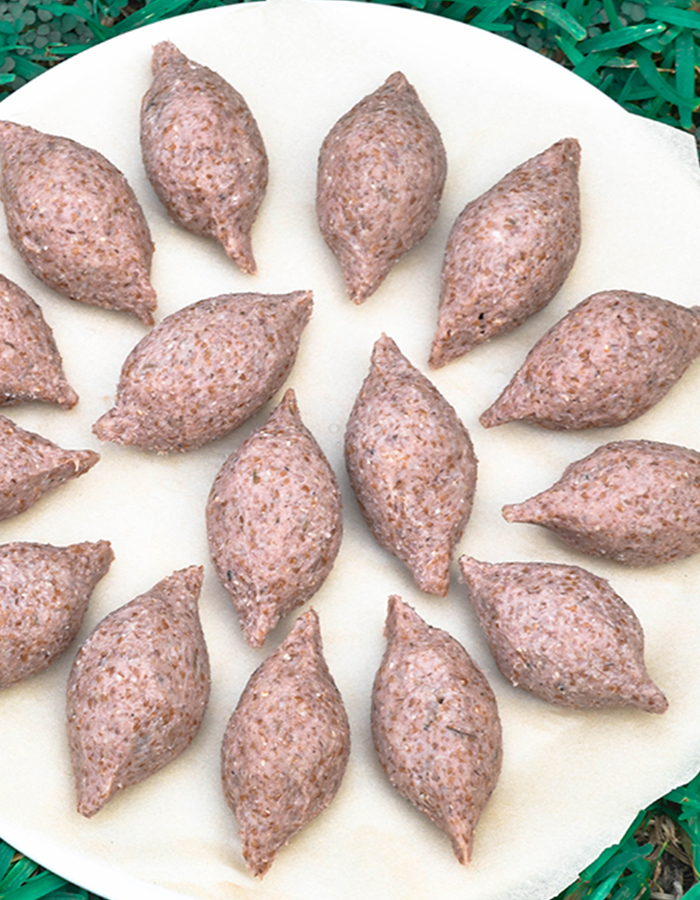
The nonstop debate about kibbeh bil laban: Do we add the kibbeh balls to the cooked yogurt while they are still raw, or do we need to cook the kibbeh in advance?
Folks here are divided, and there is no right or wrong when it comes to taste preferences. But my suggestion for a novice cook would be to bake the kibbeh balls in the oven and allow them to firm up a bit. This will help prevent the kibbeh from breaking apart while cooking in the yogurt.
What if I don’t have time to make the kibbeh balls?
Though I would urge you to learn the art of kibbeh making if you have the time—it is a fascinating process, and our family kibbeh recipe is super decadent. Here is a detailed post with a step-by-step video tutorial to unlock all the secrets of kibbeh making.
But if you’re short on time, you can buy kibbeh online from a reliable source or find it in the frozen section of Middle Eastern stores.
Once the kibbeh balls are ready, kibbeh bil laban comes together in less than an hour.
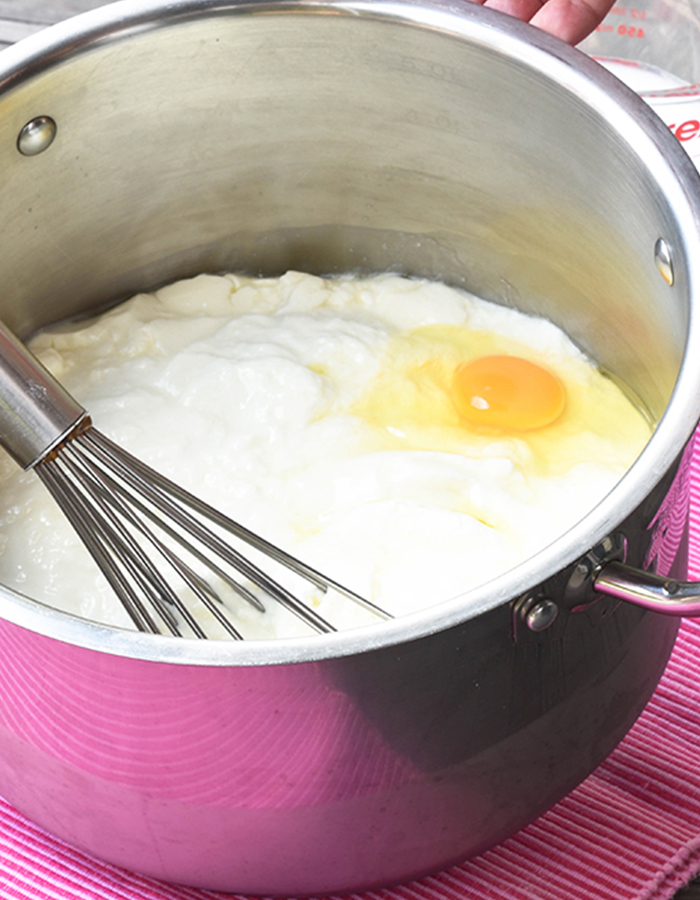
Your recipe includes a raw egg in the yogurt. Can I omit the egg?
If you are concerned about undercooked eggs, rest assured that the yogurt will be simmered for quite some time, so the egg will be fully cooked. You would not even notice its presence.
The reason our grannies used egg when cooking yogurt-based dishes is that it provides a rich, creamy texture without the risk of curdling. If, for any reason, you need to omit it, that is perfectly fine, but you will need to increase the amount of cornstarch. In other words, instead of using 2 tablespoons of cornstarch, use 3 tablespoons.
Some recipes feature rice when making kibbeh bil laban.
Yes, people are divided into two camps here. Some recipes include rice, while others thicken the yogurt with cornstarch and an egg. The recipe in my book features rice, and both versions are great. But after much testing, I would honestly say that I gravitate more toward the version without rice. The end result is silkier and creamier.
What causes the yogurt to curdle?
Yogurt tends to curdle when heated, so there are two important factors to consider when cooking kibbeh bil laban or any yogurt-based dish.
First, you need to increase the yogurt’s stability by adding cornstarch. Some versions also add rice to help stabilize and emulsify the yogurt.
Second, it is crucial to whisk the yogurt continuously until it comes to a boil.
What should I do if, for any reason, the yogurt curdles or separates while cooking?
This should not happen if you keep whisking the yogurt until it reaches a boiling point. But if it does happen, remove the yogurt from the heat as soon as you notice the curdling.
An immersion blender can help emulsify the sauce and bring it back to its original smooth consistency.
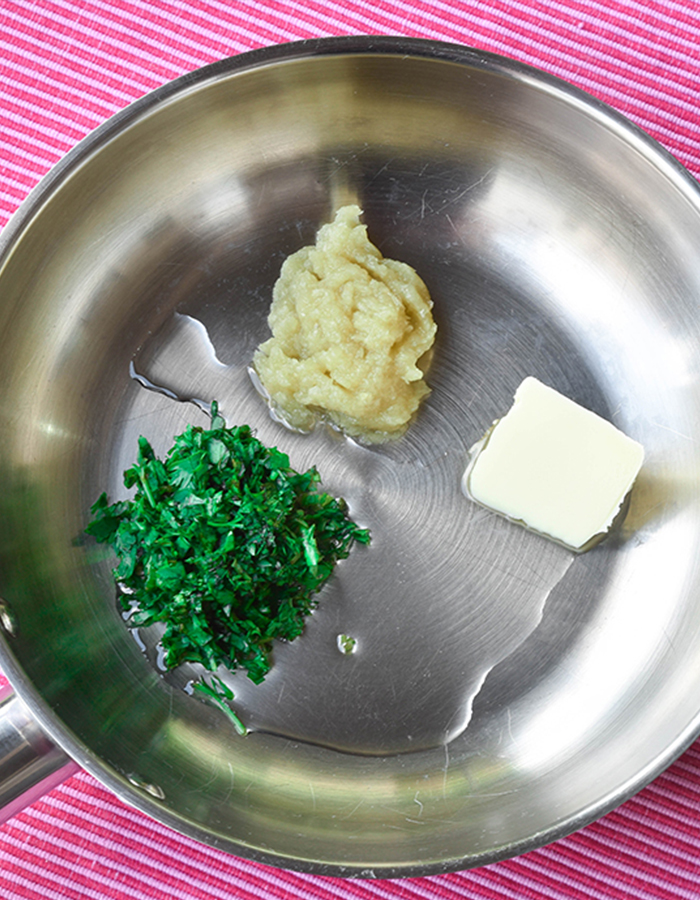
Fried garlic and cilantro mix is the pesto of Lebanese and Middle Eastern cuisine.
When yogurt is cooked, its acidity becomes more noticeable, so adding fried garlic and cilantro accentuates those flavor notes and takes kibbeh bil laban from good to extraordinary. That final hit makes a huge impact!
Cook Lebanese yogurt-based dishes with confidence.
Shish Barak: Middle Eastern-style tortellini dumplings filled with onion and minced meat, then cooked in a tangy, flavorful yogurt sauce (laban). While the exact origin of this dish is up for debate, its deliciousness is incontestable.
Koussa Bil Laban: Literally translating to “zucchini in yogurt,” this dish begins with zucchini that are hollowed out and stuffed with a flavor-packed filling of rice and meat. The stuffed zucchini are poached in water, drained, and then simmered to perfection in a fragrant, garlicky yogurt sauce.
Shrimp Fatteh: A specialty seafood dish featuring layers of fried bread, eggplant, and shrimp, all coated in a rich, tangy, garlicky yogurt sauce that brings all the flavors together.
If you are enjoying our recipes subscribe via email or, connect with me on my social media platforms:
Facebook, Instagram, YouTube , Pinterest
and TikTok!
Kibbeh Bil Laban (Labanieh)/ Kibbeh Balls in Yogurt
Description
Equipment
- Skillet
Ingredients
Kibbeh Shell
- 250 grams / 9 oz veal chunks usually from the leg, with zero percent fat
- 1 1/4 cups fine bulgur
- 1/2 teaspoon salt or to taste
- 1/2 cup boiling water
Flavor Enhancer Mix (Kamouneh)
- This mixture is added to the kibbeh dough:
- 1/2 onion finely chopped
- 1/2 tablespoon cumin seeds
- 1/2 teaspoon dried basil
- 1/2 teaspoon dried marjoram
- 1/4 teaspoon dried mint
- 2 tablespoons fine bulgur
- 2 black peppercorns
- 1/4 teaspoon allspice
- 2 dried edible rosebuds optional
- Chili flakes optional
Filling Ingredients (Hashweh)
- 250 grams / 9 oz minced veal or lamb
- 1 large onion finely chopped
- 1/2 teaspoon salt or to taste
- 1/2 teaspoon allspice
- 1/2 tablespoon sumac
- 1/4 teaspoon white pepper
- A dash of cayenne pepper optional
- 1/3 cup pine nuts or roughly chopped walnuts
- 3 tablespoons sunflower oil or ghee
For the Yogurt
- 2 kg / 4.5 lbs / 2 liters plain whole-milk yogurt. You can also make it from scratch.
- 6 garlic cloves crushed
- 2 level tablespoons cornstarch diluted in 3 cups of water
- Salt to taste
- 1 egg optional but highly recommended. If you have an egg allergy, omit the egg and use 3 tablespoons of cornstarch instead of 2.
- For the Garlic-Cilantro Pesto
- 1 tablespoon unsalted butter
- 3 tablespoons olive oil
- A handful of finely chopped fresh cilantro. Use the leaves only and discard the stems. Alternatively you can use dried mint.
Toasted pine nuts for garnish, optional
Instructions
To make the kibbeh dough:
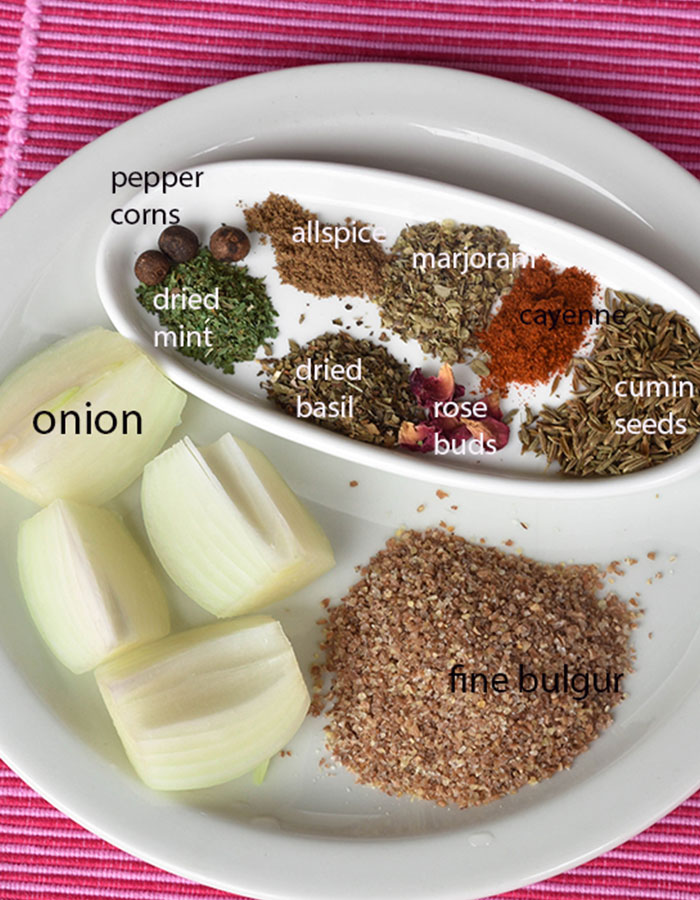
- Start by making the flavor enhancer mix (kamouneh): In the bowl of a food processor, add the cumin seeds, dried basil, dried marjoram, dried mint, peppercorns, allspice, edible rosebuds (if using), chili flakes (if using), bulgur, and chopped onion. Pulse a few times, then blend until you have a mixture with an even texture.
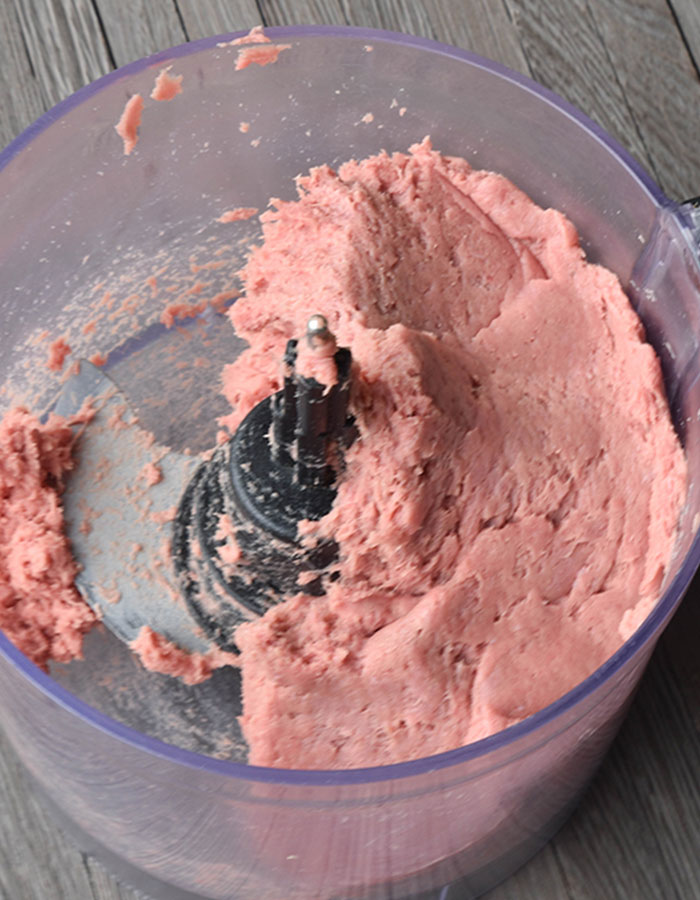
- Using a sharp knife, cut the veal chunks into small cubes, removing any fat and silver skin in the process. Place the meat in the freezer for 20 minutes; this will facilitate the grinding process.Using a food processor, grind the meat cubes to a paste-like consistency, preferably in two batches. Alternatively, ask the butcher to grind the meat in their electric grinder first, and then grind it again at home using your food processor. This will make the process much easier for you.Refrigerate.
- Put 1 1/4 cups of bulgur in a large heatproof dish and pour 1 cup of boiling water over it. Give it a quick stir and set aside for a minimum of 30 minutes, allowing the bulgur to hydrate and swell considerably. This is an important step.
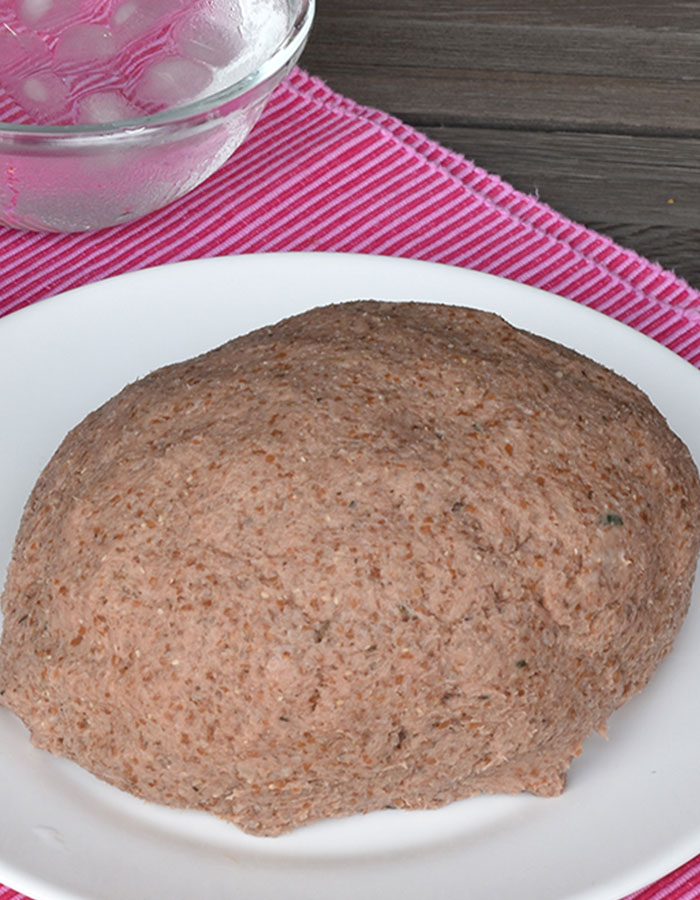
- After 30 minutes, knead the bulgur while gradually adding 1 cup of iced water. Knead with your hands for 20 minutes—the more you knead it, the better the texture will be. (Watch the video tutorial to learn the proper kneading technique.)At this stage, you will notice that the bulgur has softened. Remove the meat from the refrigerator and add it to the bulgur. Knead well until the mixture is fully incorporated, and the dough is soft and comes together into a cohesive ball.Add salt. You may need to add a little more iced water, depending on the consistency of the mixture. Watch the video tutorial to see the desired consistency.Your kibbeh dough is now ready. Refrigerate until ready to use.
To make the filling (hashweh):
- Add 1/4 cup of oil to a skillet and place over medium heat. Sauté the pine nuts until they turn golden brown. Drain on paper towels and set aside.
- Using the same oil, sauté the minced meat over medium-high heat for about 7 to 10 minutes, until the meat is browned and the juices have evaporated.
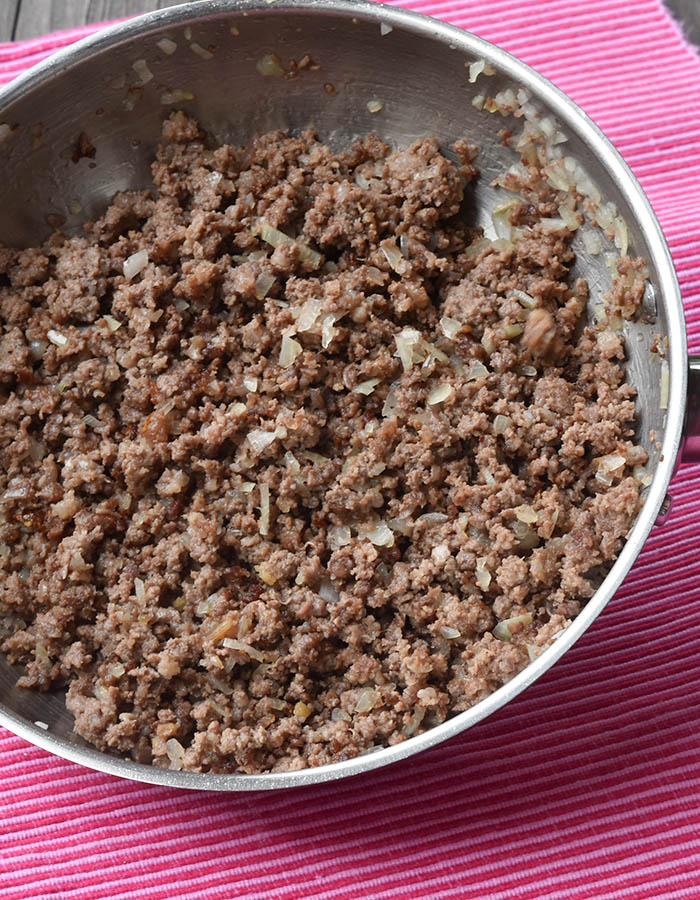
- Add the onions and cook for an additional 5 to 7 minutes over medium heat. Add the salt, sumac, allspice, white pepper, and cayenne, if using. Add the toasted pine nuts, mix well, and set aside to cool completely.
To put together:
- Dampen your hands with ice water, then grab a handful of the raw kibbeh, about the size of an egg.
- Working with one portion at a time, use your finger to make a hole in the dough. Work around the hole, pressing with your finger to create a thin wall. The wall should be approximately 2 mm thick on all sides (watch the video tutorial for guidance). Place 1 heaped teaspoon of the stuffing inside.Seal and shape the dough into an oval, adding a touch of cold water if needed to keep the surface smooth and ensure there are no pokes or openings.Place the kibbeh balls on an ovenproof dish lined with parchment paper.
- Bake in a preheated oven at 200°C / 400°F for 15 minutes, just to help the kibbeh firm up a little. There’s no need to brown the kibbeh, as they will be cooked further in the yogurt. Remove from the oven and set aside to cool.
- Now, let’s cook the yogurt:
- Cook the yogurt: In a large, heavy-based pot, add the yogurt, egg, and diluted cornstarch. Whisk well to homogenize the mixture. Place the pot over high heat and continue whisking in one direction. The yogurt requires constant attention to prevent it from curdling, so it is crucial to whisk continuously.
- Dip the Kibbeh Balls in Yogurt: Once the yogurt comes to a boil, gently add the kibbeh balls in batches. Reduce the heat to medium-low and let them simmer uncovered, stirring gently from time to time with a wooden spoon to prevent the kibbeh from breaking apart. Cook for 15 minutes, allowing the flavors to mellow and develop together.
Fry the Garlic and Cilantro
In a skillet, melt the butter and add the sunflower oil, garlic, and fresh cilantro. Cook over medium-low heat, stirring until fragrant, about 45 seconds.Add the mixture to the kibbeh bil laban pot and stir to combine. Cook for an additional 7 to 10 minutes, allowing the flavors to mellow and blend together.
To serve: Transfer to a large bowl or individual soup plates. Cover any leftovers once completely cooled and refrigerate.You can eat it right away, piping hot, or at room temperature, but it tastes even better cold, straight from the fridge.Happy eating! Watch the detailed video tutorial above.
Storage: Refrigerate for up to 4 days.
Video
Notes






















4 Comments
This is such a fabulous recipe to serve to guests. I absolutely love your seasoning blend, it’s absolutely perfect. I also love how you have made this recipe so easy by breaking down the different steps that can be done at different times.
[…] This Turkish lebeniye soup that goes by the name Lebeniye Çorbası is refreshing and utterly satisfyiing, enjoy it as a snack, a lunch or a starter at dinnertime. It has a slightly sour taste with meat balls, rice and cooked chickpeas; it consists of plain yogurt that is diluted with water and thickened up with an egg and flour; and to inject a boost of flavor, a blitz of butter and dried mint pesto on top of the soup will contribute a lift of brightness to lebeniye; it is hearty and richly flavored despite its humble ingredients.— not to be confused with the Lebanese kibbeh labanieh. […]
[…] creamy taste, laban immo has a special presence on the Middle Eastern dining table, just like kibbeh bil laban, shish barak and kousa bil laban. Those home-style dishes carry the stories of those who came […]