


Discover Jazarieh: A Traditional Lebanese Candied Pumpkin Dessert
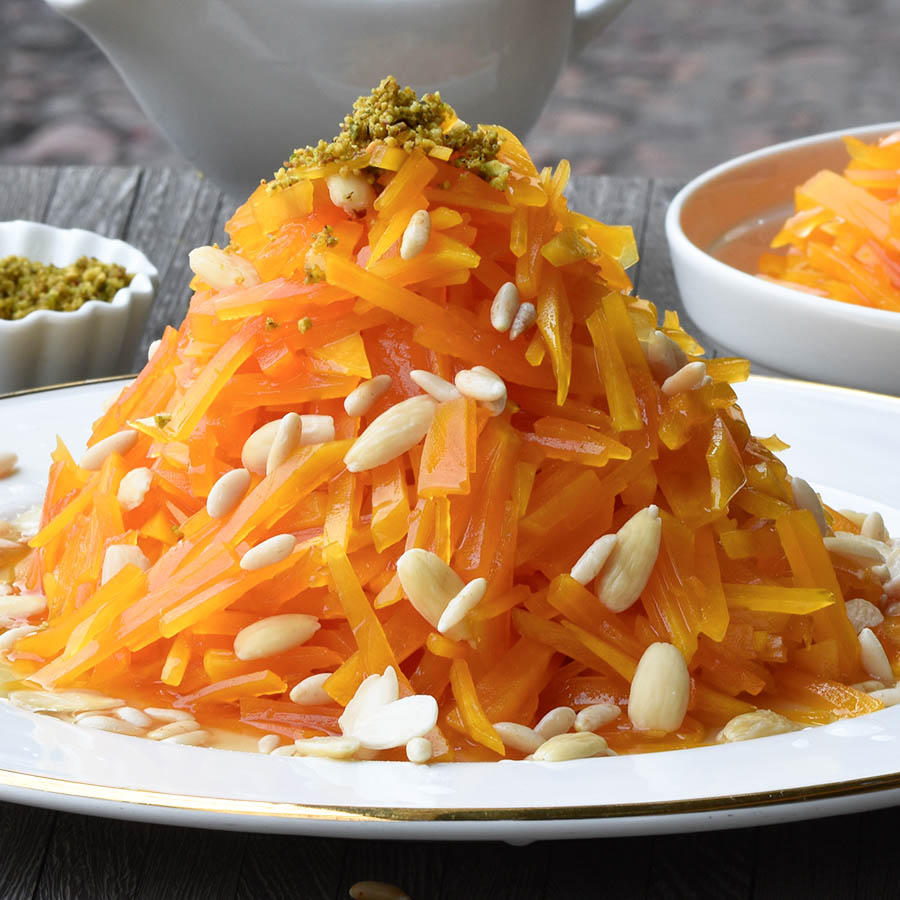
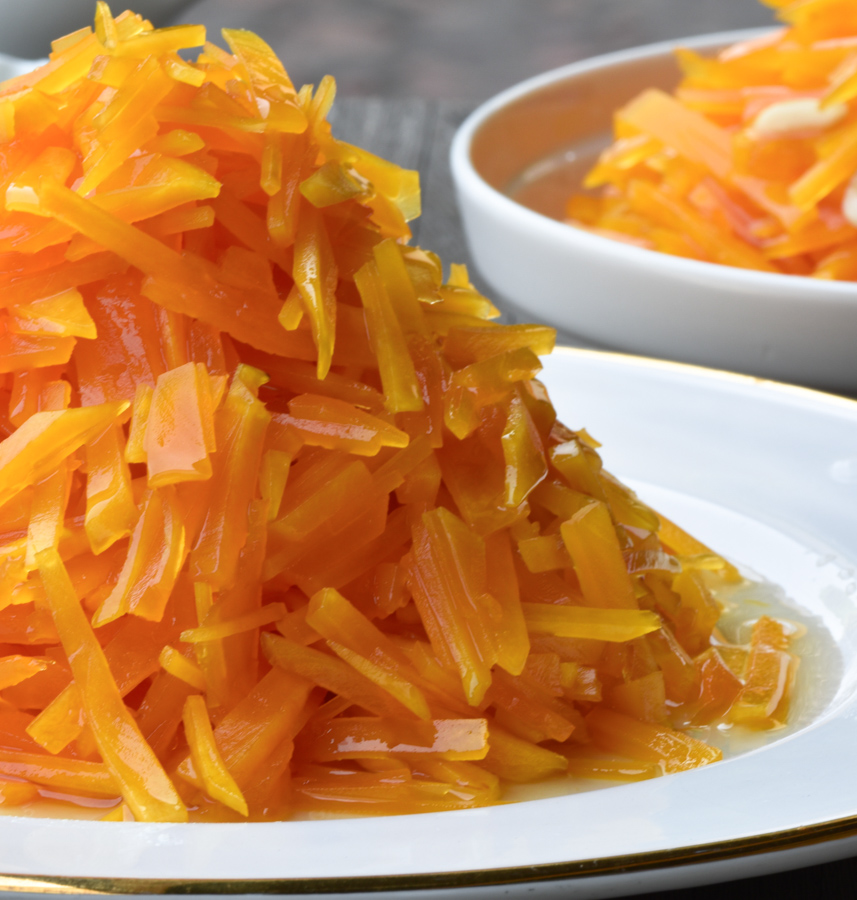
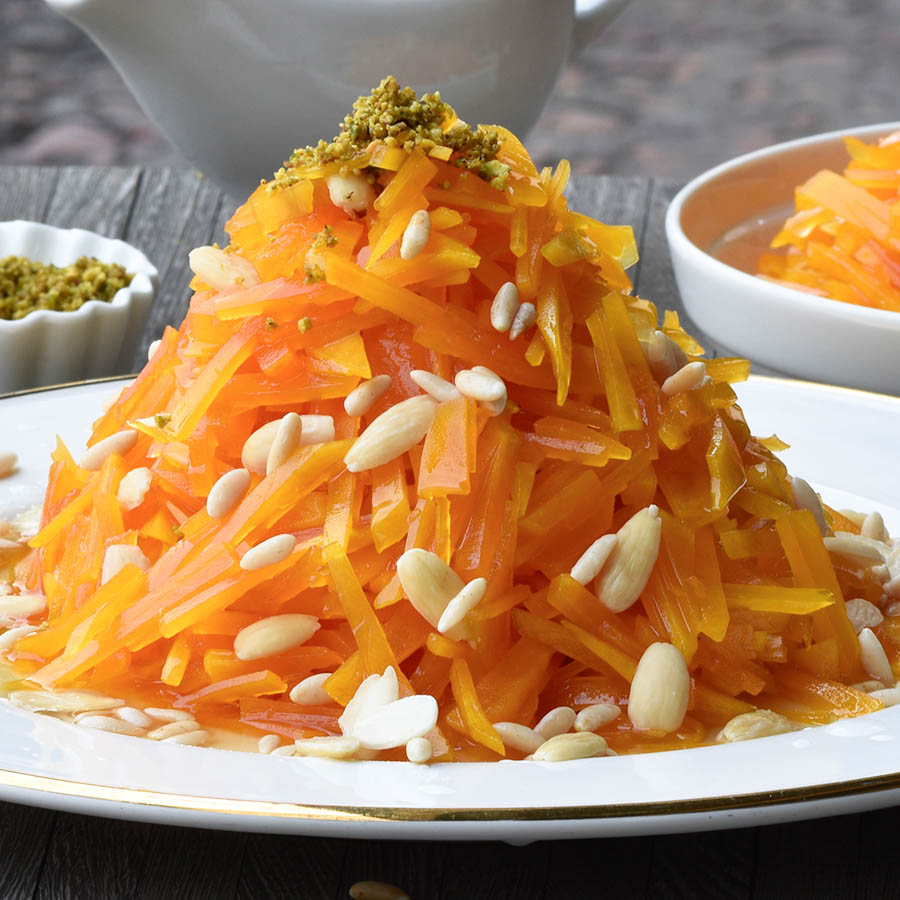
I sometimes forget just how much I love pumpkins until I visit Lebanon. Jazarieh, a traditional Lebanese candied pumpkin dessert, is something we come across every time we visit oriental sweet shops in Saida (also known as Sidon). It’s quite a sight to behold: glistening pieces of jazarieh stacked into pyramid-shaped piles and sprinkled with peeled almonds and pine nuts. It’s a truly unique Lebanese sweet that’s an experience not to be missed!
What Is Jazarieh? A Sweet Lebanese Pumpkin Treat
Technically, jazarieh is more of a glazed, candied dessert than a jam. So, if you’re turning up your nose at the thought of pumpkin simply dipped in sugar syrup, think again! If you’ve never tasted authentic Lebanese jazarieh before, you’re in for a delightful surprise.
Why is it Called Jazarieh?
Jazarieh is derived from the Arabic word jazar, which means carrots. Although jazarieh is made from pumpkin, I believe its name comes from the brilliant, bright orange color associated with carrots.
Jazarieh is traditionally scented with orange blossom water and mastic gum, which enhance its flavor and give this Lebanese candied pumpkin dessert its distinctive taste. Some recipes also include a cinnamon stick and cloves during cooking for added warmth and spice, but I prefer to make mine spice-free to let the delicate floral aromas shine through.
Learn how to transform pumpkin into a delicious candied treat with this traditional Lebanese jazarieh recipe. You can easily double the recipe, but keep in mind that doing so will affect the cooking time. There’s no need for a thermometer to make this sweet! You’ll know the jazarieh is ready when the sugar syrup thickens and the pumpkin shreds become translucent, jewel-like strands.
Julienned vs. Grated Pumpkin: Which is Best for Jazarieh?
I never thought the size and shape of the pumpkin pieces could significantly affect the flavor and texture of jazarieh until I tested two different methods. The first time, I cut the pumpkin into matchsticks, and the second time, I shredded it using a box grater.
After trying both methods, I came to appreciate how the way we cut an ingredient can influence the texture and overall eating experience of a dish, including jazarieh. Julienning the pumpkin produces a more distinct, candied texture, while grating it creates a softer, jam-like consistency. Both versions are delicious, but each offers a different taste and texture experience.
Food chemistry is fascinating, even when it comes to a humble traditional Lebanese dessert like jazarieh! Take a look at the photos below and see which version you prefer.
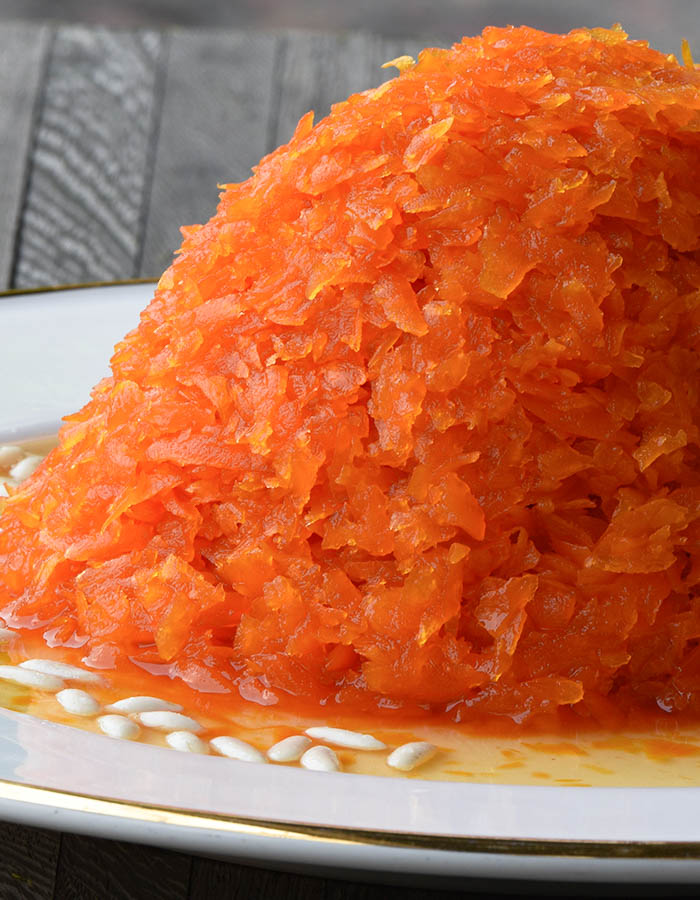
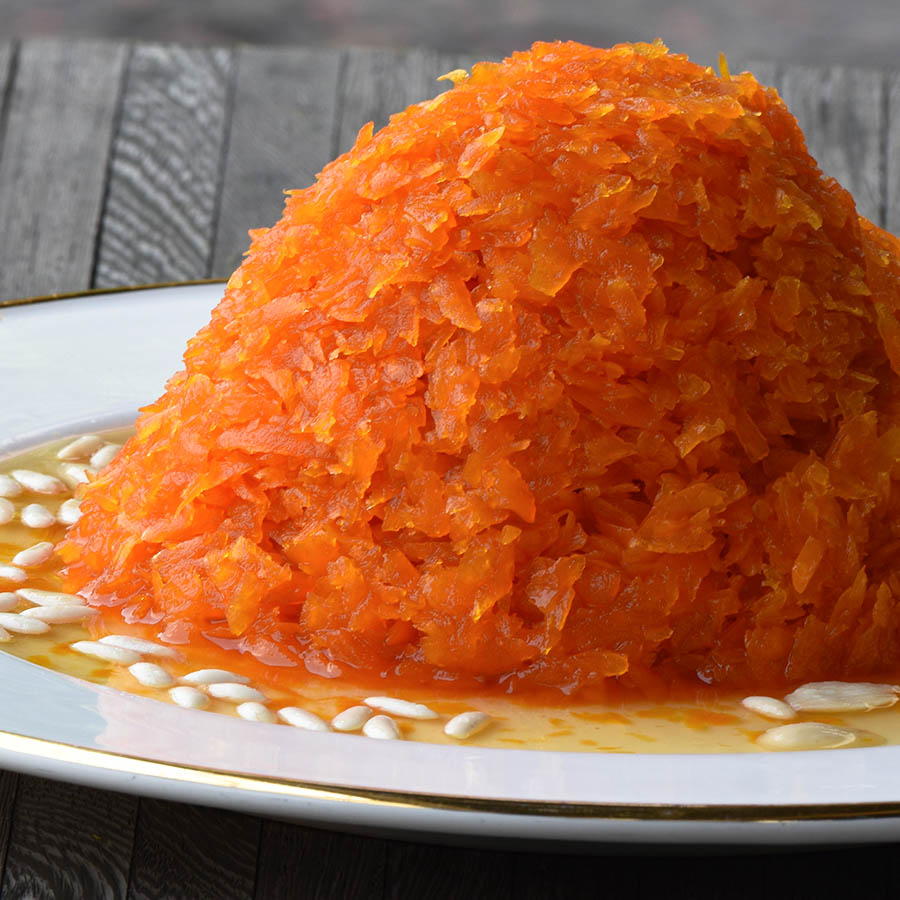
The Grated Version
For this version, I shredded the pumpkin using a box grater. As you can see, the result is a softer, jammy texture that my husband prefers.
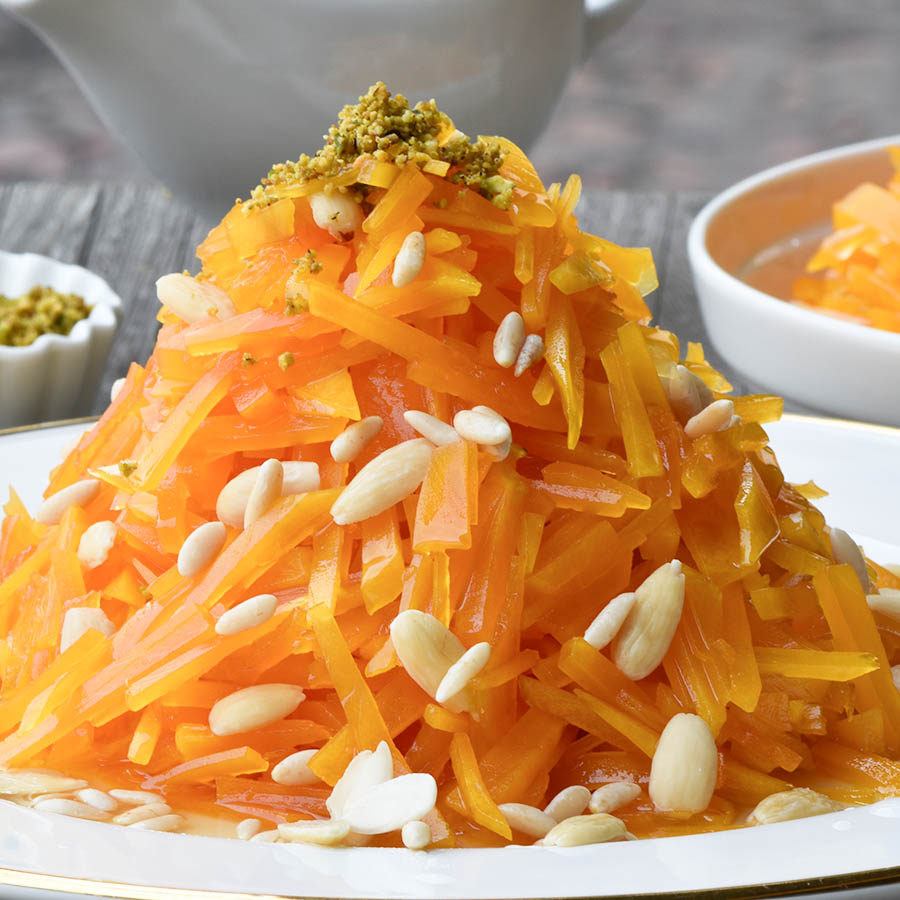
The Matchstick-Cut Texture
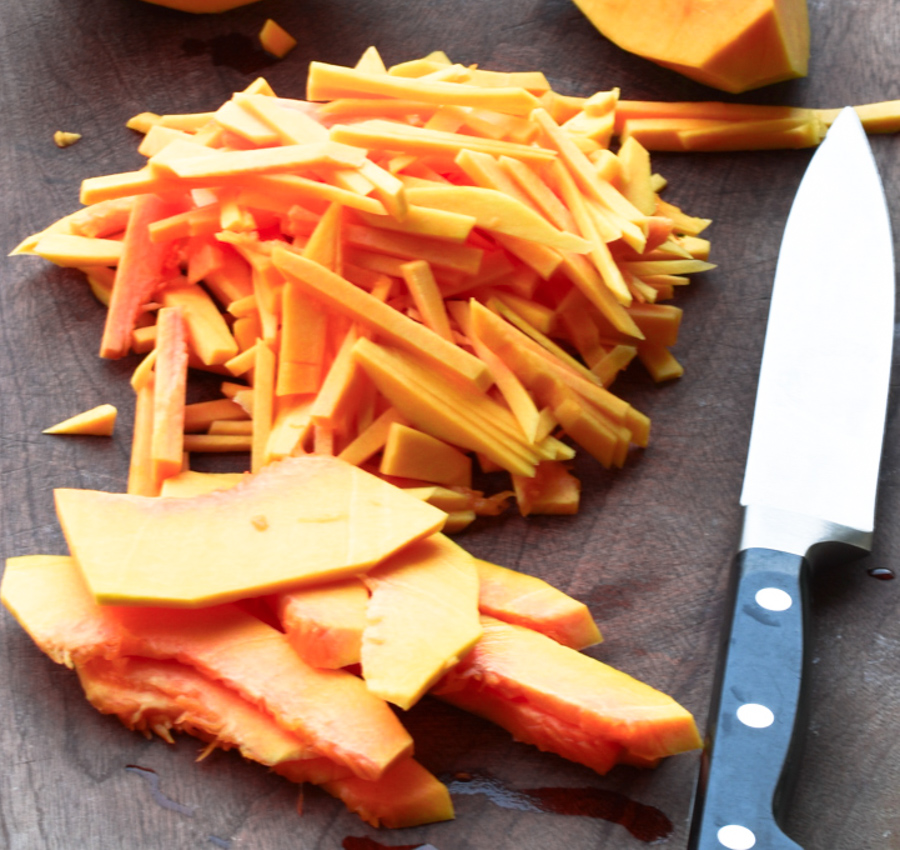
Here, the pumpkin was cut into matchsticks using a chef’s knife. The result is more like a candied pumpkin dessert, with distinct pieces and a firmer texture. This is my personal favorite!
Pickling Lime for Jazarieh: Why It’s Used and How It Works
Pickling lime is food-grade calcium hydroxide, a white alkaline powder traditionally used in the Middle East to prepare certain jams and preserves. For generations, our ancestors have used this technique to give fruit preserves an extra-crunchy texture. Traditional recipes often recommend soaking certain fruits in pickling lime water for 12–15 hours to help them retain their firmness during cooking. The same technique applies to making jazarieh!
Soaking shredded pumpkin in pickling lime water helps firm up its structure, allowing it to retain its shape and crunch instead of becoming mushy during cooking. This is what gives traditional Lebanese candied pumpkin, or jazarieh, its distinctive texture.
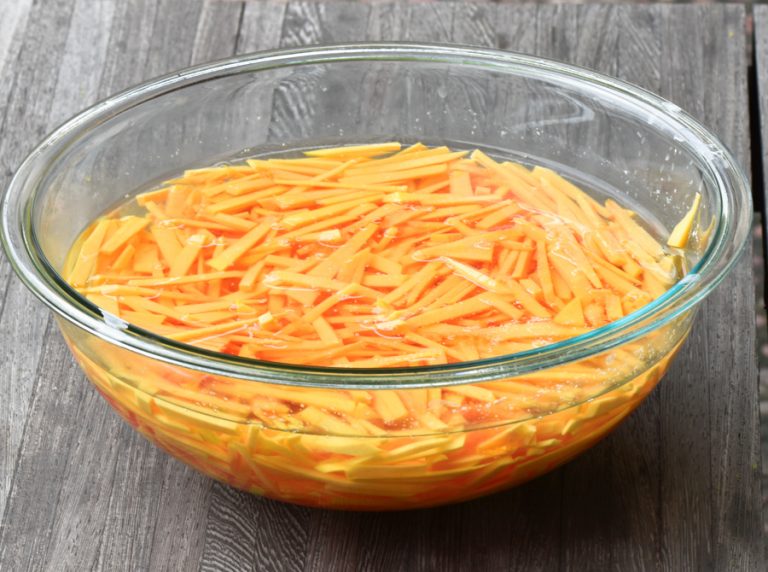
To prepare the limewater, food-grade pickling lime is mixed with water and left to stand for about an hour, allowing the undissolved lime to settle at the bottom. The clear water is then carefully poured off and used to soak the shredded pumpkin for 12 hours, leaving the sediment behind.
When I was making jazarieh, my son Hicham noticed that I was soaking the pumpkin in pickling lime water. He stared at me with a perplexed look and asked, “Are you sure, Mom?”
“Yes!” I replied. “This is a traditional technique that has been used in the Middle East for generations, possibly for centuries, to prepare certain fruit preserves. It’s nothing new!”
However, using pickling lime requires care. It is essential to use food-grade pickling lime, never industrial-grade lime, and to rinse the soaked pumpkin thoroughly in several changes of fresh water to remove any residual lime. When I made mine, I rinsed the pumpkin through six changes of water in the sink.
One important food-safety note: thorough rinsing helps remove residual lime, but it does not prevent botulism. Botulism prevention depends on following a tested recipe and appropriate food-preservation procedures. Always follow reliable food-safety guidance when preparing and storing homemade preserves.
How to Store Jazarieh
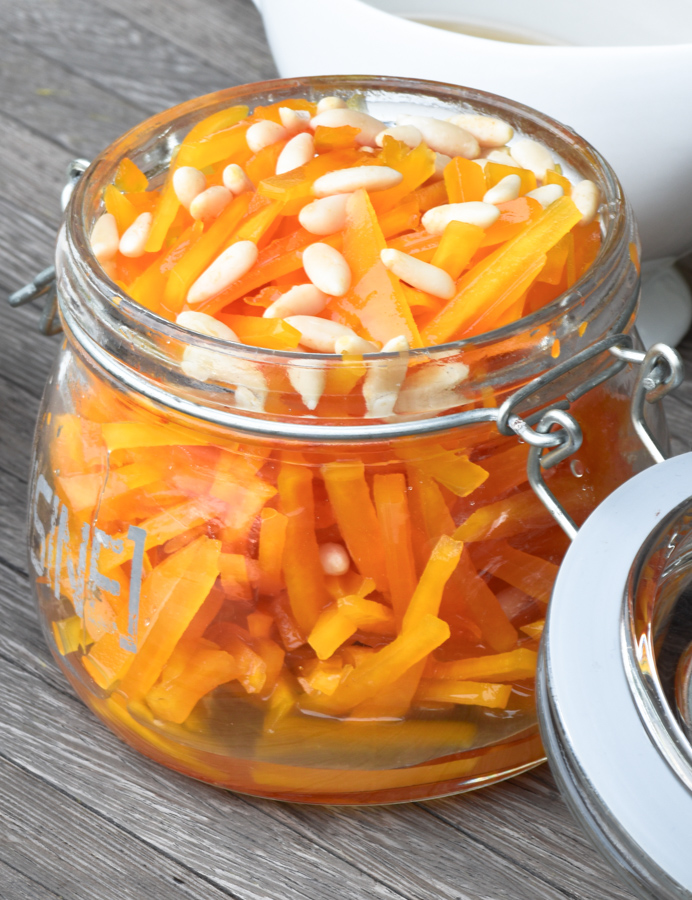
Store jazarieh with its syrup in an airtight jar or a well-sealed container in the refrigerator to keep it moist and prevent it from drying out. For the best quality, enjoy it within three weeks, provided it has been prepared and stored safely. Garnish with the previously soaked almonds and pine nuts just before serving.
More Pumpkin Recipes to Try
 Let’s Stay in Touch!
Facebook, Instagram, YouTube , Pinterest and TikTok!
Jazarieh, Lebanese Candied Pumpkin
Description
Ingredients
- 1 kg / 2 lb 4 oz pumpkin 800 g / 1 lb 12 oz after peeling
- 800 g / 1 lb 12 oz / 3½ cups granulated sugar
- 3½ cups water
- 4 tablespoons freshly squeezed lemon juice
- Almonds or pine nuts soaked in cold water
- ½ cup pickling lime slaked lime, diluted in 8 cups of water
- 3 tablespoons orange blossom water
- 1 teaspoon mastic gum crushed with a pinch of sugar (optional but recommended)
Instructions
- Note on Time: Don't let the 12-hour preparation time scare you! Nearly all of this is completely hands-off soaking time while you sleep. The actual active hands-on preparation takes less than 20 minutes. Soaking the pumpkin overnight in lime water is the magical ancestral secret that creates those crisp, jewel-like candied strands—it is entirely worth the wait!
- Dissolve the pickling lime in 8 cups of water and set aside for 1 hour to allow the undissolved lime to settle at the bottom, leaving the water clear.
- Using a sharp knife, cut the pumpkin in half and peel off the outer skin. Scoop out the seeds and fibers, then cut the pumpkin into matchstick-sized pieces. Alternatively, shred the pumpkin using a box grater or food processor if you prefer a softer, jam-like texture. Check the photos above to decide which version you prefer.
- Carefully pour the clear pickling lime water into a large bowl, leaving the settled lime sediment at the bottom of the container. Add the shredded pumpkin and let it soak for 12–15 hours. The pickling lime water helps firm up the pumpkin, allowing it to retain its shape and texture during cooking.
- Drain the shredded pumpkin and rinse it thoroughly with fresh water, changing the water at least four to five times to remove any residual pickling lime. Drain well and set aside.
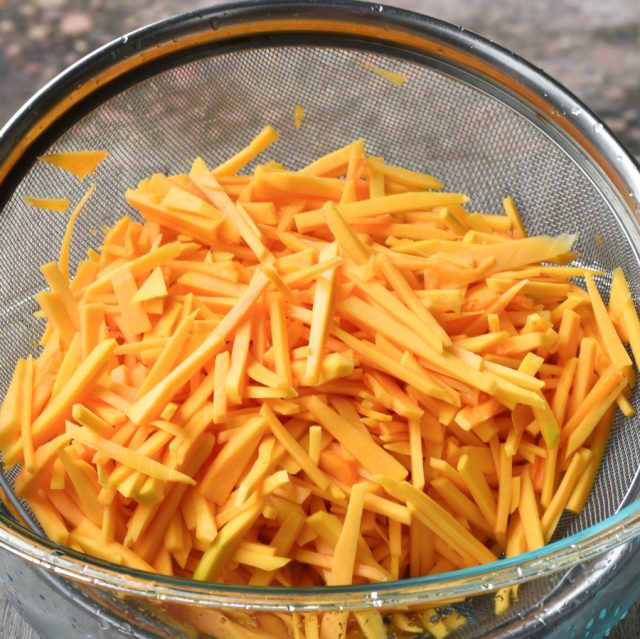
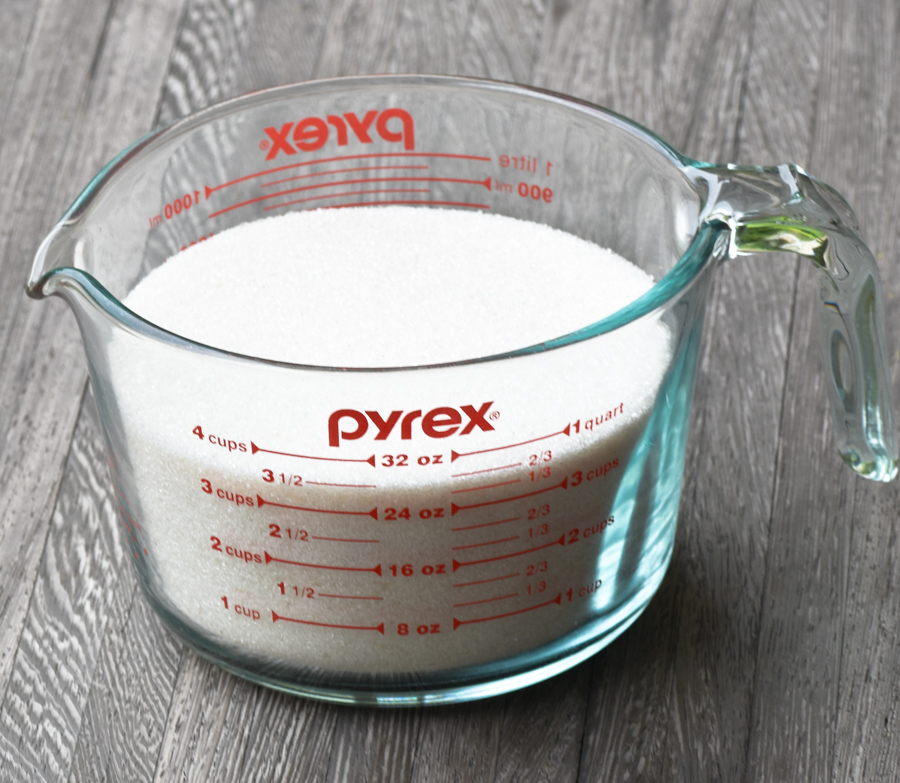
- Use equal weights of pumpkin and sugar. This recipe calls for 800 g (1 lb 12 oz) of each. If measuring by volume, use a standard 250 ml measuring cup for more accurate results.
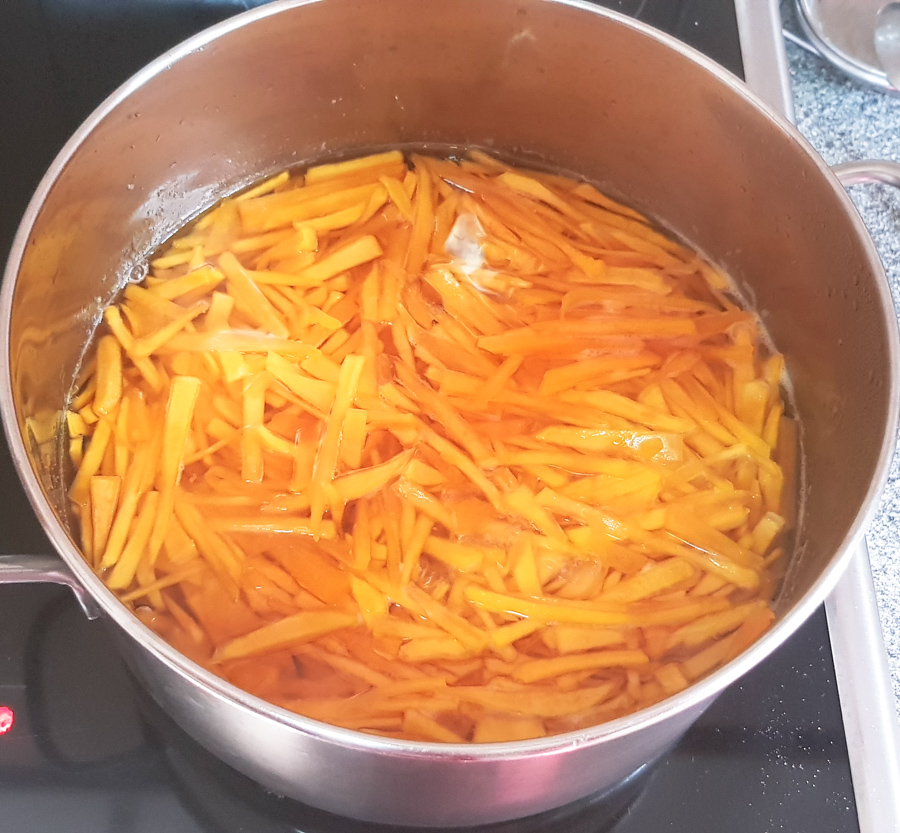
- Prepare the sugar syrup: Place the sugar and water in a large, heavy-bottomed pot over high heat. Avoid stirring to prevent the sugar from crystallizing. Bring to a boil, then add 3 tablespoons of lemon juice, the shredded pumpkin, and the crushed mastic gum.Reduce the heat to low and simmer uncovered. You should see gentle, lazy bubbles forming around the edges of the pot rather than a vigorous boil. Excessive heat will cause the syrup to reduce too quickly, leaving the pumpkin undercooked.Simmer for approximately 2½ hours, stirring occasionally, until the pumpkin is cooked and the syrup has thickened slightly. Keep a close eye on the pot and stir more frequently toward the end of cooking to prevent the syrup from reducing too much or drying out. You should have about ¾ cup of syrup remaining in the pot.
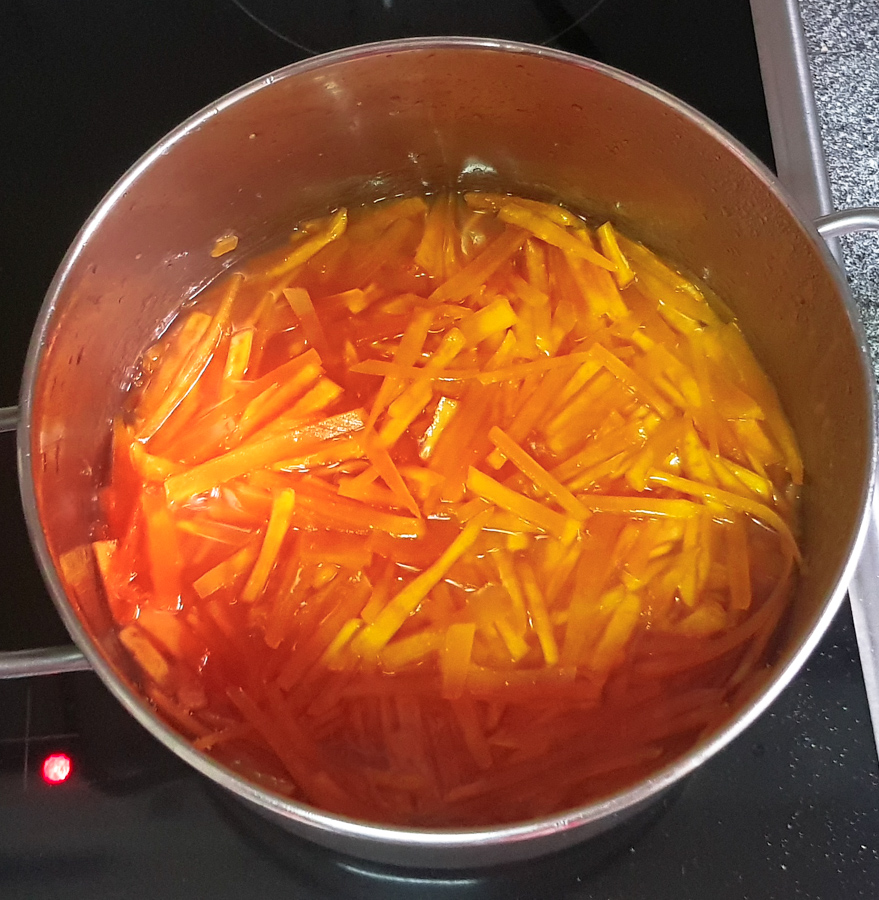
- After 2½ hours of simmering, add the orange blossom water and stir well to combine. Its heavenly fragrance adds a wonderful floral note to the jazarieh.Using a slotted spoon, remove the shredded pumpkin and set it aside. Return the sugar syrup to medium heat, add 1 tablespoon of lemon juice, and simmer for another 4 minutes to allow the syrup to thicken slightly. Remove from the heat and set aside.
- To serve, transfer the shredded pumpkin (jazarieh) to a deep dish and drizzle with the syrup. Garnish with peeled almonds and pine nuts that have been previously soaked in cold water.
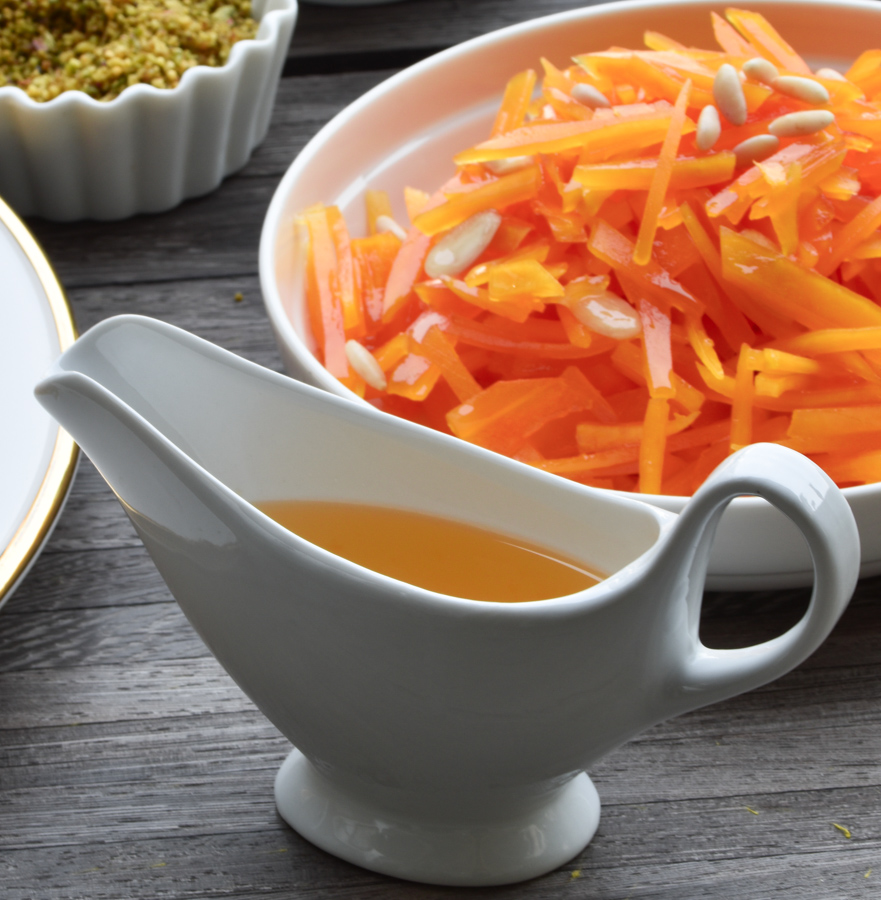
- Serve at room temperature or straight from the fridge. So delicious, with a delightful crunch in every bite!





















15 Comments
Wow, just wow! I was intrigued by this dessert from the pictures, but even moreso now that I’ve read your description of all the layers and textures!!! I am dying to try it, but I think I’d have to make a few substitutions. Thank you for sharing this beautiful creation, Hadia.
I Followed blindly the recipe, except that I covered the tart with my mom’s apricot jam. Thank for the explosion of fabulous flavors. Will be making it again
By the way the tart crust will be my go to any tart I will be making in the future . Thanks a lot.
.
I am thrilled that you described the etiology of the authentic ashta. When I tell people today, even Lebanese, they look at me as if I had been struck by lightning! I remember the large trays of unpasteurized Jersey milk resting over low heat all night on the stove and waking up in the morning and watching my mother cut the ashta into squares for refrigeration!
How long can this be stored in the fridge? Does it free well at all? Thank you!
This sounds amazing..thank you!! Is there a recipe for the jazarieh??
This looks delicious indeed. I have your book too and I love it. Please share the jazarieh recipe. Thnx
Hi, I really want to try this recipe, but I can’t find pumpkin anywhere. can I substitute by using carrots, if so do i still have to soak them in pickling lime? Thank you.
Hi Vian, honestly I haven’t tried making jazarieh with carrots, but I remember my mom used to make something similar with grated carrots, and as far as I remember, she didn’t use pickling lime, alternatively, you can substitute jazarieh with your favorite thick jam. My pleasure Vian.
Hello, Jazarieh is call like that because originaly is made from carrots. You can retrace similar recipes from Baghdad dating from the tenth century so 5 to 6 century before the introduction of Pumpkins in ME.
Nowaday, certain shops are doing it with pumpkins but you can still find the Carrot version in (from what I know) Lebanon, Syria and Irak.