


What if I can’t find Nestlé cream? Is there a substitute?
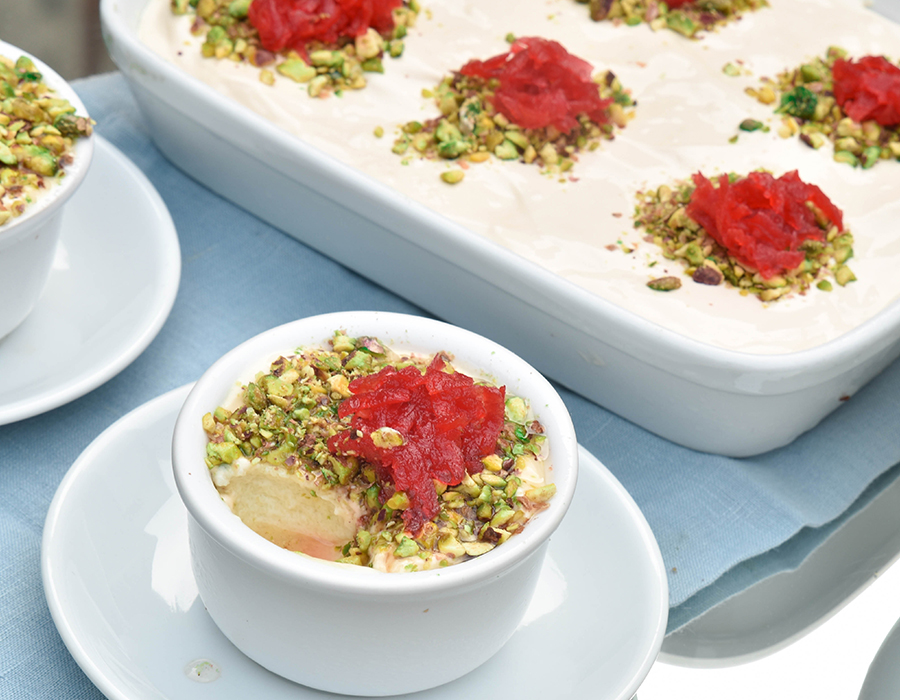
While Nestlé cream makes an ideal topping for Layali Lubnan, you can replace it with whipped cream. It won’t have exactly the same texture or taste, but it will still be a delicious match.
What if I can’t find orange blossom jam?
You can use your favorite red fruits, such as strawberries, raspberries, or pomegranate seeds, to add a beautiful pop of color.
Can I make Layali Lubnan in individual portions?
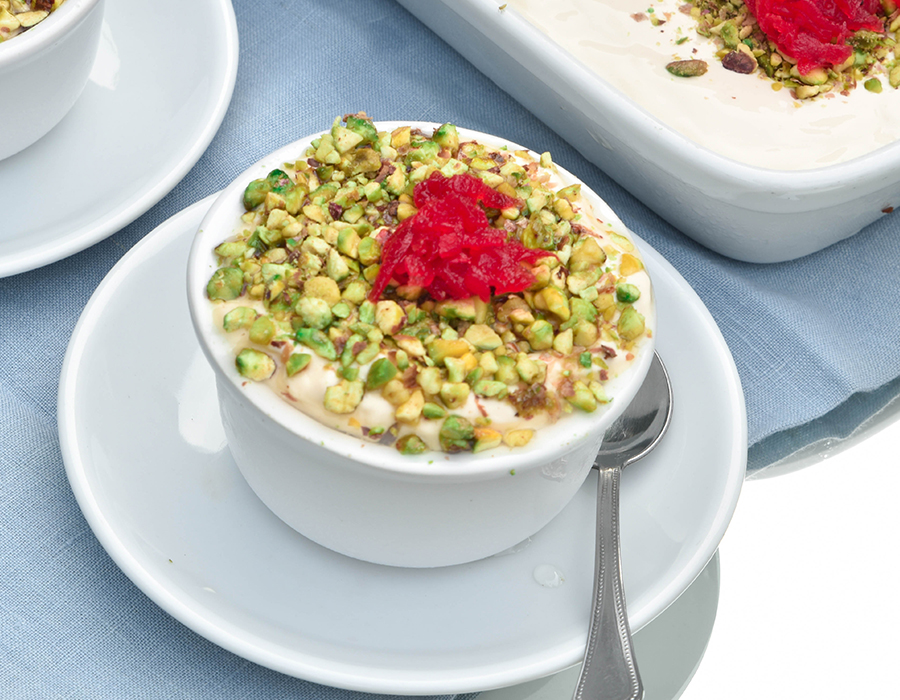
Yes, absolutely! You can make individual portions in ramekins and adjust the recipe as needed.
Is Layali Lubnan served warm or cold?
Layali Lubnan is a cold dessert. The pudding needs to be refrigerated for at least 6 hours, preferably overnight. It can be stored in the refrigerator for up to 4 days.
Can I double the recipe to feed a crowd?
Absolutely! This recipe easily serves 8 people, and you can double the recipe if you’re serving a larger crowd.
Can I make Layali Lubnan ahead of time?
Absolutely! Like muhallabia, ashtalieh, Lebanese rice pudding, meghli and strawberry mousse, Layali Lubnan can be made in advance. It’s an ideal make-ahead dessert for a dinner party, allowing you to focus on your guests and enjoy their company.
The milk-and-semolina pudding can be made 1–2 days ahead, while the sugar syrup can be prepared up to 1 week in advance.
More Lebanese Puddings You Should Know About
Ashtalieh: Unlike custards, Ashtalieh contains no eggs. It is thickened with cornstarch and made with just a few simple ingredients: milk, cornstarch, mastic gum, and orange blossom water or rose water. The key is getting the proportions just right.
Mouhalabieh: A classic creamy stovetop milk pudding from Lebanon and the wider Middle East. Egg-free and gelatin-free, it takes only a few minutes to prepare and has been enjoyed across the region for centuries.
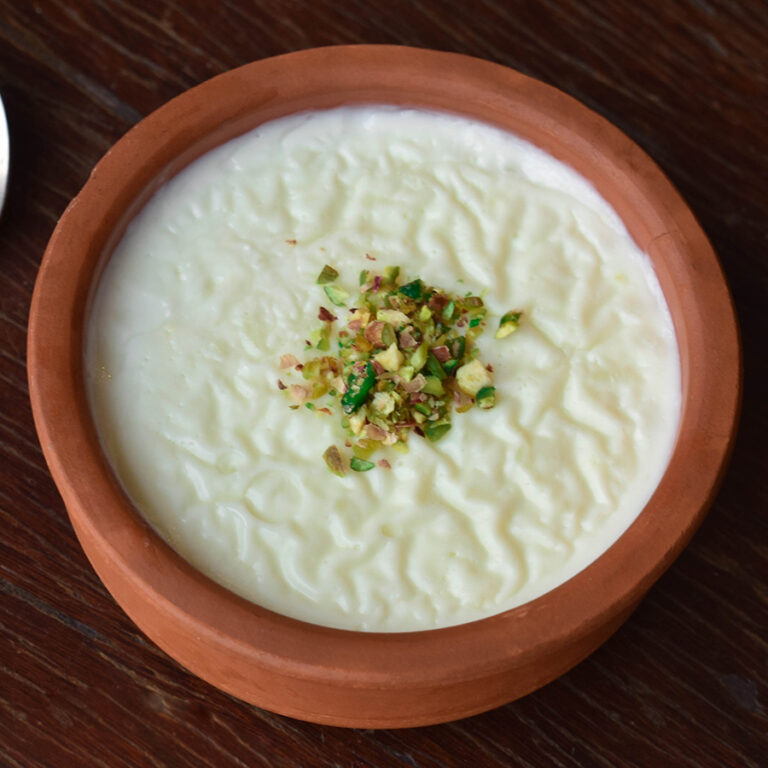
Lebanese Rice Pudding (Riz Bil Haleeb): If you’re looking for a dessert that is velvety, rich, and subtly infused with floral notes, Lebanese rice pudding, also known as Riz Bil Haleeb, is an excellent choice.
Meghli: A classic Lebanese spiced rice pudding traditionally prepared to celebrate the birth of a newborn. Fragrant with warm notes of cinnamon and caraway, this authentic Middle Eastern dessert is naturally gluten-free and thickened with rice flour.
 Let’s Stay in Touch!
Facebook, Instagram, YouTube , Pinterest and TikTok!
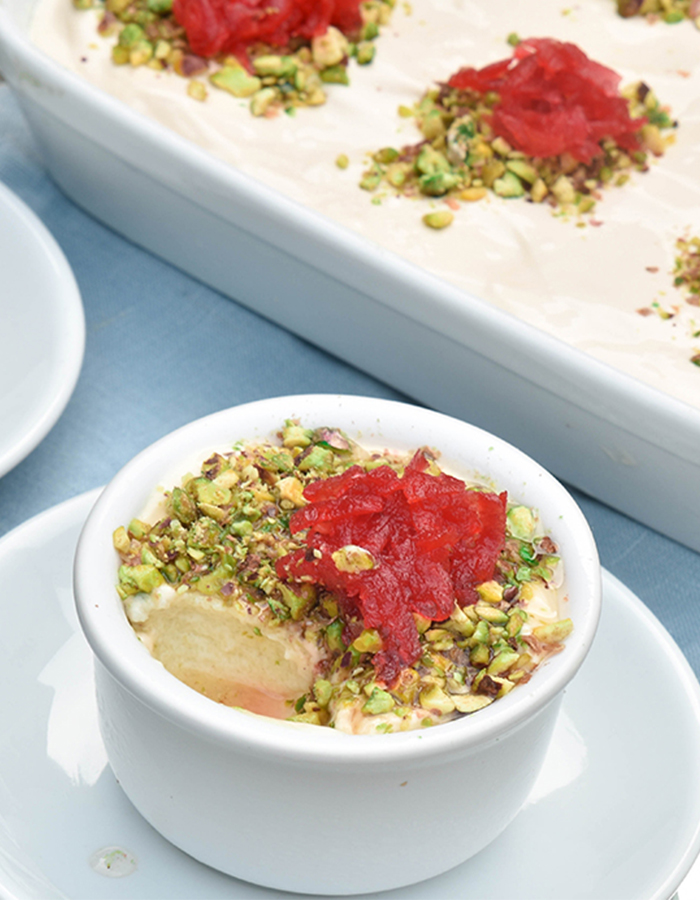
Layali Lubnan (Lebanese Semolina Milk Pudding)
Description
Equipment
- Pot
- Food Processor
Ingredients
For the Pudding
- 6 cups whole milk
- 1 cup semolina
- 1 teaspoon butter
- 1 tablespoon orange blossom water
- 1/4 teaspoon mastic gum optional but recommended
- A pinch of sugar for crushing the mastic
For the Sugar Syrup
- 3 cups sugar
- 1 1/2 cups water
- 2 tablespoons orange blossom water
For the Topping
- 2 × 170 g cans ready-made ashta cream Puck cream, or Nestlé cream
- 1 cup raw shelled pistachios, roughly crushed in a food processor
- Orange blossom petals jam or substitute with any red fruit jam of your choice
Instructions
- For the pudding: With a mortar and pestle, crush the mastic with a pinch of sugar (if using), then add it to a large pot.
- Pour the milk into the pot, then add the semolina and butter.
- Place the pan over high heat and whisk constantly until the mixture thickens completely and comes to a boil. Continue boiling for 1 minute. Pour into a large casserole or ovenproof dish. Cover with parchment paper, pressing it directly onto the surface to prevent a skin from forming. Allow to cool completely.
- To make the sugar syrup (atter): Place the water, sugar, and lemon juice in a saucepan over medium heat. Stir with a wooden spoon until the sugar has dissolved.
- Once it boils, reduce the heat to low and simmer for 7 minutes. Do not cover the saucepan. Add the orange blossom water and simmer for 1 more minute, until it thickens completely.
- Transfer the Layali Lubnan to a casserole dish or individual ramekins. Leave to cool completely.
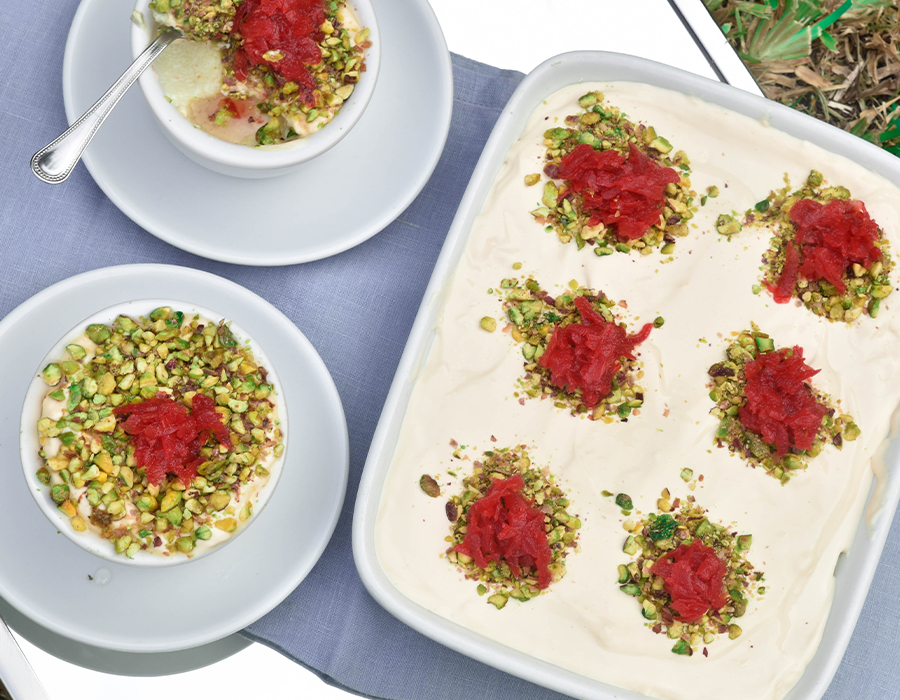
- The final touch: Spread the ashta cream evenly over the casserole or ramekins. Garnish with raw, shelled, crushed pistachios and orange blossom jam. Cover with cling film and refrigerate for a minimum of 6 hours or overnight.
- Serve with orange blossom-scented sugar syrup. Enjoy!
Video
If you are looking for the ultimate Middle Eastern comfort treat, this authentic Layali Lubnan recipe (popularly known as Lebanese Nights dessert) is exactly what you need. This refreshing, no-bake Middle Eastern semolina pudding transforms humble kitchen ingredients into an elegant centerpiece perfect for any dinner party. The stovetop semolina and milk base is cooked until thick and velvety, ladled into a casserole dish, and chilled. It is then covered with a luscious layer of cream, topped with the crunch of crushed pistachios, and finished with a generous drizzle of scented orange blossom sugar syrup. Infused with traditional aromas, this classic Lebanese dessert enchants the senses with every single bite.
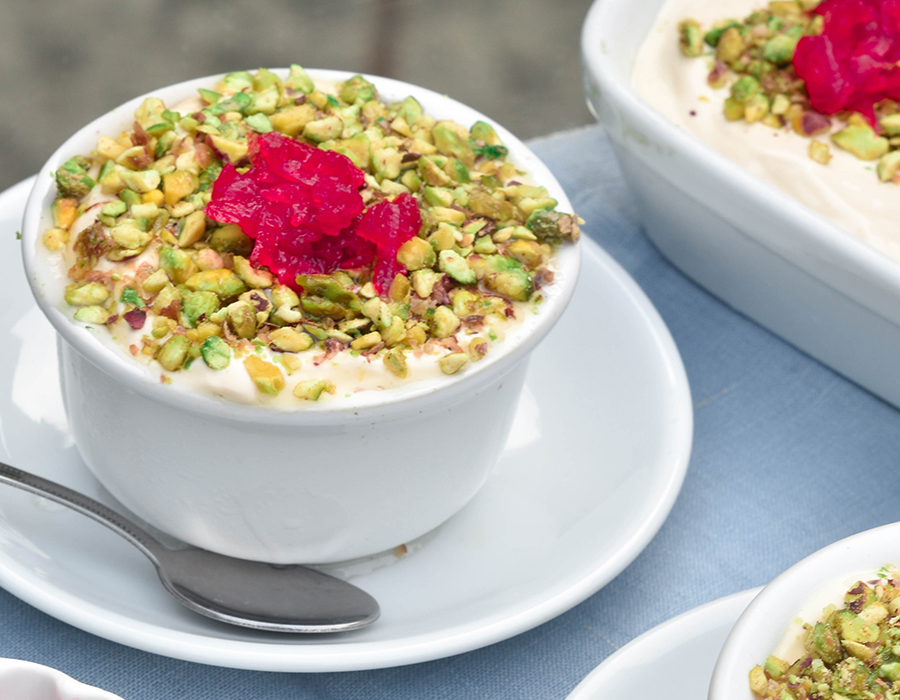
Layali Lubnan / Lebanese Milk and Semolina Pudding (Video)
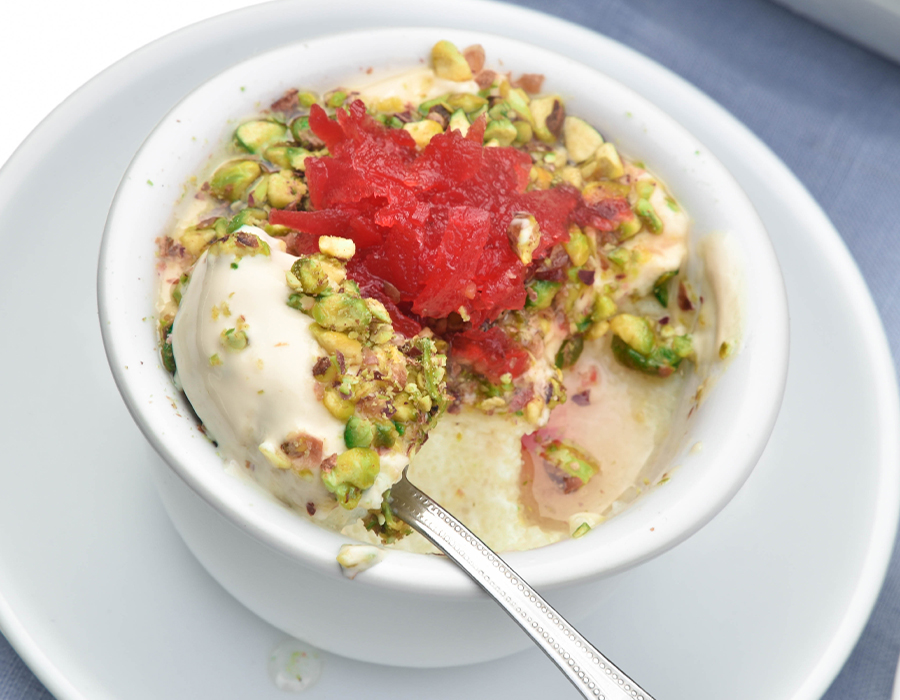
The colors of this pudding are inspired by the Lebanese flag—red, white, and green—which is one reason it is called Layali Lubnan, meaning “Nights of Lebanon.”
If you love contrasting textures and flavors, you’ll swoon over this dessert: a creamy, milky pudding topped with a crunchy layer of pistachios and finished with a fragrant orange blossom sugar syrup.
I’ll be posting a detailed video tutorial soon!
A quick look at the ingredients will give you a good idea of why this dessert is such a favorite during holidays, Ramadan, and family gatherings. It is rich, indulgently sweet, and made with simple ingredients commonly found in Middle Eastern kitchens.
Ingredients Needed
-
Whole milk: Please don’t be tempted to use skim milk. Whole milk gives the pudding its rich, creamy texture.
-
Semolina: Use coarse semolina; it acts as the thickening agent and gives the pudding its characteristic texture.
-
Butter: A small knob adds richness and gives the pudding a beautiful glossy finish.
-
Orange blossom water: Adds a delicate, fragrant floral note.
-
Mastic: Used to deepen the flavor. If you can’t find mastic, you can substitute vanilla sugar.
-
Sugar: Use white granulated sugar to make the syrup.
-
Water: Used to prepare the sugar syrup.
-
Nestlé cream: Adds extra richness and creaminess.
-
Raw shelled pistachios: Pistachios are a staple in Lebanese and Middle Eastern desserts. Chopped pistachios are commonly used as a garnish, adding crunch, flavor, and a beautiful pop of color.
-
Orange blossom petal jam: Used as a fragrant topping. If unavailable, you can substitute red jam.
This dessert is all about the contrast between creamy and crunchy, milky and floral, and sweet and fragrant—a little taste of Lebanon in every spoonful.
How to Make Layali Lubnan
Prepare the semolina pudding
With a mortar and pestle, crush the mastic with a pinch of sugar, if using, and add it to a large pot. Pour in the milk, then add the semolina and butter. Place the pot over high heat and whisk constantly until the mixture thickens completely and comes to a boil. Continue boiling for 1 minute.
Pour the mixture into a large casserole or ovenproof dish and allow it to cool completely.
Prepare the sugar syrup (atter)
Place the water, sugar, and lemon juice in a saucepan over medium heat. Stir with a wooden spoon until the sugar dissolves.
Once the mixture comes to a boil, reduce the heat to low and simmer for 7 minutes. Do not cover the saucepan.
Add the orange blossom water and simmer for 1 more minute, until the syrup thickens slightly. Set aside to cool.
Assemble the Layali Lubnan
Transfer the cooled Layali Lubnan to a large casserole dish or individual ramekins. Spread the Nestlé cream or ashta evenly over the top, covering the entire surface.
Garnish with raw, shelled, crushed pistachios and orange blossom petals jam.
Cover with cling film and refrigerate for at least 6 hours, or preferably overnight.
Serve
Serve chilled with sugar syrup (atter) on the side.
A detailed video tutorial will be posted soon.
What if I can’t find Nestlé cream? Is there a substitute?
While Nestlé cream makes an ideal topping for Layali Lubnan, you can replace it with whipped cream. It won’t have exactly the same texture or taste, but it will still be a delicious match.
What if I can’t find orange blossom jam?
You can use your favorite red fruits, such as strawberries, raspberries, or pomegranate seeds, to add a beautiful pop of color.
Can I make Layali Lubnan in individual portions?
Yes, absolutely! You can make individual portions in ramekins and adjust the recipe as needed.
Is Layali Lubnan served warm or cold?
Layali Lubnan is a cold dessert. The pudding needs to be refrigerated for at least 6 hours, preferably overnight. It can be stored in the refrigerator for up to 4 days.
Can I double the recipe to feed a crowd?
Absolutely! This recipe easily serves 8 people, and you can double the recipe if you’re serving a larger crowd.
Can I make Layali Lubnan ahead of time?
Absolutely! Like muhallabia, ashtalieh, Lebanese rice pudding, meghli and strawberry mousse, Layali Lubnan can be made in advance. It’s an ideal make-ahead dessert for a dinner party, allowing you to focus on your guests and enjoy their company.
The milk-and-semolina pudding can be made 1–2 days ahead, while the sugar syrup can be prepared up to 1 week in advance.
More Lebanese Puddings You Should Know About
Ashtalieh: Unlike custards, Ashtalieh contains no eggs. It is thickened with cornstarch and made with just a few simple ingredients: milk, cornstarch, mastic gum, and orange blossom water or rose water. The key is getting the proportions just right.
Mouhalabieh: A classic creamy stovetop milk pudding from Lebanon and the wider Middle East. Egg-free and gelatin-free, it takes only a few minutes to prepare and has been enjoyed across the region for centuries.
Lebanese Rice Pudding (Riz Bil Haleeb): If you’re looking for a dessert that is velvety, rich, and subtly infused with floral notes, Lebanese rice pudding, also known as Riz Bil Haleeb, is an excellent choice.
Meghli: A classic Lebanese spiced rice pudding traditionally prepared to celebrate the birth of a newborn. Fragrant with warm notes of cinnamon and caraway, this authentic Middle Eastern dessert is naturally gluten-free and thickened with rice flour.
Let’s Stay in Touch!
Facebook, Instagram, YouTube , Pinterest and TikTok!
Layali Lubnan (Lebanese Semolina Milk Pudding)
Description
Equipment
- Pot
- Food Processor
Ingredients
For the Pudding
- 6 cups whole milk
- 1 cup semolina
- 1 teaspoon butter
- 1 tablespoon orange blossom water
- 1/4 teaspoon mastic gum optional but recommended
- A pinch of sugar for crushing the mastic
For the Sugar Syrup
- 3 cups sugar
- 1 1/2 cups water
- 2 tablespoons orange blossom water
For the Topping
- 2 × 170 g cans ready-made ashta cream Puck cream, or Nestlé cream
- 1 cup raw shelled pistachios, roughly crushed in a food processor
- Orange blossom petals jam or substitute with any red fruit jam of your choice
Instructions
- For the pudding: With a mortar and pestle, crush the mastic with a pinch of sugar (if using), then add it to a large pot.
- Pour the milk into the pot, then add the semolina and butter.
- Place the pan over high heat and whisk constantly until the mixture thickens completely and comes to a boil. Continue boiling for 1 minute. Pour into a large casserole or ovenproof dish. Cover with parchment paper, pressing it directly onto the surface to prevent a skin from forming. Allow to cool completely.
- To make the sugar syrup (atter): Place the water, sugar, and lemon juice in a saucepan over medium heat. Stir with a wooden spoon until the sugar has dissolved.
- Once it boils, reduce the heat to low and simmer for 7 minutes. Do not cover the saucepan. Add the orange blossom water and simmer for 1 more minute, until it thickens completely.
- Transfer the Layali Lubnan to a casserole dish or individual ramekins. Leave to cool completely.
- The final touch: Spread the ashta cream evenly over the casserole or ramekins. Garnish with raw, shelled, crushed pistachios and orange blossom jam. Cover with cling film and refrigerate for a minimum of 6 hours or overnight.
- Serve with orange blossom-scented sugar syrup. Enjoy!






















3 Comments
Hi! Please tell me the when and where I use the syrup
I love lebbanes cousin