


If your idea of Lebanese food is dominated by hummus, baba ghanouj, tabbouleh, and grilled kebab, this modest recipe, known in Lebanon as mujadara msafaieh (مجدره مصفايه), will be an eye-opener. It’s just one example of how wholesome and nourishing Lebanese food can be.
A humble peasant dish made with just a few simple ingredients and little fuss, mujadara msafaieh may sound unassuming, but I promise it will impress your taste buds. It’s budget-friendly, nutritious, and deeply satisfying!

The History of Lebanese Mujadara Msafaieh
Mujadara Msafaieh is an oldie! A Lebanese culinary staple, it nourished my grandmother’s grandmother and has been enjoyed for centuries. Yes, we are a lentil-eating culture—and luckily, today, lentils are once again on the front lines as the global pulse market continues to grow.
Lentils are naturally low in saturated fat and rich in protein, fiber, and numerous essential minerals. Their impressive nutritional profile makes them a wonderful addition to a wholesome diet, and they are also among the quickest-cooking pulses, making them ideal for a simple, satisfying dinner.
Mujadara Msafaieh is a perfect example: earthy, nourishing, humble, and completely vegan.

A Comforting, Nourishing Childhood Recipe
Growing up, my mom would make it whenever I got sick because it was such a rich source of nutrition, providing protein, fiber, and numerous minerals, while also being easy to swallow on a sick day. Maybe back then it wasn’t my favorite meal, but it was calming and nourishing enough to sustain me through the worst of a fever.
By the time I grew up, though, I had come to love mujadara in all its versions, including this simple yet deeply satisfying one. Especially during winter, when sunlight is scarce, there’s something about a homey dinner like this that is exactly what I crave.

Understanding the Silky Texture of Mussafaieh
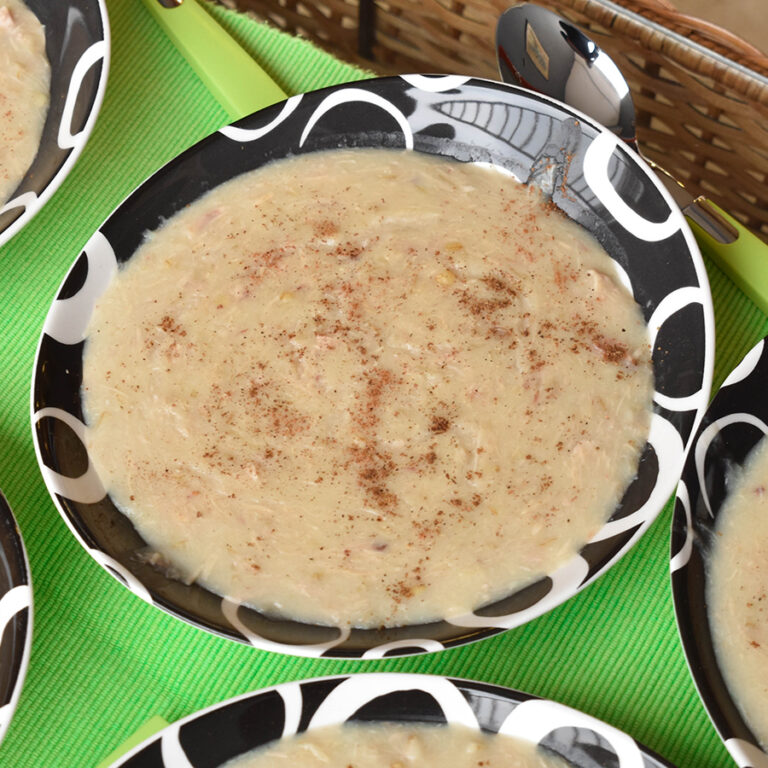
Mussafaieh is not your classic pilaf-style mujadara. It is meant to have a soft, silky, pudding-like consistency, similar to mujaddara makboussa, but with an even silkier texture. It is comforting to eat and comforting to cook, and it’s actually quite simple to make with just a few ingredients.
The only thing to keep in mind is that once you add the rice, it requires frequent stirring to prevent the mujadara from catching on the bottom of the pot.
It makes an excellent addition to your weeknight cooking rotation. Every time I dip my spoon in to check if it’s done, I inevitably take a few bites. Each spoonful feels like a warm hug from the inside.

What to Serve with Mujadara Msafaieh?
Pair your mujadara msafaieh with a Lebanese salad. The signature tangy flavors and fresh juices in Lebanese salads beautifully balance the earthy, hearty flavors of mujadara.
Mujadara msafaieh is especially delicious when paired with salads like fattoush or a simple Middle Eastern salad, but my absolute favorite is this citrusy Lebanese-style coleslaw. It’s light and refreshing—there’s no mayonnaise involved—and a little sharper and tangier than most coleslaws, which makes it the perfect match for all versions of mujadara, especially mujadara msafaieh.
The salad is incredibly easy to make. Crisp cabbage leaves add plenty of crunch, while the bold, garlicky lemon dressing brings brightness and a burst of flavor to the mujadara. Together, they make a wonderfully refreshing and balanced meal.

Traditional Food Mill vs. Immersion Blender
Our grannies used to process mujadara msafaieh with a food mill, a great tool for straining foods to achieve an exceptionally smooth consistency. A food mill uses a hand crank and a blade to mash and strain food, pressing it through tiny holes and creating a creamy, velvety texture. However, after testing it with an immersion blender, I found the result equally satisfying—unlike with Lebanese brown lentil soup or Middle Eastern red pepper paste, where the texture benefits more from the food mill.

Cumin Powder or Freshly Grated Black Pepper?
Both are flavor enhancers that can drastically complement lentil dishes. It is common practice to add cumin powder to mujadara msafaieh, and although I love cumin in soups and countless other dishes, I gravitate more toward freshly grated black pepper, specifically for this recipe.
It adds such a pungent, aromatic piquancy! I love how even a few flakes can elevate the flavor of mujadara msafaieh. Black pepper is best freshly ground, as pre-ground pepper tends to lose its flavor and aroma very quickly.

How to Cook Mujadara Msafaieh: Step-by-Step
Check the lentils for any small stones, then rinse them in a mesh sieve under cold running water. Drain and place them in a large pot. Wash the rice in a sieve under running water and drain.
Add the water to the pot and cook over high heat. Once it comes to a boil, cover the pot, reduce the heat to low, and leave it to cook for about 1 hour, or until the lentils are ultra-soft.
Step 1: Purée the Lentils
Prepare your hand mill: I usually secure the food mill over a large glass or ceramic bowl, then pour the lentils and their broth into the mill in batches. Turn the crank, and the blade will purée the lentils through the holes in the disc. Keep turning until all the lentils have been blended, making sure to scrape any remaining soup from the bottom of the mill. Alternatively, you can use an immersion blender to purée the lentils.
Step 2: Cook with Rice
Return the puréed lentils to a large pot and add the rice and salt. Bring to a boil, then reduce the heat to low and leave to cook for about 30 minutes, making sure to stir frequently to prevent the mujadara from catching on the bottom of the pot.
Troubleshooting the Consistency
The consistency of the mujadara msafaieh should be somewhat similar to polenta or a creamy pudding. Use your common sense to judge the consistency, keeping in mind that it will thicken as it cools.
If, for any reason, it is too thick, simply add ¼ cup of water, or perhaps a little more. This won’t affect the final result. On the other hand, if it turns out thin and a little watery, allow the excess liquid to evaporate by bringing the mujadara to a gentle simmer until it reaches the desired consistency.

Step 3: Add the Sauteed Onions
Meanwhile, in a large skillet, heat the olive oil over medium heat. Add the chopped onions and cook, stirring regularly, until the onions are lightly browned.
Add the onions to the lentils and stir to combine. Cook for one more minute, stirring continuously. Adjust the freshly ground black pepper to taste (I like a generous dash of freshly ground black pepper).
How to Serve It
Ladle the mujadara msafaieh into individual plates and serve warm or cold, accompanied by tomato wedges, onions, pickles, Lebanese cabbage salad, fattoush, Middle Eastern salad, and Lebanese bread. Serve mujadara msafaieh with tomato wedges, onions, and Lebanese pickles. They’ll take your mujadara to another level!


Discover these delicious lentil recipes, packed with bold flavors, wholesome ingredients, and plenty of comfort in every bite!
- Mujadara Hamra
- Bulgur Mujadara
- Mujadara makbousa
- Adas Bhamod (Lebanese Sour Lentil Soup with Swiss Chard)
- Lebanese Red Lentil Soup
- Lebanese Brown Soup
- Autumn Salad with Lentils, Pomegranates and Apples
 Let’s Stay in Touch!
Facebook, Instagram, YouTube , Pinterest and TikTok!

Mujadara Msafaieh/ Lentil Puree Mujadara
Description
Equipment
- hand mill, or immersion blender
Ingredients
For the Lentils and Rice
- 2 cups brown or green lentils
- 10 cups water
- ½ cup short-grain rice such as Egyptian or Arborio rice
- 2 large onions finely chopped
- ½ cup olive oil
- 2 level teaspoons salt or to taste
- Freshly ground black pepper to taste
For the Lebanese Cabbage Coleslaw (Salatet Malfouf)
- 1 head of cabbage about 800 grams (1¾ pounds)
- 3 large garlic cloves crushed
- ⅓ cup olive oil
- ¼ cup freshly squeezed lemon juice
- 1 level teaspoon salt or to taste
Instructions
- Check the lentils for any small stones, rinse them in a mesh sieve under cold running water, and drain.
- Wash the rice in a sieve under running water, then drain.
- Place the lentils and water in a large pot and cook over high heat. Once the water comes to a boil, cover the pot, reduce the heat to low, and cook for about 1 hour, or until the lentils are very soft.
- Prepare your food mill: Secure the food mill over a large glass or ceramic bowl. Pour the lentils and their broth into the mill in batches. Turn the crank to purée the lentils through the holes in the disc. Continue turning until all the lentils have been puréed, scraping any remaining lentils from the bottom of the mill. Alternatively, use an immersion blender to purée the lentils.
- Return the puréed lentils to a large pot. Add the rice and salt, and bring to a boil. Reduce the heat to low and cook for about 30 minutes, stirring frequently to prevent the mujadara from catching on the bottom of the pot.The consistency of the mujadara msafaieh should be somewhat similar to a creamy pudding. Use your common sense to judge the consistency, keeping in mind that it will thicken as it cools.If, for any reason, the mujadara is too thick, add ¼ cup of water, or a little more if needed. This will not affect the end result. On the other hand, if it turns out too thin or watery, let the excess liquid evaporate by bringing the mujadara to a simmer, uncovered, until it reaches the desired consistency, stirring constantly.
- Meanwhile, in a large skillet, heat the olive oil and add the chopped onions. Cook over medium heat, stirring regularly, until the onions are lightly browned. Add the onions to the lentils and stir well to combine. Cook for another minute, stirring continuously.Adjust the freshly ground black pepper to taste (I like to add a generous amount).Ladle the mujadara msafaieh into individual plates and serve warm or cold with tomato wedges, onions, Lebanese pickles, Lebanese cabbage salad, fattoush, Middle Eastern salad, and Lebanese bread.
To make the cabbage salad
- Quarter the cabbage through the core, then cut out the core. Cut each quarter crosswise in half and finely shred.To make the dressing, combine the crushed garlic, lemon juice, salt, and olive oil. Pour the dressing over the shredded cabbage and mix well to combine.Serve immediately, or refrigerate for 1 hour before serving to allow the flavors to blend.
- Storage: Refrigerate for up to 4 days.






















6 Comments
I have a question about the salted malfouf. In the recipe it says, “1 leveled teaspoon or to your taste prefence” is of what? Salt?
Fantastic!
Thank you, Antonio.
My son lives in Toronto and requested I make him this. Such an easy and delicious meal
Thank you, Jane. I am happy you liked.