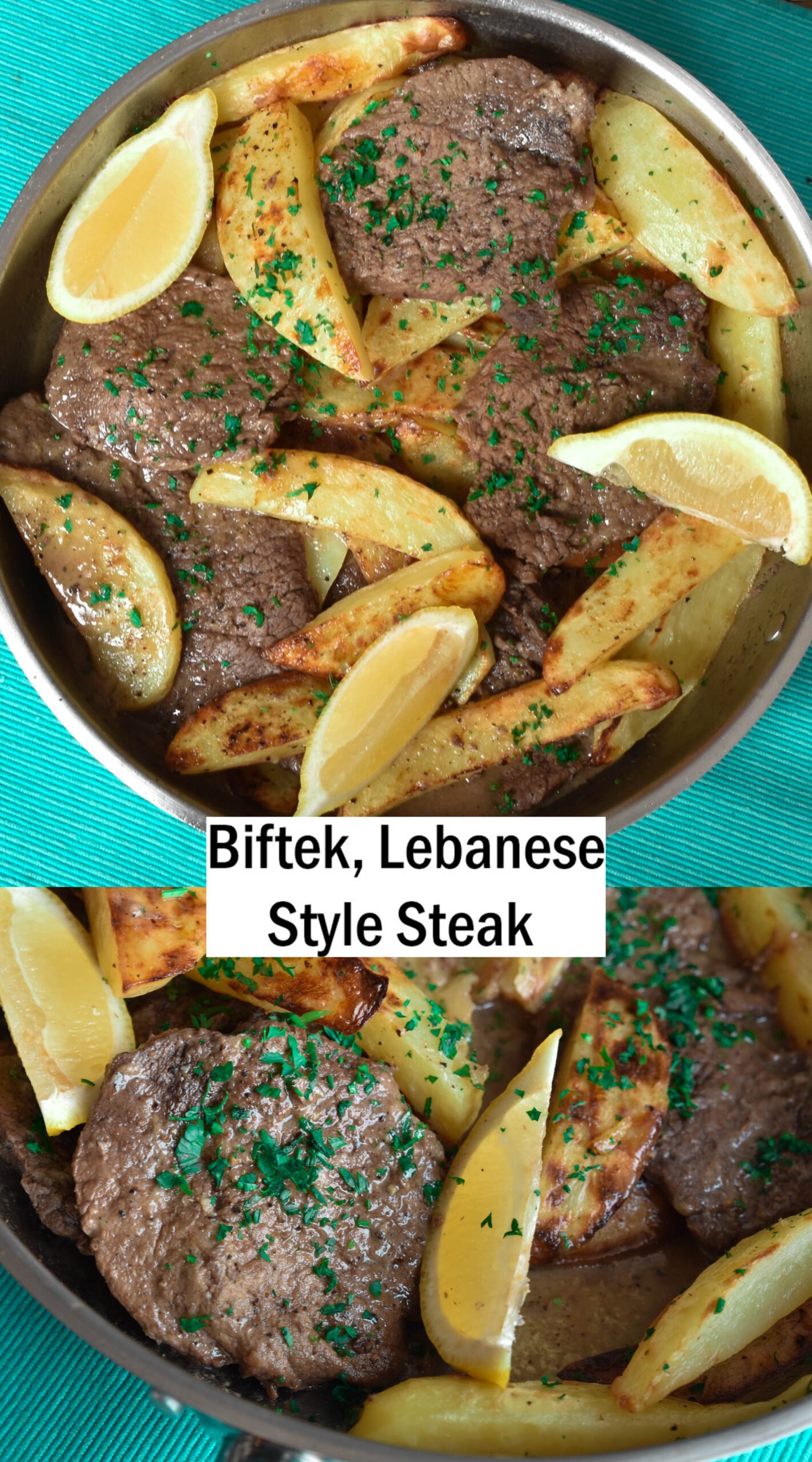


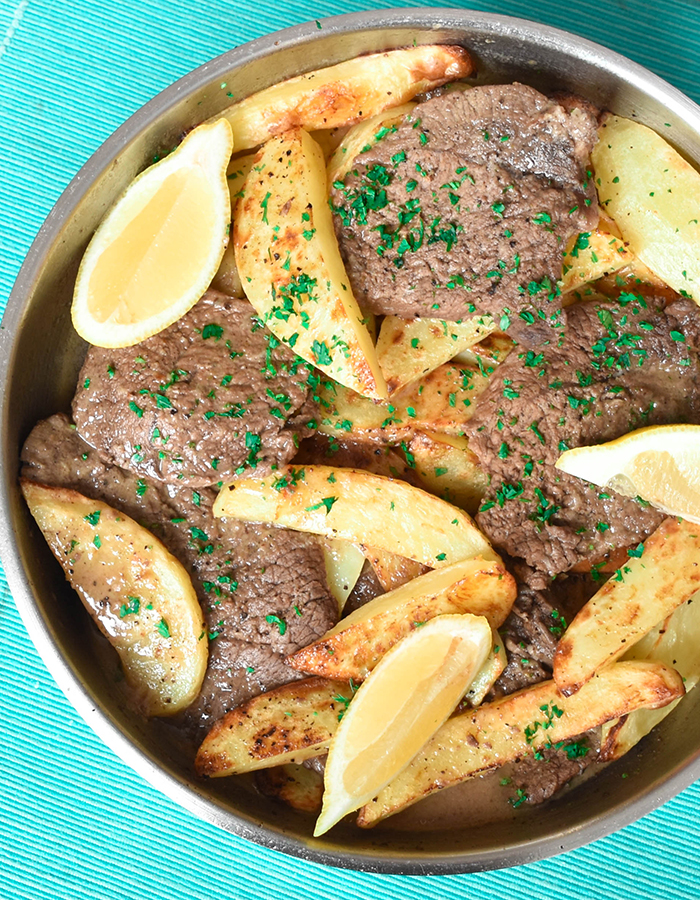
One of my favorite steaks to recreate is a classic I grew up eating in Lebanon. When it comes to cooking biftek, the Lebanese-style steak, there’s really only one way I know it: marinated with garlic, lemon, and olive oil, then seasoned with salt, black pepper, and seven spice. It’s fairly simple, yet incredibly satisfying.
The Secret to Perfect Lebanese Biftek
Thin slices of beef steak are marinated with crushed garlic, lemon juice, and olive oil before being cooked on the stovetop—a Lebanese classic that never goes out of style. The richness of the seared steak pairs beautifully with lemon and garlic in this hearty skillet meal.
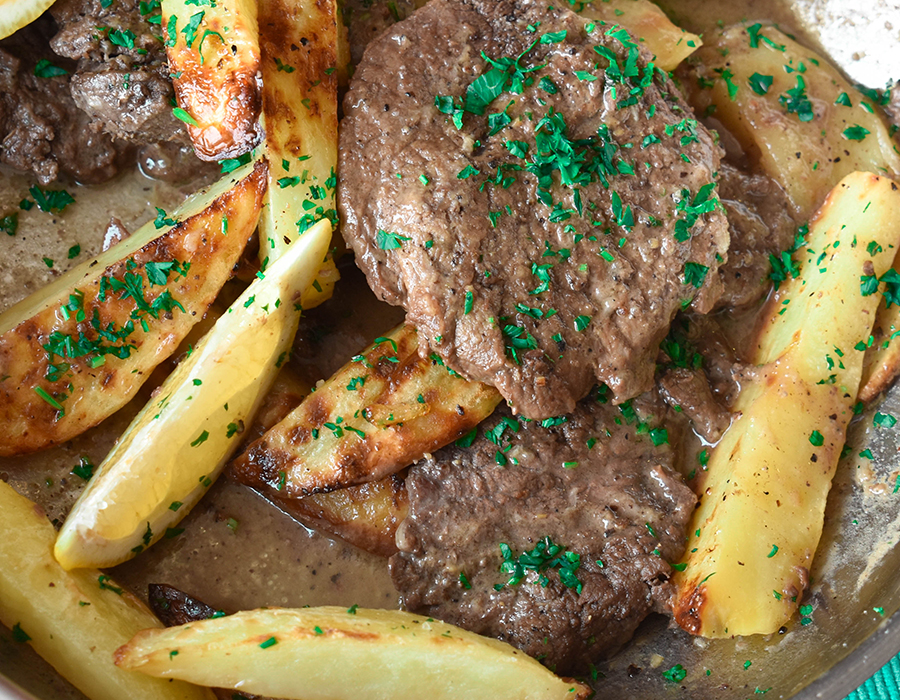
I used beef tenderloin, but any cut, such as skirt or flank steak, will work well here. After searing the steak, the marinade—lemon juice and garlic—is added to the same hot skillet, where it softens and develops a delicate, roasted flavor. Roasted potato wedges are added to the skillet at the end, allowing them to absorb all the bright, savory flavors of the lemony broth.
Step-by-Step Cooking Instructions
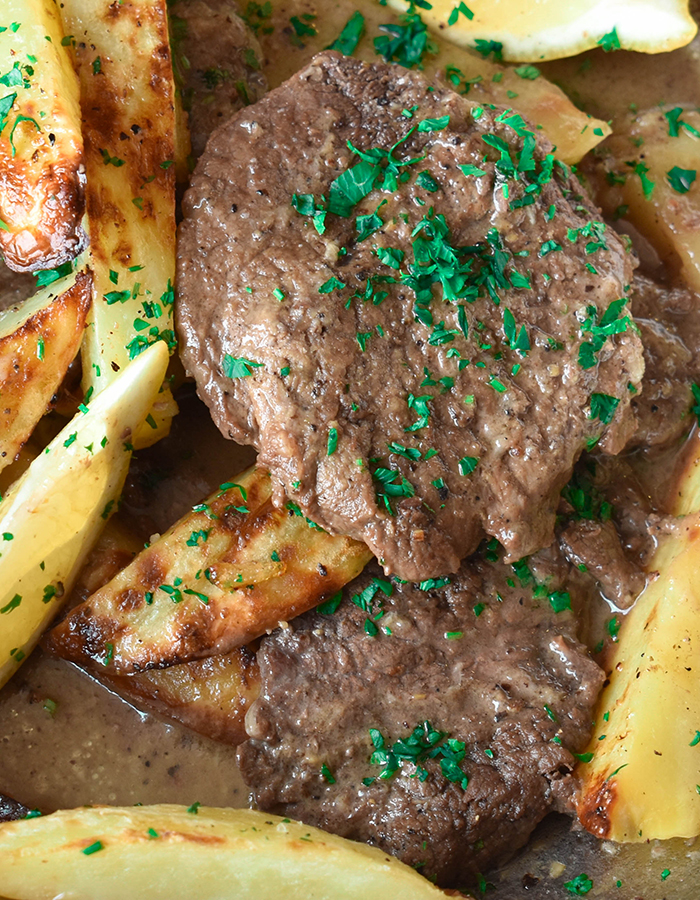
Sear the steak in a skillet, then transfer it to a plate, leaving the flavorful residues in the skillet. Add a splash of water, then pour the lemon and garlic marinade into the hot skillet. Return the seared steak to the skillet and cook for another 30 minutes over low heat.
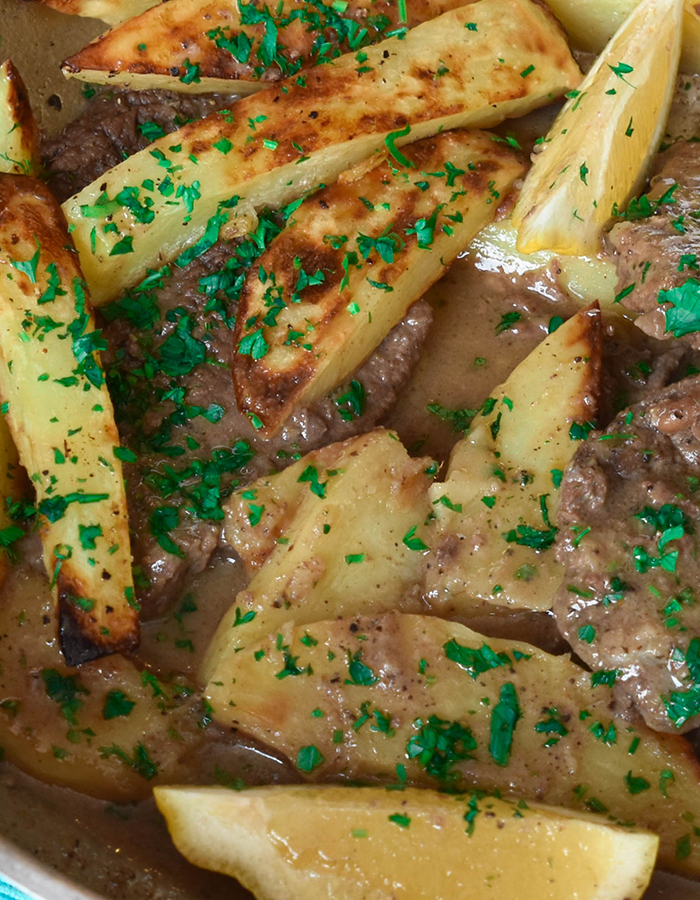
Add the roasted potato wedges to the skillet. Even if the liquid in the skillet is still runny, you’ll notice that the potatoes will absorb the steak broth, helping it thicken slightly.
Authentic Mediterranean Flavors
Lebanon, located on the eastern coast of the Mediterranean Sea, is known for its rich Mediterranean cuisine. Extra-virgin olive oil, garlic, and lemon are ubiquitous in Lebanese kitchens. Even the steak here involves no butter—just take a look at the ingredients. Nothing fancy, just good food, fresh ingredients, and a simple preparation that comes out this beautifully, with a joyful result.
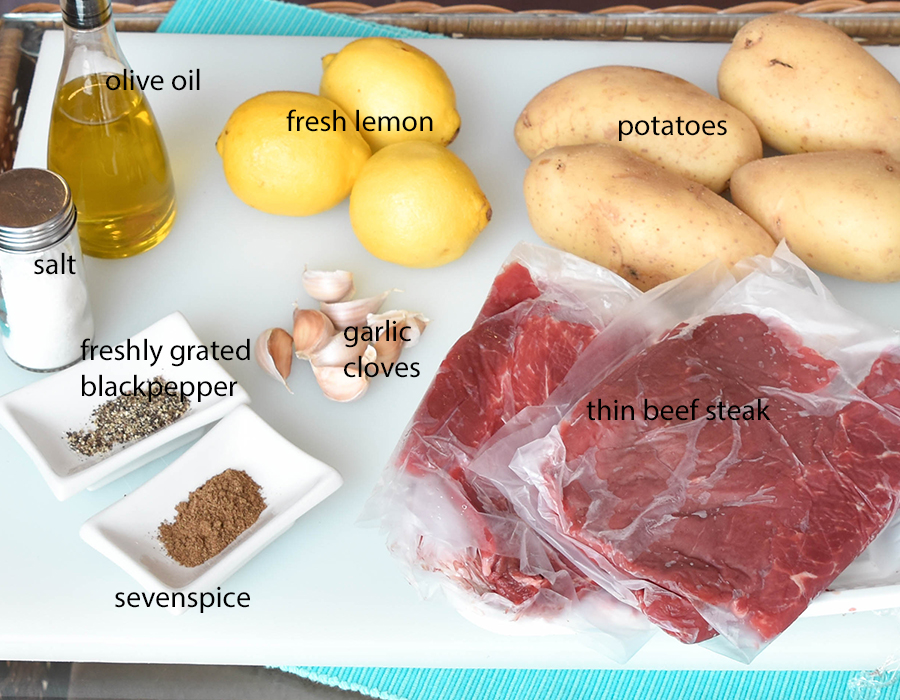
Ingredients:
-
Thinly sliced beef steak
-
Garlic
-
Lemon
-
Potatoes
-
Olive oil
-
Seven-spice
-
Freshly ground black pepper
-
Salt
- Hot water
Tips and Tricks
-
Choose a tender cut of beef, such as tenderloin or flank steak.
-
I prefer to use a mortar and pestle to crush the garlic. This brings out a strong garlic flavor without making the garlic puree bitter.
-
Use a skillet that can handle high heat.
-
Always use freshly squeezed lemon juice and avoid bottled lemon juice.
-
Keep the heat at medium-high when searing the steaks. This helps seal in the moisture and gives the exterior a lovely dark, crispy crust before adding the leftover marinade and boiling water.
-
Flip and move the steaks occasionally to ensure even cooking.
Slice and Pound the Beef
Start by slicing the beef into thin slices against the grain, about ¼ inch thick. Then, pound each slice with a meat mallet to break down the connective tissues and tenderize the meat.
Transfer the prepared beef to a bowl. Alternatively, you can ask your butcher to slice and pound the beef for you.
Lemon, Garlic, and Spices
Lemon and garlic come together to create wonderful flavor. Adding seven-spice and black pepper gives the marinade a delicious spicy undertone.
Please note that the acidity in the lemon juice helps break down the meat fibers. For this reason, marinate the beef for at least 30 minutes, but no longer than 4 hours, to prevent the meat from becoming mushy.
To make the marinade, whisk together the crushed garlic, lemon juice, salt, seven-spice, and black pepper.
Marinate the Meat
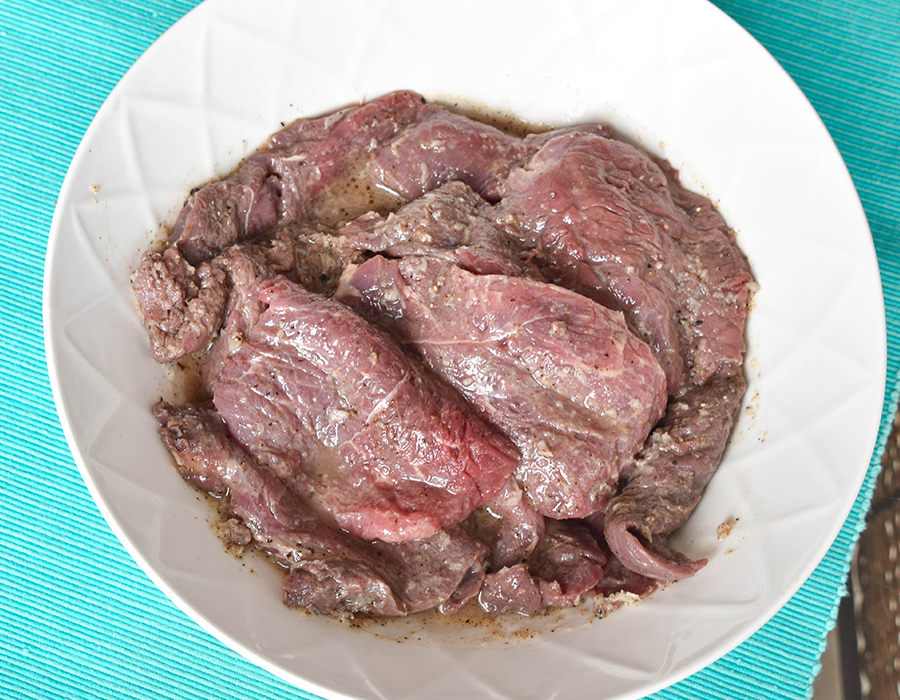
Place the beef steaks in a large bowl and pour the marinade over them. Cover the bowl with cling film and, if possible, refrigerate for at least 30 minutes or up to 4 hours.
Remove the beef from the refrigerator at least 20 minutes before cooking to allow it to come closer to room temperature.
Sear the Steaks, Add the Water and Marinade
Remove the steaks from the bowl, scraping off most of the marinade. Reserve the remaining marinade.
Heat the olive oil in a skillet over medium-high heat. Sear the steaks in batches, if necessary, for about 5 minutes, using tongs to turn them frequently until they are nicely browned.
Using the same skillet, gradually add the boiling water, scraping up the flavorful browned bits from the bottom of the pan. Then carefully add the reserved lemon-and-garlic marinade.
Bring the liquid to a boil, then return the seared steaks to the skillet. Reduce the heat to very low, cover with a lid, and cook for a further 30 minutes.
This slow cooking allows the flavors to mellow together, helps tenderize the steaks, and allows the liquid to reduce slightly. Taste and adjust the salt according to your preference.
Keep the steaks covered and warm until ready to serve.
What to Serve with Lebanese Biftek
Serve Lebanese biftek with hummus, tabbouleh, fattoush, or a fresh Middle Eastern salad.
To make the roasted potato wedges:
Preheat the oven to 400°F (204°C). Line a baking sheet with parchment paper and coat it with 1 tablespoon of olive oil. Cut each potato into 8 long wedges.
Spread the potatoes on the baking sheet in a single layer. Toss them with the remaining 3 tablespoons of olive oil and season with sea salt. Bake until golden on the outside and tender inside, about 40 minutes. Flip the potatoes once, after 20 minutes. If they do not flip easily, leave them in the oven a little longer to brown further, then use a metal spatula to gently loosen them from the baking sheet.
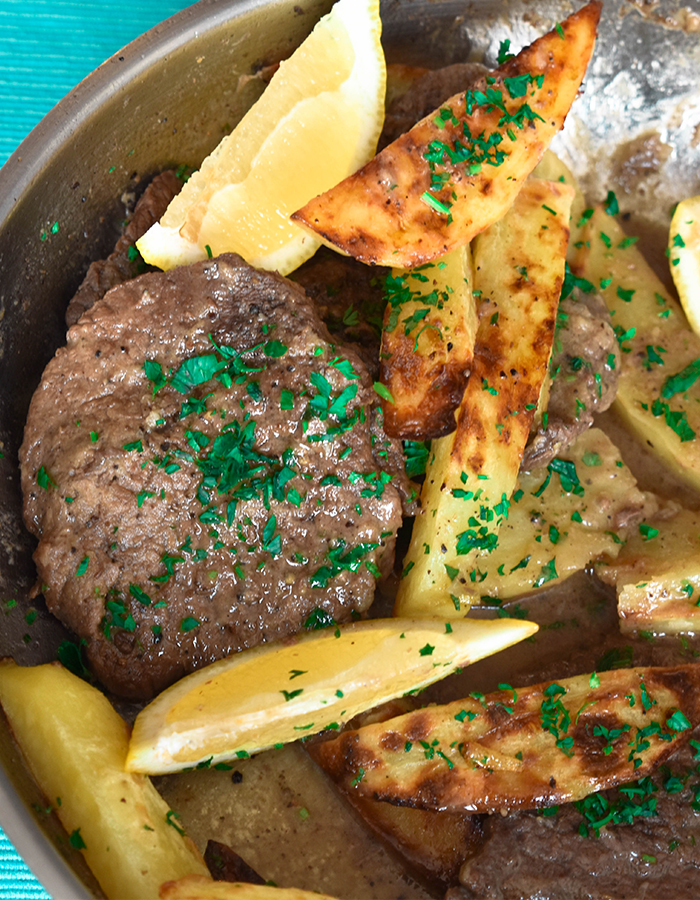
Add the roasted potato wedges to the skillet. They act like a sponge, absorbing the broth from the skillet and helping to thicken it, making for a delicious combination.
 Let’s Stay in Touch!
Facebook, Instagram, YouTube , Pinterest and TikTok!
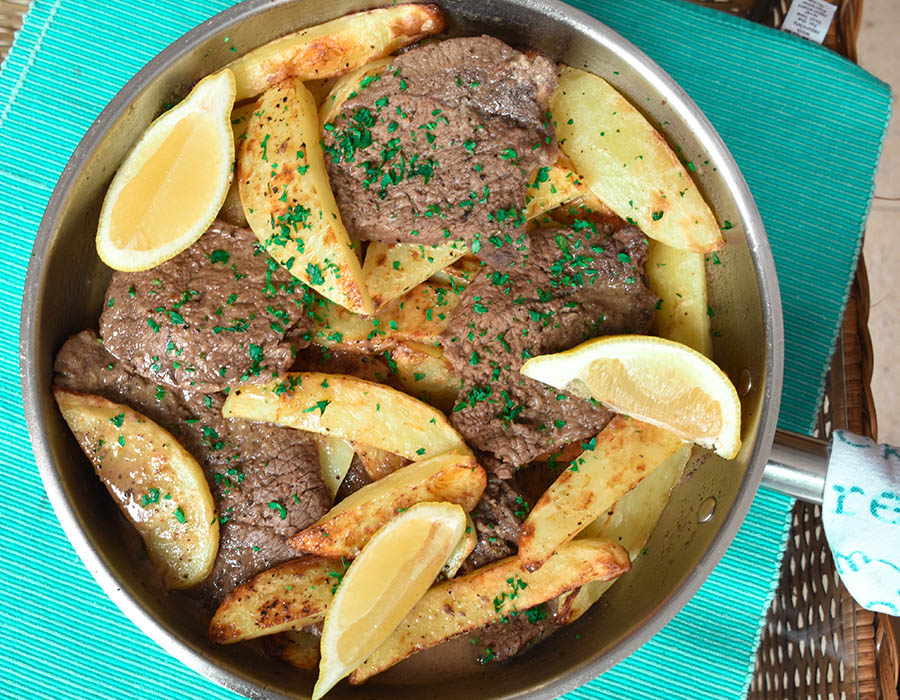
Biftek, Lebanese-Style Steak with Garlic and Lemon
Description
Equipment
- 1 large skillet
- 1 Baking sheet
- 1 parchment paper
Ingredients
- 1 kg / 2 lb 4 oz tenderloin or flank steak
- 8 garlic cloves crushed
- 1/3 cup olive oil divided between the marinade and searing
- 2 1/2 cups hot water
- 1/2 teaspoon seven-spice or allspice
- 1 teaspoon freshly ground black pepper
- 3/4 cup fresh lemon juice
- Salt to taste
- For the Potato Wedges
- 1 kg potatoes peeled
- 2 tablespoons olive oil
- Salt to taste
- A dash of freshly ground black pepper
Instructions
- Start by slicing the beef into thin slices. Slice it thinly against the grain, about ¼ inch thick, then pound each slice with a meat mallet to break down the connective tissues. Alternatively, ask your butcher to slice and pound the beef for you. Transfer the prepared beef to a bowl.
- To make the marinade: In a large bowl, whisk together the crushed garlic, lemon juice, salt, seven-spice, black pepper, and half of the olive oil. Add the beef steaks and toss to coat. Cover with cling film and marinate for 30 minutes or up to 4 hours. Remove the steaks from the fridge at least 20 minutes before cooking.
- Remove the steaks from the bowl, scraping off most of the marinade. Add olive oil to a skillet and sear the steaks in batches over medium-high heat for about 5 minutes, using tongs to turn them frequently until they are nicely browned.Remove the skillet from the heat. Gradually add the boiling water, then add the reserved marinade (lemon and garlic) to the same hot skillet. Bring to a boil, then return the seared steaks to the skillet. Cover and cook for a further 30 minutes over very low heat, allowing the flavors to meld, the steaks to soften, and the sauce to reduce slightly.Adjust the salt to taste. Cover with a lid to keep the steaks warm until ready to serve.
To roast the potato wedges:
- Meanwhile, preheat the oven to 400°F (204°C). Line a baking sheet with parchment paper and coat it with 1 tablespoon of olive oil.
- Cut each potato into 8 long wedges.
- Spread the potatoes on the baking sheet in a single layer. Toss with the remaining three tablespoons of olive oil, then season with sea salt and a dash of freshly ground black pepper.
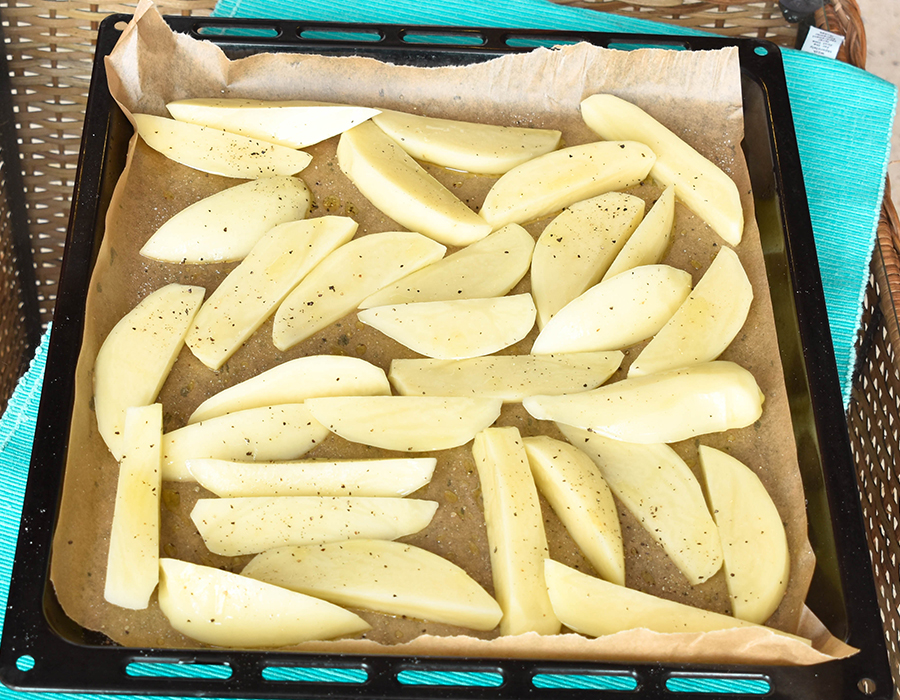
- Bake the potatoes until golden on the outside and tender inside, about 40 minutes. Flip the potatoes once, after 20 minutes. If they don’t flip easily, leave them in the oven a little longer to brown further, then use a metal spatula to gently loosen them.Add the potatoes to the steak skillet. The sauce in the skillet will thicken, while the potatoes absorb some of the broth—a great combination.Happy eating!
Video
Notes