



Watch the detailed video tutorial below to learn how to make these delicious Lebanese potato kibbeh balls at home!

What is Lebanese Potato Kibbeh (Potato Croquettes)?
This traditional Lebanese potato kibbeh recipe is a true taste of old-fashioned Lebanese cooking!
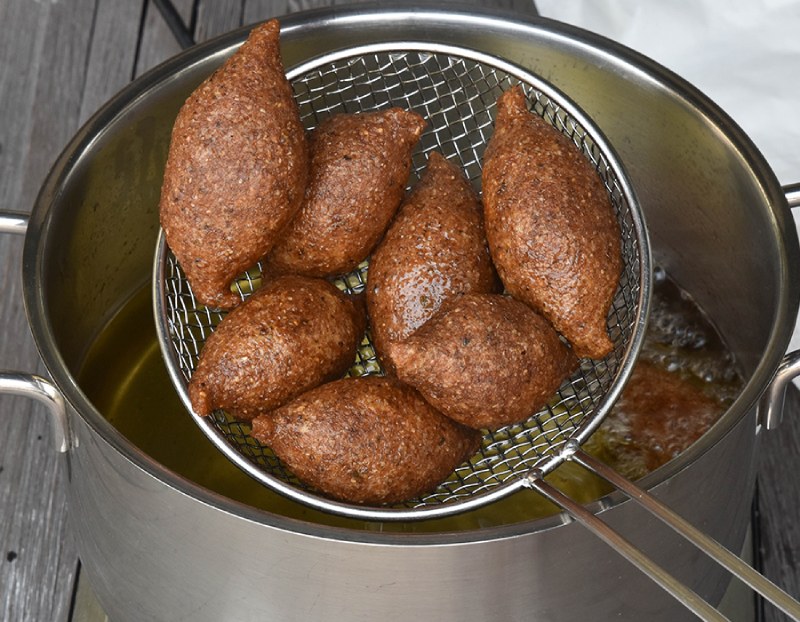
These delicious fried potato kibbeh balls feature a flavorful outer shell made with mashed potatoes, fine bulgur wheat, and a fragrant blend of spices. The crispy golden shells are filled with a delicious mixture of leafy greens, chickpeas, and onions, creating a satisfying vegetarian Lebanese appetizer packed with flavor.
For meat lovers, I’ve also included an alternative spicy minced meat filling, giving you two delicious variations in one recipe. The secret to perfect Lebanese potato kibbeh is achieving a crispy, golden-brown exterior with a soft, moist, and flavorful center.
Whether served as an appetizer, a snack, or part of a traditional Lebanese meal, these homemade potato kibbeh croquettes are a wonderful way to enjoy authentic Lebanese cuisine.
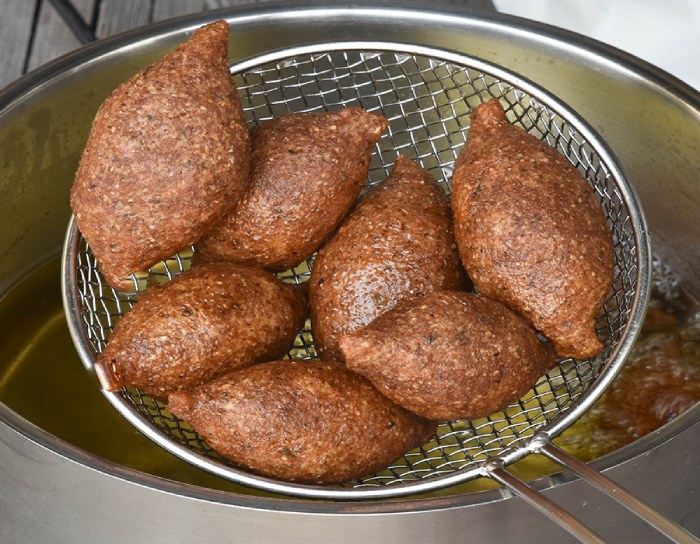
Grandma’s Lebanese Potato Kibbeh Recipe – A Traditional Family Favorite
Grandma, You’re the Best!
Almost every family has a treasured recipe, and the best ones are those passed down from one generation to the next. This special Lebanese potato kibbeh recipe was passed down to me by my paternal grandmother, and it holds some of my fondest childhood memories.
I remember how she would make her delicious potato kibbeh on special occasions. Growing up, the only time we were allowed to eat kibbeh for breakfast was when we spent the night at Grandma’s house! At her place, the rules were different. She spoiled us like no one else, and we absolutely loved it.
Making potato kibbeh was her specialty, and one of the best parts was when she called us into the kitchen to watch her fry the kibbeh balls. They would be lined up neatly on a platter, ready to be fried, and she always made at least four dozen. Once they were golden, crispy, and fresh out of the frying pan, they would disappear within minutes!
Her cooking was unforgettable, and I’m so grateful she shared this precious family recipe with me. Today, I still make her Lebanese potato kibbeh for family gatherings in her memory. Every bite takes me back to those beautiful childhood days, and it tastes just as wonderful as I remember.
I’ve stayed true to Grandma’s original recipe, making only one small adjustment: I added cornstarch to the potato kibbeh dough to give the outside an extra-crispy texture. It’s a little twist on her timeless recipe, but the delicious flavor and cherished memories remain exactly the same.
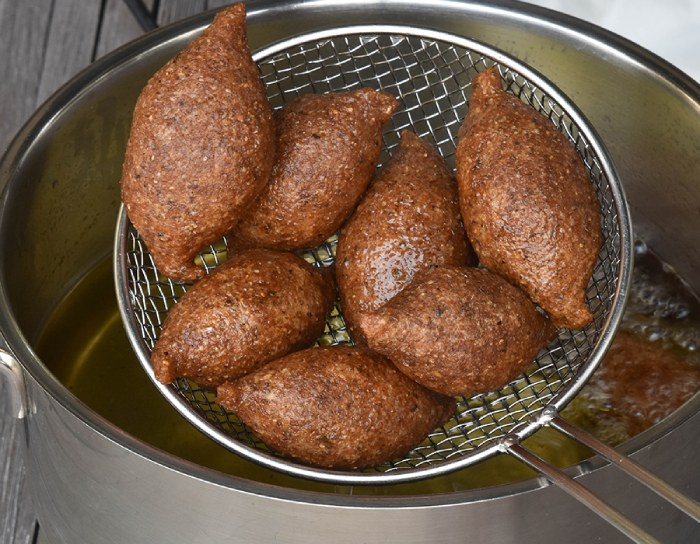
How to Shape Lebanese Potato Kibbeh: Tips for Beginners
Shaping Lebanese potato kibbeh into the traditional oval shape can be a little challenging at first, but don’t worry! With a bit of practice, you’ll soon get the hang of it.
The best way to master the art of shaping kibbeh is to watch the technique in action. My detailed video tutorial below will guide you through each step, making it easier to understand and perfect the process. Watch closely, give it a few tries, and you’ll be shaping beautiful, evenly formed kibbeh balls in no time!
8 Expert Tips for Crispy Lebanese Potato Kibbeh Balls
Follow these simple tips to make perfectly crispy Lebanese potato kibbeh balls with a golden exterior and a soft, flavorful interior. From preparing the bulgur and shaping the kibbeh to freezing and frying, these tricks will help you achieve delicious results every time.
1. Soak the Bulgur in Boiling Water
Soak the fine bulgur wheat in boiling water to help it soften before mixing it with the mashed potatoes. This step helps create a cohesive kibbeh dough that holds its shape during frying.
2. Knead the Bulgur by Hand
Knead the soaked bulgur thoroughly with your hands to achieve the right texture. Avoid using a food processor, as it can make the mixture too sticky or alter the texture of the kibbeh dough.
3. Mash the Potatoes Properly
Use a potato ricer or potato masher to achieve smooth, lump-free mashed potatoes. Avoid using a food processor, which can release too much starch and make the potatoes gluey, resulting in a sticky dough that is difficult to shape.
4. Keep a Bowl of Ice Water Nearby
Keep a bowl of ice water beside you while shaping the potato kibbeh. Dampen your hands occasionally to prevent the dough from sticking and to help you form smooth, evenly shaped oval kibbeh balls.
5. Freeze the Kibbeh Before Frying
Arrange the shaped potato kibbeh balls on a tray and freeze them for at least 40 minutes before frying. This helps them firm up, making them easier to handle and less likely to break apart in the hot oil.
6. Maintain the Correct Frying Temperature
For crispy, golden-brown potato kibbeh, heat the oil to 325–375°F (165–190°C). Use a kitchen thermometer to monitor the temperature and adjust the heat as needed. Oil that is too cool can make the kibbeh greasy, while excessively hot oil may brown the outside before the inside is heated through.
7. Avoid Overcrowding the Frying Pan
Fry only four or five kibbeh balls at a time, depending on the size of your pan. Adding too many at once lowers the oil temperature, which can result in greasy, soggy kibbeh or cause the shells to break. Allow the oil to return to the correct temperature between batches.
8. Fry the Kibbeh Directly From Frozen
There is no need to thaw the potato kibbeh before frying. Frying them while frozen helps them retain their shape and makes them easier to handle. Add them carefully to the hot oil in small batches, and allow enough time for the centers to heat through without overbrowning the shells.
Follow these tips for delicious homemade Lebanese potato kibbeh with a crispy, golden shell and a tender, flavorful center!
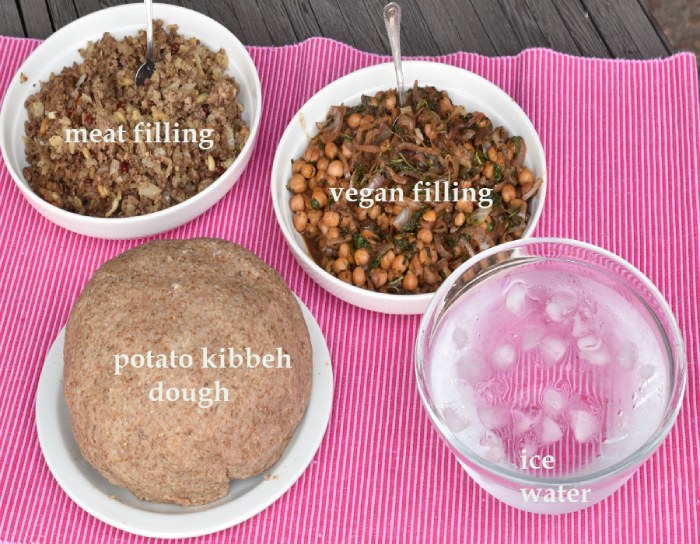
This recipe is actually two in one! I’ve included two delicious filling options: a traditional meat filling known in Arabic as hasweh, and an irresistible chickpea, onion, and citrusy filling. If you’ve been following my recipes, you may recognize the vegetarian filling from my pumpkin kibbeh recipe, where I use the same wonderfully flavorful combination.
🛒 Recipe Ingredients at a Glance
Potato Kibbeh Dough (Outer Shell)
-
- Smooth, boiled potatoes
- Fine bulgur wheat, softened in boiling water
- Cornstarch for extra crispiness
- Traditional Lebanese spices
-
- Cooked chickpeas
- Sautéed onions
- Fresh leafy greens
- Lemon juice and seasonings for a fresh, tangy flavor
- Lean ground meat
- Finely chopped onions
- Warm spices and aromatic seasonings
Choose your favorite filling: Make it vegetarian with chickpeas and greens, or go for the traditional savory meat filling. Both pair perfectly with the crispy potato shell!
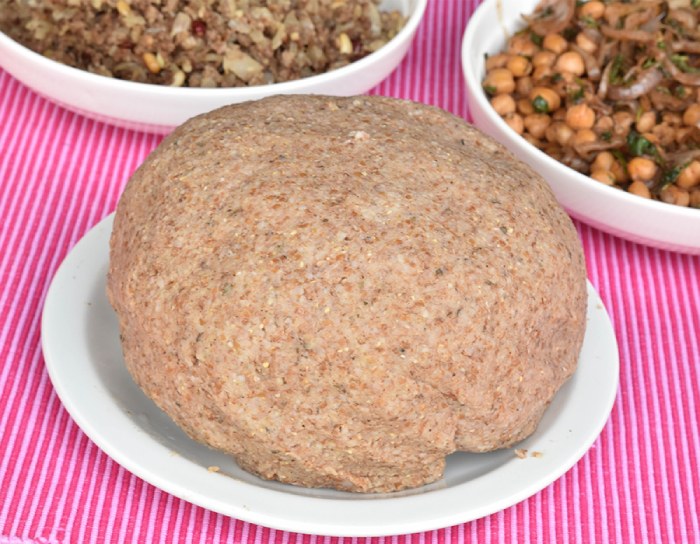
How to Make Lebanese Potato Kibbeh
1. Prepare the Potato Kibbeh Dough
Place the fine bulgur wheat in a large bowl. Add the boiling water, stir well, cover with plastic wrap, and let it sit for 40 minutes, allowing the bulgur grains to absorb the water and soften. This step is essential for achieving the right texture.
Meanwhile, place the potato in a small pot and cover it with water. Bring to a boil, then reduce the heat, cover, and simmer for 20–25 minutes, or until the potato is fork-tender.
After 40 minutes, knead the hydrated bulgur thoroughly by hand, gradually adding the ice water until it forms a cohesive mixture.
Peel the cooked potato while it is still warm and mash it using a potato masher or fork until smooth. Add the mashed potato to the bulgur, followed by the cornstarch, Lebanese seven-spice blend, cinnamon, cumin, white pepper, dried basil, paprika, dried marjoram, and salt to taste.
Knead everything together until the spices are evenly distributed and the dough is soft, smooth, and holds together in a cohesive ball. Your potato kibbeh dough is now ready for stuffing and shaping!
For visual guidance, watch the detailed video tutorial to see how the dough should look and feel.
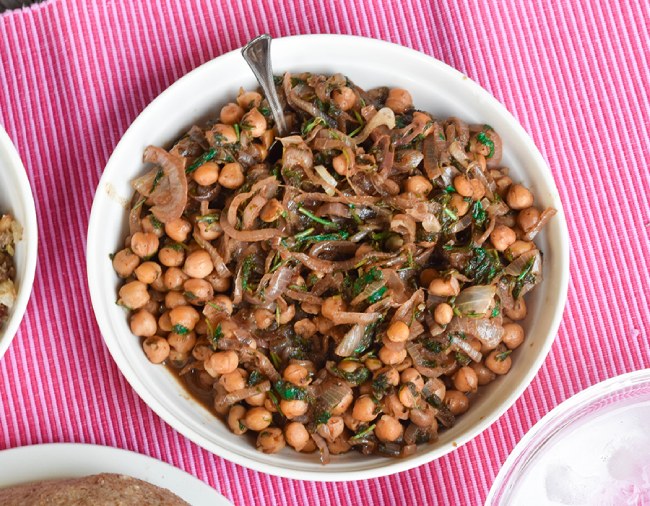
2. Prepare the Vegetarian Chickpea and Swiss Chard Filling
Heat the olive oil in a skillet over medium-high heat. Add the chopped onions and sauté until translucent and softened.
Add the chickpeas and shredded Swiss chard, and cook for another 2 minutes, stirring to combine.
Season with sumac, pomegranate molasses, cayenne pepper, and cumin. Cook for another minute, allowing the flavors to blend.
Transfer the filling to a bowl and let it cool completely before stuffing the kibbeh.
This tangy, savory vegetarian filling is packed with flavor and makes a delicious alternative to the traditional meat filling.
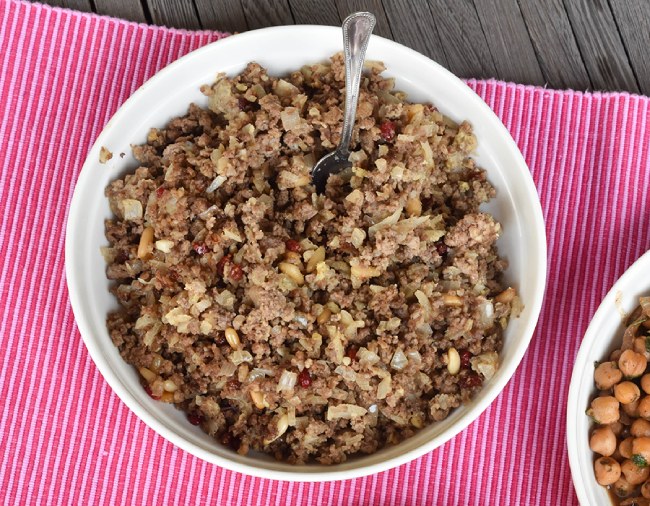
3. Prepare the Traditional Lebanese Meat Filling (Hasweh)
Heat the oil in a skillet over medium heat. Add the pine nuts and sauté until golden brown, stirring frequently so they do not burn. Remove them with a slotted spoon, drain on paper towels, and set aside.
Using the same oil, add the minced meat and cook over medium-high heat for 7–10 minutes, breaking it up as it cooks, until browned and the juices have evaporated.
Add the chopped onions and continue cooking for another 5–7 minutes, until softened.
Season with salt, sumac, allspice, white pepper, and cayenne pepper, if desired. Stir in the toasted pine nuts and mix well.
Transfer the meat filling to a bowl and let it cool completely before using it to stuff the potato kibbeh.
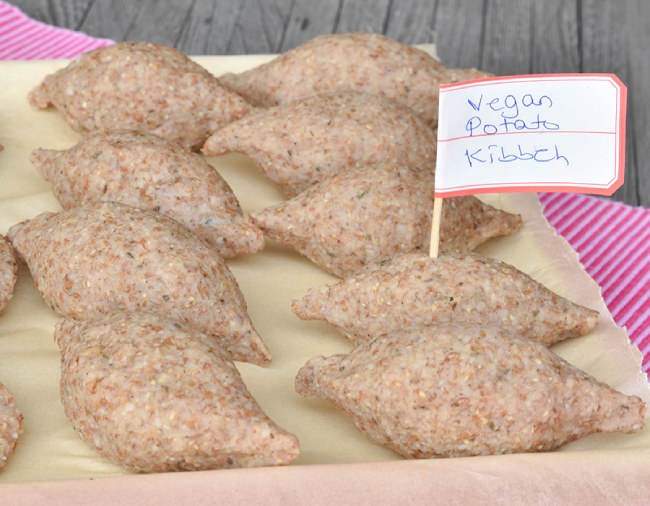
4. Stuff and Shape the Potato Kibbeh Balls
Dampen your hands with ice water to prevent the potato kibbeh dough from sticking.
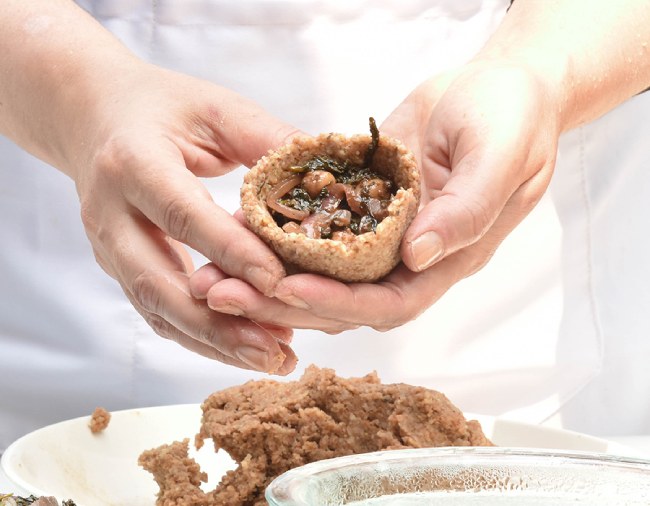
Take a portion of dough about the size of an egg and roll it gently between your palms. Using one finger, make a hole in the center and gradually widen it by rotating the dough and gently pressing against the inside walls.
Aim for an even shell approximately 2 mm thick all around, taking care not to create holes or cracks. Watch the video tutorial for a visual demonstration of this traditional kibbeh-shaping technique.
Place one heaped teaspoon of your chosen filling inside the shell. Carefully pinch the opening closed and shape the kibbeh into a smooth oval, gently smoothing out any cracks with a little cold water.
Repeat with the remaining dough and filling, alternating between the vegetarian and meat-filled versions if you wish.
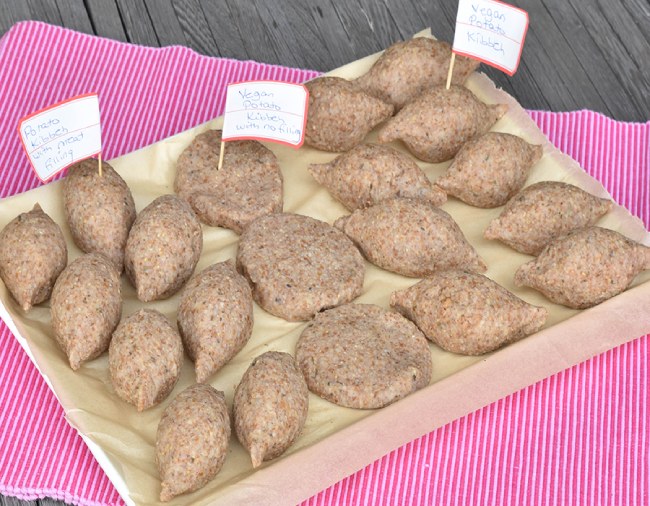
Arrange the shaped kibbeh balls on a parchment-lined tray as you work.
5. Chill the Kibbeh Before Frying
Freeze the shaped potato kibbeh balls for at least 30 minutes before frying. This helps the shells firm up, making them easier to handle and less likely to break apart in the hot oil.
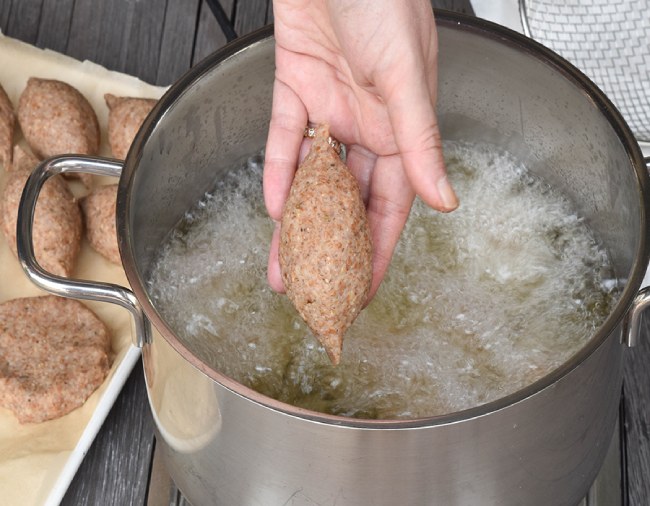
6. Deep-Fry the Lebanese Potato Kibbeh
Heat enough oil in a deep, heavy-bottomed pot or deep fryer to fully submerge the kibbeh. Bring the oil to approximately 340°F (170°C).
Carefully lower the kibbeh into the hot oil in small batches, taking care not to overcrowd the pot. Adding too many at once can lower the oil temperature and cause the shells to become greasy or break apart.
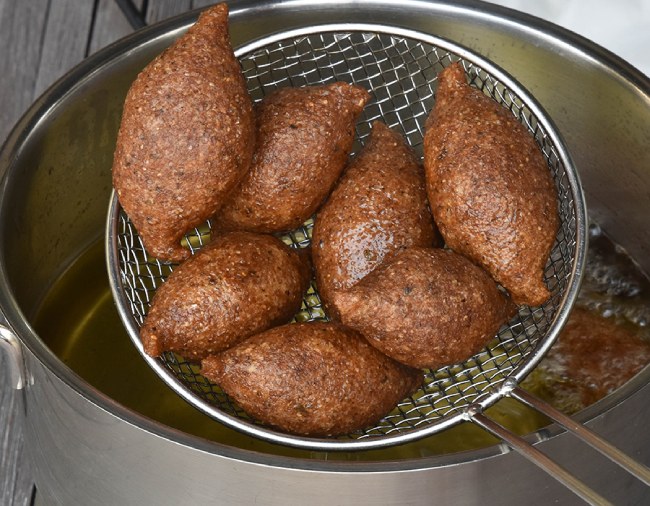
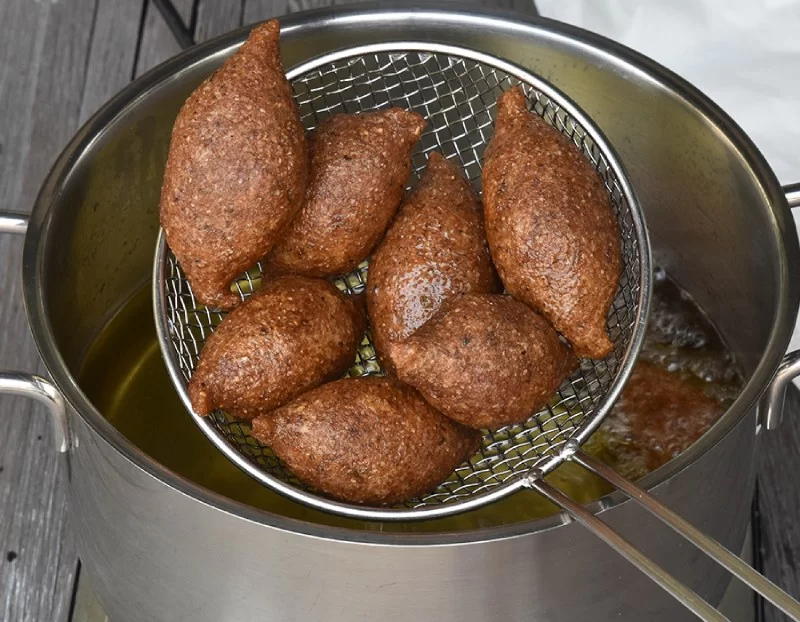
Fry until the kibbeh are golden brown and crispy on all sides. Depending on their size and whether they are chilled or frozen, cooking time may vary; allow approximately 12-15 minutes per batch as a starting point, and check that the filling is thoroughly heated. For meat-filled kibbeh, ensure the meat filling was fully cooked before stuffing.
Remove the kibbeh with a slotted spoon and drain on paper towels.
Serve warm while the shells are crispy and the fillings are deliciously flavorful.
How Many Potato Kibbeh Balls Does This Recipe Make?
This recipe makes approximately 25 Lebanese potato kibbeh balls, depending on their size and how much filling you use. You can easily double or triple the ingredients to feed a larger crowd.
Making kibbeh is even more enjoyable when you have extra hands in the kitchen! Invite family or friends to help with stuffing and shaping, turn the process into a fun group activity, and get dinner on the table a little faster.
Serve your homemade potato kibbeh warm with your favorite dipping sauce or as part of a Lebanese mezze spread.
My favorite way to enjoy these wonderful fried potato kibbeh balls is fresh from the fryer, when the golden shells are at their crispiest and the flavorful filling is still warm. They’re a true taste of traditional Lebanese home cooking!
A Fun Family Activity: Make Kibbeh Together!
Making kibbeh is always more fun with extra hands in the kitchen! Invite family or friends to help with stuffing and shaping the kibbeh balls, turn the process into a fun group activity, and get dinner on the table faster.
Lebanese fried potato kibbeh balls are delicious on their own, but pairing them with traditional Lebanese dips, fresh salads, and creamy sauces makes them even more irresistible. Here are some of my favorite ways to serve crispy potato kibbeh:
- Hummus: Serve your golden, crispy potato kibbeh on a bed of creamy hummus for a delicious combination of textures and flavors.
- Muhammara: Muhammara and potato kibbeh are a match made in food heaven! This rich, smoky red pepper and walnut dip complements the crispy kibbeh beautifully.
- Pomegranate Molasses: Drizzle a little pomegranate molasses over the kibbeh or serve it on the side for a sweet-and-tangy contrast.
- Plain Yogurt: A bowl of cool, creamy plain yogurt makes a simple and refreshing accompaniment to the warm, crispy kibbeh.
- Purslane Yogurt Salad: This refreshing Lebanese-style salad combines creamy yogurt with fresh purslane for a light, tangy side dish that balances the richness of fried kibbeh.
- Tabbouleh or Fattoush: Pair your potato kibbeh with a fresh Lebanese tabbouleh or fattoush salad. The bright lemon dressing, fresh herbs, and crunchy vegetables add freshness to your meal.
Whether you serve them as an appetizer, part of a Lebanese mezze spread, or as a main course with fresh salads and dips, these pairings will make your homemade potato kibbeh even more delicious!

How to Freeze and Store Lebanese Potato Kibbeh (Make-Ahead Tips)
Make Ahead: You can prepare Lebanese potato kibbeh balls in advance and freeze them for later. Arrange the shaped, uncooked kibbeh balls on a parchment-lined baking sheet, making sure they are not touching. Freeze until completely firm, then transfer them to freezer-safe bags or airtight containers. Store in the freezer for up to 3 months.
When ready to cook, fry the kibbeh directly from frozen without thawing, adding them carefully to hot oil in small batches. This helps them hold their shape and achieve a crispy, golden-brown exterior.
More Delicious Lebanese Kibbeh Recipes to Try
- Lebanese fried kibbeh balls
- Pumpkin kibbeh
- Grilled kibbeh
- Potato kibbeh
- Baked kibbeh cups with muhammara
- Avocado Kibbeh
 Let’s Stay in Touch!
Facebook, Instagram, YouTube , Pinterest and TikTok!
Recipe Name: Crispy Lebanese Potato Kibbeh Recipe
Description
Ingredients
For the Potato and Bulgur Dough
- 2 cups fine bulgur wheat
- 1 potato 250 g / 9 oz
- 2 tablespoons cornstarch
- 2 cups boiling water
- 1¼ cups ice water
- 1 level teaspoon Lebanese seven-spice blend
- 1 level teaspoon ground cinnamon
- 1 level teaspoon ground cumin
- ½ teaspoon freshly ground white pepper
- 1 level teaspoon dried marjoram
- 1 level teaspoon dried basil
- 1 level teaspoon paprika
- 1 teaspoon salt or to taste
For the Vegetarian Chickpea Filling
- 2 cups canned chickpeas drained
- 1 kg 2 lb 4 oz red or yellow onions, thinly sliced
- 2 tablespoons sumac
- 4 tablespoons pomegranate molasses
- 1 tablespoon salt or to taste
- 1 teaspoon cayenne pepper optional
- ⅓ cup olive oil
- ½ teaspoon ground cumin
- 2 cups sorrel Swiss chard, or spinach, cleaned and shredded
For the Meat Filling (Hasweh)
- 500 g 1 lb 2 oz minced veal or lamb
- 3 large onions finely chopped
- 1 teaspoon salt or to taste
- 1 teaspoon ground allspice
- 1 tablespoon sumac
- ½ teaspoon ground white pepper
- A dash of cayenne pepper optional
- ⅓ cup pine nuts or roughly chopped walnuts
- ¼ cup sunflower oil or ghee
For Deep-Frying
- Sunflower oil or another neutral oil as needed for deep-frying
Instructions
- The cooking times are broken down into 20 minutes for boiling the potatoes and 10 minutes total frying time for your batches, making exactly 30 minutes of total active cooking time.
- For the Vegan Filling:
- In a skillet, heat the olive oil over high heat. Add the onions and sauté until they become translucent.
- Add the chickpeas and shredded Swiss chard to the onions, cooking for an additional 2 minutes.
- Stir in the sumac, pomegranate molasses, cayenne pepper, and cumin powder. Cook for 1 more minute, then transfer the mixture to a bowl and let it cool completely.
For the Meat Filling:
- Heat ¼ cup of oil in a skillet over medium heat. Sauté the pine nuts until they turn a golden-brown color. Drain them on paper towels and set aside.
- Using the same oil, sauté the minced meat over medium-high heat for about 7 to 10 minutes until the meat is well-browned and its juices have completely evaporated.
- Add the onions and cook for an additional 5 to 7 minutes over medium heat.
- Season with salt, sumac, allspice, white pepper, and cayenne pepper (if using). Stir in the toasted pine nuts, mix thoroughly, and set aside to cool completely.
To Make the Potato Kibbeh Dough:
- Place the fine bulgur in a large bowl and pour in the boiling water. Stir well, cover tightly with cling film, and leave for 40 minutes to allow the bulgur grains to fully hydrate and swell. (This is a crucial step).
- Meanwhile, place the potatoes in a small pot and cover them with water. Bring to a boil, then cover and cook over low heat for about 20 to 25 minutes until they are fork-tender.
- After 40 minutes, knead the bulgur while gradually adding the ice water until it forms a cohesive ball (refer to the video tutorial for visual guidance).
- Peel the potatoes and mash them with a fork while they are still hot. Add the mashed potato to the bulgur, then stir in the cornstarch, seven-spice blend, cinnamon, cumin, white pepper, dried basil, paprika, dried marjoram, and salt to taste. Knead well until the mixture is fully integrated, smooth, and forms a cohesive dough. Your potato kibbeh dough is now ready.
Assembly (Choose one of the two fillings):
- Dampen your hands with ice water and scoop up a handful of the kibbeh dough (roughly the size of an egg).
- Working with one portion at a time, press your finger into the center to create a hole. Work around the cavity, thinning the walls until they are about 2mm thick on all sides (watch the video tutorial for the technique).
- Place 1 heaped teaspoon of your chosen stuffing into the cavity. Seal the opening and shape the dough into a smooth oval. Use a touch of cold water if needed to smooth out any cracks or openings.
- Arrange the shaped kibbeh balls on a tray. Freeze them for at least 30 minutes before frying to ensure they hold their shape.
Frying the Potato Kibbeh:
- Heat a generous amount of oil to 170°C (340°F). There should be enough oil to completely submerge the kibbeh.
- Deep-fry the kibbeh balls in small batches to avoid crowding the pan, which can lower the oil temperature and cause the kibbeh to become mushy.
- Fry until golden brown and crispy on all sides, which should take about 12 to 15 minutes. Drain on paper towels and serve warm or at room temperature. (Watch the detailed video tutorial below).
Video
Notes
The recipe for the “Fried Potato Kibbeh Balls” was posted on June 2014, the photos and text were updated on July, 2024!
























2 Comments
I love this recipe and so does my extended family. My cousin was in town yesterday and said it was ‘dangerously good.’ I’ve made it twice and came back to review the ingredients and directions. Both times I have had leftover mix. 1kg/2lbs 4oz onions seems like too much. I always have leftover vegan stuffing. It looks like you have a lot less onion in your mixture in the video. Is this a typo error?
Thanks, Tarator
Hi Thomas and thank you for the feedback, I am happy you and your family liked,no typo error, onions add so much flavor; I usually thin the kibbeh shell which makes me stuff the kibbeh a bit more, maybe, I would advice you to reduce the filling ingredients by half, but please keep the onion ratio as mentioned. Welcome Thomas.