


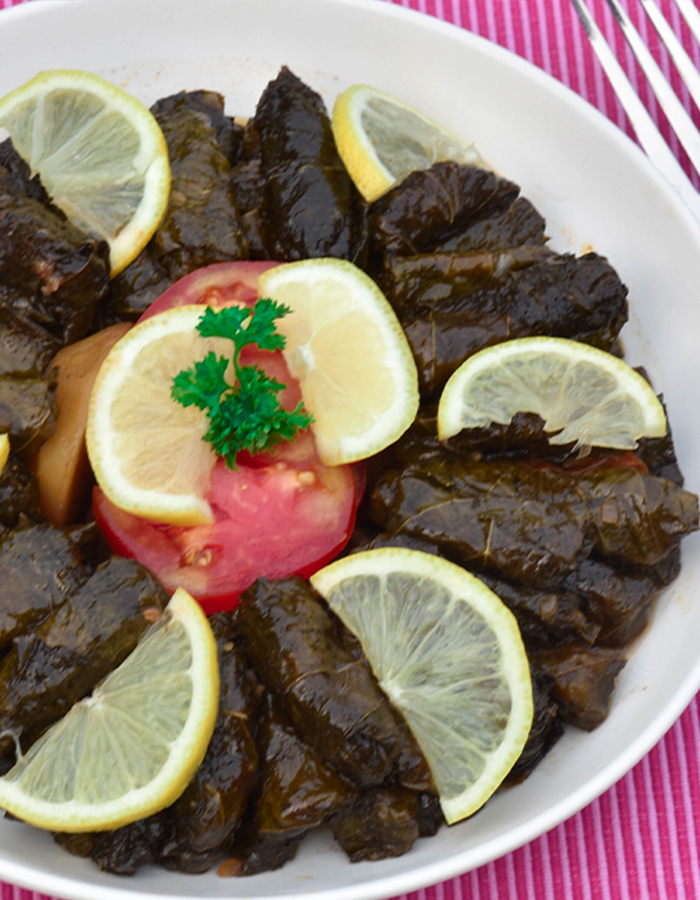
Here is a solid vegetarian stuffed grape leaf recipe to start with—ideally easy, straightforward, and from a reliable source: my mama. Follow it to the letter, and success is yours!
Also known in Arabic as warak enab, stuffed grape leaves are probably one of the most iconic Middle Eastern dishes. All you need are a few pantry staples to make this irresistible Lebanese version. The leaves are wrapped around a savory filling of rice, tomatoes, onions, parsley, olive oil, lemon juice, pomegranate molasses, and a secret ingredient that will take your stuffed grape leaves from good to excellent. Keep reading to learn what it is!
Seasoned with warm spices and cooked slow and low until meltingly tender, these little lemony rolls are like tiny surprises in every bite.
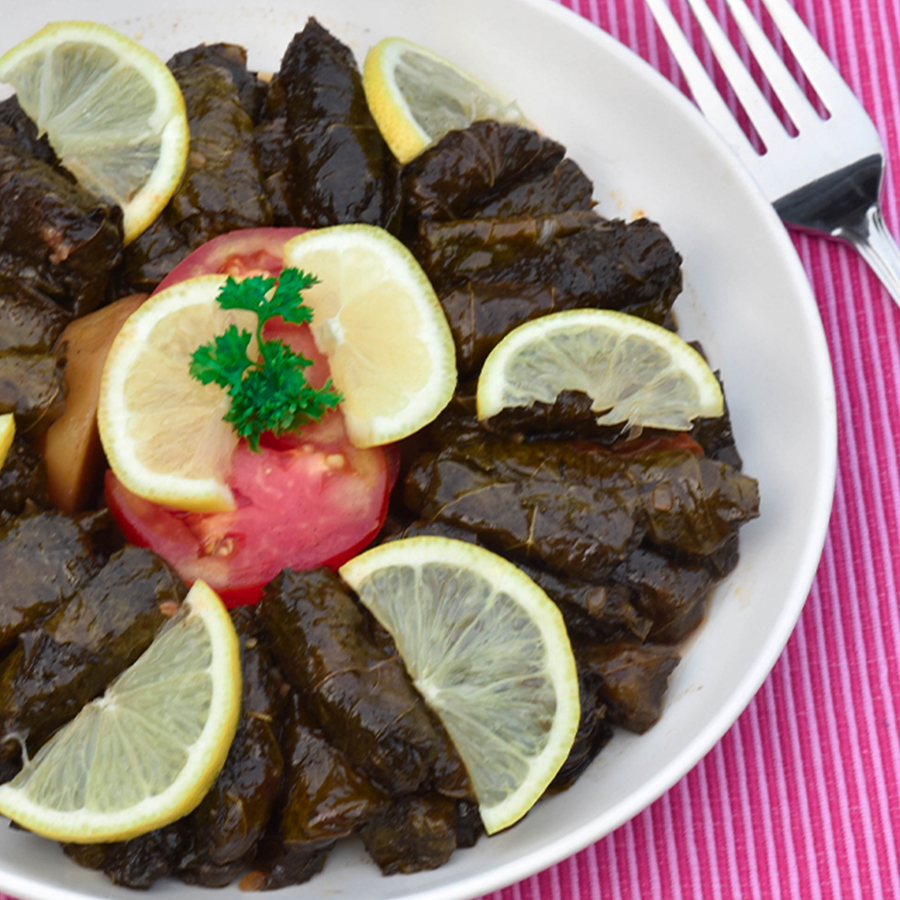
Authentic Vegetarian Stuffed Grape Leaves
There are many variations of stuffed grape leaves throughout the Mediterranean and Arab world. They can be made with two different types of fillings: one vegetarian, like today’s recipe, and another made with minced meat. Recipes vary from country to country and even from family to family, but the main elements are often quite similar.
For our extended family gatherings, it’s not a complete celebration unless we have vegetarian stuffed grape leaves and tabbouleh. They are always among the first dishes to disappear from the buffet table. Whenever I’m invited to parties or gatherings, I’m often asked to bring a plate of my vegetarian stuffed grape leaves.
They’re easy to transport to different functions, always a crowd-pleaser, and almost guaranteed to inspire requests for the recipe.
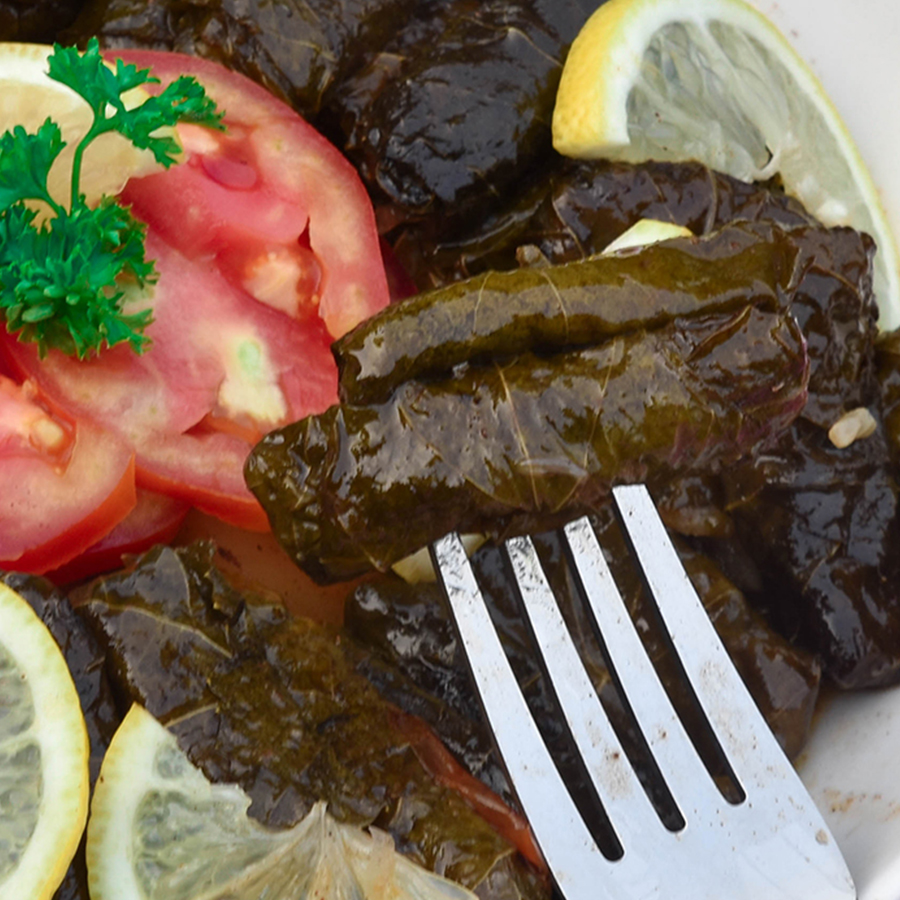
Fold them like mini cigars: fold over one side, then the other, then the bottom, and finally roll upward. The filling can be made a day in advance and refrigerated in an airtight container.
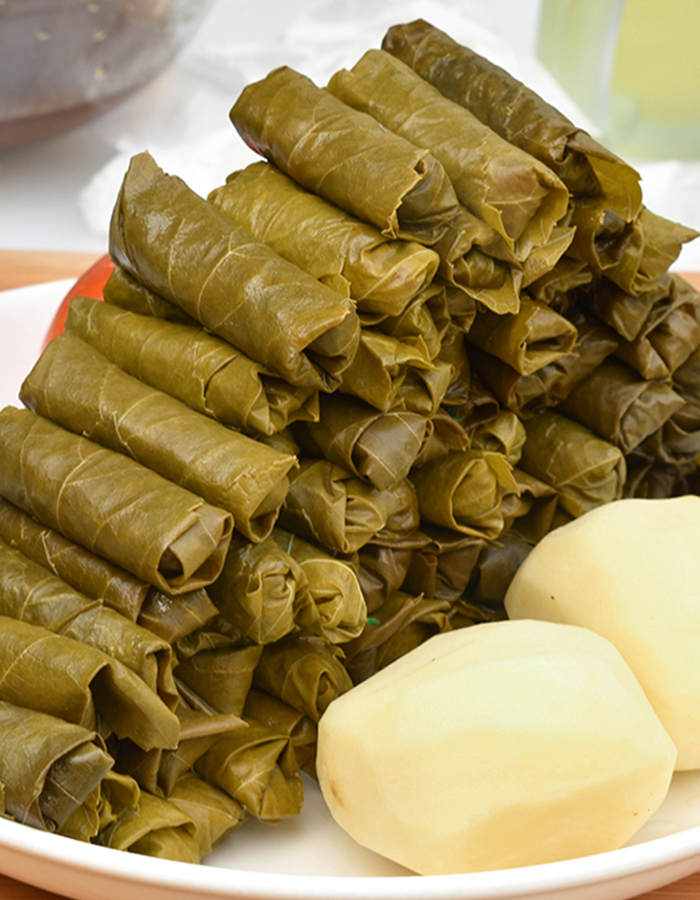
Ingredients needed:
-
Grape leaves, fresh or in brine
-
Short-grain rice
-
Tomatoes
-
Parsley
-
Onions
-
Olive oil
-
Freshly squeezed lemon juice — please don’t use the bottled stuff
-
Pomegranate molasses
-
Seven-spice or allspice
-
Ground cinnamon
-
Lebanese or Turkish coffee
-
Salt
-
Potato, sliced, to line the bottom of the pot (optional)
Steps to make:
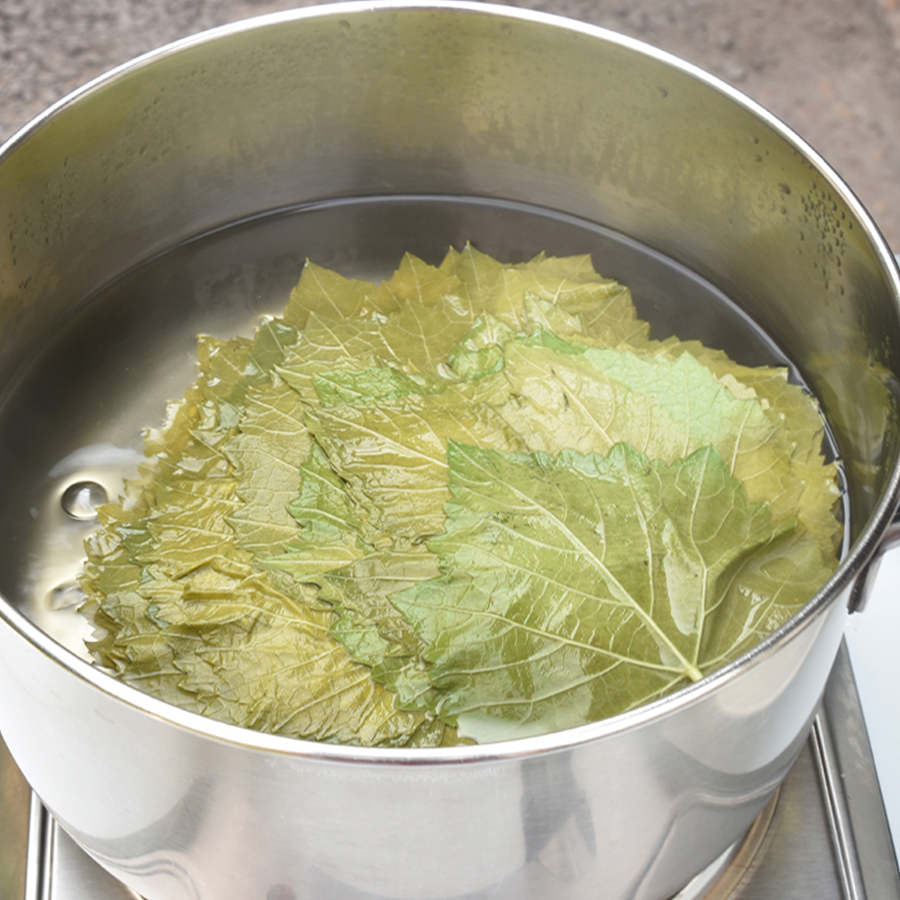
Blanch the grape leaves: Blanch the grape leaves in boiling water until they wilt and turn a darker green. Remove them with a slotted spoon and allow them to cool completely. Snip off the stems.
Soak the rice: Soak the rice in water for 30 minutes. Transfer it to a mesh sieve, rinse under cold running water, and drain well.
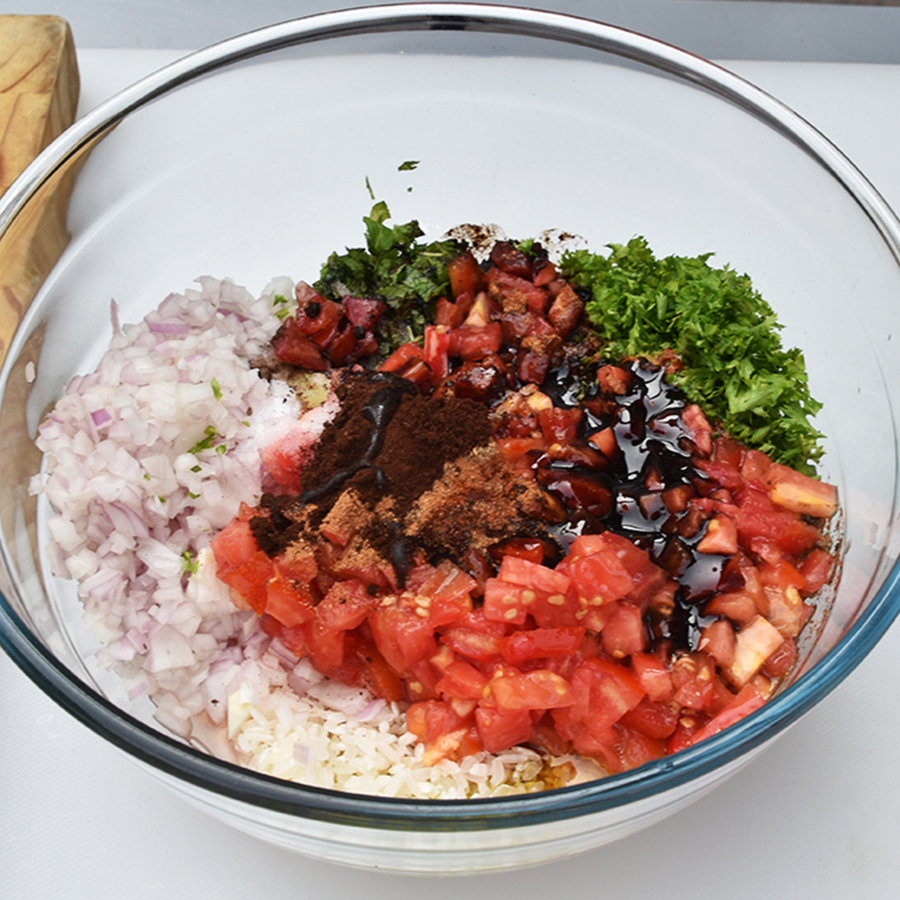
Make the filling: Combine the tomatoes, parsley, onions, rice, salt, olive oil, lemon juice, pomegranate molasses, cayenne pepper (if using), and black pepper. Drain the liquid from the mixture and set it aside. Your stuffing is now ready.
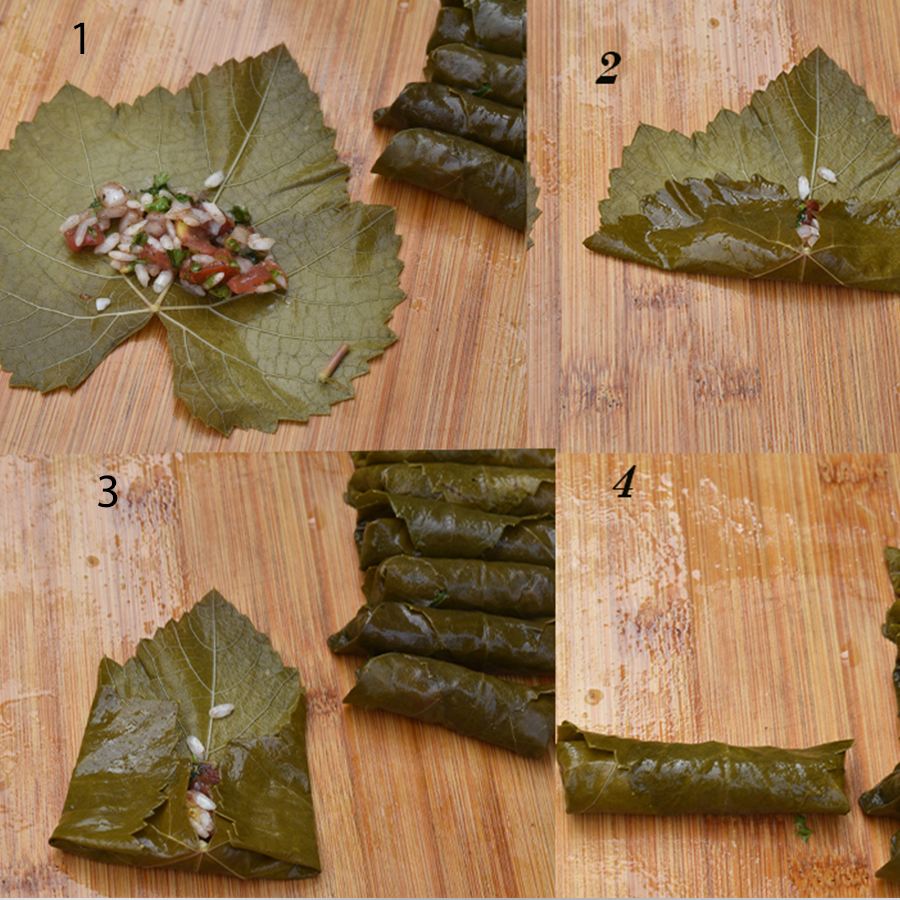
Stuff and roll the grape leaves: Using a sharp knife, trim the stem (if it is still attached to the leaf) and discard it. Place a spoonful of the stuffing near the bottom of the leaf and spread it horizontally. Fold in both sides, then roll the leaf from the bottom to the top. Repeat with the remaining grape leaves.
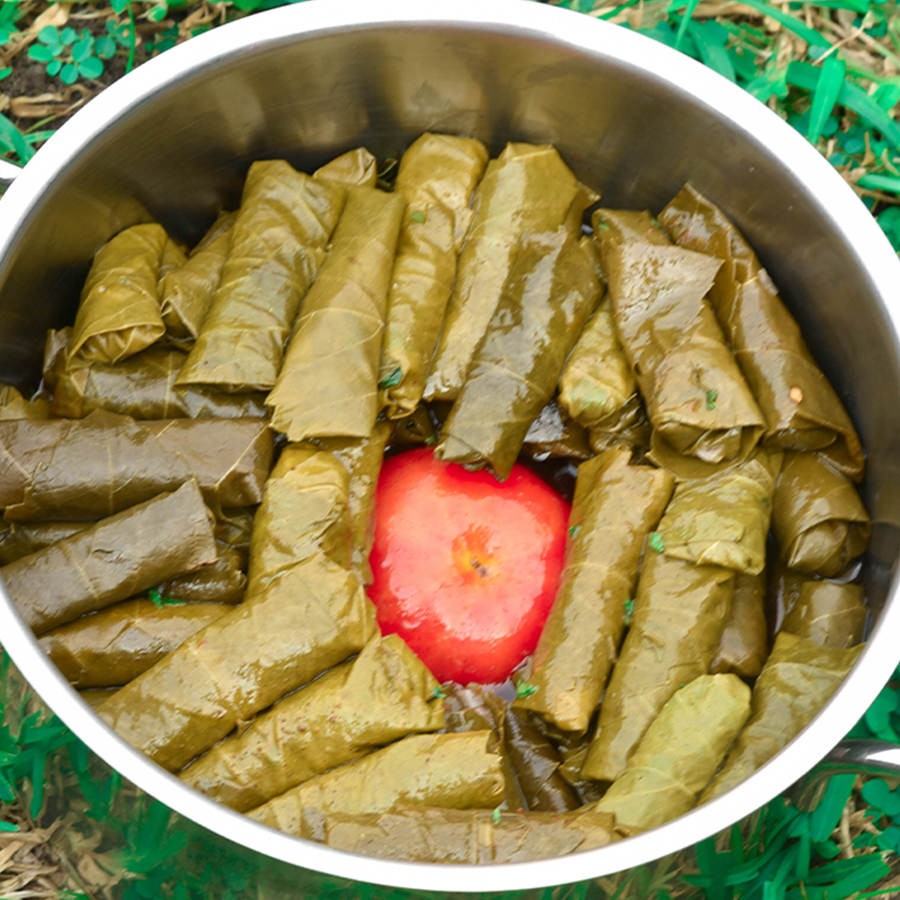
Stack the grape leaves in a pot: In a large pot, arrange the potato discs evenly in a single layer. Place 1 large tomato in the center of the pot. Neatly and tightly arrange the grape leaves around the tomato in a circular pattern. Make sure the seams of the leaves are facing downward to prevent them from unraveling during cooking.
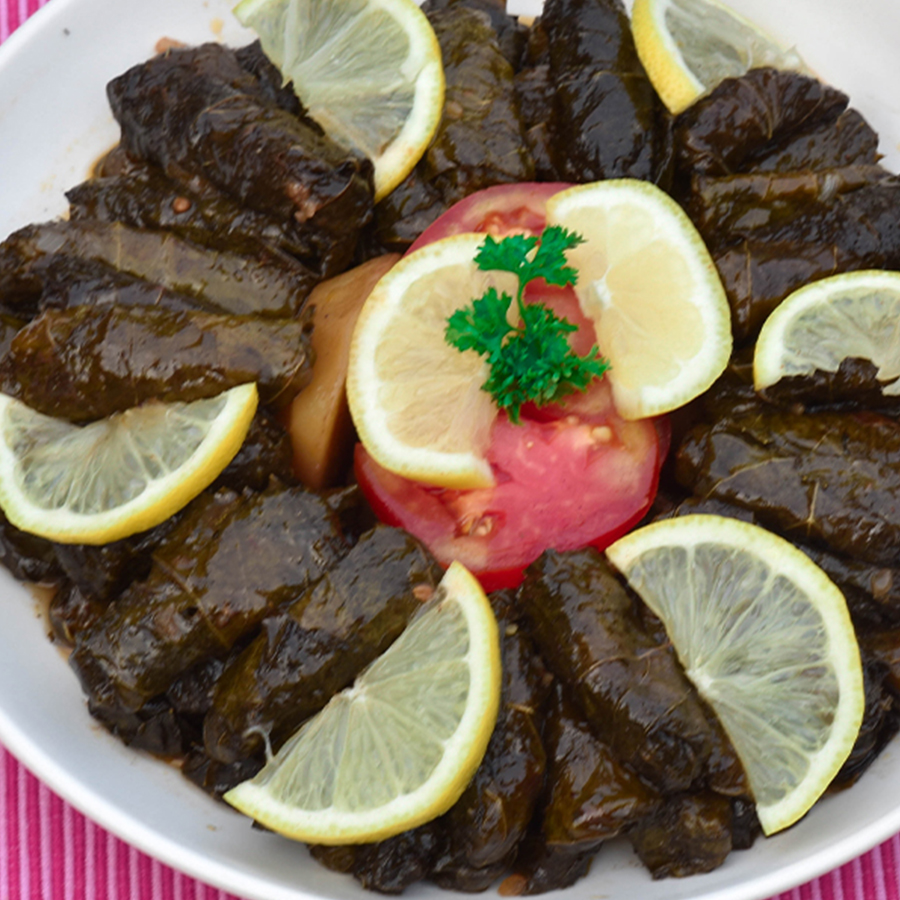
Cook the grape leaves
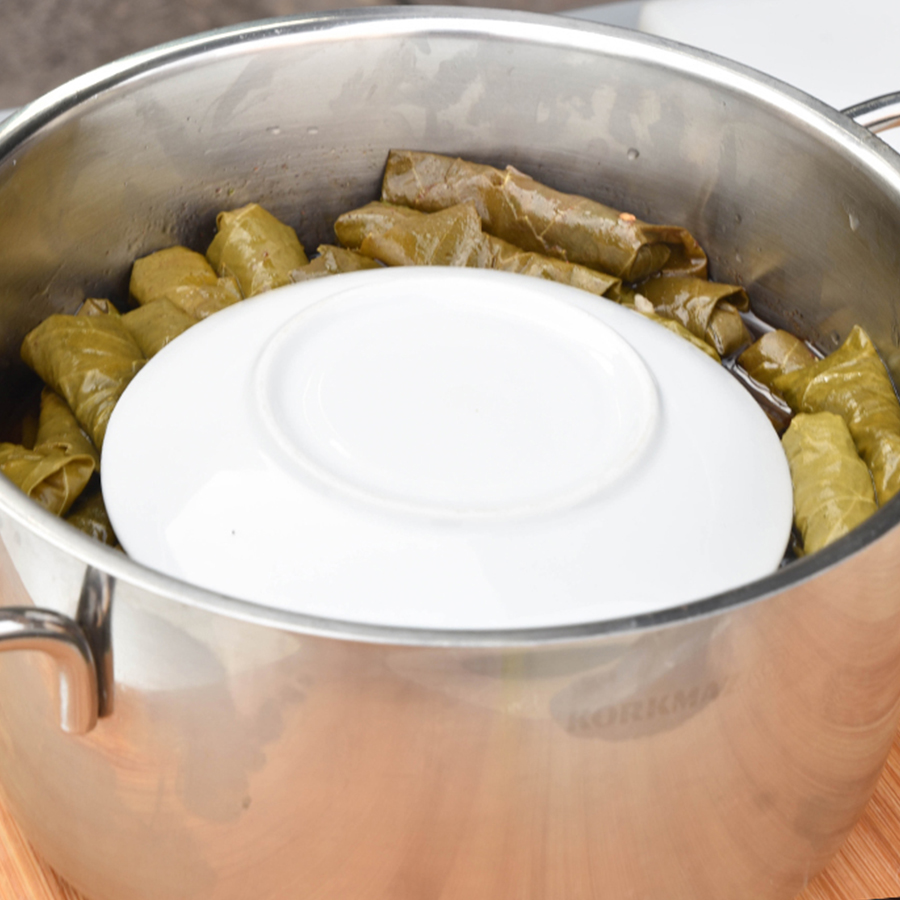
Mix the liquid retained from the stuffing with ⅓ cup of water. Taste for salt and adjust to your liking, then pour the mixture over the stuffed grape leaves. Cover them with a heatproof plate and place the pot over medium-high heat until the liquid comes to a boil. Cover the pot with a lid and let it simmer over low heat for about one hour, or until the grape leaves are fully cooked.
Remove from the heat and let the grape leaves rest in the pot until they are lukewarm. This will allow them to absorb some of the remaining liquid, making them even more juicy and flavorful.
Straightforward but laborious!
As you can see, the recipe is straightforward, and there are no tricky ingredients involved. But I have to admit, rolling all these grape leaves is laborious and takes time and effort. That said, it can be a therapeutic practice when you roll them with a group of people.
I really enjoy it that way. When we gather around the table to roll a huge batch of warak enab, the power of collaboration turns the process into an adventure.
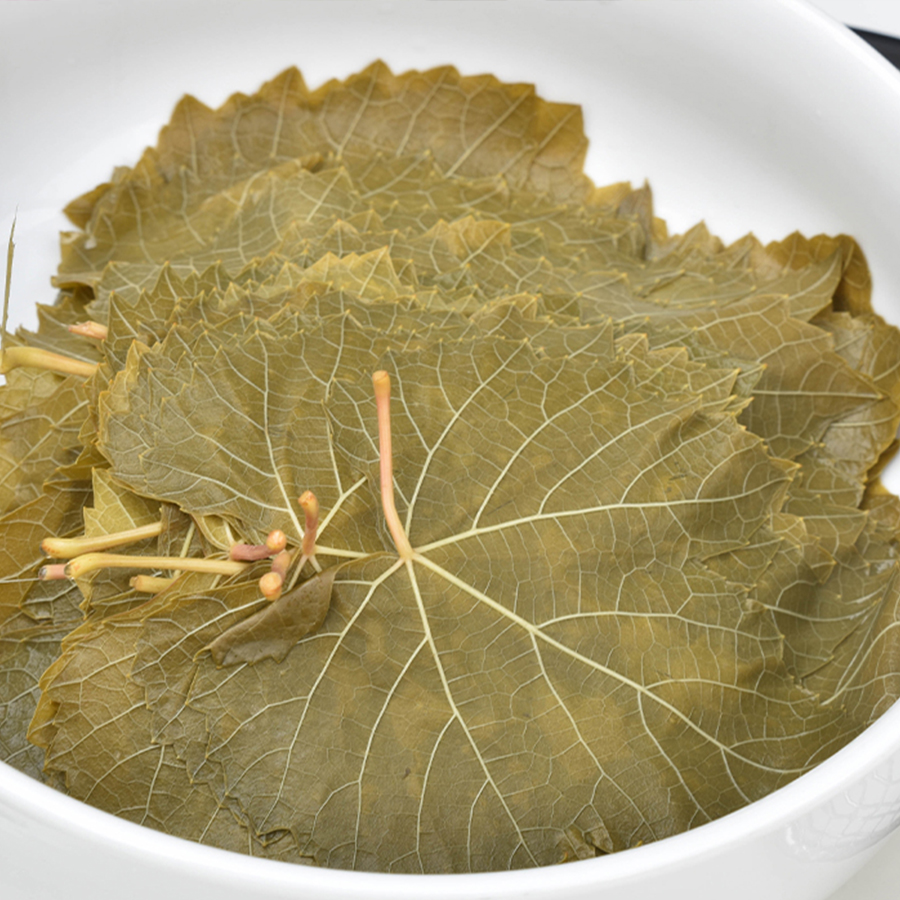
Fresh or Jarred Grape Leaves in Brine
Of course, there’s nothing like fresh grape leaves. If you’re lucky enough to have a vineyard with grapevines, you should pick the leaves while they’re still tender and pliable. The ideal ones are about the size of your palm: too large, and they can be tough; too small, and you’ll have a hard time rolling them.
That said, grape leaves packed in brine can do the job just fine. They’re available at large supermarkets and Middle Eastern markets. Choose a good brand and avoid tough leaves—they’ll disappoint you even after blanching.
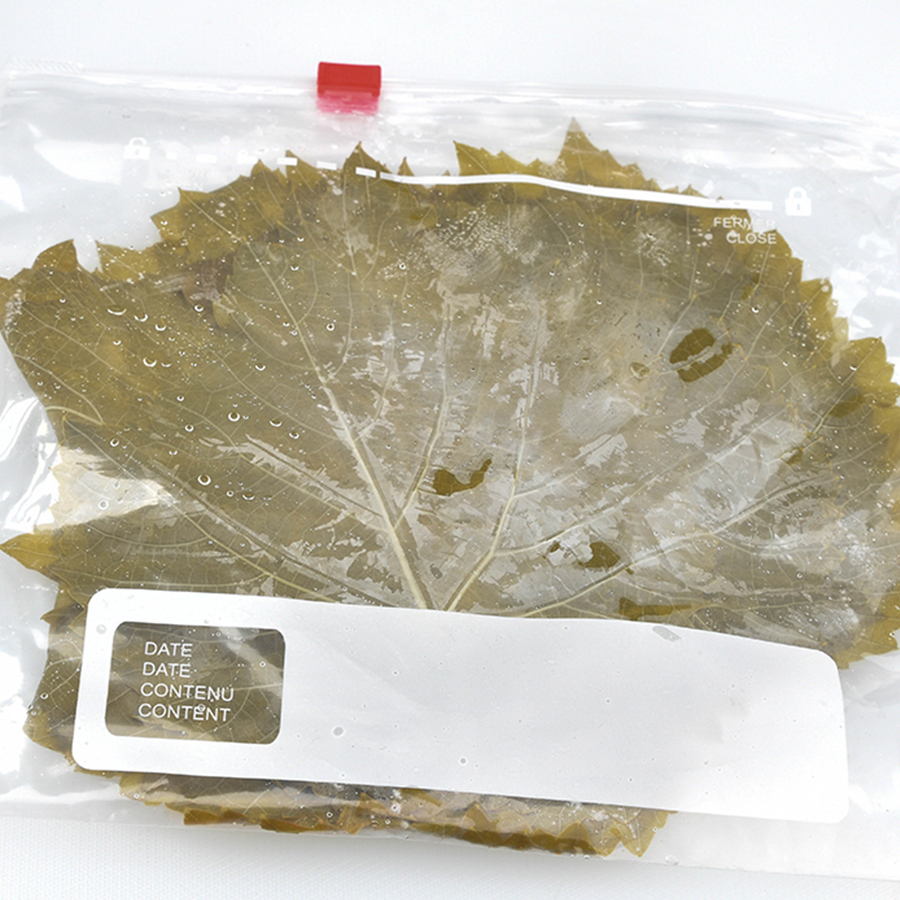
How do I freeze fresh grape leaves?
Pick tender grape leaves, leaving the stems intact. Gently wash the leaves and stack them underside-up, with the stems aligned. Group about 20 leaves into each stack.
Bring about 8 cups of salted water to a boil and blanch one stack at a time for about 30 seconds, or until the leaves wilt and turn a darker green. Remove them with a slotted spoon and allow them to cool completely. Transfer the stacks to freezer bags and freeze.
Your recipe features pomegranate molasses. Can I skip it?
Pomegranate molasses is the secret ingredient that takes these grape leaves from good to excellent. However, if you’re not a fan, you can certainly skip it.
Adding Lebanese coffee to the filling sounds weird to me!
Believe it or not, this ingredient takes the grape leaves from good to excellent. You won’t actually taste the coffee—it simply acts as a flavor enhancer. I highly recommend adding it!
One cup of olive oil sounds like a lot. Can I reduce it to half a cup?
The generous amount of olive oil adds so much flavor and richness to the grape leaves, but of course, you can reduce the amount to your liking.
Are they served warm or cold?
Since this is a meatless version, it is traditionally served at room temperature or slightly chilled.
How should I store the vegetarian grape leaves?
Stuffed grape leaves can be refrigerated this way for up to 5 days. They taste even better after a day or two in their cooking liquid.
 Let’s Stay in Touch!
Facebook, Instagram, YouTube , Pinterest and TikTok!
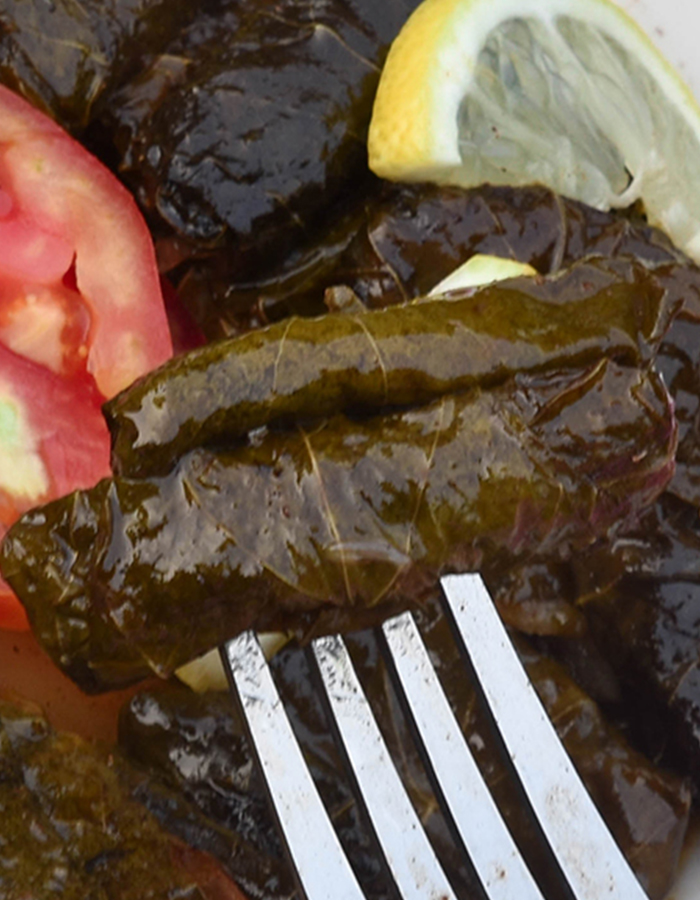
Authentic Vegetarian Stuffed Grape Leaves
Description
Ingredients
- 250 g / 9 oz fresh grape leaves
- ¾ cup short-grain rice
- 5 medium tomatoes finely chopped
- 1 large tomato sliced, for placing in the center of the pot
- 1 large potato sliced into ½-inch-thick discs (optional)
- 2 cups fresh parsley finely chopped
- ½ cup fresh mint leaves chopped
- 2 large onions finely chopped
- 1 cup high-quality olive oil
- ½ cup freshly squeezed lemon juice
- 3 tablespoons pomegranate molasses
- ½ teaspoon seven-spice or allspice
- A pinch of cinnamon
- Cayenne pepper optional
- 1 level teaspoon Lebanese or Turkish coffee finely ground
- ⅓ cup water
- 1 tablespoon salt or to taste
Instructions
- Pick the tender grape leaves, leaving the stems intact. Gently wash the leaves and stack them underside up, with the stems aligned. Make stacks of about 20 leaves each.Bring about 8 cups of salted water to a boil and blanch the stacks one at a time. Blanch each stack for about 30 seconds, or until the leaves wilt and turn a darker green. Remove with a slotted spoon and allow to cool completely.If using preserved grape leaves, simply rinse and drain them.
- Using a sharp knife, trim off the stem (if it is still attached to the leaf) and discard it.
- Soak the rice in water for 30 minutes, then transfer it to a mesh strainer, rinse under cold running water, and drain.
- In a deep bowl, mix the rice, parsley, mint, onions, tomatoes, salt, cinnamon powder, seven-spice, cayenne (if using), Lebanese coffee (the secret ingredient), lemon juice, olive oil, and pomegranate molasses. Mix well to allow all the flavors to infuse.Drain the liquid from the mixture and set it aside. Your stuffing is now ready. Save the liquid—it’s liquid gold! It captures all the delicious umami flavors and can be used later in the recipe.
- Spread each grape leaf on a flat surface, veiny side up.
- Place a spoonful of the stuffing near the bottom of the leaf and spread it horizontally. Fold both sides inward, then roll the leaf from the bottom to the top.
- Repeat the process with the remaining grape leaves.
- In a large pot, arrange the potato discs in an even single layer. Place 1 large tomato in the center of the pot.
- Neatly and tightly arrange the grape leaves around the tomato in a circular pattern. Make sure the seams of the leaves are facing downward to prevent them from unraveling during cooking.
- Mix the liquid retained from the stuffing and pour it over the stuffed leaves. Add the 1/3 cup of water, taste for salt, and adjust to your liking.
- Cover with a heatproof plate and place over medium-high heat until it comes to a boil. Cover the pot and let it simmer over low heat for about one hour, or until fully cooked. Remove from the heat and leave it in the pot until it is lukewarm. This will allow the grape leaves to absorb some of the liquid in the pot, making them even more juicy and flavorful.Happy eating!
- Transfer them to a shallow serving dish and decorate with lemon wedges. Drizzle the remaining thick, lemony liquid from the pot over the grape leaves for an extra juicy, flavorful finish. Be sure to watch the detailed video tutorial above—it’s very helpful!
Video
Notes























2 Comments
Love the recipe everyone loves them.
I just not sure I am doing the parsley amount correctly. Is the one cup of chopped parsley or one cup loose parsley leaves then chopped. Thank you in advance.
Thank you so much, John. It is 1 cup of chopped parsley.